REVIEW · AMALFI COAST
Cooking class Amalfi Coast by Marco and Tano
Book on Viator →Operated by Cooking Class Amalfi Coast da Marco e Tano · Bookable on Viator
Pizza starts with a garden. This private Amalfi Coast cooking class pairs a hands-on kitchen lesson with a family-farm ingredient hunt, and it ends with a relaxed meal on the terrace. I love the garden-to-dough flow, and I also love that the day finishes with local wine and limoncello, not just a quick taste.
The main thing to think about is logistics: the start time is 11:00 am in Scala (Via Lama di Priso), and Amalfi Coast travel can be slow depending on where you’re staying.
In This Review
- Key highlights before you go
- Marco and Tano’s Amalfi Coast setup: private villa, small group, real food
- The garden-to-ingredient part in Scala: where the day starts
- The kitchen lesson: pizza dough, pasta work, and hands-on technique
- What you eat on the terrace: wine, limoncello, and a finish with a view
- Price and value on the Amalfi Coast: what $326.53 gets you
- Timing and meeting point: how not to lose an hour on arrival
- Who this cooking class is best for (and who might want something else)
- FAQ
- FAQ
- How long is the Amalfi Coast cooking class?
- What time does the class start?
- Where do we meet for the class?
- Is this experience private?
- What dishes do we make?
- Do we get to eat what we cook?
- Is wine or limoncello included?
- Is the class taught in English?
- What’s the group size limit?
- What is the cancellation policy?
- Should you book Marco and Tano’s Amalfi Coast cooking class?
Key highlights before you go
- Garden harvest first: you start outdoors, picking seasonal ingredients straight from their property
- Private villa experience: lessons are private, with the villa exclusively for your group
- Pizza dough and more: you’ll work dough and prepare dishes like pasta and pizza (and sometimes ravioli-style pasta)
- Hands-on teaching: you’re not watching from the sidelines; you get step-by-step help in the kitchen
- Terrace meal with local drinks: your work turns into a shared meal with wine and limoncello
Marco and Tano’s Amalfi Coast setup: private villa, small group, real food
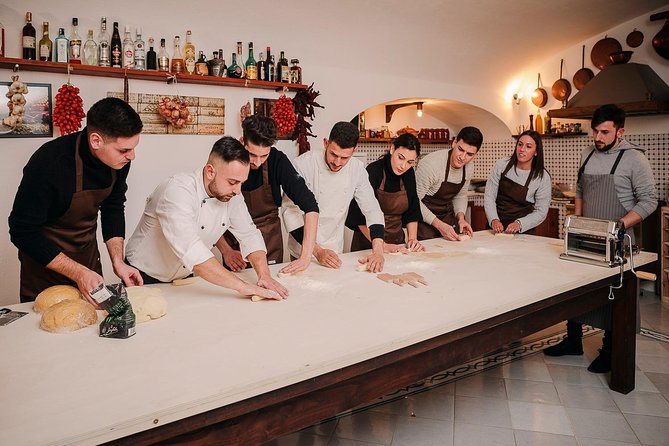
This is the kind of class that feels less like a ticketed activity and more like you’re joining a working family for a cooking day. The setup matters: the lesson is private, and you have the villa to yourselves. With a stated maximum of 8 people, the energy stays personal, and you’re less likely to get rushed or lost in a big group format.
You also get a clear structure to the experience. It’s not just cooking. The day starts with the harvest, moves into the kitchen for dough and pasta work, and then lands on the terrace for a proper sit-down tasting. If you like learning where ingredients come from (and not just memorizing recipes), this format clicks.
One more practical note: the class is offered in English and uses a mobile ticket. That’s a nice combination on the Amalfi Coast, where phone-based confirmations are usually the easiest way to stay organized.
You can also read our reviews of more cooking classes in Amalfi Coast
The garden-to-ingredient part in Scala: where the day starts
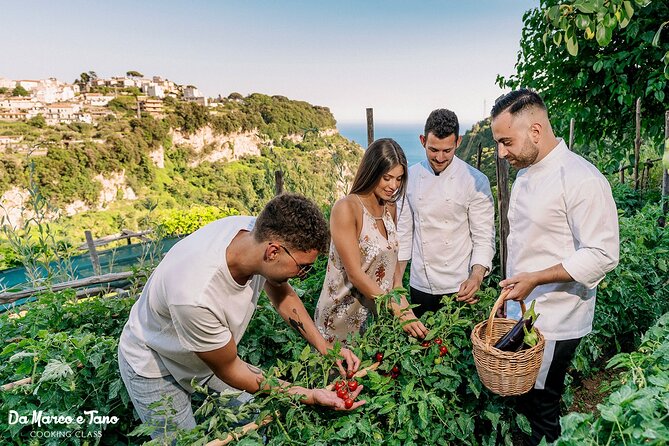
The first step is Scala, and the day begins with a garden visit. The goal is simple: show you what’s growing, when it’s ready, and how ingredient choices affect cooking. You’ll see the harvest stage before you ever touch the dough, so the lesson doesn’t feel abstract.
Based on what’s been shared from past experiences, you can expect that ingredient picking is part of the fun. People describe going into the garden and selecting seasonal produce, then bringing that freshness directly into the cooking process. It turns the class into a story you can taste.
Why this matters: it teaches you a way of cooking that travels with you. Once you understand how chefs select ingredients during the season, you’re less likely to rely on imported “perfect” items back home. You start thinking like a cook—choosing what’s good right now, not what’s trendy.
The kitchen lesson: pizza dough, pasta work, and hands-on technique
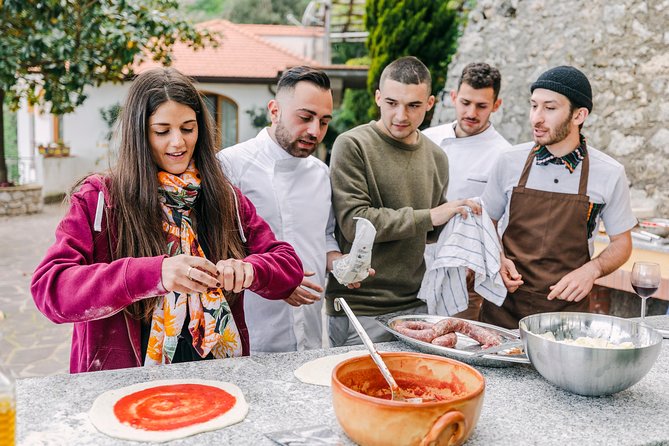
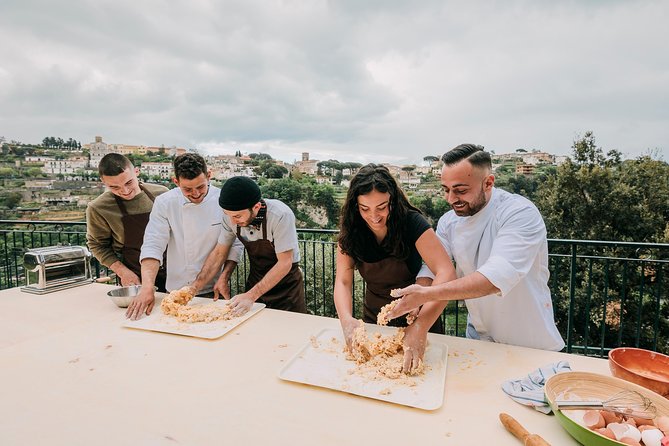
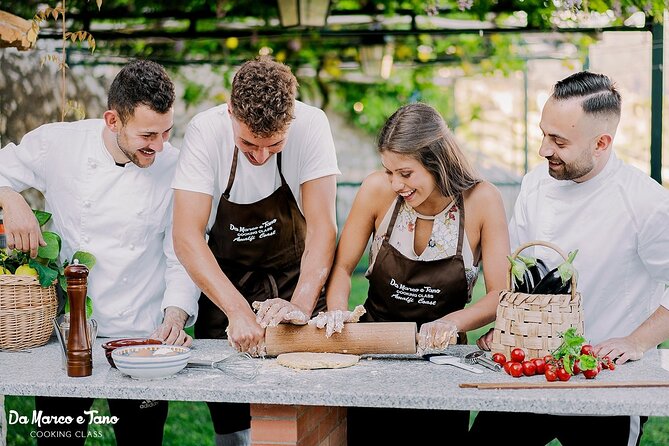
Once you’re in the kitchen, the focus shifts to actually making food. The class includes pizza dough and much more, and the teaching style is step-by-step. You’ll be doing the work, not just watching hands mold dough.
From the dishes people have prepared in this class, it’s clear the menu can include pasta plus pizza, and it may expand to full courses. In past sessions, participants have mentioned making ravioli, eggplant parmesan, and lemon tart or lemon pie. The sample menu lists pasta and pizza with a dessert, and the “other” dessert category lines up with those lemon-based sweets described.
A few practical takeaways you should expect:
- Dough handling: pizza dough is part of the lesson, so you’ll learn how to work with it and how texture changes as you handle it
- Pasta skills: rolling and assembling pasta comes up in similar experiences here, so you get technique, not just a recipe
- Seasonal logic: because the ingredients come from their own garden, the cooking feels grounded in what’s actually available
Even if you’ve cooked at home before, this kind of kitchen time is valuable because it’s guided. You can ask questions, correct your technique in real time, and leave with more confidence than a cookbook lesson ever gives.
What you eat on the terrace: wine, limoncello, and a finish with a view
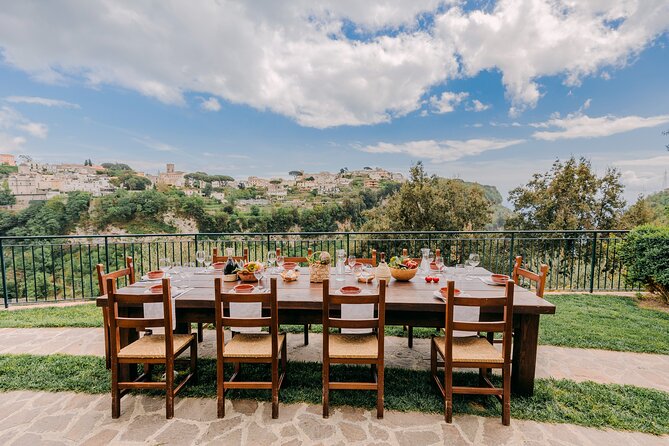
The best classes don’t just teach; they feed you. Here, you taste what you made on the terrace. The experience includes a glass of wine and limoncello, and people often mention that the outdoor setting makes the whole meal feel special.
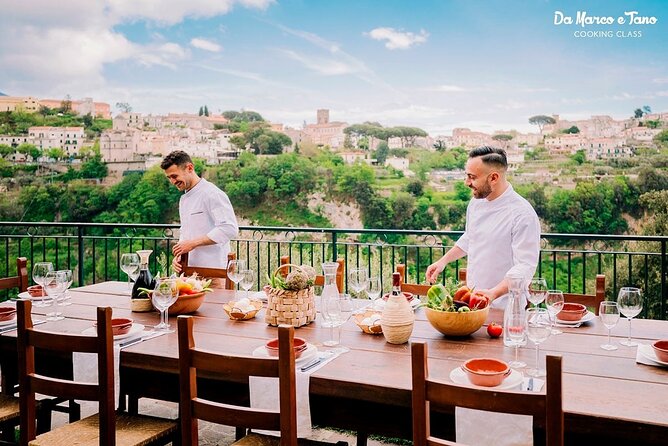
You’ll be eating where the views can do some of the storytelling. Descriptions include scenery overlooking the valley below, which is exactly the kind of setting that turns a meal into a memory you’ll replay later. And because this is a private villa day, the atmosphere tends to feel calm and unhurried—more “celebration” than “production line.”
One of the reasons I like this end format: it closes the loop. You pick ingredients, you work dough, then you taste the result without splitting the day into separate experiences that never quite connect.
Price and value on the Amalfi Coast: what $326.53 gets you
At $326.53 per person for roughly 4 hours, the price is not “cheap.” On the Amalfi Coast, that’s rarely realistic unless you’re doing a group activity in a more generic setting.
So how does it make sense value-wise?
You’re paying for three things that usually cost extra when they’re split apart:
- Private instruction in a small group format (max 8)
- Exclusive villa time, not shared space with a larger crowd
- A full food arc: garden harvest, hands-on cooking, and a meal with wine and limoncello
If you compare it to booking a cooking class only, plus paying separately for a meal and drinks, the totals can climb quickly. Here, the meal is part of the experience, and the setting is part of what you’re buying.
Also, average advance booking is shown at 78 days. That’s a gentle hint that dates can fill up. If you care about this specific experience, I’d treat it like a main attraction on your schedule, not a backup plan.
Timing and meeting point: how not to lose an hour on arrival
The class starts at 11:00 am and meets at Via Lama di Priso, 84010 Scala SA, Italy. It ends back at the meeting point.
That start time matters. Late mornings on the Amalfi Coast can work well—especially if you’ve planned an earlier activity elsewhere—but traffic and winding roads can still slow you down. If you’re staying farther away, give yourself margin. I’d rather arrive early with a coffee than rush in hungry and stressed.
Because the location is described as near public transportation, you might have options if you don’t want to rely entirely on a car. But “near” doesn’t mean “easy for everyone,” so I recommend thinking about how you’ll get there and back before you commit.
Who this cooking class is best for (and who might want something else)
This is a strong fit if you want:
- A hands-on day with real technique, especially pizza dough and pasta work
- A personal setting with a small group and exclusive villa time
- Food rooted in seasonality, since the day begins with the garden harvest
- A romantic or special-occasion feel—people have highlighted anniversaries and honeymoons, likely because the pace and terrace meal are very “linger a little”
It might be less ideal if you want a quick, low-effort activity, or if you don’t like being in the kitchen for the full block of time.
FAQ
FAQ
How long is the Amalfi Coast cooking class?
It’s listed as about 4 hours.
What time does the class start?
The start time is 11:00 am.
Where do we meet for the class?
You meet at Via Lama di Priso, 84010 Scala SA, Italy.
Is this experience private?
Yes. The lessons are described as private, and the villa is used exclusively for the group.
What dishes do we make?
The sample menu includes pasta and pizza, plus a dessert. The class also includes making pizza dough and other dishes.
Do we get to eat what we cook?
Yes. You taste everything on the terrace as part of the experience.
Is wine or limoncello included?
The terrace tasting is accompanied by a glass of wine and limoncello.
Is the class taught in English?
Yes, it’s offered in English.
What’s the group size limit?
The experience has a maximum of 8 travelers.
What is the cancellation policy?
Cancellation is free up to 24 hours before the experience start time. After that cut-off, refunds aren’t available.
Should you book Marco and Tano’s Amalfi Coast cooking class?
If you’re picking just one “do something different” food experience on the Amalfi Coast, I’d strongly consider this one. The garden harvest + hands-on cooking + terrace meal with wine and limoncello combination is exactly what makes cooking classes feel worth the cost here.
Book it especially if you want a private, smaller-group day and you care about learning how ingredients and technique work together, not just leaving with a list of recipes. If you’re tight on time, the 4-hour block at 11:00 am might be harder to fit—plan your logistics early so you don’t start the class frazzled.