REVIEW · AMALFI
From Amalfi Coast: Pompeii Herculaneum skip-the-line
Book on GetYourGuide →Operated by SUNLAND VIAGGI E TURISMO AMALFI COAST · Bookable on GetYourGuide
Pompeii plus Herculaneum in one day. That is the big draw, and it’s smart: you get skip-the-line entry plus an expert guide so you spend your time looking, not waiting. I like that this is small-group touring, which makes it easier to ask questions and keep up with the story the guide is telling. One thing to consider: it’s a long day with plenty of walking on uneven excavation ground, so it’s not a good fit for limited mobility or people who get motion sick.
You’ll start with coach time along the Amalfi Coast towns, then land at Pompeii for about two hours of guided exploring. After a lunch break, you’ll head to Herculaneum for another focused two-hour visit. The itinerary aims to cover the essentials without making the day feel like a sprint, but you still need solid shoes and stamina.
In This Review
- Key Highlights You’ll Feel Right Away
- From Amalfi Coast to Pompeii: The Ride Sets the Tone
- Skip-the-Line Entry: Why It Changes Your Day
- Pompeii in About Two Hours: What You Should Expect
- What makes Pompeii special (and how to watch for it)
- One practical caution from experience
- Lunch Break: A Little Freedom Goes a Long Way
- Herculaneum in About Two Hours: A More Residential Side
- How to get more out of Herculaneum’s ruins
- A note about hearing the guide
- Roman Life Details: Baths and Gymnasium Matter
- The Cameo Atelier Stop: Local Craft on the Way Back
- Price and Value: Is $169.93 Worth It?
- Who This Tour Suits Best (And Who Should Rethink It)
- My Practical Take: Tips to Make Your Day Smoother
- Should You Book This Pompeii and Herculaneum Day Trip?
- FAQ
- How long is the Pompeii and Herculaneum skip-the-line tour?
- Are skip-the-line tickets included?
- Will I have guided time at both sites?
- Do I get pickup from Praiano?
- Is this tour suitable for limited mobility?
- What should I bring?
- What language is the tour in?
Key Highlights You’ll Feel Right Away
- Skip-the-line tickets included for Pompeii and Herculaneum, so you avoid the worst entrance queues
- Expert archaeological guide in English to turn ruins into real Roman life
- A small-group format that keeps the experience more hands-on than big-bus tours
- Roman daily-life stops, including the public baths and gymnasium angle
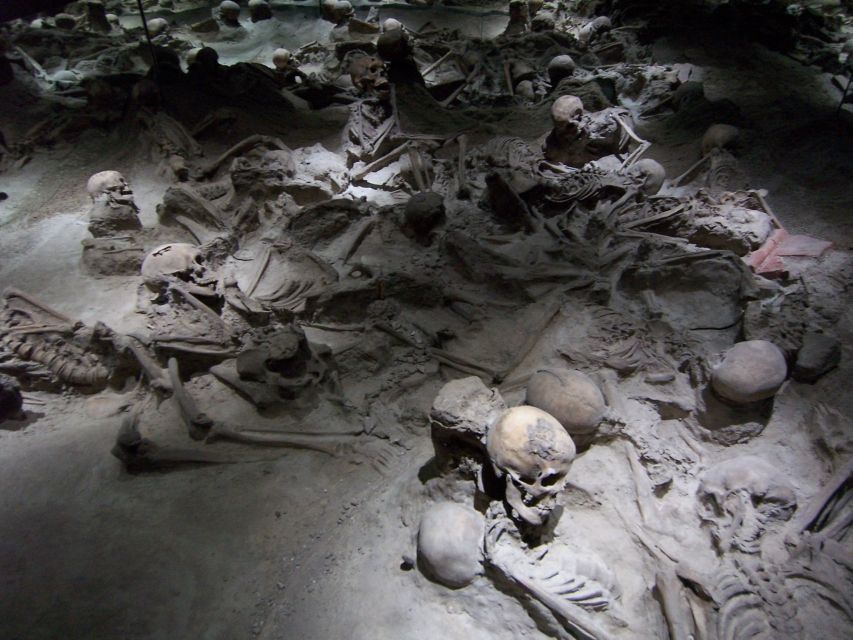
- Two Vesuvius victims, contrasted: Pompeii’s commercial energy vs Herculaneum’s residential feel
- Cameo atelier stop on the return, a practical taste of local craft before you head back
From Amalfi Coast to Pompeii: The Ride Sets the Tone
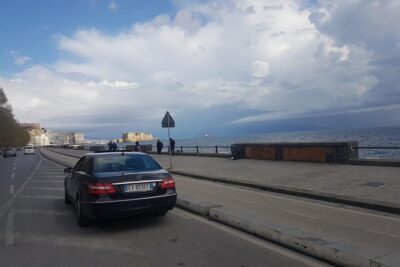
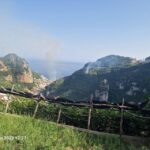
This is one of those trips where the journey actually helps. You’ll board an air-conditioned coach and head out along the Amalfi Drive, passing the towns that make this coast famous for its cliffs, curves, and photo ops. Don’t over-plan your expectations for the ride time; it’s a full day, and the real goal is arriving with enough energy to enjoy both sites.
For people staying around Positano or Praiano, there’s an option for a return shuttle situation: the tour notes a pickup by minibus from Praiano to Amalfi is included (so you can board the main coach from Amalfi). One wrinkle: on the return, due to traffic regulation, the minibus service may not run, and you’ll drop in Amalfi instead. In practice, that means you should be ready to finish in Amalfi and make your way back from there.
I also appreciated that a local partner emails you after booking to reconfirm pickup time and location. With tours on the Amalfi Coast, that kind of confirmation matters because meeting points can vary by option.
You can also read our reviews of more tours and experiences in Amalfi

Skip-the-Line Entry: Why It Changes Your Day
Pompeii and Herculaneum can swallow hours if you get stuck in queues. Here, skip-the-line tickets are included for both ruins, which is huge value when you only have about two hours per site with a guide.
Think about it like this: when your entry process is fast, you can use your time for what you paid for—seeing streets, homes, and public areas—rather than standing in a line wondering if your shoes will survive. And because this is designed as a small-group day, the guide’s timing feels tighter and more purposeful.
There’s also a money-saving angle on certain dates. The tour info notes that on the 1st Monday of each month, you can save with free entrance to State sites (and it also mentions Special Sundays with free entrance). If you’re traveling on one of those dates, it’s worth checking what that means for your exact ticket cost before you go.
Pompeii in About Two Hours: What You Should Expect
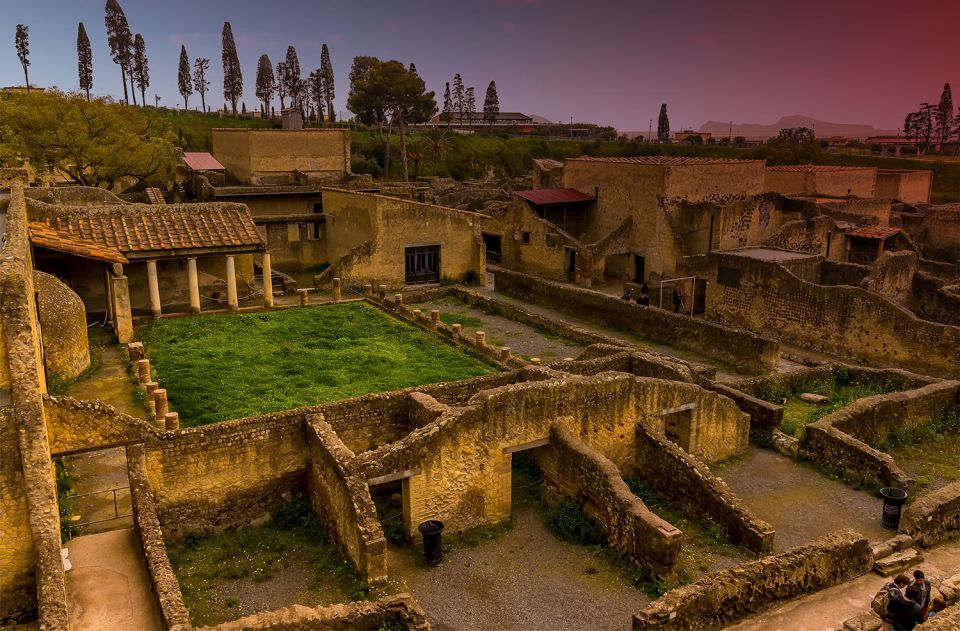
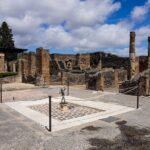
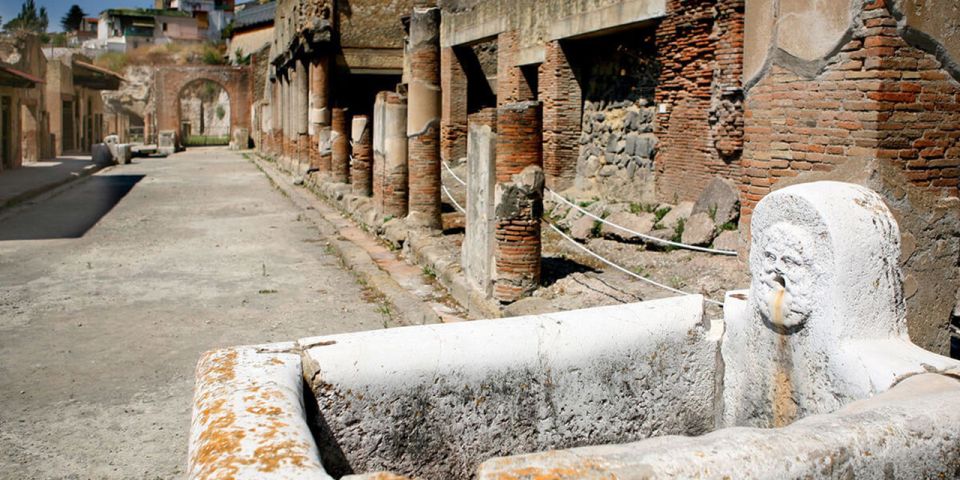
You’ll arrive at Pompeii and get around two hours guided through the excavations. Pompeii’s story is both dramatic and painfully specific: it was a thriving commercial center that was buried during the Vesuvius eruption night between 24 and 25 August 79 A.D., when about 5 meters of lapilli and ash covered the city.
That matters for how the guide structures the walk. Pompeii isn’t just piles of stone. The guide’s job is to help you connect the physical layout to sudden interruption—how a city kept working right up until it didn’t.
What makes Pompeii special (and how to watch for it)
I love Pompeii because it gives you that clear “street-level” sense of Roman city life. You’re not only looking at villas; you’re also getting a snapshot of how people moved and worked.
A good way to keep yourself oriented is to think in zones while you walk:
- The “public” feel: where people gathered, shopped, and did business
- The “everyday” feel: doorways, passageways, and the rhythm of buildings
- The “what survived” feel: those preserved details that make the city feel recently abandoned
The tour is built to cover notable highlights without trying to cram in everything. That’s a plus, because Pompeii is too big to fully conquer in one visit.
One practical caution from experience
Pompeii can cook you faster than you expect—especially in warmer months. You may also find yourself doing a longer walk than you planned if timing between lunch and transfers isn’t perfectly timed for your pace. This tour includes lunch time, but the exact flow after the guided segment may affect how hot and tired you feel before eating.
If you’re the type who likes breaks, pack water habits into your day: take small sips when you can, and don’t save it all for later.




Lunch Break: A Little Freedom Goes a Long Way
After the guided Pompeii portion, you’ll have free time for lunch before continuing to Ercolano/Herculaneum. This break is genuinely useful because you’ll likely be switching from “listen and look” mode into “reset and refuel” mode.
Because you’re in a tourist-heavy area, you’ll have plenty of options. Your best move is to choose somewhere you can actually sit down and cool off—not a quick snack that turns lunch into a regret.
And if you have any flexibility, eat earlier rather than later. It helps you arrive at Herculaneum with less fatigue and more patience for the ruins.
Herculaneum in About Two Hours: A More Residential Side
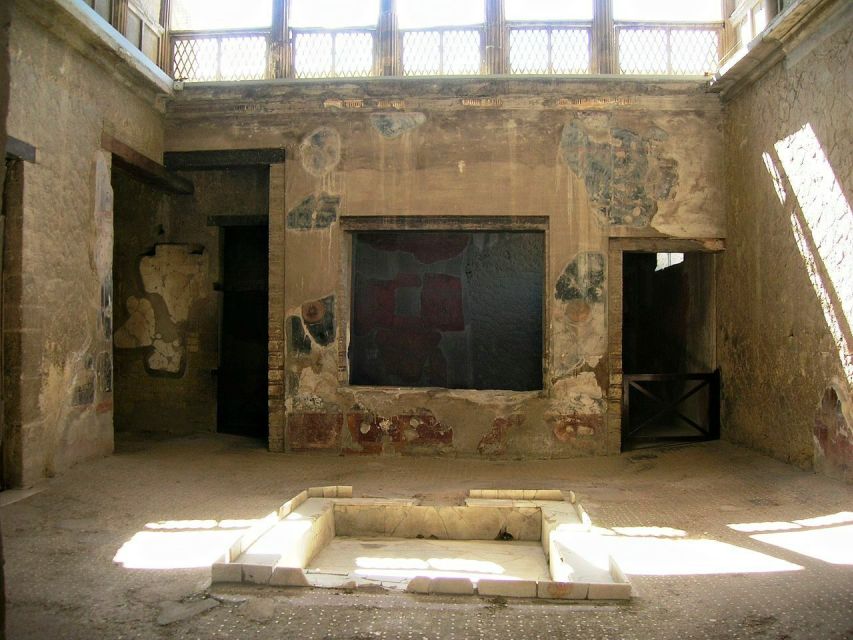
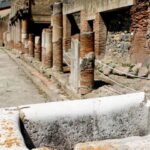
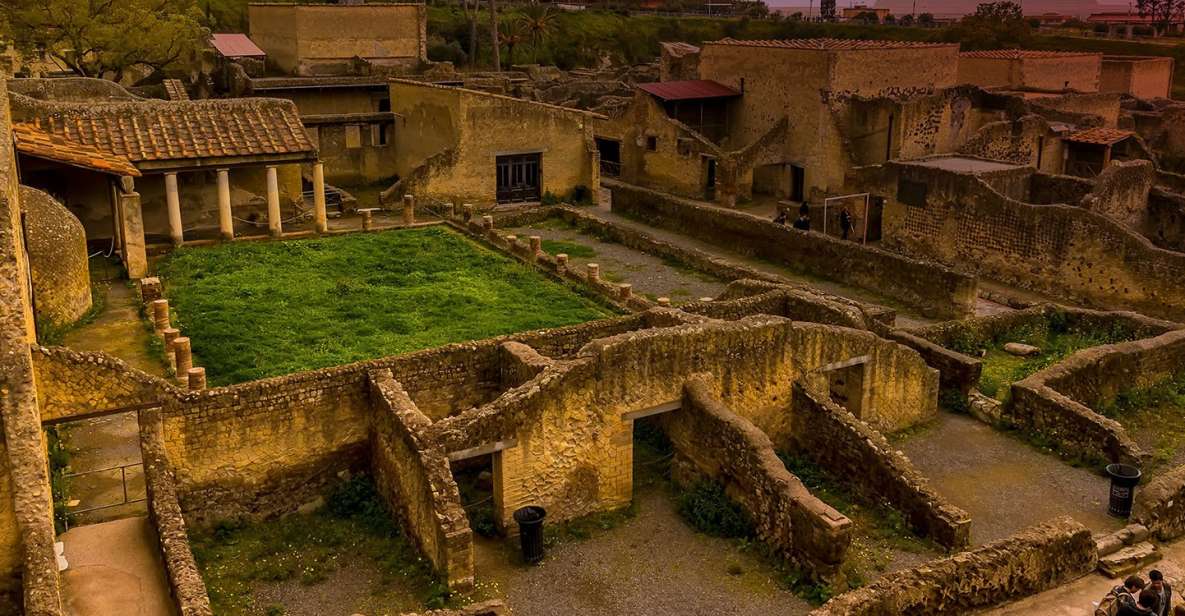
Next stop is Herculaneum (Ercolano), another city buried by Vesuvius. Here’s the big difference: unlike Pompeii’s commercial center vibe, Herculaneum feels like a quiet residential coastal town.
That contrast is one of the reasons I recommend doing both on the same day. You get range. Pompeii shows you the public-facing city machine; Herculaneum shows a more intimate snapshot of daily life.
How to get more out of Herculaneum’s ruins
In Herculaneum, buildings can feel more “human-scale” because the focus is on homes and the everyday arrangement of life. When you walk, pay attention to what feels practical:
- entrances and thresholds
- passageways that suggest how people moved through the home
- the way rooms relate to each other
Even without seeing every room (because, realistically, you won’t), you’ll start feeling the pattern.
A note about hearing the guide
The tour info says the guide is live English, and there’s an optional audio guide. Still, in open-air archaeological sites, sound can vary. If you don’t have a way to clearly hear your guide at every moment, you’ll get less out of the details—even if you can see the stones just fine. If audio options are offered on the day, grab them. Your attention span is limited; don’t spend it guessing what the guide just said.
Roman Life Details: Baths and Gymnasium Matter
One of the strengths of this tour is that it doesn’t treat Pompeii and Herculaneum like museum exhibits only. It points you toward Roman life, including the public baths and gymnasium angle mentioned in the highlights.
Why that’s valuable: baths weren’t just hygiene. They were social space, exercise space, and routine. The gymnasium and bath setting help you understand the culture behind the stone—how people met, talked, trained, and spent time.
When you spot these kinds of areas on your route, don’t just think architecture. Ask yourself: who used this space, how often, and what was the purpose in daily life? That mental habit makes the ruins feel much more “real” than just old walls.
Also, one tip worth taking seriously: the tour can involve museum-related choices on-site. A small reminder from the experience: make room to check out the museum areas if the timing allows. It’s often the easiest way to connect what you saw outside to objects and context you can’t fully grasp from ruins alone.
The Cameo Atelier Stop: Local Craft on the Way Back
On the return journey, you’ll stop at a well-known cameo atelier. This is the kind of stop that can go either way on a tour—some people love the craft, others just want to get home. The best approach is to treat it as context, not a must-buy shopping spree.
If you’re curious about Italian artisan traditions, this can be a nice final touch: you’ll see how cameo-style work ties into local heritage and tourism culture in the area. And if you’re not into shopping, you can still use the time to watch and ask questions, then decide whether you want anything.
Price and Value: Is $169.93 Worth It?
At $169.93 per person, this isn’t a “budget and hope” kind of deal. You’re paying for three things that actually matter on these ruins:
- Included skip-the-line tickets (a real time-saver)
- An expert archaeological guide (so the ruins make sense)
- Air-conditioned transportation with a small-group setup
You also get both sites in one day, which is convenient if you’re staying on the Amalfi Coast and don’t want to figure out separate logistics.
Where the value gets tricky is in your expectations for pacing. The day runs about 8–9 hours, and each site is roughly two hours of guided time. That’s enough to get oriented and see major highlights, but it’s not enough for a slow, photography-only day. If you want to wander for hours on your own, you might prefer a longer independent visit.
Still, for most travelers—especially first-timers—the cost feels fair because it buys you time, structure, and understanding.
Who This Tour Suits Best (And Who Should Rethink It)
This is a good fit if you want:
- one organized day with both Pompeii and Herculaneum
- an English archaeological guide to explain what you’re seeing
- less waiting and more time inside the sites
It’s not a good fit if:
- you have limited mobility (the tour info says it involves a long day of walking around excavations)
- you get motion sickness (there’s motion in the coach)
- you need frequent long breaks or step-free pacing
If you’re a walker who enjoys learning while you travel, you’ll likely have a strong day. If you prefer slow museum vibes, plan to either take breaks outside the guided parts or consider a different format.
My Practical Take: Tips to Make Your Day Smoother
Here’s how to turn this into a great day instead of a slightly exhausting one:
- Wear real walking shoes. Excavation terrain isn’t flat and it’s not forgiving.
- Hydrate early. Heat builds fast before you fully realize it.
- Use audio options if available. At Herculaneum especially, hearing the guide clearly can shape your experience.
- Ask the guide about priorities. With only a couple of hours, you want the “why” behind what you’re seeing, not just dates on a sign.
- Bring patience for the timing. A two-site day can feel intense. That’s normal.
And if you know you’re the type who gets worn out by long walks, it might help to remember a common planning suggestion: some people prefer visiting Herculaneum first and Pompeii second because it can change the rhythm of the day. This tour runs a specific order, but it’s worth keeping your own comfort in mind.
Should You Book This Pompeii and Herculaneum Day Trip?
I’d book this if you’re staying on the Amalfi Coast and you want the smart version of Pompeii + Herculaneum: skip-the-line tickets, a real guide, and a route designed to cover the highlights without wasting time.
Skip it if you need step-free access, you hate long walking days, or you want a relaxed two-site visit with lots of independent wandering. This is structured for efficiency and learning, not for lingering.
If you want one clear goal—seeing both Vesuvius cities with expert context—this tour hits that goal.
FAQ
How long is the Pompeii and Herculaneum skip-the-line tour?
The duration is about 8–9 hours, and starting times depend on availability.
Are skip-the-line tickets included?
Yes. Skip-the-line tickets for the ruins of Herculaneum and Pompeii are included.
Will I have guided time at both sites?
Yes. You get around 2 hours guided touring at Pompeii and around 2 hours visit at Herculaneum with your archaeological guide.
Do I get pickup from Praiano?
Pickup by minibus from Praiano to Amalfi is included (so you can board the main coach from Amalfi). On the return, due to traffic regulation, minibus service may not be available and drop-off will be in Amalfi.
Is this tour suitable for limited mobility?
No. The tour is not suitable for people with limited mobility because it involves a long day of walking around excavation sites.
What should I bring?
Bring comfortable shoes and a passport or ID card (a copy is accepted).
What language is the tour in?
The live tour guide is in English, and an optional audio guide is also available in English.