REVIEW · MOUNT VESUVIUS
Naples: Herculaneum and Vesuvius Day Trip
Book on GetYourGuide →Operated by Napoli Official Tour · Bookable on GetYourGuide
Two ancient sites, one very busy day. I like how this trip pairs skip-the-line entry at Herculaneum with full transportation by shuttle, so you can focus on what’s in front of you instead of figuring out logistics. The trade-off: you’re moving on a schedule, and the Vesuvius walk is real work.
You’ll start in Naples and make the hop to Herculaneum in about 40 minutes. From there, you get on-the-ground time to wander at your own pace, then you head to Mount Vesuvius, where an alpine guide (National Park) supports the crater visit before the ride back to Naples. Bring good shoes and plan to be comfortable with some walking, including uneven volcanic ground.
In This Review
- Key Points to Know Before You Go
- A One-Day Shortcut to Herculaneum and Mount Vesuvius
- From Naples Pickup to Herculaneum: Shuttle Timing and Drop-Off Reality
- Herculaneum Priority Entry: What You’ll See in the Mosaic Houses
- How long you’ll want inside
- Mt. Vesuvius by National Park Track: The 1,000-Meter Climb to the Crater
- If the weather turns
- Vouchers, No Audio Guide, and How to Avoid Ticket-Day Friction
- How Much Time You Really Have at Each Site
- A good rule of thumb
- Price and Value: Is $135.94 Worth It?
- Who This Day Trip Fits (and Who Should Rethink It)
- Notes for families
- Should You Book This Naples Herculaneum and Vesuvius Tour?
- FAQ
- How long is the Naples: Herculaneum and Vesuvius day trip?
- Where do you get picked up?
- How do the tours get into the sites?
- Is skip-the-line access included?
- Do you get a guide for the ruins?
- Is there any guide at Mount Vesuvius?
- How is the Mount Vesuvius part handled?
- What should I bring?
- What happens if Vesuvius is closed due to weather?
- How does pricing work for children?
Key Points to Know Before You Go
- Priority access at Herculaneum helps you spend more time inside the ruins
- Shuttle bus transportation from Naples keeps the day structured and low-stress
- Mt. Vesuvius uses a crater-walk format with an alpine guide from the National Park
- Your time at each site is self-paced (no guided walkthrough of the ruins)
- Herculaneum is smaller than Pompeii, which can be a plus if you don’t want a marathon
- There’s no audio guide or full tour guide included, so rely on your own reading
A One-Day Shortcut to Herculaneum and Mount Vesuvius
If you only have one day in Naples and want volcano views plus truly “wow” ruins, this is a strong fit. Herculaneum gives you a calmer, more intimate sense of Roman life, while Vesuvius puts you in the middle of the Bay of Naples panorama.
This setup also solves the biggest Naples problem: getting yourself out to the sites and back without spending your vacation time with bus schedules. The day runs as a loop—Naples to Herculaneum, then onward to Vesuvius—so you’re not stitching together multiple tickets and transfers.
You can also read our reviews of more tours and experiences in Mount Vesuvius.



From Naples Pickup to Herculaneum: Shuttle Timing and Drop-Off Reality
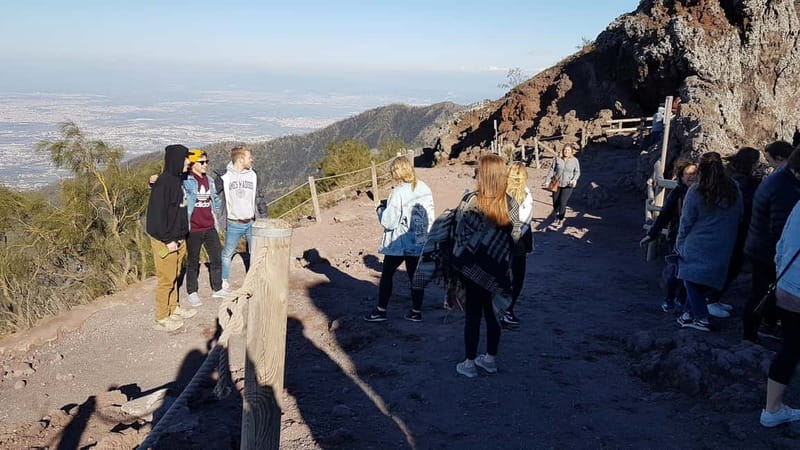
You’ll depart from the historical city center area of Naples and ride for about 40 minutes to get near the Herculaneum entrance. The shuttle drops you close to where you need to go, which matters on a day like this when you want your momentum to stay high.
One detail worth planning for: the tour’s exact departure time is approximate, and the local operator confirms it the day before. Also, the order of visits can vary depending on what helps the day run smoothly. That’s normal for this kind of outing, but you’ll want to keep your morning flexible.
Herculaneum Priority Entry: What You’ll See in the Mosaic Houses
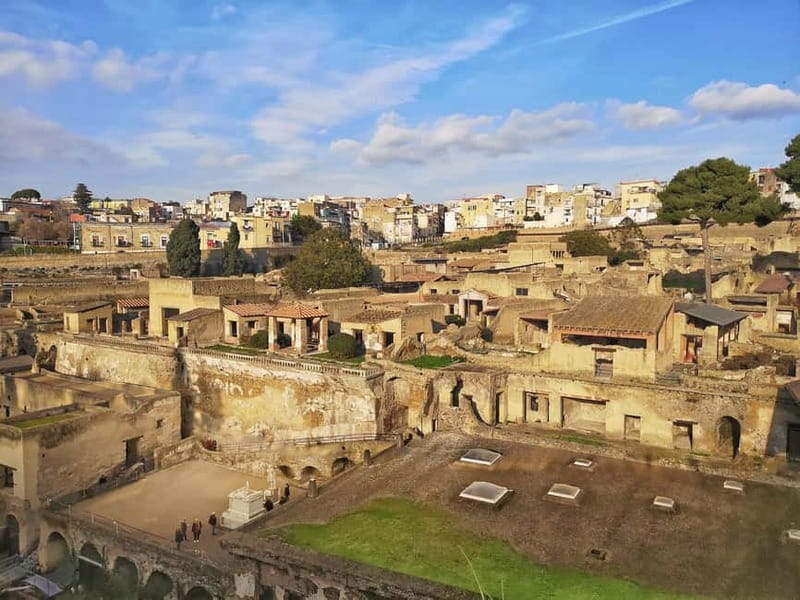
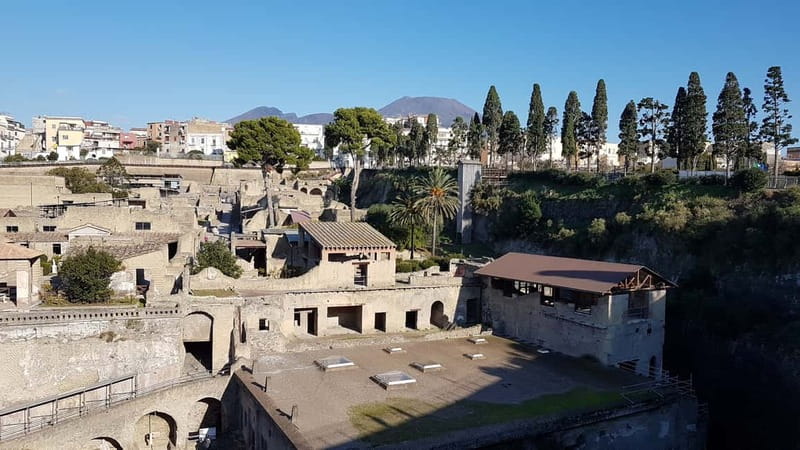
Herculaneum was one of the first major archaeological sites discovered in the 18th century, and it’s famous because so much of it still reads clearly. You’ll get skip-the-line / priority access with your voucher, then you explore on your own.
This is where I think the trip makes its best case. With self-guided time, you can slow down where you care most, instead of being marched through everything at someone else’s pace. And because Herculaneum is smaller than Pompeii, you can still see plenty without feeling like you’re sprinting from doorway to doorway.
Here are the standout sights to look for while you’re walking:
- House with the mosaic atrium: a strong example of decorative Roman floorwork and layout
- House of the deer: another memorable interior focus that helps the site feel lived-in rather than just stone
- Thermal spas of the forum: useful if you like the practical side of Roman city life—how people bathed and met
- House of the mosaic of Neptune and Amphitrite: the kind of floor detail that makes you stop, look, and realize you’re staring at something made centuries ago
Also, it helps that Herculaneum tends to feel quieter than the most famous option next door. If you want ruins with room to breathe, this site often delivers.
How long you’ll want inside
The exact time on the ground can feel tight if you’re trying to cover everything. If you’re the type who enjoys reading details (or just re-watching the same scene from different angles because it’s stunning), plan to spend longer than the minimum and prioritize the mosaics and main public spaces first.
Mt. Vesuvius by National Park Track: The 1,000-Meter Climb to the Crater
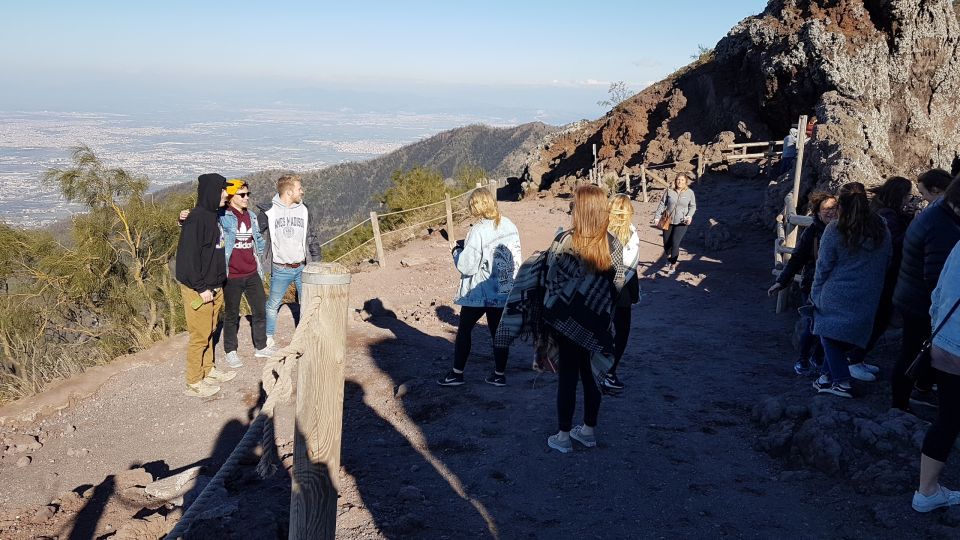
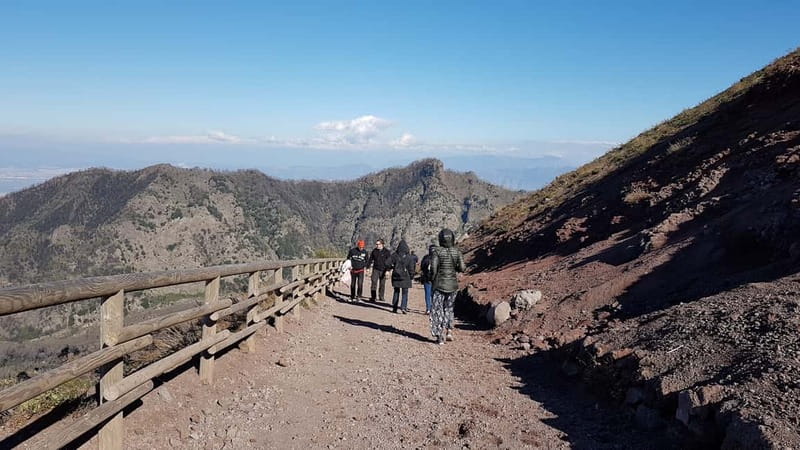
After Herculaneum, you’ll continue to Mount Vesuvius. You’ll ride through a national-park area with views over the Bay of Naples, then the shuttle climbs to around 1,000 meters.
From that point, you take a walking path to the crater area. This is not a gentle stroll. You’ll be walking uphill on volcanic ground, and it can be hot—so bring the right footwear and pace yourself. The payoff is the crater viewpoint and the big-sky panorama when conditions are clear.
What makes this part of the experience practical is the alpine guide provided by the National Park. You’re not on your own in the most technical-feeling section of the route, and you can ask questions about local geology while you’re there.

If the weather turns
Vesuvius can close due to adverse weather or other force majeure issues. If that happens, the operator provides an alternative itinerary or you may forgo the tour. In that case, you get a refund for the Vesuvius entrance ticket portion (listed as €15.00 per person). Translation: the day isn’t always guaranteed to reach the crater, so it’s smart to have a plan for flexibility.
Vouchers, No Audio Guide, and How to Avoid Ticket-Day Friction
One common friction point with self-paced ruins tours is ticket handling. Here, entry fees are included, but in practice you’ll use vouchers that you substitute at the entrances.
At Herculaneum, the voucher process usually works smoothly because the big benefit is priority access. At Vesuvius, the pattern can feel a bit more inconvenient: you might be dropped near the pedestrian ascent, then need to walk a short distance to handle your ticket at the ticket office. It’s not a disaster—just don’t assume the entrance office is right beside the bus stop.
The other major reality check: this tour does not include a general guide for the ruins, and it doesn’t include an audio guide. That’s why I recommend you come armed with at least one of these:
- a guidebook you can skim quickly on the bus,
- a map/plan you can use while walking,
- or a couple of printed notes about what to look for (mosaics, thermal spaces, forum-related areas).
A small thing that can affect your experience: if you were expecting lots of English-language help on-site, it may not always be available. So plan like it’s a self-guided day and you’ll have a better time.
How Much Time You Really Have at Each Site
This tour is built around fitting two major stops into about 7 hours total. That makes it efficient, but it also means you’ll want to decide what matters most before you get dropped off.
Herculaneum usually feels best when you treat it like a walk-through museum—stop at the mosaics, then circle back to catch the details you missed. If you try to sprint through everything, you’ll end up with a blur of walls.
Vesuvius works differently. Your time is tied to the crater walk and return. Expect that your pace (and the conditions) will change how long it takes. You might find the uphill stretch takes around 30 minutes at a steady effort, but it can also take longer round-trip if you move more slowly or conditions are tough.
A good rule of thumb
- If you love ruins: prioritize a deeper look at Herculaneum
- If you love views: prioritize getting to the crater area early enough to breathe, not rush
Price and Value: Is $135.94 Worth It?
At $135.94 per person for a 7-hour day, you’re paying for the parts most people find hardest to manage on their own: ground transportation, priority access at Herculaneum, and the National Park crater support at Vesuvius.
Here’s the value breakdown in plain terms:
- You get shuttle transportation so you’re not solving how to get from Naples to two separate sites and back.
- You get priority entry at Herculaneum, which can reduce the time you lose to queues.
- You get Vesuvius with an alpine guide from the National Park, which adds safety and context for the crater approach.
- You don’t pay extra for entrance fees included in the package, though you’ll still use vouchers at the counters.
Where the value can feel less perfect is the “no audio/ruins guide” piece. If you really want a narration-style walkthrough of Herculaneum, you’ll have to bring your own context. Still, for many people, the savings in stress and the efficient day format are worth it.
Who This Day Trip Fits (and Who Should Rethink It)
This is a good match if you:
- want two top Campania experiences in one day,
- prefer self-paced ruins time over a strict tour script,
- are comfortable with a hike up to Vesuvius crater viewpoints,
- want a streamlined transportation plan from Naples.
It may be less ideal if you:
- need a full guided explanation at the ruins (since no guide/audio is included),
- don’t handle uphill walking well,
- get uncomfortable with ticket-voucher steps and short walking transfers near the entrances.
Notes for families
Children are handled with specific rules: the tour is free for kids up to 3 years old, and pricing is reduced for ages 4–17. You should also bring a passport or ID card for children.
Should You Book This Naples Herculaneum and Vesuvius Tour?
I’d book it if your priority is getting both Herculaneum and Vesuvius done in one day without turning your trip into a transport puzzle. The combination of priority access at Herculaneum and the National Park alpine guide at Vesuvius makes the day feel practical, not chaotic.
Before you click confirm, do three things:
- Pack comfortable shoes for uphill volcanic ground.
- Bring something to compensate for the lack of an audio/ruins guide (a guidebook or notes).
- Be realistic about time at each stop, especially at Vesuvius if you’re slower moving or visiting in hot conditions.
If you want a day that’s efficient, scenic, and built around major highlights rather than planning, this one checks a lot of boxes.
FAQ
How long is the Naples: Herculaneum and Vesuvius day trip?
It runs for 7 hours. The exact start time depends on availability.
Where do you get picked up?
Pickup is included, and the driver picks you up at a designated city bus stop.
How do the tours get into the sites?
You use a voucher for entry. You’ll substitute the voucher for tickets at the entrances.
Is skip-the-line access included?
Yes. Priority access is included for Herculaneum, and the tour highlights skip-the-line entry with your voucher.
Do you get a guide for the ruins?
No. The package does not include a guide or audio guide for the day’s sites.
Is there any guide at Mount Vesuvius?
Yes. Entry to Vesuvius includes an alpine guide provided by the National Park.
How is the Mount Vesuvius part handled?
The shuttle climbs up to about 1,000 meters, and then you take a walking path to reach the crater area with the alpine guide.
What should I bring?
Bring comfortable shoes. Also, bring a passport or ID card for children.
What happens if Vesuvius is closed due to weather?
If Vesuvius is closed due to adverse weather or force majeure, you’ll take an alternative itinerary or you may forgo the tour. In that case, the refund covers the Vesuvius entrance ticket portion (€15.00 per person).
How does pricing work for children?
It’s free for children up to 3 years old, and there’s a reduced price for children aged 4 to 17.