REVIEW · SORRENTO
Pizza School Experience from Sorrento
Book on Viator →Operated by AVI Travel · Bookable on Viator
Pizza dough therapy in Sorrento. This hands-on class has you roll and toss the dough under chef Luigi’s guidance, then build a classic Margherita you actually eat during the same session. It’s a smart break from the usual sit-down “tourist pizza” stop.
I especially like the practical coaching you get while shaping the dough, and I love that you’ll also sample other pizzas (including mozzarella-focused tastings). One thing to plan for: the pacing can include waiting at the start, and you may be standing for parts of the session, so comfortable shoes and breathable clothes help.
Pizza School Sorrento: quick highlights
- Hands-on dough work with toss-and-roll coaching from the pizzaiolo (Luigi is a frequent name you’ll hear).
- Classic Margherita focus so you learn the why, not just the what.
- Mozzarella tastings plus tasting your own pizzas with the group.
- Small group cap (up to 15 people), which keeps the class feeling more personal than a big factory line.
- Hotel-area pickup and return makes it easy to fit into a day in town.
- You eat what you make, plus beverages and bottled water are included.
In This Review
- Pizza School Sorrento: what you’ll really do in 2 hours
- Getting from Sorrento to Restaurant Tirabuscio without stress
- The Sorrento Coast stop: why that first bit of time helps
- Rolling, tossing, and shaping dough like a Neapolitan pizzaiolo
- Margherita by hand: building flavor with sauce and mozzarella
- Eating together: what the class meal feels like
- Price and value: is $78.61 a fair deal?
- Group size, pacing, and practical comfort tips
- Who this pizza making class is best for (and who might not love it)
- Should you book Pizza School in Sorrento?
- FAQ
- How long is the pizza making experience in Sorrento?
- What does the pizza class cost?
- Where do I meet, and do I get picked up?
- Is the class offered in English, and how many people are in the group?
- What’s included in the price?
- What isn’t included?
- Can you accommodate dietary requirements?
- Are kids allowed?
- What is the cancellation policy?
Pizza School Sorrento: what you’ll really do in 2 hours
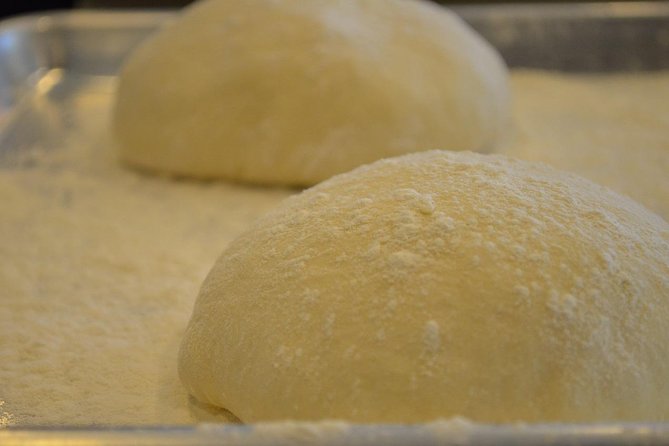
If you want the Sorrento experience to be more than a pretty view and a quick meal, this pizza class delivers. The core idea is simple: you show up, get transported to the restaurant school area, and then you spend the time making pizza like a real Neapolitan process—dough first, toppings second, bake last, eat immediately.
You’re not just watching someone cook. You’re rolling, stretching, and shaping. You get guidance while you work the dough, and you’ll get to try the pizzas others make too. That combo—doing and tasting—helps the lesson stick. Afterward, you can come home with a few real habits that make your own pizza better, instead of vague memories.
English is offered, and the group stays small (maximum 15). That matters. With a smaller class, you’re more likely to get correction when the dough is too tight or the shaping is off. And if you have kids in the group, this kind of active class is usually easier to keep fun and moving.
One practical note: because the lesson includes steps like setup and bake timing, you might spend some time standing around before you’re fully in the rhythm. If you hate waiting, plan your expectations for a “hands-on cooking class” that still has a few unavoidable pauses while dough rises and pizzas bake.
Getting from Sorrento to Restaurant Tirabuscio without stress
The experience runs on a clean pickup-and-return rhythm. You meet at Hotel PlazaVia Fuorimura, 3, 80067 Sorrento and then get picked up for the drive to Restaurant Tirabuscio for the class. After it’s finished, you return to the meeting point.
This is the part that makes or breaks the day for many people. In Sorrento, walking can be steep and sidewalks can be uneven, and a class like this is most enjoyable when transport is handled. Having pickup helps you arrive calm and on time instead of worrying about finding a small restaurant school on your own.
Also, you’ll use a mobile ticket. Keep your phone charged and accessible. A lot of little “Italy logistics” problems vanish when you have your ticket ready before the driver arrives.
Here’s the caution I’d share: be on time at the pickup spot. The experience is capped in size, and once the class clock starts, it can feel rushed if you arrive late. If your plans are changeable—boats running late, crowds, transit delays—give yourself a buffer so you don’t force anyone to adjust the schedule on the fly.
You can also read our reviews of more tours and experiences in Sorrento.
- Sorrento Farm and Food Experience including Olive Oil, Limoncello, Wine tasting
★ 5.0 · 2,524 reviews


The Sorrento Coast stop: why that first bit of time helps
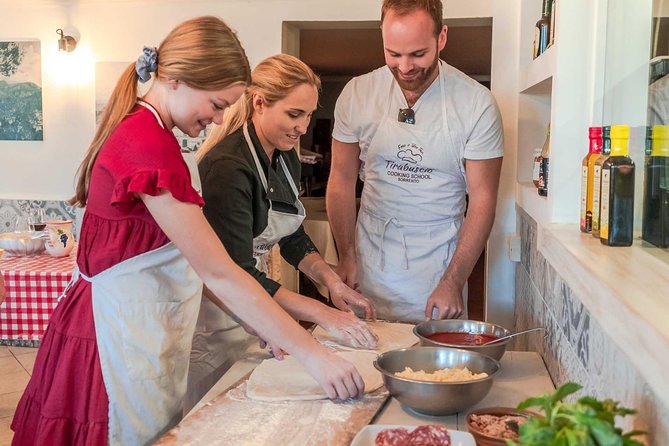
The session lists Sorrento Coast as part of the experience. Even if the class happens at the restaurant school, that initial segment sets the tone: you’re getting out of the main traffic flow and heading toward a calmer cooking setting.
What I like about this approach is that it makes your first minutes feel less like “waiting to start class” and more like getting oriented. You also get a small sensory break from town—sea air, changing views, and the feeling that you’re moving toward something less touristy than the center.
If you’re the type who likes your day structured, this helps. You’re not left wondering what happens next. Pickup happens, movement happens, and then you’re at the cooking space where the lesson can begin.
Rolling, tossing, and shaping dough like a Neapolitan pizzaiolo
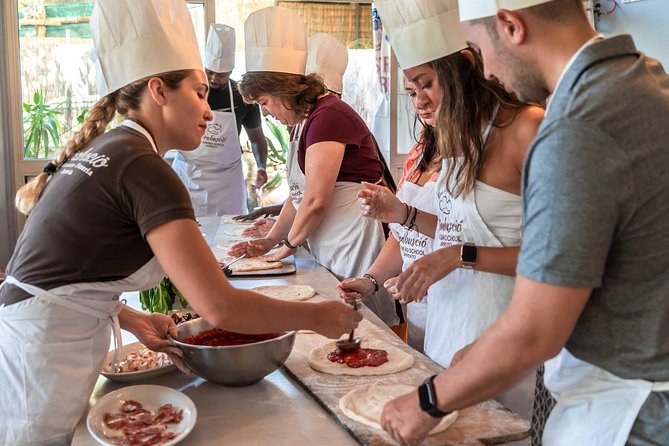
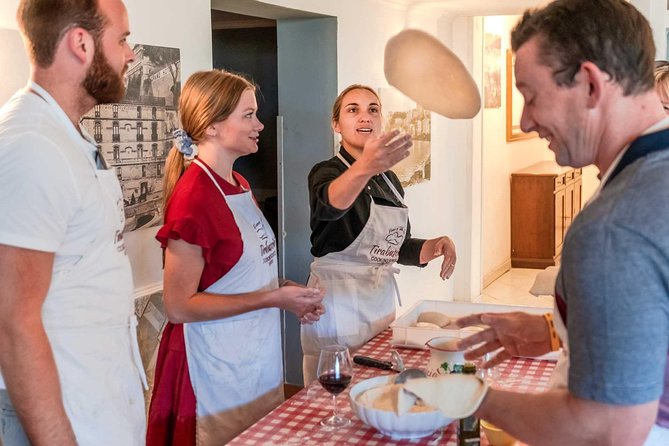
This is the heart of the value. The class is built around you working the dough with guidance from your pizza maker—often referenced as Luigi—so the lesson isn’t abstract.
You’ll learn core dough handling steps such as:
- how to roll and stretch without tearing
- how to shape into a workable round
- and how to toss (yes, the kind you see in Neapolitan pizza demos)
The toss-and-roll part is more than show. When the instructor corrects your handling—too much pressure, wrong grip, or dough not relaxed enough—it directly affects how the pizza bakes. Dough that’s treated gently keeps a better texture. Dough that’s overworked can end up tough or uneven.
I also like that the lesson is interactive. In many cooking classes, you chop once and mostly watch. Here, you’re doing the key skill for the entire session. That keeps energy up, especially for families and for people who want to take home a skill they can actually repeat.
One consideration: because the oven and bake timing matter, you may stand for a while at certain points. If you run hot, wear something that breathes. One class description notes that the start can be warm and standing-heavy. Once the active cooking begins, the pace typically picks up.
Margherita by hand: building flavor with sauce and mozzarella
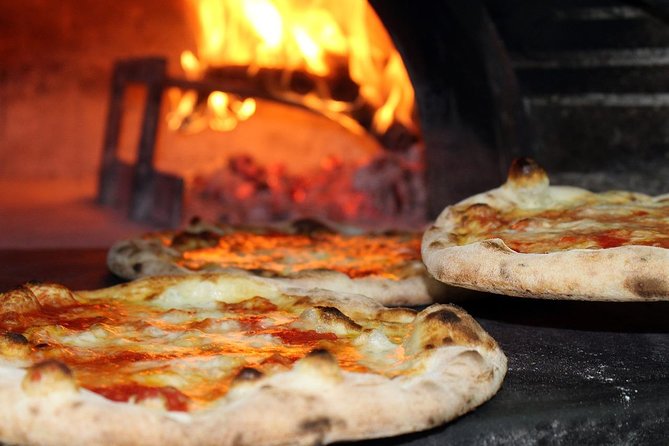
A lot of pizza classes avoid fundamentals. This one leans into Margherita—a simple pizza with big consequences. You’re making pizza margherita with tomato sauce and mozzarella, and that focus is smart because it teaches the balance of the ingredients rather than hiding behind complicated toppings.
Margherita is a test of technique:
- sauce needs to be spread correctly (not piled, not smeared too thick)
- mozzarella needs the right amount and distribution
- the dough needs to be ready to bake so you don’t end up with raw centers or dry edges
You’ll also get to taste other pizzas as part of the course. There’s also strong emphasis on mozzarella tasting, and in at least some sessions you may hear about mozzarella-making basics, not just eating it. Even when you’re not making cheese from scratch, tasting the mozzarella is a key lesson because it helps you understand what fresh texture and flavor should feel like.
One good practical takeaway: if you’ve ever made pizza at home and it came out bland, the fix is often not a new topping. It’s usually sauce quality, cheese handling, and dough bake readiness. Margherita teaches those points fast.
Eating together: what the class meal feels like
After the baking, you sit down and eat what you made with the group. The experience includes food tasting, plus beverages and bottled water.
This is more than “included lunch.” It’s part of the learning loop. You finish shaping, you bake, and then you taste your result while it’s still a fresh comparison against the class samples. That immediate feedback is how you figure out what you did right and what you’d adjust next time.
Some people also mention enjoying a glass of vino with the meal. Since the listing only says beverages, I won’t promise wine in every session. But if you see it on the table when you arrive, it fits the vibe: pizza plus a relaxed, social finish.
There’s also mention of dessert in some cases. Again, treat that as a possible bonus, not a guaranteed part of every schedule.
Practical tip: eat like you want to taste, not like you want to power through. If you want to replicate this at home, pay attention to the dough texture and the sauce-to-cheese ratio as you chew.
- Sorrento Farm and Food Experience including Olive Oil, Limoncello, Wine tasting
★ 5.0 · 2,524 reviews



Price and value: is $78.61 a fair deal?
At $78.61 per person for about 2 hours, you’re paying for more than ingredients. You’re paying for instruction, time, and a small-group cooking setup that includes:
- beverages
- food tasting
- bottled water
- the pizza-making session itself
The best way to judge value here is to ask what you’d otherwise buy or do. If you were going to eat pizza anyway, you’d likely spend similar money at a sit-down spot—yet you wouldn’t learn the dough-handling skills or get coached through shaping and topping. This class turns that money into a usable skill set.
Also, the group size cap (max 15) helps justify the price. More attention and less crowding makes the instruction feel more direct, especially during dough shaping and toss practice.
Not included: souvenir photos. If you want pictures, you’ll need to buy them separately. For most people, that’s fine because your phone will handle your own shots. But if you’re expecting a bundled photo package, that’s a surprise to avoid.
Group size, pacing, and practical comfort tips
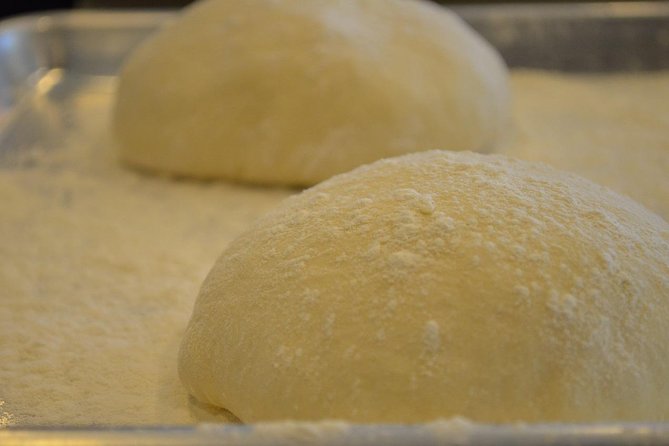
Because the max is 15 people, this usually stays friendly and not chaotic. Still, the class can feel like a “production line” when a cooking session is running to schedule—dough steps, waiting for bake rounds, and moving everyone through in order.
That said, multiple parts of the experience are built to keep it active:
- you do the dough work
- you shape and top your own pizza
- you taste what gets produced
So yes, you might stand. And yes, there may be moments when nothing dramatic happens. The difference is that once you’re on the dough and topping stage, you’re busy.
Here’s what I’d do to make the experience more comfortable:
- wear shoes you can stand in for a bit
- bring a light layer if the room runs warm
- keep your phone handy for the moment you want to document your finished pizza
- arrive early enough for pickup so you don’t start the class rushed
Also, one small but real comfort note: there are comments about aprons that didn’t feel freshly provided. If that bothers you, bring your own towel or wear something you don’t mind getting a little cooking-scented.
Who this pizza making class is best for (and who might not love it)
This class is a strong match if you want:
- a hands-on Neapolitan pizza style lesson in Sorrento
- a fun family activity where kids can participate (dough tossing tends to land well)
- a break from purely eating-your-way through Italy
- a small-group experience in English
It may be less ideal if you:
- hate waiting around during cooking transitions
- prefer flexible menus with lots of customization (the class centers on Margherita and its mozzarella-focused components)
- can’t tolerate standing for parts of the session
If you’re a serious pizza nerd, the Margherita-focused teaching is still valuable. It’s easier to learn the fundamentals when everything else is kept simple.
Should you book Pizza School in Sorrento?
I’d book it if your goal is to go home with a real skill and a real meal—not just a food stop. The combination of dough tossing with guided coaching and then eating your own Margherita is exactly the kind of experience that turns a holiday into something practical.
Book with extra confidence if you like small-group classes, enjoy active cooking, and want a true Sorrento-day memory that isn’t tied to a packed dining room.
Skip or reconsider if you’re very sensitive to standing time, want menu freedom, or can’t handle the idea that a timed class has a few unavoidable pauses.
If you want one simple decision rule: if you can picture yourself stretching dough with an instructor standing right beside you, you’ll probably love this class.
FAQ
How long is the pizza making experience in Sorrento?
The experience runs for about 2 hours.
What does the pizza class cost?
It costs $78.61 per person.
Where do I meet, and do I get picked up?
You start at Hotel PlazaVia Fuorimura, 3, 80067 Sorrento NA, Italy. Pickup is included, and the activity ends back at the meeting point.
Is the class offered in English, and how many people are in the group?
Yes, it’s offered in English. The group size is limited to a maximum of 15 travelers.
What’s included in the price?
The price includes beverages, food tasting, and bottled water.
What isn’t included?
Souvenir photos are not included (they are available to purchase).
Can you accommodate dietary requirements?
You should advise any specific dietary requirements at the time of booking.
Are kids allowed?
Children must be accompanied by an adult.
What is the cancellation policy?
Free cancellation is available up to 24 hours in advance for a full refund. If you cancel less than 24 hours before the start time, you won’t receive a refund.
You Might Also Enjoy
More Tour Reviews in Sorrento
- Sorrento Farm and Food Experience including Olive Oil, Limoncello, Wine tasting
★ 5.0 · 2,524 reviews