REVIEW · SORRENTO
Pompeii and Herculaneum from Sorrento or Naples
Book on Viator →Operated by Mondo Guide Srl · Bookable on Viator
Two Roman cities, one fiery day. This day trip from Sorrento or Naples pairs Pompeii’s huge ruins with Herculaneum’s unusually well-preserved villas, so you see the eruption’s impact from two angles in one outing. I like that the format is tight and guided, built to help you make real sense of what you’re looking at instead of just wandering.
I especially love the small-group feel: up to 8 people with a minivan and English-speaking driver, plus focused walking tours with a guide. The bus ride also does a job beyond transport, with comfortable air-conditioning and views over the Bay of Naples and Mount Vesuvius as you go.
One consideration: the main admission tickets are not included. You’ll add about €19 for Pompeii and €16 for Herculaneum when you plan your budget.
In This Review
- Key highlights at a glance
- Why Pompeii and Herculaneum together works (even if you only have one day)
- Getting there: Sorrento or Naples, plus air-conditioning and big views
- First stop: Pompeii’s 3-hour walking tour (what you should expect to see)
- A realistic drawback here
- Second stop: Herculaneum’s preserved villas and 500°C volcanic flow clues
- Why those details matter (not just what you see)
- Skip-the-line energy: how the day stays efficient
- Price and value: what you’re really paying for
- Group size and guide approach: small enough to feel personal
- What to bring (so you don’t waste your limited time)
- Who should book this Pompeii and Herculaneum day trip?
- Should you book this Pompeii and Herculaneum tour?
- FAQ
- FAQ
- How long is the Pompeii and Herculaneum tour?
- What time does the tour start?
- Are the Pompeii and Herculaneum entrance fees included?
- What group size is used for the transport?
- Is the tour guided?
- Do children pay for admission?
- Do you get a refund if your plans change?
Key highlights at a glance
- Small-group pacing that keeps you moving through Pompeii and Herculaneum with a guide, not in a crowd
- Air-conditioned transport from Sorrento or Naples, with Bay of Naples and Vesuvius views
- Pompeii-focused 3-hour walk through the city’s most visit-worthy areas
- Herculaneum’s preservation: villas and even everyday details like wood/ropes shown where you can actually see them
- English-speaking guidance throughout the walking time (and driver support the whole excursion)
- Top-rated experience with a 5/5 score from 23 reviews and 100% recommended
Why Pompeii and Herculaneum together works (even if you only have one day)
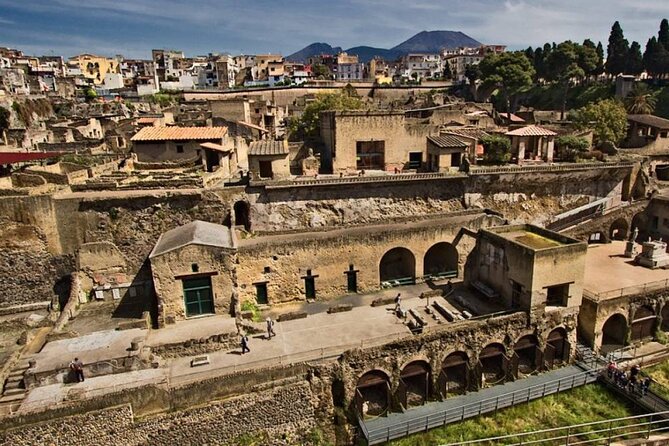
If you’ve ever tried to understand Pompeii from photos, you already know the problem: it’s big. Real big. Pompeii is an open-air site with streets, buildings, and countless details, so the risk is simple—seeing a lot but remembering little.
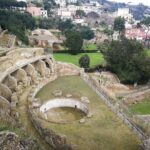
This tour solves that by pairing Pompeii and Herculaneum in one trip. Pompeii gives you the scale: the city layout, the public spaces, the everyday spaces that still feel human when you stand inside them. Herculaneum then changes the mood. It’s smaller, and the preservation is so good that you start thinking less about ruins as a concept and more about real rooms, real materials, real life that stopped suddenly in 79 AD.
That contrast is one of the best reasons to do both cities. You end up with a more complete picture than if you only do Pompeii or only do Herculaneum. And you do it with a plan, not a free-for-all.
You can also read our reviews of more tours and experiences in Sorrento.
- Sorrento Farm and Food Experience including Olive Oil, Limoncello, Wine tasting
★ 5.0 · 2,524 reviews


Getting there: Sorrento or Naples, plus air-conditioning and big views
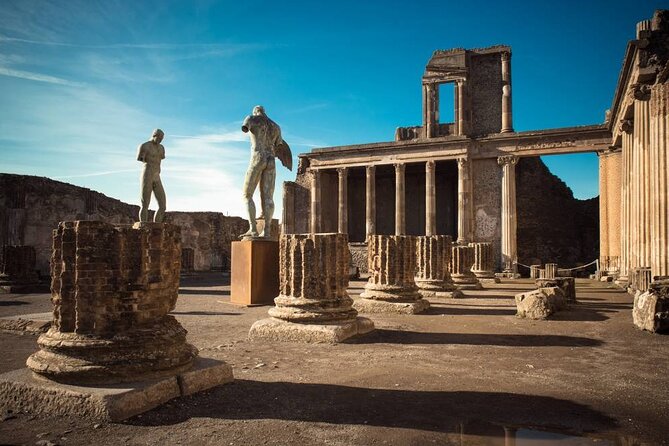
The meeting is set early, with a 8:00 am start, and the tour ends back at the meeting point. That matters in this part of Italy because travel time can steal your attention. Starting early helps you get into the archaeology while the day is still fresh.
On the road, you ride in a minivan for up to 8 people, and for larger groups (9–19), the tour uses a minibus. Either way, the key is comfort: the ride is air-conditioned, and the route includes views over the Bay of Naples and Mount Vesuvius. Even if the real work is the ruins, those first looks at Vesuvius set the emotional context fast.
It’s also a practical bonus that the tour is set up near public transportation. That gives you flexibility if you’re staying in a place with easy transit connections.
First stop: Pompeii’s 3-hour walking tour (what you should expect to see)
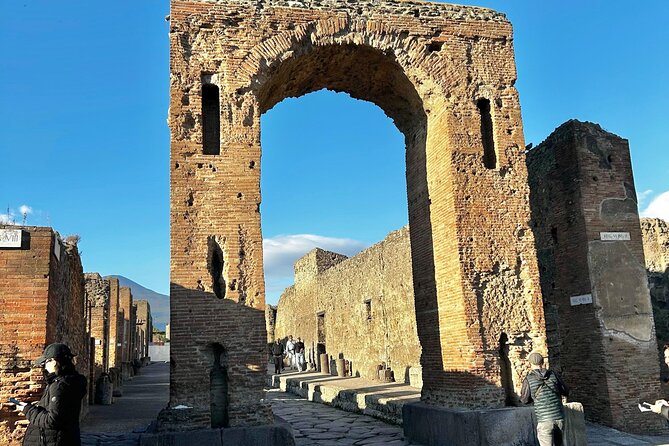
Pompeii is the headline for a reason, but a 3-hour walk can feel short until you realize how focused the time is. You’re not meant to cover every corner. You’re meant to get your bearings fast and understand how the city worked.
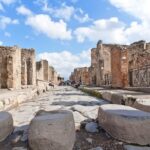
During this portion of the day, the tour includes a guided walking tour for about 3 hours. That’s the sweet spot for learning without burning out. A good guide helps you read what you’re seeing: where streets would have carried carts and footsteps, how buildings were arranged, and how daily life played out block by block.
Pompeii is also special because of what happened after the eruption. The city was buried in volcanic ash and remained hidden until excavations began in the 18th century, with the site reopened to the public over time—one reference point you’ll likely hear is that it was buried until 1748. When you understand that timeline, you stop treating the ruins like a random set of stone walls and start seeing them as something that was preserved, then uncovered.
A realistic drawback here
Your time in Pompeii is fixed. If you’re the type who wants to linger in one specific area for an hour, you may feel rushed. The tradeoff is that you get a guided, higher-meaning visit instead of a long day of wandering.
Second stop: Herculaneum’s preserved villas and 500°C volcanic flow clues
Herculaneum has a different vibe. Pompeii can feel grand and loud, even though it’s silent now. Herculaneum feels more intimate—almost like the city paused mid-routine.
This tour keeps Herculaneum to about 2 hours with a walking focus. That shorter window can actually help, because the site is packed with detail. You’ll likely spend your time looking at how people lived in more affluent homes, and the reason Herculaneum gets so much attention is preservation quality.
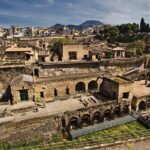
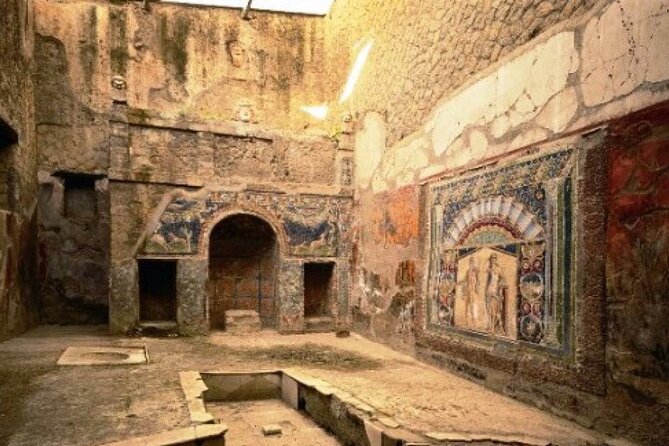
What makes it so striking is that you can see patrician villas and fine building work, plus elements that survived in a way you wouldn’t expect. The description you’ll want to keep in mind is the strength of the volcanic conditions: the eruption involved destructive flows around 500°C, yet Herculaneum preserved evidence of everyday life—down to things like wood and ropes—and you can still see those details on site.
- Sorrento Farm and Food Experience including Olive Oil, Limoncello, Wine tasting
★ 5.0 · 2,524 reviews



Why those details matter (not just what you see)
When a site preserves materials closely enough to make you think about how people touched and used them, history becomes practical. You start picturing furniture placement, household layout, and the reality that Roman life wasn’t all forums and marble columns. In Herculaneum, it’s easier to connect the physical evidence to real routines.
And since the tour includes guidance, you’re not left figuring it out alone.
Skip-the-line energy: how the day stays efficient
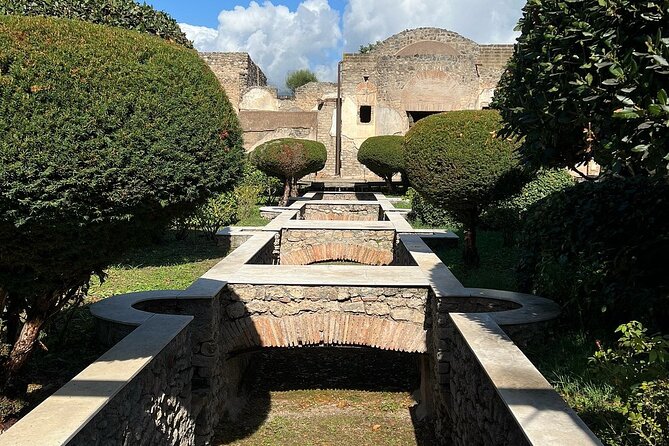
One of the most valuable parts of a tour like this is the time management. Pompeii and Herculaneum are popular, and waiting can eat the day. This experience is built to help you start exploring without getting stuck in long delays.
You’ll also appreciate that the transport and guide plan the day so you’re not coordinating your own timing between two major sites. Two locations means you need a schedule. Otherwise, one slow moment can turn the whole day into chaos.
Also: you get a mobile ticket, which typically makes entry logistics smoother than printed passes—especially on days when you’re moving quickly between sites.
Price and value: what you’re really paying for
The price is $188.90 per person, and it’s typically booked about 49 days in advance. That date pattern is often a sign that people want dependable planning for peak season.
Here’s the key value equation:
- You pay for guided time at Pompeii (3 hours) and Herculaneum (2 hours), plus the drive and guide coordination.
- You’re also paying for the reality of getting between Sorrento or Naples with air-conditioned transportation and driver support.
- Major entrance fees are extra. You’ll budget €19 for Pompeii and €16 for Herculaneum.
So the total spend isn’t just the $188.90—it’s the add-on tickets too. But in return, you get structure: a plan, a guide to explain what matters, and a schedule that fits everything into an 8-hour day.
Where this can be a particularly good deal is for people who don’t want to spend their whole day working out routes, timing, and priorities. If you show up to Pompeii and Herculaneum on your own, you can spend lots of time deciding what to do next. Here, the day is already set.
Group size and guide approach: small enough to feel personal
This tour has a maximum size capped at 19 travelers, but the setup depends on your group count:
- Up to 8 people: minivan with English-speaking driver and the small-group walking format
- 9–19 people: minibus with an English-speaking guide for the excursion
Either way, the goal is the same: a group small enough that you can actually hear and follow the guide while walking. Big tour buses exist, but this one is built to keep your attention from slipping.
And the human factor counts. In the feedback tied to this provider, guides named Serena and Chiara come up as people who made the day feel smooth and special. That’s the kind of difference you feel when you’re walking through ruins—having someone explain what you’re seeing and keep the day moving.
What to bring (so you don’t waste your limited time)
Because the tour is built on walking time at both sites, your comfort setup matters. The day runs about 8 hours, with major portions on foot.
I recommend you plan for:
- Comfortable shoes for uneven stone and outdoor surfaces
- Sun protection, because these are open-air sites
- A small bag for water and essentials (food and drinks aren’t included)
If you like photos, bring a power bank too. Your phone battery often disappears faster than you expect when you’re trying to capture details you don’t want to forget.
Who should book this Pompeii and Herculaneum day trip?
This is a strong fit if you want:
- A guided visit to both sites without trying to manage logistics yourself
- A single-day plan that still gives meaningful time at two major archaeology stops
- English-speaking help so the ruins translate into something you can remember
It may be less ideal if you:
- Hate walking and want a mostly seated experience
- Prefer spending unplanned extra hours in one single area
Also, the tour notes that most people can participate, which suggests the format is designed for typical day-trip mobility. If you have a specific limitation, it’s worth checking details before booking.
Should you book this Pompeii and Herculaneum tour?
I’d book it if you’re aiming for a smart one-day hit: Pompeii for scale, Herculaneum for intimate preservation, and an English guide to connect the dots. The price lands in the middle of what you’ll usually see for guided transfers plus walking tours from Sorrento or Naples, and the add-on ticket fees are clearly stated, so you won’t get surprised later.
This is especially worth it if you’re the type who wants to feel confident about what you’re seeing. The schedule is tight, yes, but the structure is what makes it work.
If you’re undecided, here’s your quick decision rule: if you want a guided plan and value your time, book. If you want maximum freedom to roam slowly and linger in your own corners for hours, you may prefer doing it independently.
FAQ
FAQ
How long is the Pompeii and Herculaneum tour?
The tour runs for approximately 8 hours.
What time does the tour start?
The start time is 8:00 am.
Are the Pompeii and Herculaneum entrance fees included?
No. Pompeii entrance is €19 per person, and Herculaneum entrance is €16 per person.
What group size is used for the transport?
For up to 8 people, the tour uses a minivan. For groups of 9–19 people, it uses a minibus.
Is the tour guided?
Yes. There are guided walking tours: about 3 hours at Pompeii and about 2 hours at Herculaneum, led by an English-speaking guide.
Do children pay for admission?
Children under 18 enter for free with a valid form of ID.
Do you get a refund if your plans change?
Yes. You can cancel up to 24 hours in advance for a full refund.
You Might Also Enjoy



More Tour Reviews in Sorrento
- Sorrento Farm and Food Experience including Olive Oil, Limoncello, Wine tasting
★ 5.0 · 2,524 reviews