REVIEW · POSITANO
Positano: Old Town Walking Tour with Archaeologist Guide
Book on GetYourGuide →Operated by Tour Guide Naples SRL · Bookable on GetYourGuide
Positano history is hiding under your feet. This 2-hour old town and downtown walking tour pairs amazing coastal views with a real archaeological visit to an underground Roman villa covered in frescoes. Two things I really like: you get the “Positano postcard” moments without wasting time, and your guide (including names like Lucianna and Emilia from past groups) explains what you’re seeing in plain, human terms.
The one drawback to plan for is simple: you’ll walk a lot, and getting down toward the beach means stairs. The route also involves uphill and narrow lanes, so comfortable shoes are not optional.
In This Review
- Key things to know before you go
- Why This Positano Walk Works: Two Towns, One Clear Route
- Start Point at Art Hotel / Hotel Pasitea: Setting the Tone Early
- Old Town Positano: Narrow Lanes, Medieval Anchors, and Panoramic Stairs
- Beach Views and Fornillo: Where Locals Go (and Where You Learn the Difference)
- Downtown Positano Shops: Ceramics, Sandals, Shoemakers, and Local Artists
- Church of Santa Maria Assunta: Why This Abbey Matters
- The Underground Roman Villa: Frescoes, Archaeologist Guidance, and Real Scale
- Pace, Price, and Logistics: Is It Good Value?
- Who This Tour Best Suits
- Should You Book This Positano Old Town Walk?
- FAQ
- FAQ
- How long is the Positano Old Town Walking Tour?
- Where do I meet the guide?
- Where does the tour end?
- What is included in the price?
- What languages are the tours offered in?
- Is the tour wheelchair accessible or stroller friendly?
- Does the tour run in bad weather?
- Who can the tour accommodate regarding weight and age?
Key things to know before you go
- Small group, max 10 people: easier conversation and a calmer pace in tight streets
- Underground Roman Villa visit: frescoes plus an archaeologist guide, not just casual sightseeing
- 13th-century fort photo stop: a medieval anchor point while you move through older streets
- Fornillo and Spiaggia Maggiore area: beach time with local context, not only the main shoreline
- Craft-street stroll in Downtown Positano: ceramics, sandals, shoemakers, and local artist galleries
Why This Positano Walk Works: Two Towns, One Clear Route
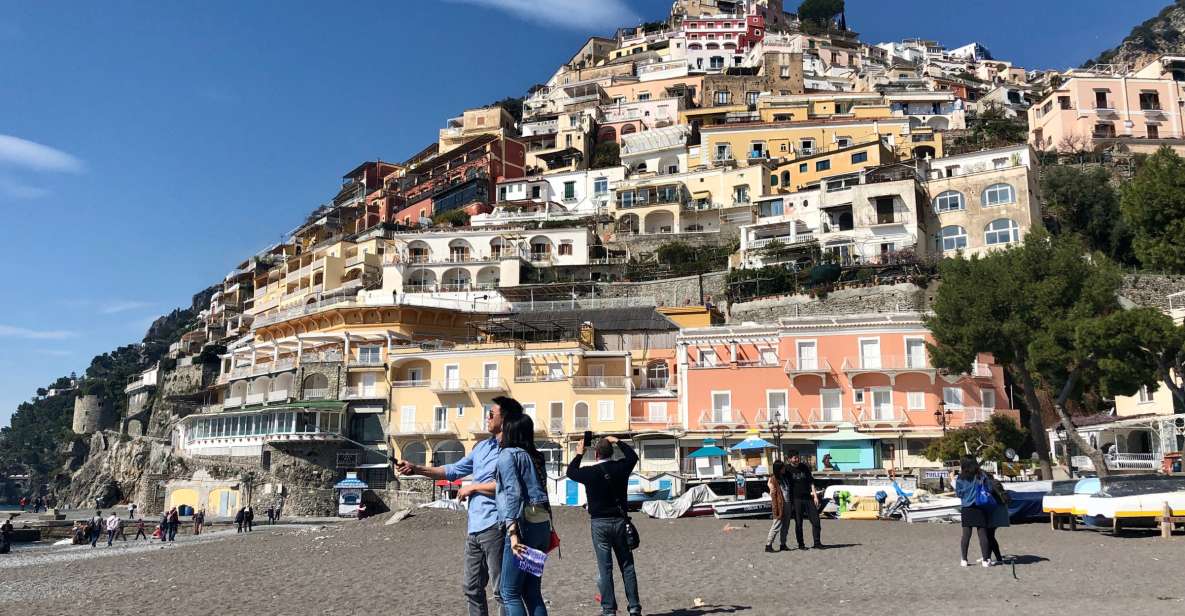
Positano can feel like you’re either sprinting for a view or stuck in a crowd. This tour avoids that by giving you a logical loop through Old Town and Downtown Positano. Instead of wandering and hoping you stumble on the good bits, you follow a local guide through the lanes, staircases, and key viewpoints.
I also like the balance of the experience. You start with streets and scenery, then shift to downtown shopping streets, and finally end at a proper “wow” stop: an underground Roman villa with frescoes. In about two hours, you get the coast, the town fabric, and the buried layer of history that Positano doesn’t shout about at street level.
And yes, it still feels like Positano—sun on your skin, views changing with each bend, and steps underfoot.
You can also read our reviews of more walking tours in Positano



Start Point at Art Hotel / Hotel Pasitea: Setting the Tone Early
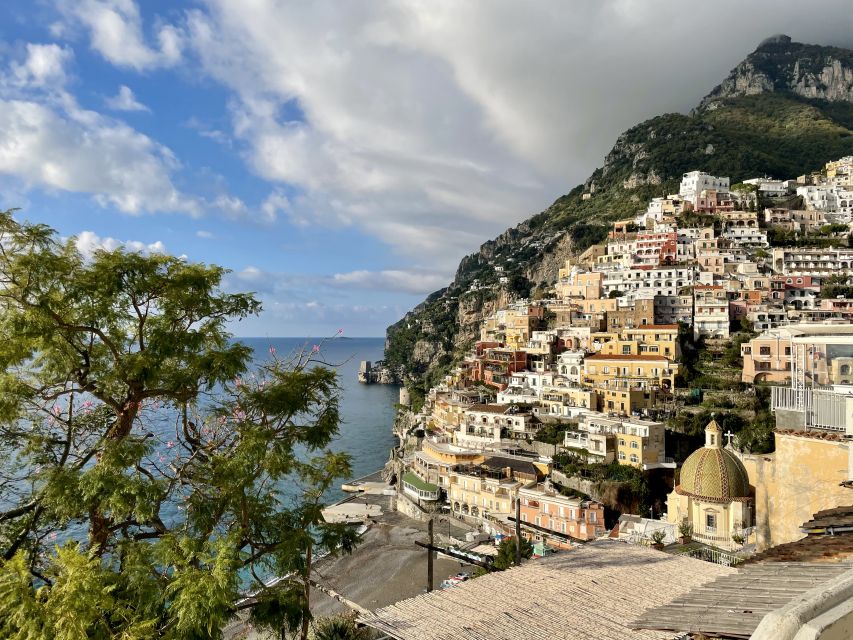
You meet your guide at the main entrance of Art Hotel / Hotel Pasitea. That matters because it’s a natural staging point for moving out of the busiest areas quickly and starting the walk with momentum.
From the start, the tour is designed to help you leave the heavier foot-traffic behind. You’re not just following a route on a map; you’re following a local through the “how people actually move” network: narrow paths, connecting stairways, and short cuts. If you’ve ever tried to navigate Positano alone, you’ll appreciate that the guide handles the turns while you focus on where the next view opens up.
Practical note: you should expect a mix of sun and shade as you move. Bring sunscreen and something light to drink along the way, especially if your tour time lands in warmer hours.
Old Town Positano: Narrow Lanes, Medieval Anchors, and Panoramic Stairs
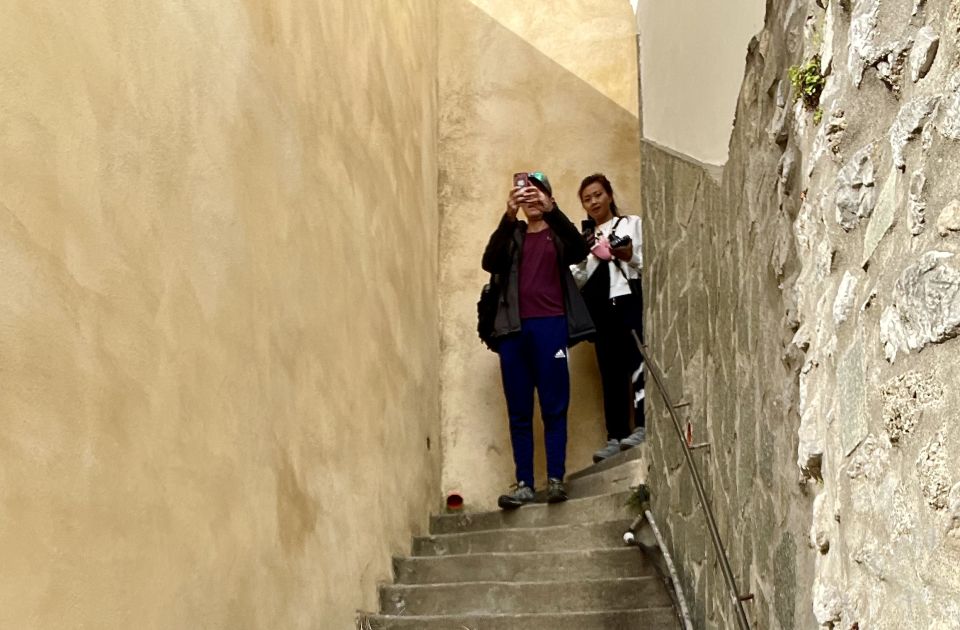
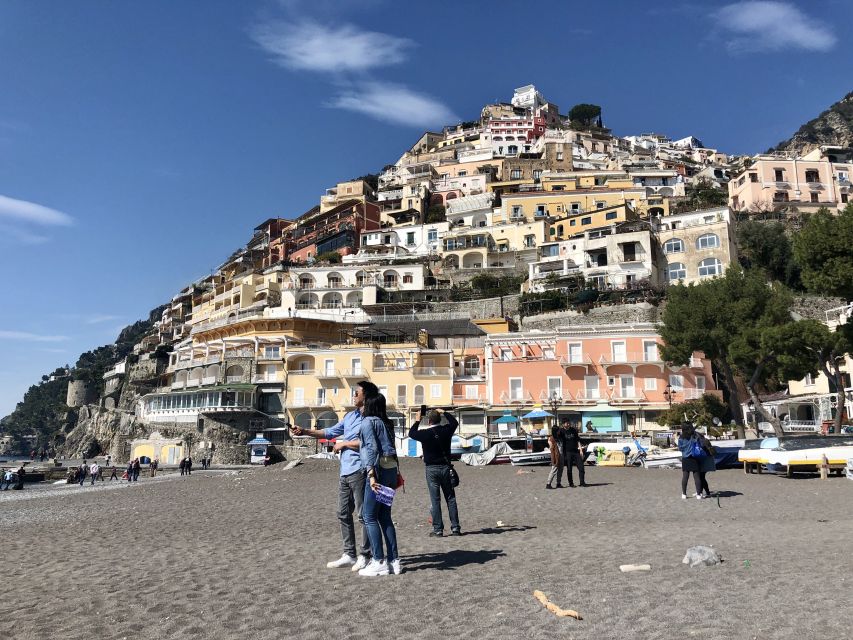
Old Town Positano is the part that makes you slow down even when you’re tired. The streets are tight, the buildings feel close, and the views keep rewarding you for climbing a little more. Your guide helps connect those impressions to actual places and eras.
One of the stops you’ll pass is a 13th-century fort from the medieval age. It’s the kind of detail that’s easy to miss from street level if you’re just snapping photos. With a guide, it becomes more than a wall: you start to see why the fort mattered and how it fits into Positano’s older defensive needs.
The route also includes narrow downhill paths and panoramic staircases. Expect steps, and expect that the stairs are part of the experience, not an inconvenience you can fully avoid. I recommend planning your energy: go into the walk with the mindset that you’re doing it for views and access, not to “finish fast.”
Beach Views and Fornillo: Where Locals Go (and Where You Learn the Difference)
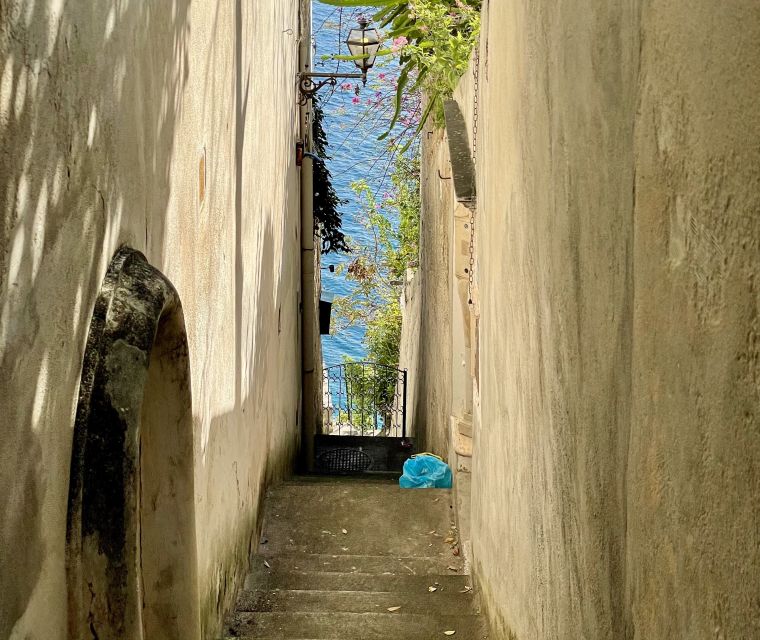
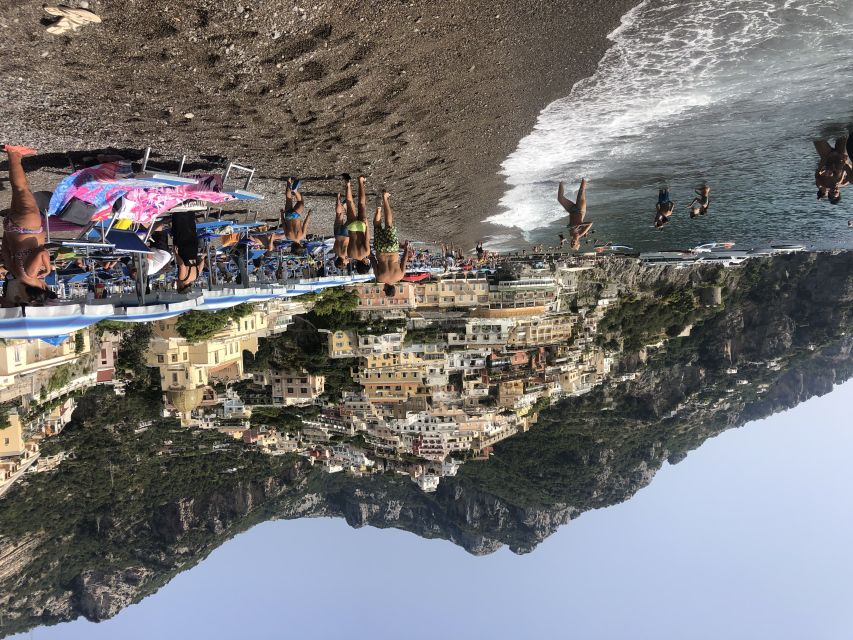
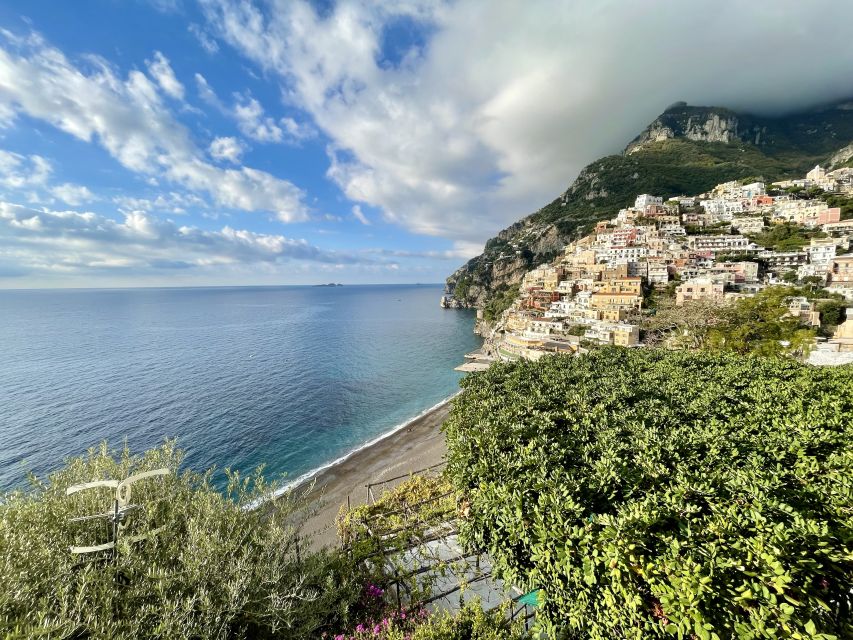
A big reason people book Positano tours is the beaches, but the coast is more than one shoreline. This walk takes you toward the central beach area for dramatic views, then down to Fornillo beach, where the locals go to sunbathe.
That locals-vs-main-beach context is what makes this stop valuable. It’s not just about where the sand is; it’s about how the town uses its coastline. When your guide points out the differences, you’ll understand why the viewpoints feel different even when the water looks similar.
You’ll also spend time near Spiaggia Maggiore, Positano’s main beach area. The walk down involves stairs, so don’t schedule anything tight after this unless you’re confident you can move comfortably on uneven steps.
Small practical tip: if you want great photos, plan on pauses mid-route. Positano rewards patience. The best angles often happen right when the guide stops to point out a view or a street turn.
Downtown Positano Shops: Ceramics, Sandals, Shoemakers, and Local Artists
After the beach and viewpoints, the tour shifts to Downtown Positano. This is where the town turns into craft and commerce, and it’s also where you’ll see how “shopping streets” actually work there.
Your guide leads you uphill toward a street area with a variety of ceramic shops, sandal makers, and shoemakers. This is useful even if you don’t plan to buy anything. Watching local makers at work (or seeing the displays and materials) gives you a more grounded sense of Positano’s economy than souvenir racks alone.
You’ll also pass galleries featuring work by local artists. Again, the value isn’t only the art—it’s how the pieces connect to the town. Positano has always mixed tourism with local craftsmanship. On this walk, you see that in motion.
I suggest you bring a “browse budget” mindset. This stop can tempt you, but the best strategy is to look closely, ask questions if you can, and only buy what genuinely fits your taste. You’ll have plenty of opportunities to slow down, because the streets are narrow and the route keeps moving at a walking pace.
You can also read our reviews of more guided tours in Positano





Church of Santa Maria Assunta: Why This Abbey Matters
At the right point in the walk, you’ll approach the Church of Santa Maria Assunta, originally the abbey of Positano’s 10th-century Benedictine monastery.
This is one of those places where a quick explanation turns the experience from pretty to meaningful. You’re not just looking at a church facade. You’re seeing a link in time: monastic roots, then later layers, all inside a town built upward and inward.
Even if churches aren’t your main interest, don’t skip this. Positano’s identity is tied to these institutions, and your guide helps you place the structure into the larger story of the town’s development.
The Underground Roman Villa: Frescoes, Archaeologist Guidance, and Real Scale
Here’s the part that makes the tour feel worth it even if you’ve seen plenty of coastal towns already.
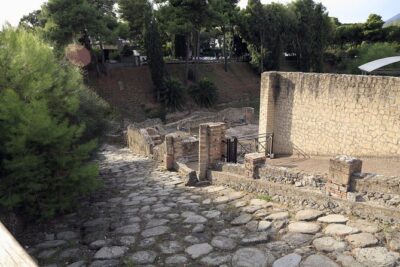
You’ll visit an underground Roman villa that has been recently discovered and is open to the public. The ticket includes entry, and the tour includes an archaeological guide, so you’re not just looking at paintings—you’re learning how the site fits into Roman life and what you’re seeing in the frescoes.
The frescoes are described as wonderful, and the underground setting changes how you experience them. Light behaves differently, surfaces feel cooler and more sheltered, and you start to notice details you’d likely miss if the art were simply on a sunlit wall.
What I like most about having an archaeologist involved is how it adds structure to your looking. You’ll understand what to pay attention to and how to interpret the imagery rather than treating it like decorative background. In a town full of beauty, that kind of guidance is gold.
Pace, Price, and Logistics: Is It Good Value?
Let’s talk value, not just price. At $112.15 per person for a 2-hour small-group tour, you’re paying for three combined ingredients:
- A licensed local guide
- Roman villa entrance
- An archaeological guide for the Roman site
If you’ve ever tried to piece that together yourself, you’ll know how quickly time and stress add up. Local knowledge saves you from guessing where to go, and the villa ticket plus archaeology guidance means you’re not just buying a view—you’re buying access and interpretation.
As for pace: this tour is active. It’s not a sit-and-stroll. You’ll do significant walking, including stairs down toward the beach. If you’re the type who gets sore easily, plan your day so you’re not stacking heavy activities afterward. Wear grippy shoes and be ready for narrow lanes.
Also, it’s explicitly not suitable for wheelchair users, and there’s a weight limit listed at 331 lbs (150 kg). Baby strollers are not allowed, either. If any of these matter to you, it’s better to choose a different format that matches your mobility needs.
Group size is limited to 10 participants, and that’s a big deal here. Positano’s streets are tight. Smaller groups make the walk feel smoother and give your guide a chance to keep everyone together without rushing.
Who This Tour Best Suits
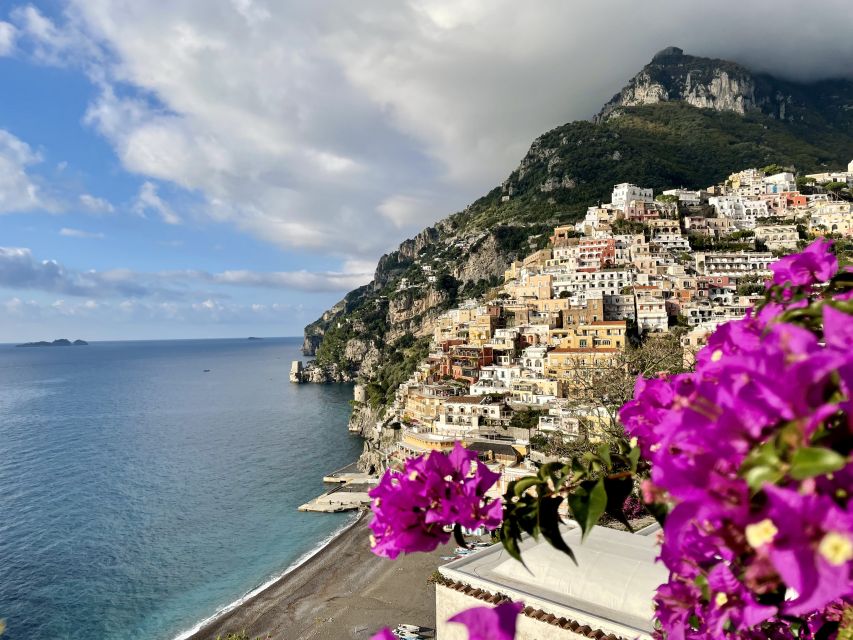
This is a great fit if you want an efficient, guided way to see multiple sides of Positano in one go: Old Town streets, beach viewpoints, downtown craft streets, and then a serious archaeological stop underground.
You’ll especially enjoy it if:
- You like learning while you walk, not afterward in a classroom
- You want someone to point out what matters on stairways, corners, and church fronts
- You’re curious about Roman remains and the meaning behind frescoes
It may not be the best match if:
- You need step-free routes (stairs are part of the walk)
- You’re traveling with very young kids in strollers
- You prefer long, relaxed beach lounging without much walking
Should You Book This Positano Old Town Walk?
I’d book it if your goal is to get more than just the usual “beach plus photos.” The underground Roman villa visit, with an archaeologist guide, is the rare moment where Positano’s beauty connects to something tangible and interpretive. Add in the small group size and a route that makes sense across Old Town and Downtown, and the price starts to feel logical rather than inflated.
If you’re comfortable with stairs and want a guided plan that saves you time and confusion, this tour is one of the more practical ways to experience Positano deeply in only two hours.
FAQ
FAQ
How long is the Positano Old Town Walking Tour?
The tour lasts about 2 hours.
Where do I meet the guide?
Meet your guide in front of the main entrance of Art Hotel / Hotel Pasitea.
Where does the tour end?
The activity ends at Piazza dei Mulini.
What is included in the price?
You get a local licensed guide, a Roman villa entrance ticket, and an archaeologist/archaeological guide.
What languages are the tours offered in?
The live guide is available in English, Italian, German, and Spanish.
Is the tour wheelchair accessible or stroller friendly?
No. It is not suitable for wheelchair users, and baby strollers are not allowed.
Does the tour run in bad weather?
Yes. The tour takes place rain or shine.
Who can the tour accommodate regarding weight and age?
It is not suitable for people over 331 lbs (150 kg) and not suitable for people over 95 years.