REVIEW · RAVELLO
Sorrento and Amalfi coast self audio guide tour
Book on GetYourGuide →Operated by ITGUIDES · Bookable on GetYourGuide
The Amalfi Coast works best when you go at your pace, and this smartphone audio tour is built for that. I like the way it bundles Sorrento, Amalfi, Positano, and Ravello into one simple experience, and I also like the practical setup: you download ahead and then follow 26 geolocated points of interest as you walk. One thing to consider: it’s not a live guide, so if you want step-by-step turn-by-turn coaching, you may find some parts feel a bit light.
You’ll spend your time hearing short descriptions tied to key spots, with the feeling of a guided route—only without the pressure of a group schedule. There’s also a wide language choice (Italian, English, German, Spanish, French), which helps if you’re traveling as a pair with different preferences. Just remember you’re relying on a charged phone and basic smartphone comfort to keep everything running smoothly.
In This Review
- Key highlights worth knowing
- How a self-audio guide really changes the day
- The four towns route: what the audio is trying to do
- Sorrento: citrus, gardens, and Torquato Tasso
- Amalfi: setting your expectations for history and town feel
- Positano: pacing yourself on a steep, viewpoint-first coast
- Ravello and the villa reality check (tickets may cost extra)
- Languages and how to actually use the app day-of
- Price and value: why $4.70 can make sense
- Practical tips so the route feels effortless
- Should you book this Sorrento and Amalfi Coast audio tour?
- FAQ
- How long is the tour available?
- Is there a meeting point?
- What’s included with the tour?
- Which languages are available?
- Do I need to buy tickets for villas?
- Does the guide work without signal?
- What should I bring?
- Can I cancel after booking?
Key highlights worth knowing

- 26 geolocated stops: The audio is tied to specific points, so you don’t just listen in the dark.
- 26 audio descriptions across four towns: enough structure to guide your day without locking you in.
- Works anytime for 365 days: download once and use it again on a return visit.
- Five language options: Italian, English, German, Spanish, French.
- No meeting point: self-guided from wherever you start in Sorrento or along the coast.
- Tickets not included: some villa stops may require you to buy entry yourself.
How a self-audio guide really changes the day

This tour is refreshingly low-tech in the best way. You install the app, download the audio before you go, then use your phone like a pocket guide. Since there’s no meeting point, you’re free to start when your energy and ferry/bus timing line up.
For your planning, that matters more than you might think. On the Amalfi Coast, crowds, weather, and transit delays can make a tight-group schedule feel stressful. With an audio route, you can stretch the pace—linger over a view, duck into shade, or pause for photos—without having to keep up with anyone.
The other big advantage is cost-to-coverage. At $4.70 per person, you’re paying for audio descriptions and geolocation points, not for a premium in-person escort. That can be great value if you’re the type who enjoys learning while you wander, but you don’t need someone physically leading you from stop to stop.
A fair caution: with self-guides, you’re in charge of navigation. The route design can feel perfect if your walking matches the geolocated points. If your day goes off-script (alternate streets, long stops, bus detours), you might find yourself skipping ahead or missing a point or two.
You can also read our reviews of more tours and experiences in Ravello.



The four towns route: what the audio is trying to do

The tour focuses on the Amalfi Coast’s four “pearls”: Sorrento, Amalfi, Positano, and Ravello. The concept is simple: you’ll move through a chain of viewpoints, old-town streets, and major highlights, with short narration tied to where you are.
The tone is also clear. It’s not just postcard descriptions. The guide mixes city identity, literary nods, and the feeling of place. In Sorrento, it leans into citrus and culture; on the coast towns, it leans into long timelines and the kind of beauty that has attracted famous visitors for generations.
And because the guide is active for 365 days, you’re not stuck feeling like you have to “finish” everything in one trip. You can use it the first day, then come back later for the spots you missed.
Sorrento: citrus, gardens, and Torquato Tasso

Sorrento is your entry point, and the audio sets the mood right away. You’ll hear it described as the city of oranges and lemons, with gardens and big hotels overlooking the Gulf of Naples. That framing is useful because it helps you understand what you’re looking at while you walk: the coast views aren’t random scenery—they connect to why Sorrento became a magnet for travelers.
One of the most specific historical ideas you’ll pick up is the birth of Torquato Tasso here. That detail matters because it links Sorrento to the romantic travel story the coast is famous for: people arriving for more than sun and views, and actually wanting cultural context.
If you enjoy literary breadcrumbs, you’ll also notice the audio brings in references like Goethe’s line about lemons and mentions the broader “Divine Coast” reputation. It even points out that the area became a World Heritage Site in 1997. That’s helpful when you want to look beyond the obvious photos and understand why the whole coastline is treated as something worth protecting.
Practical note: one downside I’d plan for is that some people want even more Sorrento-specific stops. If you’re hoping for a long list of hyper-targeted viewpoints and micro-areas in Sorrento, you might feel the coverage is “okay” rather than exhaustive. The flip side is that the route still gives you a guided backbone without turning your day into a checklist.
Amalfi: setting your expectations for history and town feel
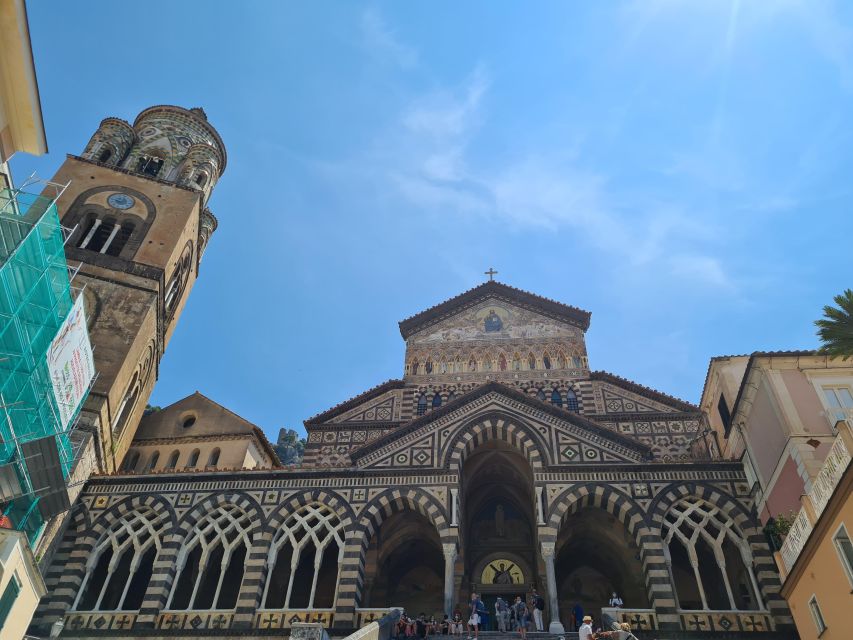
When the audio moves into Amalfi, it shifts from citrus culture to the larger story of the coast towns themselves. The guide positions Amalfi (along with Ravello and Positano) as one of the three pearls, leaning on the sense of thousand-year history and the long-standing pull of the shoreline.
Even if you don’t know anything about Amalfi going in, this approach works. It tells you what kind of moments to listen for: old-town atmosphere, the continuity of settlement, and the ongoing draw of the views.
Here’s how to use that while walking: when the narration starts, don’t treat it like background noise. Pause for a minute, look around, and match what you’re hearing to the street scene in front of you. On the coast, your best photos often come from the subtle “look angles” where the town opens toward the sea. The audio’s job is to help you notice those angles faster.
Since the tour provides geolocated points, your best strategy is to let the phone guide your timing. If a point doesn’t feel like the exact spot you imagined, don’t fight it—just continue to the next audio location. Self-guides work best when you stay flexible.
Positano: pacing yourself on a steep, viewpoint-first coast

Positano is the next audio chapter, and the guide keeps the tone consistent: town identity, coastal beauty, and the kind of scenes that have drawn famous names over time. The narration frames the area as a place where visitors come to contemplate the coastline—not just pass through it.
What that means for you on the ground: you’ll want to plan for a walking day where viewpoints win over speed. Streets can feel steep and stop-and-start. With this setup, you don’t need to rush between major sights. You can take the audio at human speed—listen, glance, breathe, and then move on when you’re ready.
Also, because the guide is built for smartphone use with geolocated points, you’ll get the most from it when your movement is steady and your phone screen doesn’t die mid-walk. Bring a charged phone and treat battery like a key accessory, not an afterthought.
One more practical thought: if you’re traveling with someone who expects more “talking while walking” guidance, you may prefer a more hands-on tour. The audio descriptions guide you, but they may not always provide continuous commentary during every movement between stops. That can be fine if you like a calmer style; it can feel boring if you want constant narration.





Ravello and the villa reality check (tickets may cost extra)

The last town in the four pearls is Ravello, and the audio keeps the emphasis on long tradition and beauty. This is also where your ticket expectations matter.
The guide notes that entry tickets are not included when needed—examples given include Villa Rufolo and Villa Cimbrone. So if your Ravello plan is “audio only,” you’ll still get plenty of town context. But if your plan is “do the famous villas,” you should budget for the entry fees separately.
How to handle this smartly: decide before you go whether you want your day to center on paid attractions. If yes, you can treat the audio as your way to choose the order and match it with what you’re seeing. If not, you can still use Ravello’s history and atmosphere as your focus, without feeling like you’re missing something because you skipped tickets.
This is also one of the most practical value points about the tour: for a low price, you get the interpretive layer. You’re not forced into purchasing multiple attractions at once just to justify the tour. You pick what you want to spend on.
Languages and how to actually use the app day-of

The tour offers audio in Italian, English, German, Spanish, and French. That’s more than convenience. In practice, it helps your brain stay engaged. If you’re not constantly translating, you’ll enjoy the story bits more—like the cultural references and the World Heritage context.
Before you start walking, make sure:
- Your app is installed and the audio is downloaded (so you’re not battling signal).
- Your phone battery is healthy.
- You’re comfortable tapping and following geolocated points without getting flustered.
And yes, smartphone familiarity is recommended. If your phone setup is finicky—low battery habits, unstable GPS, or you hate screen use while walking—this can turn into extra friction.
One more detail I’d factor into expectations: some people want the narration to feel more animated while moving between stops. If your ideal guide is constant commentary and direction, you might feel the audio leans more toward description than guidance. That doesn’t mean it’s unusable. It just means you should know what kind of experience this is: structured listening, not a live coaching voice.
Price and value: why $4.70 can make sense

At $4.70 per person, this is priced like a budget-friendly way to add meaning to your coast day. You’re not paying for a guide’s time, vehicle logistics, or timed ticket bundling. You’re paying for:
- 26 audio descriptions
- 26 geolocated point markers
- permanent access for 365 days
- multilingual narration
- a clear structure across four towns
That’s a solid deal if you already plan to explore on foot and you don’t need someone to organize the whole day. It’s also a good fit if you’re comparing against pricier day tours. The audio becomes your low-cost “interpretation layer,” while you still control transport and pace.
The trade-off is simple: you’re not paying for expert improvisation in real time. If you have questions about what you’re seeing right now, or you want human answers and adjustments, an audio guide can’t do that. It gives you the story; it doesn’t replace conversation.
Practical tips so the route feels effortless

To make this work well, keep your day simple and your tech ready.
Do this:
- Wear comfortable shoes. The coast can be unforgiving even when the route is “short.”
- Keep your phone charged and accessible. If you lose battery, you lose the guide.
- Download ahead so you’re not stuck with connectivity problems.
- Use the geolocated points as anchors. If you wander, you’ll still find your way back to the next listening moment.
Plan for this possible snag:
- Some descriptions may feel broad. If you’re the type who wants ultra-specific “this exact corner, this exact view,” you may want to pair the audio with basic maps or a lightweight town guide.
Should you book this Sorrento and Amalfi Coast audio tour?
Book it if you want:
- A self-guided way to enjoy Sorrento, Amalfi, Positano, and Ravello
- A simple audio layer that runs on your phone for a long time
- Multiple language options
- A low-cost alternative to pricier guided excursions
Skip it or think twice if:
- You want constant turn-by-turn human-style directions
- You’re likely to rely on your phone for navigation but don’t like using it on the move
- You expect the audio to cover every major sub-spot in Sorrento in detail
My take: this is a good value choice when you like learning while you walk and you keep your expectations matched to what an audio guide can do. If you treat it as a set of listening anchors rather than a full tour escort, you’ll get the most out of the coast.
FAQ
How long is the tour available?
It’s valid for 365 days, meaning you can install, download, and use the audio during that period.
Is there a meeting point?
No. This is self-guided, so there is no meeting point.
What’s included with the tour?
You get 26 audio descriptions, 26 geolocated points of interest, and access through an app you can install and download before starting.
Which languages are available?
The audio is available in Italian, English, German, Spanish, and French.
Do I need to buy tickets for villas?
Entry tickets are not included when required. Villa examples mentioned are Villa Rufolo and Villa Cimbrone.
Does the guide work without signal?
The information says you can install and download before your visit, which helps you use it during your day.
What should I bring?
Bring comfortable shoes and a charged smartphone.
Can I cancel after booking?
You can cancel up to 24 hours in advance for a full refund.