REVIEW · SORRENTO
Piano di Sorrento Walking Tour with a Local
Book on Viator →Operated by Tour Guide Naples · Bookable on Viator
Lemons, museums, and views in one walk. This Piano di Sorrento walk packs in lemon-garden tastings and a standout homemade cannolo filled with sheep ricotta, all in about two hours. You also get a guided route that feels like you’re shown the town, not just herded through it.
I love that the food stops are tied to place: you taste what grows nearby, then you move on to historic buildings and viewpoints. One drawback to plan around is simple but important: make sure you’re at the right town. If you end up in Sorrento proper instead of Piano di Sorrento, it can throw off the whole morning.
In This Review
- Key highlights worth showing up for
- Price and time: does this walk feel worth $80.44?
- Meeting at Corso Italia 216: start smart to avoid a bad mix-up
- Villa Fondi: public gardens and an archaeological museum you’ll actually use
- Villa Lauro: a quick hit of neoclassical beauty
- Piazza della Repubblica: old market streets and local rhythms
- Via Ponte di Mortora: walking an older route through a tufa valley
- The lemon garden stop: why tasting here feels different
- Homemade cannolo with sheep ricotta: the dessert moment to plan around
- Fruit market time: gelato and local fruit, not tourist filler
- Orazio Bridge and the Lavinola Valley: a viewpoint that rewards the walk
- Old fisherman village of Piano and historic shipyards
- Who this tour is best for (and who might want something else)
- FAQ
- FAQ
- What’s the meeting point for the Piano di Sorrento walking tour?
- How long is the tour?
- What time does the tour start?
- Is the tour offered in English?
- What’s included in the ticket price?
- Is this a private tour?
- What’s the cancellation policy?
- Should you book this Piano di Sorrento walking tour with a local?
Key highlights worth showing up for
- Lemon garden tastings you can actually connect to what you see outside
- Sheep-ricotta cannolo and a real local dessert break
- Villa Fondi museum time with archaeological finds and multimedia reconstructions
- Market-area walking around the old fruit-and-fish trading zone
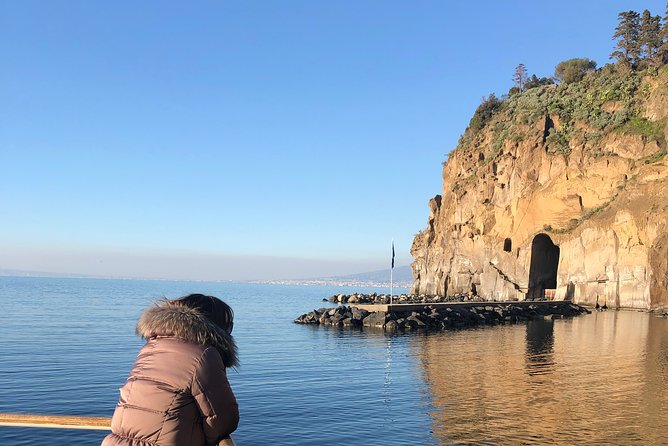
- Orazio Bridge viewpoint for a photo-friendly angle over the Lavinola Valley
- Neoclassical Villa Lauro and the older paths that stitch the town together
Price and time: does this walk feel worth $80.44?

For $80.44 per person, you’re buying a lot more than a casual stroll. You’re paying for a local guide to shape the route, plus included access to the Villa Fondi archaeological museum and time for food stops that are described as homemade and tied to local production.
Two hours is also a practical length. It’s long enough to feel like you left the main tourist loop, but short enough that you can still eat, shop, or catch transport afterward without losing your whole day. If your plan is a fast, meaningful half-morning, this fits that style well.
You can also read our reviews of more walking tours in Sorrento



Meeting at Corso Italia 216: start smart to avoid a bad mix-up
The tour meets at Corso Italia, 216, 80063 Piano di Sorrento at 10:00 am, and it ends back there. That sounds straightforward, but one lesson from real-life booking trouble is worth taking seriously: Piano di Sorrento and Sorrento are not the same place.
Before you leave, double-check what your map shows as your location name. If you’re staying near Sorrento, it’s very easy to accidentally head to the wrong village. I’d also give yourself a little buffer time to find your exact meeting spot so you can start relaxed, not stressed.
Villa Fondi: public gardens and an archaeological museum you’ll actually use
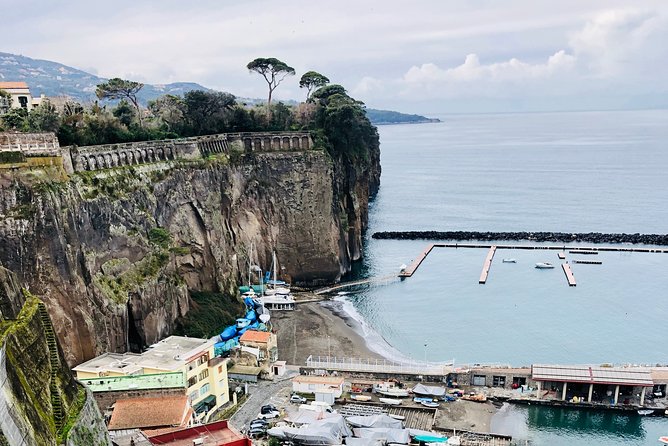
The walk begins at Villa Fondi, where you’ll spend about 30 minutes with the included admission. The setting matters here: you’re in the public gardens and facing toward the fisherman area of Marina di Cassano. That combination—green space with coastal views—makes the museum visit feel less like a detour and more like part of the landscape.
Inside, the museum is noted for archaeological finds that date back to the Greek-Roman age, plus multimedia reconstructions. Even if you’re not a museum person, multimedia can help you build mental pictures quickly—what you’re looking at and how it might have fit into daily life long ago. The trade-off is time: you have about 30 minutes, so you won’t do a slow, deep study of every display. Still, it’s a solid “taste” of local archaeology without turning your tour into a classroom.
Practical tip: if you’re the type who likes to read every label, you may wish you had more time. If you skim and follow the guide’s explanations, you’ll get a lot out of the short visit.
Villa Lauro: a quick hit of neoclassical beauty
Next is Villa Lauro, described as the most beautiful neoclassical villa in the Sorrento Peninsula. The stop is brief—about one minute—which tells you what this is meant to do. It’s a visual punctuation mark, giving you a quick style contrast after the gardens and museum.
A stop like this works well when you’re doing a walking route with multiple themes. You don’t need long; you just need to see it and move on. If you’re the kind of traveler who loves architecture, take advantage of the moment to really look at proportions and the mood of the facade before the tour keeps walking.
Piazza della Repubblica: old market streets and local rhythms
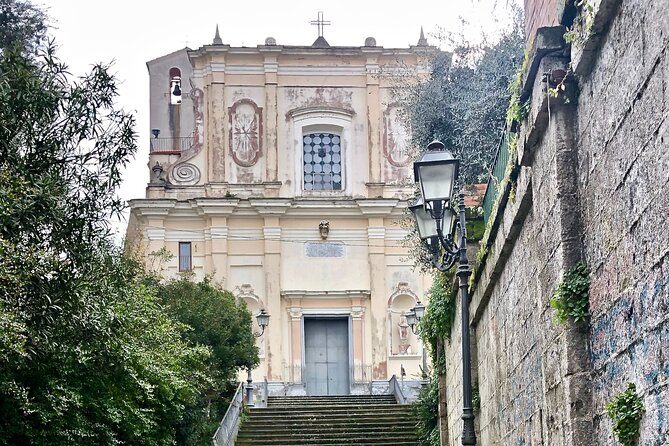
You’ll then pass through Piazza della Repubblica, described as the old fruit and fish market area of Piano. This is one of those places where “market” doesn’t just mean shopping—it’s how people historically connected food supply with daily life.
The practical value of this stop is that it ties your future tastings to what used to happen here. Even if the modern market look is different, the area’s role helps you understand why you’re seeing fruit and learning about local production. It’s also a nice reset point: short, open-feeling walking before the route shifts back into older paths.
- Sorrento Farm and Food Experience including Olive Oil, Limoncello, Wine tasting
★ 5.0 · 2,524 reviews






Via Ponte di Mortora: walking an older route through a tufa valley
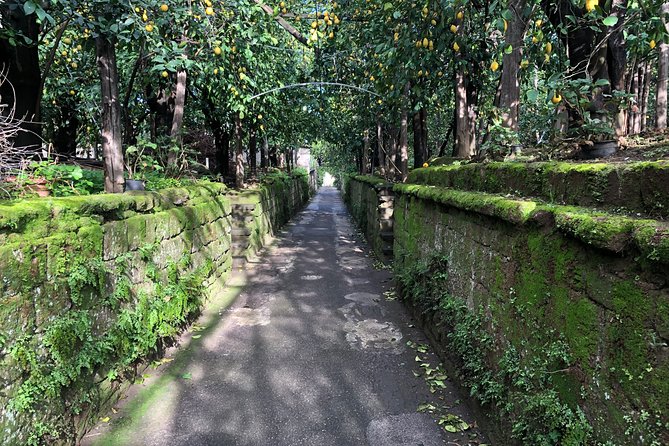
Next comes Via Ponte di Mortora, described as the oldest walking path that crosses a deep tufa rock valley of Piano di Sorrento. You’re only there for about five minutes, but the point is atmosphere. You’re moving along a route that locals have used for generations, and the tufa setting gives the walk a more grounded, “built by geology” feel.
This is also where comfortable shoes pay off. Even without steep specifics in the plan, older paths can mean uneven ground. Keep an eye on footing and you’ll enjoy the walk more.
The lemon garden stop: why tasting here feels different
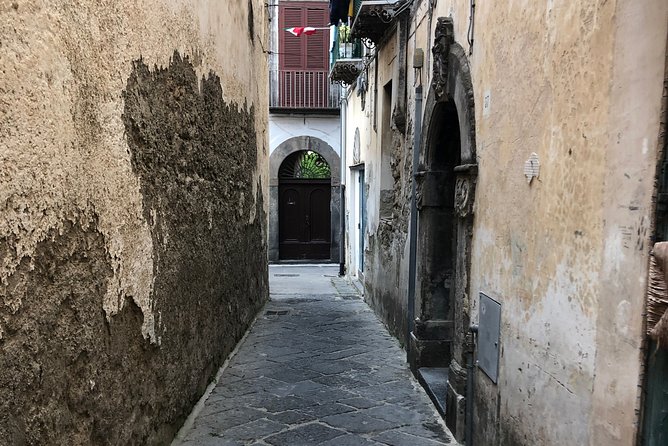
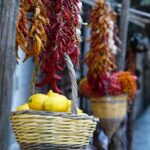
The tour’s food highlights center on lemons. You’ll visit a lemon garden, try the produce, and connect the taste to the place it comes from. This is one of my favorite kinds of tour moments: you’re not just eating—you’re learning the local logic behind the flavor.
You also get fruit as part of the market-time experience, which helps you broaden the flavor menu beyond sweets. The key value is variety. Instead of just one dessert stop, you get a sequence that moves from savory-ish produce tasting to sweet treats.
Homemade cannolo with sheep ricotta: the dessert moment to plan around
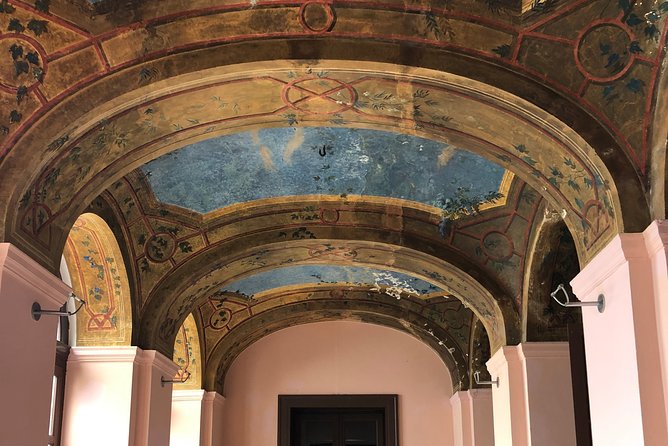
You’ll eat a homemade cannolo filled with sheep ricotta. This is a major highlight in the tour description and in the kind of feedback people remember—because cannolo is one of those foods where small differences matter.
Why sheep ricotta? It usually brings a richer, more distinctive dairy flavor than the more common alternatives you might find elsewhere. If you like desserts but hate when tours serve candy-store versions of local foods, this is the opposite. It’s specifically framed as homemade and tied to regional ingredients.
One more practical angle: if you’re going to buy extra snacks afterward, you might want to pace yourself. That cannolo is a real centerpiece.
Fruit market time: gelato and local fruit, not tourist filler
Later, you’ll try South Italian ice cream and some fruit at the fruit market. This is where the tour feels like it’s chasing everyday local habits. In many places, “market time” becomes a photo stop and a store stop. Here, the description points to tasting, not just sightseeing.
Think of it like this: the lemon garden gives you the source story, and the market gives you the taste story. Ice cream in particular tends to be best as a palate reset, so it works after the cannolo when your taste buds want something lighter but still sweet.
If you’re traveling with someone who wants both history and food, this middle section is a great compromise zone.
Orazio Bridge and the Lavinola Valley: a viewpoint that rewards the walk
The tour ends with a stand on Orazio Bridge, where you get a great view of the Lavinola Valley. Bridges can be hit-or-miss on guided walks, but this one is described as view-focused, not just a passage.
This is the payoff moment: after museum walls, garden smells, and market flavors, your eyes finally rest on a larger scene. It’s also a good time to take photos—just be mindful of where you stand so you don’t block other people moving through.
If you’re the kind of traveler who likes one strong view per day, this is your anchor.
Old fisherman village of Piano and historic shipyards
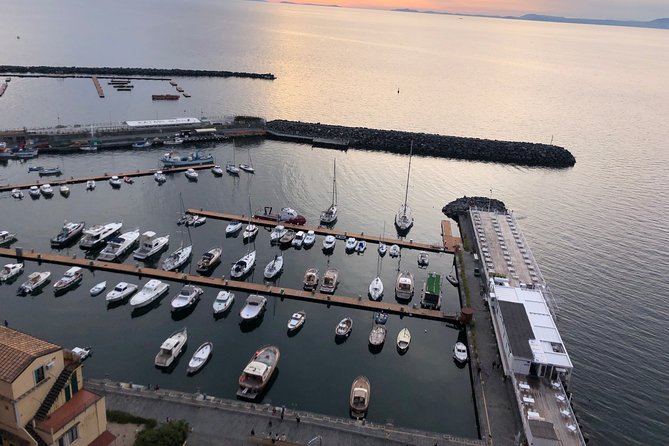
The route also includes the old fisherman village of Piano, noted for important shipyards in the XVIII and XVIV centuries. Even though you’re not given a deep museum-style timeline here, the context helps everything click: coastal work shaped the economy, and that heritage is why certain areas of Piano feel like they’re designed around water.
This is a good stop for curiosity. If you like connecting the dots—who built the town, where the labor happened, and why the walking paths make sense—this is the kind of add-on that makes the whole experience feel more coherent.
Who this tour is best for (and who might want something else)
This is ideal if you want a private, guide-led walk that mixes food and local place with a couple of culture stops. It’s especially good for couples, small friend groups, and anyone who’s tired of only doing big-ticket sights and wants something more human-sized.
You’ll probably enjoy it most if you:
- Like short museum moments with a guide guiding what to notice
- Enjoy lemon-based flavors and Italian sweets
- Want a local-style route that gets you out of the main high-traffic zones
It might be less ideal if you’re looking for long museum time, or if you prefer to plan tastings on your own without included food breaks.
FAQ
FAQ
What’s the meeting point for the Piano di Sorrento walking tour?
The meeting point is Corso Italia, 216, 80063 Piano di Sorrento NA, Italy. The tour ends back at the same meeting point.
How long is the tour?
The tour lasts about 2 hours.
What time does the tour start?
The scheduled start time is 10:00 am.
Is the tour offered in English?
Yes, the tour is offered in English.
What’s included in the ticket price?
The tour includes admission to the Villa Fondi archaeological museum. The description also includes food tastings such as a homemade cannolo with sheep ricotta, South Italian ice cream, and tastings connected to the lemon garden and fruit market.
Is this a private tour?
Yes. It’s described as a private tour/activity, with only your group participating.
What’s the cancellation policy?
You can cancel for a full refund up to 24 hours in advance of the experience start time. Free cancellation is available under that window.
Should you book this Piano di Sorrento walking tour with a local?
If your goal is a short, local-feeling morning that combines lemon-garden tastings, a memorable sheep-ricotta cannolo, and a museum stop you can finish without feeling rushed, this is an easy yes. The route also gives you one real viewpoint moment at Orazio Bridge, plus a market-area walk that connects the food to the town.
Just do one thing before you go: make sure you’re in Piano di Sorrento and standing at the exact Corso Italia, 216 meeting point. Nail that, and you’ll get a walk that feels like an authentic introduction to the area rather than a checklist of stops.
You Might Also Enjoy

More Walking Tours in Sorrento

More Tours in Sorrento



More Tour Reviews in Sorrento
- Sorrento Farm and Food Experience including Olive Oil, Limoncello, Wine tasting
★ 5.0 · 2,524 reviews