REVIEW · SORRENTO
Pompeii & Amalfi Coast Private Tour: Archaeologist-led, Flexible
Book on Viator →Operated by Fabrizio Belleni - Leisure Italy Private Guide · Bookable on Viator
Pompeii and the Amalfi Coast, controlled by you. This private day tour out of Sorrento means hotel pickup and a plan you can actually adjust on the fly, whether you want more Pompeii time or more coast views. You’re not stuck behind a rigid schedule while the day speeds past.
What I like most is the Pompeii side: an archaeologist guide who helps you read the site, from the Forum’s public life to private homes and the quieter details that make Roman daily routines click. You’ll also spend time where Pompeii explains itself, including the Antiquarium and high-impact stops like the Porta Marina approach.
One consideration: Pompeii involves lots of walking on uneven ground, plus steps and ramps. The operator notes it’s not recommended for people with walking issues, and you’ll want a moderate fitness level for a full 8 to 9 hour day.
In This Review
- Key things to know before you go
- A private archaeologist makes Pompeii make sense
- Porta Marina to the Forum: get oriented in minutes
- The everyday Pompeii stops: markets, baths, and homes
- Fast-food culture and new excavation tech
- Teatro Grande and the Antiquarium: pair the story with the objects
- Amalfi coastline day: drive, then choose your towns
- Sorrento, Positano, Amalfi, Ravello: a practical flow for real time
- More towns to mix in: Minori, Maiori, Erchie, Vietri sul Mare
- Timing tips that can save your day
- Price and value: private transport plus real expertise
- Who this tour fits best
- Should you book this Pompeii and Amalfi Coast private tour?
- FAQ
- Is pickup included in the tour price?
- Does the tour include lunch?
- Are Pompeii admission tickets included?
- How long is the tour?
- What language is the tour guide?
- Is this a private tour or shared?
- Is the tour suitable for people with mobility or walking issues?
- Can the guide meet us at the airport or port in Naples?
- Are service animals allowed?
Key things to know before you go
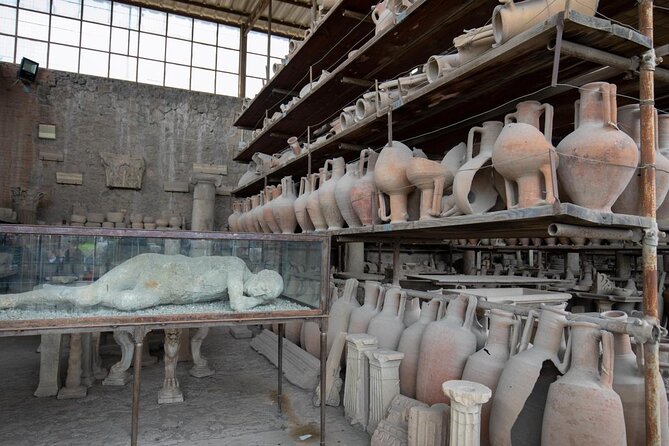
- Archaeologist-led pacing in Pompeii: you’re guided through public spaces and private homes, not just photo stops
- Flexible Amalfi routing: towns and timing can be adjusted to match your group’s interests
- High-impact start points: entry through Porta Marina to get immediate structure and key sights early
- Museum time included: the Antiquarium pairs well with what you’re seeing in the open-air ruins
- Food planning that can handle real needs: the guide has coordinated gluten-free lunch options nearby
- Scenic drive is part of the experience: Sorrento’s coast road and the SS163 drive shape the day’s rhythm
A private archaeologist makes Pompeii make sense
Pompeii hits hard, fast. Even if you’ve seen pictures before, the scale and the preservation can surprise you. The best part of a private, archaeologist-led format is that the ruins stop being random stones and start becoming a living city layout you can follow.
Fabrizio Belleni leads the Pompeii portion, and the tone is practical: he frames what you’re looking at, why it mattered, and how it fits into Roman life. From the start, you’re encouraged to move at your group’s pace. That matters because Pompeii is huge, and a one-size-fits-all tour can push you too quickly through the places that deserve attention.
If you like learning while walking (not sitting in a classroom), you’ll probably enjoy this setup. And if you prefer more time on fewer streets, you can ask for that too. The day is designed for control.
You can also read our reviews of more private tours in Sorrento



Porta Marina to the Forum: get oriented in minutes
Most Pompeii days start like this: you arrive, you see big ruins, you take photos, and later you wish someone had explained the city’s logic. Here, the first big move is orientation—starting at Porta Marina, the Marine Gate.
You walk up a steep ramp into a dual-arched gateway, with one side wide enough for pack animals and the other meant for pedestrians. That entrance feels cinematic because it quickly transitions you from the ramp into the city’s core. From there, key structures line up in your mind: the route naturally funnels you toward the Temple of Apollo and the civic center area.
Then you’re into the Basilica and the Forum zone. The Basilica Pompeiana functioned as the city’s major civic and commercial hub—more courthouse and business exchange than a religious space. Even if the roof is gone, the scale stays obvious: you can still picture those giant columns and the raised podium where magistrates would have presided.
In the Forum itself, the setting becomes clearer. It’s where politics, religion, and trade came together—Rome’s daily power center. You walk across original paving stones and get a sense of the pedestrian-only plaza where people gathered, argued, voted, and traded weights.
The everyday Pompeii stops: markets, baths, and homes
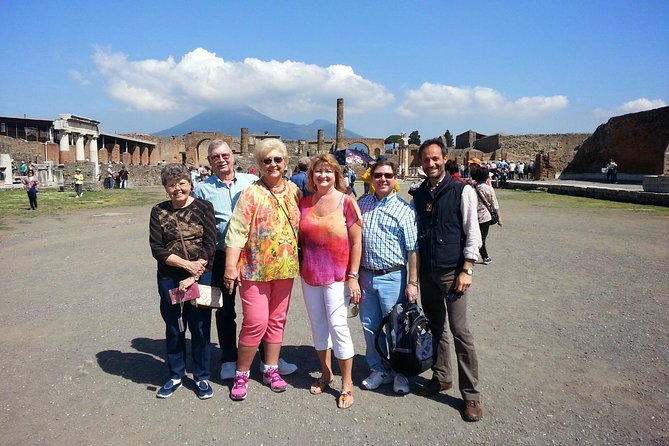
Pompeii isn’t only big monuments. The tour’s strength is how it keeps steering you toward daily life: what people ate, where they cleaned up, what they bought, and how private wealth showed itself.
A great example is the Macellum, Pompeii’s covered market right by the Forum. You can follow the layout: smaller shops around the edge and a central pavilion area. It’s a smart stop if you’re curious about commerce because you can see where officials checked weights and measures, including the stone mensa ponderaria. There are also casts associated with the eruption victims in this area, and that emotional weight lands differently when you’ve already been thinking about ordinary routines.
Then come the Forum Baths. This is one of those stops that makes Pompeii feel like a place people actually lived in. Because this bath complex was still operating in 79 AD, you can trace the bathing circuit: changing room, cold room, warm room, and hot room. Even with parts missing, the architecture helps you understand how heat moved through the system, including the hypocaust idea of circulated warm air under floors.
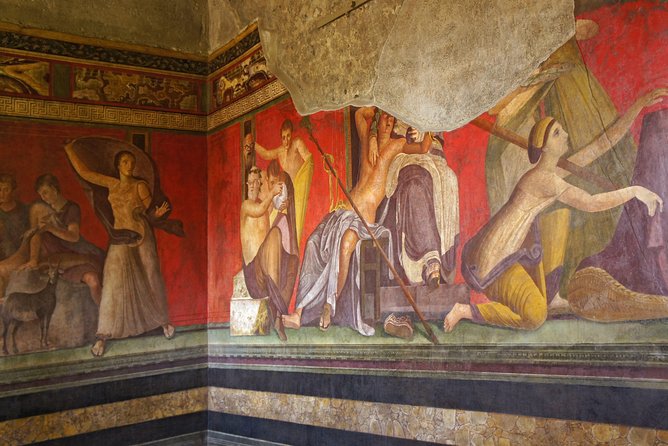
If you want the “wow” inside a private home, plan for the House of the Vettii, often compared to the Sistine Chapel of Pompeii because of the fresco detail. The highlight is the combination: vivid wall paintings plus a peristyle garden setting. It’s one of the best ways to see what wealth looked like right before the eruption.
Fast-food culture and new excavation tech
Not all Pompeii surprises are about palaces. The Thermopolium is a perfect counterpoint: an ancient “fast-food” counter where you can see how quick meals worked. The counter shape and bright fresco decoration make the stop feel playful, but it’s also data-rich—dolia jars held remains that archaeologists found, showing a range of foods mixed together. It’s a reminder that diet and daily convenience existed 2,000 years ago.
For a more modern archaeological experience, you might also encounter the Insula of the Chaste Lovers. This block is known for elevated walkways that let you look down into active excavation work. It’s a rare feeling: not just seeing what’s already found, but also watching the process of discovery happen as you stand above it.
Teatro Grande and the Antiquarium: pair the story with the objects
By the time you reach the Teatro Grande, you’ve already learned a lot of Pompeii’s daily rhythm. The theater adds another layer: Roman public entertainment and social structure. You can see the horseshoe seating arrangement and how the stone tiers reflect hierarchy, with elite marble seating placed higher than areas used by common audiences.
The guide’s job here is to make the site feel usable again. The acoustics are part of the experience, and it’s one of the few stops where the building itself helps you imagine performances.
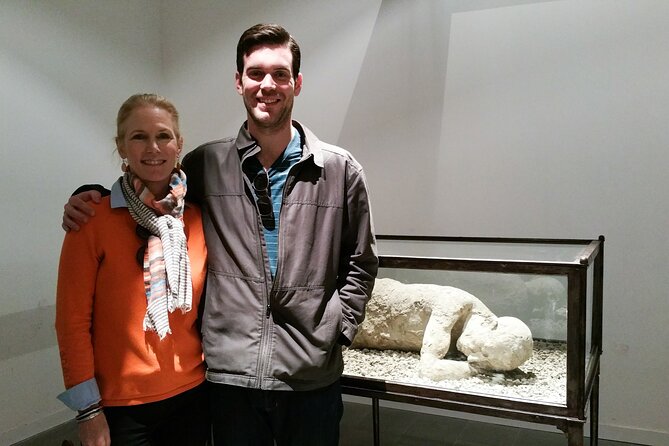
After walking through ruins in the heat (Pompeii can be relentless), the Antiquarium is the reset button. It houses fragile treasures and gives you context that open-air streets can’t. It’s also where the plaster casts live, showing victims and animals at the moment of the eruption. This is heavy material, but it’s also where you connect the story to people, not just buildings.
- Sorrento Farm and Food Experience including Olive Oil, Limoncello, Wine tasting
★ 5.0 · 2,524 reviews





Amalfi coastline day: drive, then choose your towns
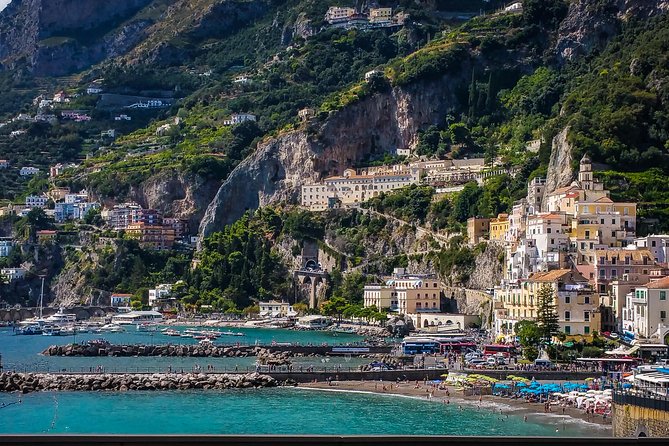
Once Pompeii time is done, the Amalfi half is about contrast. You shift from volcanic history to cliff roads, sea views, and towns you can walk slowly—without the same intensity as the Pompeii crowds.
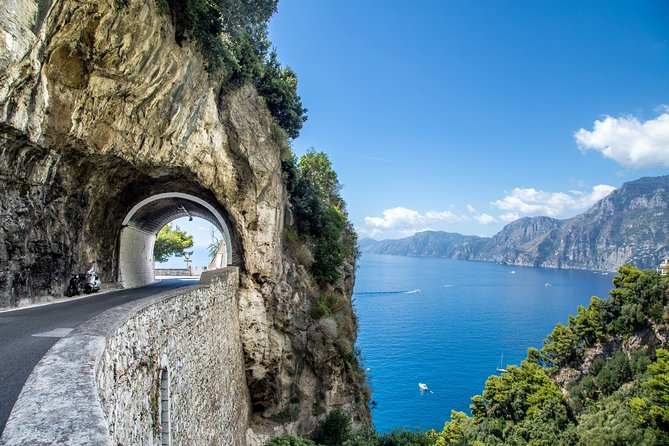
The day’s scenic drive starts with the SS145 Sorrentina road, the dramatic coastal route linking the Bay of Naples and the Sorrento Peninsula. Expect tunnels, bridges, and big panoramic turns that reveal turquoise water, Mount Vesuvius in the distance, and towns like Vico Equense and Meta perched on limestone bluffs. Even if you’ve driven coastal roads before, this one tends to feel like it was built for postcards and breathers.
From there you work your way into the Amalfi side via the SS163, the road many people consider the classic cliff-hugging thrill ride. It’s a real highlight if your group enjoys viewpoints and doesn’t mind winding roads. The bonus is that it gives you a sense of why Amalfi’s towns formed where they did: steep slopes, protected coves, and travel shaped by geography.
Sorrento, Positano, Amalfi, Ravello: a practical flow for real time

This tour is set up so you can spend your limited hours wisely across the coast. That matters because Amalfi Coast towns vary a lot in feel, and the best plan depends on what you want more of: views, history, shopping, gardens, or slower strolling.
Sorrento usually works as a gentle jump-off. You’re high above the Bay of Naples, with a walkable old center and viewpoints from places like Villa Comunale. If you want a quick coffee, a gelato, and a chance to orient yourself after Pompeii, Sorrento is a solid place for that.
Positano is next-level visual drama. It’s the steep cascade town—the Vertical City—where streets zigzag past shops and bougainvillea toward the Church of Santa Maria Assunta with its tiled dome. If your group likes shopping and photo stops, this is the town for it. If you’re prone to getting tired on steep stairs, build in breaks.
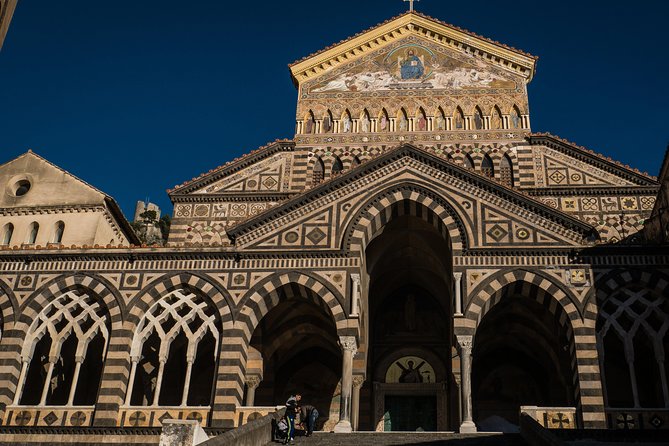
Amalfi is more about history and structure. The town center revolves around the Duomo di Sant’Andrea with its striking striped facade and the monumental staircase leading up to it. Even if you only do a short visit inside, the mix of architectural influences stands out. You’ll also get time to wander the narrow vicoletti and its harbor views.
Ravello is the relief valve. It sits above the coast like a quiet balcony, famous for gardens and music associations. If Amalfi feels too intense in midday crowds, Ravello gives you open air and long views. The key stop here is Villa Cimbrone Gardens, including the Terrace of Infinity—one of those viewpoints that changes how you remember the coastline.
More towns to mix in: Minori, Maiori, Erchie, Vietri sul Mare
A flexible Amalfi itinerary is useful because not every group wants the same towns. This tour can add or substitute stops like Minori, Maiori, Erchie, and Vietri sul Mare, depending on timing and your interests.
Minori tends to appeal if you want a quieter coastal feel and food focus. It’s also tied to artisan baking and local pastry traditions. Maiori is better if you like space and a longer sandy beach, plus a flatter promenade that’s easier to walk than some hill towns. Erchie is the small, calmer fishing hamlet option, good if you want a low-key beach break and fewer people. Vietri sul Mare works well when you want ceramics culture—colorful tiles everywhere, plus an iconic domed church covered in majolica tiles.
The practical advantage: you’re not locked into only the famous names. You can pick the balance between sightseeing and breathing.
Timing tips that can save your day
This is the kind of day where timing matters as much as itinerary. A good guide will think about heat, crowd levels, and the order that makes the most sense.
One helpful example from real experiences with this guide: the suggestion to consider Pompeii in the afternoon if you’re traveling in hotter months, because a breeze often picks up later. That kind of “tiny change, big comfort” is exactly what flexible private guiding is for.
You’ll also want to treat lunch as part of pacing, not a random afterthought. The guide has arranged lunch near the Pompeii entrance in at least one case where someone needed gluten-free pasta. If you have dietary needs, it’s worth asking early so you don’t spend lunch hunting.
Price and value: private transport plus real expertise
At $540.66 per person for an 8 to 9 hour private day, you’re paying for three things at once: private guiding, private transportation, and time efficiency.
Pompeii admissions are usually extra unless you choose a tickets-included option. The data lists Pompeii admission fees as €19 per person (and free for kids). So your total cost can be higher once you add entry, depending on what you select at booking. Lunch also isn’t included, but the tour supports restaurant choices based on your preferences.
What makes this price feel more reasonable than piecing things together yourself is that you’re not just buying a map and a driver. You’re buying an archaeologist-led explanation that helps you understand what you’re walking through, plus a driver who can handle route changes so you don’t waste hours.
Who this tour fits best
This tour is ideal if you want:
- A private guide who can explain Pompeii like a city, not a checklist
- Flexibility to choose towns and adjust pace
- A structured Pompeii route that covers civic areas, markets, baths, homes, and a museum
- A smooth day plan with pickup and round-trip transportation from Sorrento, Naples, Positano, or Pompeii
It’s especially good for families and mixed-age groups, because private guiding makes pacing easier. The guide is also described as patient and careful with time limits.
On the other hand, if your group includes people with significant walking difficulties, the operator warns that Pompeii isn’t recommended. For that situation, you may need a different plan or more limited walking.
Should you book this Pompeii and Amalfi Coast private tour?
Book it if you want a full, high-value day where Pompeii feels understandable and the coast feels unhurried. The biggest draw is the combination of archaeologist-led Pompeii context plus a driver who can shape the Amalfi side around your group.
Skip it (or rethink the format) if you need minimal walking at Pompeii. Also, budget extra time and money for Pompeii admission if you didn’t select the tickets-included option, and plan for lunch to be on your own.
If you’re coming from Naples (airport, port, or rail station), or you’re staying in Sorrento or Positano, the pickup approach makes this day easier to pull off without stress.
FAQ
Is pickup included in the tour price?
Yes. Pickup and drop-off are included, and the guide can meet you in Naples or Sorrento or Positano or Pompeii.
Does the tour include lunch?
No. Lunch is not included, but the guide can help with choices based on your preferences.
Are Pompeii admission tickets included?
Pompeii admission fees are not included unless you select a tickets-included option during booking. If not selected, Pompeii admission is listed as €19 per person (free for kids).
How long is the tour?
The duration is about 8 to 9 hours.
What language is the tour guide?
The tour is offered in English.
Is this a private tour or shared?
It’s a private tour/activity, so only your group participates.
Is the tour suitable for people with mobility or walking issues?
The operator says Pompeii is not recommended for those who have walking issues. The tour is for travelers with moderate physical fitness.
Can the guide meet us at the airport or port in Naples?
Yes. The port or the airport or the railways in Naples is listed as not a problem.
Are service animals allowed?
Yes, service animals are allowed.
You Might Also Enjoy




More Private Tours in Sorrento



More Tours in Sorrento



More Tour Reviews in Sorrento
- Sorrento Farm and Food Experience including Olive Oil, Limoncello, Wine tasting
★ 5.0 · 2,524 reviews