REVIEW · SORRENTO
Guided Tour of Pompeii and Herculaneum with Lunch and Ticket
Book on Viator →Operated by Buyourtour di Amo Italy Travel · Bookable on Viator
Two volcano victims in one day. You get a guided tour through Pompeii and Herculaneum, plus a winery lunch, so you can see two once-great Roman cities without juggling trains. I like how the day is built around major sites, not just random wandering, and the pacing usually keeps the story clear.
I also really value the winery lunch with wine tasting on the Vesuvius slopes. It is a practical break after hours of walking, and it ties the ruins to what this region does today. In hot weather, the best guides also help you find shade while explaining what you are looking at.
One drawback to plan for: Pompeii is enormous and can be crowded, so even with reserved entry, you may not get to every corner you hope for. With a full day and lots of stops, the experience can feel fast if you are trying to take in everything slowly.
In This Review
- Key highlights you should know
- Pompeii Meets Herculaneum: Why This Combo Works
- Price and Value: What You Really Get for Around $192
- From Sorrento to the Ruins: A Day That Runs on Timing
- Pompeii Arrival: Reserved Entry and a Guided City-Center Walk
- The Forum’s Buildings: Macellum Market Life and the Temple Square View
- Stabian Baths: Politics, Power, and the Rituals of Daily Washing
- Lupanar and Teatro Grande: The Social Life Side of Pompeii
- Sorrentino Vini Winery Lunch: Food, Wine, and a Reset on the Move
- Herculaneum Arrives: Why the Second City Feels Different
- House of the Deer and Neptune Mosaics: Making Sense of Private Wealth
- Skeleton House, Augustales Frescoes, and the Big House-That-Reads-Like-a-Hotel
- Casa del Salone Nero: When Art Turns Into Evidence
- Walking, Heat, and Staying Sane Through Nine Hours
- Who This Tour Is Best For (and Who Might Prefer Another Plan)
- Should You Book This Pompeii and Herculaneum Day Tour?
- FAQ
- How long is the Pompeii and Herculaneum tour?
- Is lunch included?
- Are admission tickets included for Pompeii and Herculaneum?
- Will I receive a ticket on my phone?
- What language is the tour offered in?
- How big is the group?
- What should I wear or bring for the day?
- Can I cancel if plans change?
- What happens if the weather is bad?
Key highlights you should know
- Reserved-entry style access helps you get moving faster than unguided ticket lines when Pompeii is busy
- Two time periods, two cities: Pompeii’s streets and baths, then Herculaneum’s unusually preserved houses
- Stops built around everyday life: the Forum, the market (Macellum), the baths, and even the Lupanar
- Vesuvius wine + lunch included at Sorrentino Vini, with tastings of Prosecco, red, and white
- Herculaneum houses and mosaics: deer statuary, Neptune and Amphitrite mosaics, and the black-painted salon
- Small-group feel with a big-site reality: up to 100 people, but you still experience crowding at the ruins
Pompeii Meets Herculaneum: Why This Combo Works
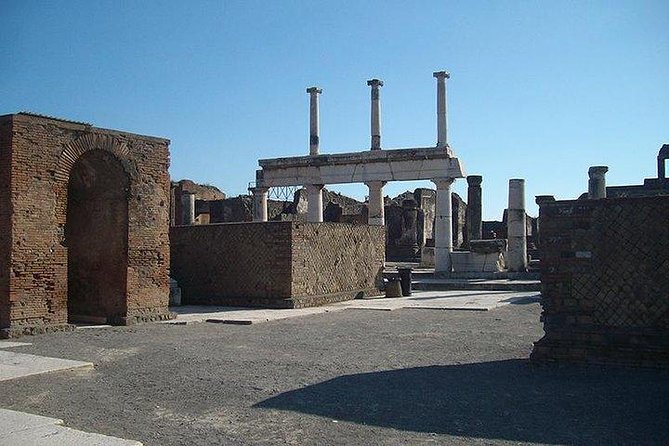
This is one of those rare days where the logistics make sense. Pompeii and Herculaneum were both buried by the 79 AD eruption of Mount Vesuvius, but the two sites feel different when you see them back-to-back. Pompeii gives you the broad sweep: streets, public buildings, and neighborhoods laid out in a city plan. Herculaneum feels more intimate because the preservation is so strong that houses, villas, and details still read clearly.
For you, the big win is not just the “two places in one day” headline. It is the way the tour structure helps you compare daily life. In Pompeii, you walk through the machinery of city life: courts, commerce, markets, baths, entertainment. Then you switch to Herculaneum, where those same kinds of spaces show up in homes and villas with a level of detail that makes you slow down.
The day runs about 9 hours, and both Pompeii and Herculaneum are each built around a 2-hour block on-site. That is a decent amount of time for guided highlights. Still, remember what ruins are like: even a great plan can feel rushed when the site is crowded and the sun is hot.
You can also read our reviews of more tours and experiences in Sorrento

Price and Value: What You Really Get for Around $192
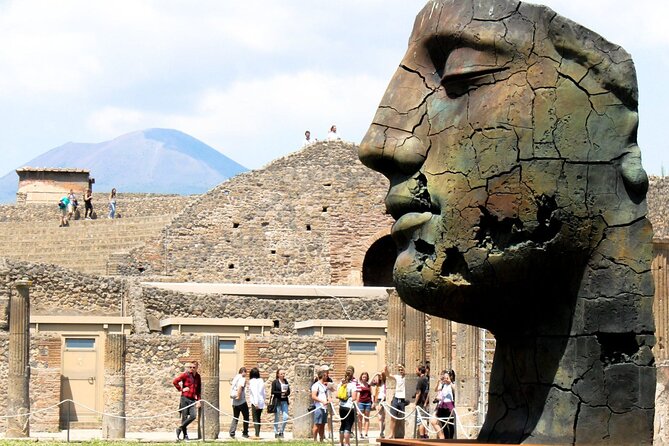
At $192.22 per person, you are paying for more than entry tickets. You get a guided experience in English, transport from Sorrento, admissions/tickets included for Pompeii and Herculaneum-related stops, and lunch plus wine tasting at Sorrentino Vini.
Here is why that matters for value: Pompeii and Herculaneum are two of the most visited archaeological areas in Italy, and they attract crowds. Paying for a guided day helps you avoid the “Where do we start?” confusion and the wasted time of piecing together tickets and timing on your own.
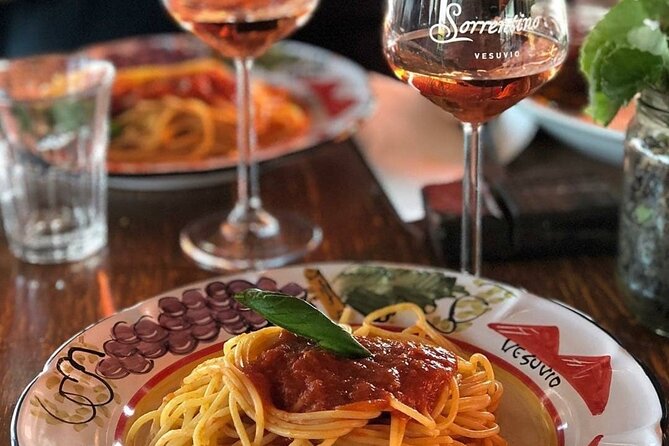
The lunch package also changes the math. You get a starter of bruschetta, cured meats, cheeses, and seasonal vegetables. Then you eat pasta with piennolo cherry tomatoes, followed by a traditional homemade dessert. And you taste three wines: Prosecco, red, and white. That is not a tiny add-on; it is a solid meal and a proper break, not just a snack.
Also, this tour averages booking about 78 days in advance. That signals something practical: if you want a good slot during peak season, early planning helps.
From Sorrento to the Ruins: A Day That Runs on Timing
The tour starts in Sorrento, and the pickup is described as near public transportation. That matters because Sorrento traffic and parking can be chaotic, especially in summer. Once you are on the move, you will spend a good chunk of the day riding between sites.
You are grouped with a maximum of 100 travelers. That number sounds large, but on a guided day it often translates to a manageable crowding level while you are listening and waiting. The real crowd pressure shows up at the ruins themselves, especially Pompeii.
A practical note: the tour times can shift due to local traffic or other circumstances. So keep your expectations flexible. If you plan to tour at the same time you are trying to catch a tight dinner reservation later, you might feel stressed. Give yourself slack.
Pompeii Arrival: Reserved Entry and a Guided City-Center Walk
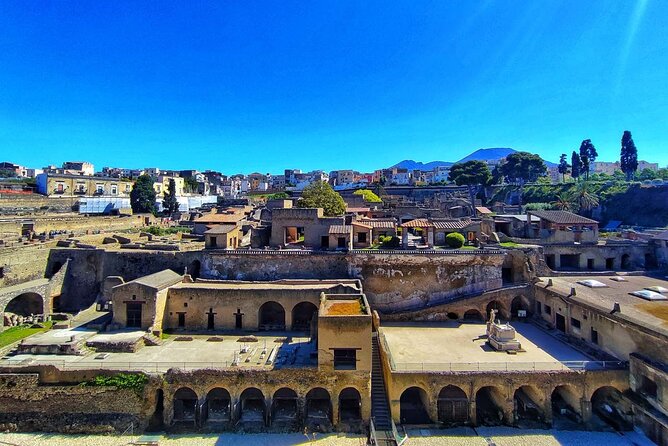
Pompeii is not a “single monument” kind of site. It is a whole city, and it can overwhelm you if you show up cold. The tour solves that by pushing you into the places that anchor the story.
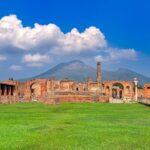
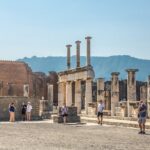
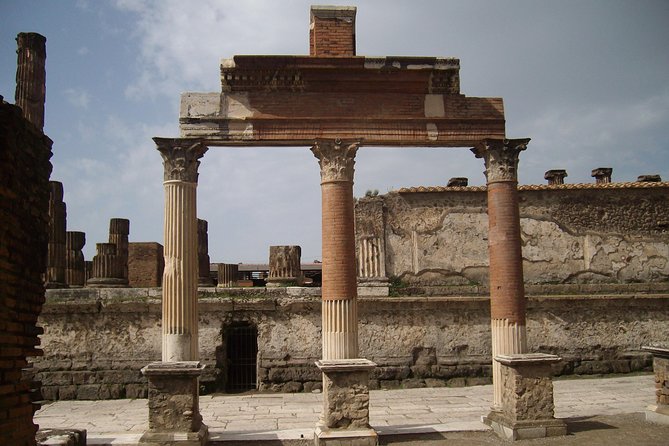
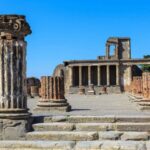
You begin at the Archaeological Park of Pompeii, with admission included. From there, the focus shifts to public life, starting with the Foro de Pompeya, the civic center. This area is where administration, justice, business, commercial activity, and worship all meet. In plain terms, it is the place where Pompeians would recognize their city’s rhythm.
Then you head for the Tempio di Giove Capitolino on the northern side of the Forum. This is one of those stops where the layout helps you understand the drama. The temple dominates the Forum, and Vesuvius rises behind it, so you see how the sacred and the terrifying landscape sit together.
What I like about this Pompeii sequence is that it teaches you how to look. Instead of only saying “this is a temple” or “this is a street,” the tour’s structure connects buildings to daily decisions: where people judged disputes, where officials managed the city, and where worship shaped public life.
The Forum’s Buildings: Macellum Market Life and the Temple Square View
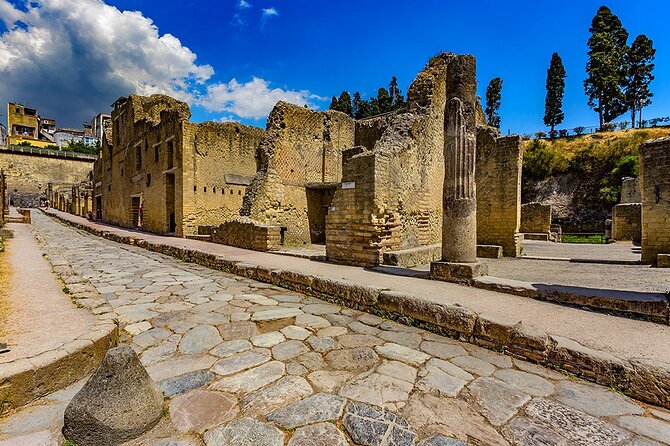
After the Forum’s big civic landmarks, you get into the city’s commercial heartbeat at the Macellum. This market complex is described as a tuff quadri-porticus with a market hall elevated on the eastern side. Think of it as a food hub where daily life happened, not a luxury shopping district.
Even better, you do not just walk past it. You get the visual cues the site offers: the walls of the porticoes were decorated with scenes from daily life, including selling fish and poultry, plus mythological subjects. That means you can treat the artwork like “instructions” for what this place was used for.
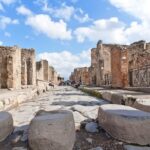
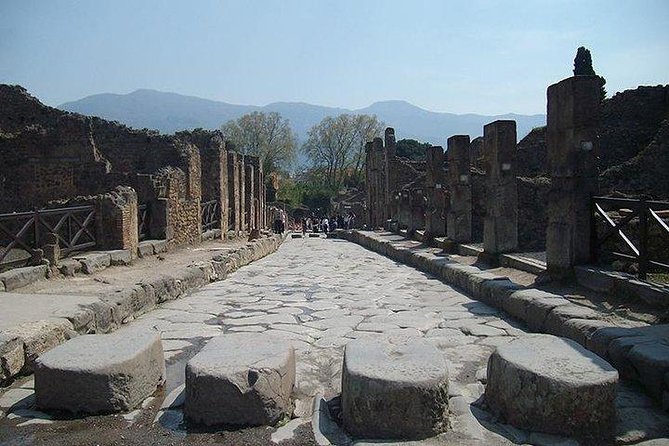
From there, you follow one of Pompeii’s main streets: Via dell’Abbondanza. This road connects the Forum with the Amphitheatre. Standing on this street, you start to grasp how movement worked in the city: civic life linked directly to public entertainment.
If you are the type who likes “how people moved” and “what people did,” these stops are a strong use of limited time. If you are only chasing famous-looking structures, you might need to remind yourself that markets and streets are where most of the city’s energy lived.
You can also read our reviews of more guided tours in Sorrento


Stabian Baths: Politics, Power, and the Rituals of Daily Washing
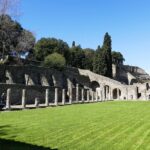
Next up is the Stabian Baths (Terme Stabiane), and this stop is one of the most memorable for most people because it shows routine. The baths were built at different times, with early construction dating to the 4th century BC. The tour focuses on the layout visitors can picture today: the main entrance opens into a large courtyard with a pool to the left and a colonnade leading to the men’s quarters.
From there, you move through bathing zones named in the tour: apodyterium, frigidarium, tepidarium, and calidarium. The heating system is a standout detail too, with hot air moving from furnaces through pipes in the walls and double floors. It is a reminder that these were not just “rooms to wash.” They were engineered public spaces.
For you, the key insight is the human side. The baths were a place where people bathed and also discussed politics, battles, trials, and women. So even though it looks like architecture, it is really a social stage.
One consideration: baths are partially complex to follow when you are moving in a group, and you may want to slow down and take in the layout. Wear shoes that handle uneven stone.
Lupanar and Teatro Grande: The Social Life Side of Pompeii
Then the tour goes into two stops that change the mood quickly.
The Lupanar is Pompeii’s well-known brothel, identifiable by its erotic paintings. The description notes that prostitutes were mostly Greek and Oriental slaves, and the building ran on two floors: the owner and slaves’ living areas upstairs, and five rooms downstairs with built-in beds.
It is not a comfortable topic for everyone, but it is historically informative. The tour does not treat it like shock value. It frames it as part of how the city functioned socially, not as a random oddity.
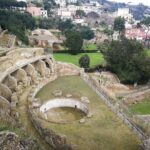
After that you visit the Teatro Grande, the large theatre built around the middle of the 2nd century BC and later restored in Roman style. Here you hear what it did: comedies and tragedies of Greek-Roman tradition. The theatre is also described as the first large public building in the area to be completely freed from eruption deposits, which explains why it is so readable today.
If you want a balance of “public power” and “public entertainment,” this pairing works well. If your goal is only the most famous monuments, the theatre might feel less dramatic than you expected—but it is a strong window into what Romans actually went out for.
Sorrentino Vini Winery Lunch: Food, Wine, and a Reset on the Move
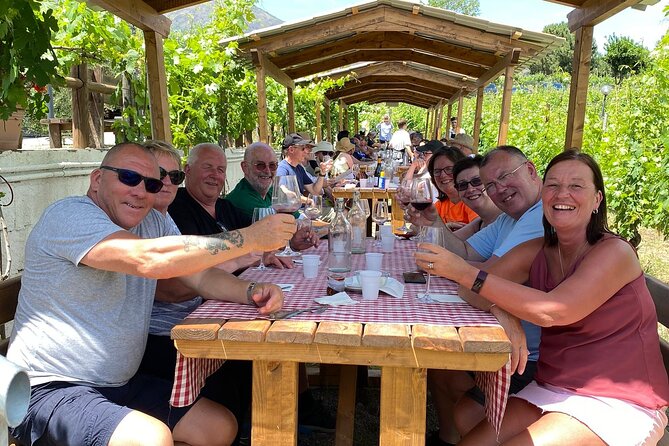
Midday, you head to Sorrentino Winery (Sorrentino Vini). This is not just a meal stop. It is where the day stops and you breathe.
The winery is described as founded in 1990 by Paolo Sorrentino, now with 35 hectares of property within the Vesuvius National Park. The most famous Vesuvius wine they produce is Lacryma Christi, and it is noted as the only DOC product produced on Vesuvius.
Your lunch is simple, local, and filling:
- Starter: bruschetta, cured meats, cheeses, seasonal vegetables
- Wine tasting: Prosecco, red, and white
- Main: pasta with piennolo cherry tomatoes (a local specialty)
- Dessert: traditional homemade dessert
For me, this stop is practical value. After Pompeii’s walking, your legs need a break. You also get something emotional: food and wine here connect the region’s modern identity to the same slopes that shaped the ancient story.
The tradeoff is time. A few guests have felt the winery lunch takes up valuable hours that could have gone to more ruins. So if you are a super-archaeology purist, expect to compromise. If you want a full day that still feels like a trip to Campania, you will likely appreciate the balance.
Herculaneum Arrives: Why the Second City Feels Different
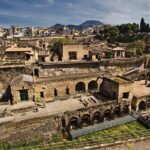
After lunch, you shift gears to the Parco Acheologico Di Ercolano for Herculaneum. The site is described as still perfectly preserved, with remains of streets, houses, and villas you can admire.
The biggest difference for you is how Herculaneum can feel more detailed as you move through it. Pompeii gives you the city grid and the public world. Herculaneum brings you closer to home life. It is like changing from a wide-angle photo to a room-by-room view.
This section also runs about 2 hours, with admission included. The tour keeps it focused on standout homes and visual treasures so you do not leave with only one or two impressions.
House of the Deer and Neptune Mosaics: Making Sense of Private Wealth
One of the first Herculaneum stops is the House of the Deer. This luxurious home with a sea-view terrace belonged to Q. Granius Verus, a slave freed shortly before the destruction. The name comes from deer statues in the garden that appear to be assaulted by a pack of dogs.
Even if you do not care about titles and ownership, this stop helps you read the architecture as status. You can see why sea-view rooms mattered, and you can picture the garden as part of the living experience, not decoration in isolation.
Next comes Casa di Nettuno e Anfitrite. The big draw is the mosaics in glass paste, described as very expensive for its time. You also get floral and hunting scenes, plus a central mosaic featuring Neptune and Amphitrite. This stop is listed as Admission Ticket Free, which is helpful because it keeps the day’s admissions structure simple.
These homes are the kind of stops that change how you understand Roman daily life. You start to realize that leisure was not only public. It was in private rooms, in gardens, and in the details you would only see when guests were present.
Skeleton House, Augustales Frescoes, and the Big House-That-Reads-Like-a-Hotel
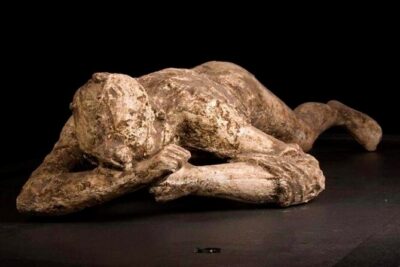
The tour continues with Casa dello Scheletro, known for skeleton remains found in 1831 in a second-floor room. The name comes from that discovery, and it signals how dramatically archaeology can reconstruct what happened.
Then you visit the Sacello degli Augustali, built near the forum when Augustus was still alive and in power. The building preserves splendid frescoes showing Hercules entering Olympus with Jupiter, Juno, Minerva, and Hercules against Achelous. The description also notes the janitor’s skeleton found in his room on the bed—again, a reminder that these sites hold human evidence, not just walls.
Finally, you see the House of the Hotel, located on the edge of the hill in a panoramic position. It is described as the largest house of Herculaneum discovered so far, at 2,250 square meters, and it is also noted as the only house in the city to own a spa district. That spa space is why it was first considered like a hotel.
If you are wondering why this matters: the spa district brings the Pompeii bath theme into Herculaneum domestic life. You start seeing how bathing culture traveled from public spaces into private luxury.
Casa del Salone Nero: When Art Turns Into Evidence
To wrap up the Herculaneum highlights, the tour includes Casa del Salone Nero, the house of the black salon. The name comes from a party hall entirely painted black with geometric patterns.
This is also one of the most “evidence-based” stops on the day because the description notes waxed tablets found there tied to L. Venidius Ennychus. The tablets mention eligibility for Augustale, the purchase of a slave, and the birth of a daughter.
This stop is a good final moment because it ties art and artifacts together. You are not just seeing decoration. You are seeing how households were recorded, how status worked, and how people lived with the power system of the time.
Walking, Heat, and Staying Sane Through Nine Hours
A day like this can feel intense because both cities are walking-heavy and the ruins are outdoors. The tour guidance specifically calls out comfortable shoes, sunglasses, and sunscreen in the summer. That is not optional advice.
One thing I appreciate from past experience with this kind of day is that the best guides help you manage the heat. In one example, a guide made sure there was shade while explaining points on the way through Pompeii. That kind of small adjustment matters, especially when you are outside for hours.
Also, expect a group rhythm. You will likely spend time standing still for explanations, walking as a unit, then regrouping. If you get easily separated, plan to stay alert and know exactly where your meeting point is supposed to be.
Who This Tour Is Best For (and Who Might Prefer Another Plan)
This tour is a strong fit if you want:
- a guided overview of both sites in one day
- tickets handled for you
- lunch and wine included so your day does not fragment
- structured stops that highlight how people lived, not only what was destroyed
It is also a good choice if you are coming from Sorrento and you do not want to plan the whole day around transport.
If you hate crowds, you might find Pompeii challenging even with reserved entry. If your ideal day is slow museum pacing, this one may feel like you are always walking to the next stop.
Should You Book This Pompeii and Herculaneum Day Tour?
I would book it if you want a big, high-value day with guided context and built-in comfort. The combination of Pompeii’s public life, Herculaneum’s preserved homes, and a real lunch with Prosecco, red, and white tasting makes the price feel reasonable rather than random.
I would think twice if you are hoping to see every possible building in Pompeii or if you know you struggle with long walking days. Pompeii can be crowded, and the tour’s format is designed for highlights in a single push.
If you do book, go in expecting “best-of” coverage, bring your best walking shoes, and use lunch as the reset that keeps the day enjoyable.
FAQ
How long is the Pompeii and Herculaneum tour?
It runs about 9 hours. The exact timing and the order of activities can vary due to local traffic conditions or other circumstances.
Is lunch included?
Yes. Lunch at Sorrentino Winery includes a starter (bruschetta, cured meats, cheeses, seasonal vegetables), wine tasting (Prosecco, red, and white), a main course (pasta with piennolo cherry tomatoes), and dessert.
Are admission tickets included for Pompeii and Herculaneum?
Yes. Admission tickets are included for the Pompeii and Herculaneum archaeological stops and the listed sites.
Will I receive a ticket on my phone?
Yes. The tour includes a mobile ticket, so you do not need to rely on a printed voucher.
What language is the tour offered in?
The tour is offered in English. It may also be operated by a multilingual guide.
How big is the group?
The maximum group size is 100 travelers.
What should I wear or bring for the day?
Wear comfortable shoes. In the summer, bring sunglasses and sunscreen as well.
Can I cancel if plans change?
Yes. You can cancel for a full refund up to 24 hours before the experience’s start time.
What happens if the weather is bad?
This experience requires good weather. If it is canceled due to poor weather, you will be offered a different date or a full refund.
You Might Also Enjoy



More Tickets in Sorrento


More Tours in Sorrento





More Tour Reviews in Sorrento
- Sorrento Farm and Food Experience including Olive Oil, Limoncello, Wine tasting
★ 5.0 · 2,524 reviews