REVIEW · SORRENTO
Pompeii, Herculaneum and Winery on Vesuvius with an Archaeologist
Book on Viator →Operated by Fabrizio Belleni - Leisure Italy Private Guide · Bookable on Viator
Pompeii and Herculaneum in one day is intense. What makes this trip special is the mix of a hands-on archaeologist guide and a relaxed winery lunch inside Vesuvius National Park. With Fabrizio Bellini leading, you get an explanation for what you’re seeing, not just a walk between ruins.
I especially like how the Pompeii portion is built around the Forum and the big visual moments like mosaics and frescoes, while still leaving room to match your group’s energy. I also like the human-scale additions like the Antiquarium stops, where the casts and organic remains help the story land fast.
One possible drawback: this is a long, full day (8 to 9 hours) with lots of uneven ancient surfaces, so you’ll want moderate fitness and comfortable shoes, especially if you’re traveling with kids.
Key highlights that make this tour worth your time
- Private, English-led archaeologist tour with Fabrizio Bellini, plus pickup in Naples or Sorrento
- Smart Pompeii route: Forum, Temple of Apollo, Casa dei Vettii, Teatro Grande, and Antiquarium di Pompei
- Herculaneum emphasis on remarkably preserved details like mosaics, textiles, and organic artifacts
- Cantina del Vesuvio lunch and tasting in the Vesuvius National Park setting
- Flexible pacing so you can slow down, switch order, or trim stops as needed
- Family-friendly upgrade designed to keep children interested (with questions and engagement)
In This Review
- Why Pompeii and Herculaneum feel different when you have the right guide
- Pompeii’s Forum to Teatro Grande: where the city’s daily life comes into focus
- Temple of Apollo: religion, architecture, and a view line to Vesuvius
- Forum of Pompeii: politics, markets, and why the paving stones matter
- Casa dei Vettii and Insula dei Casti Amanti: luxury walls and new excavation tech
- Teatro Grande: social class written into stone tiers
- Antiquarium di Pompei: the emotional handrail before the walk
- Herculaneum next: organic preservation and seaside Roman life
- Antiquarium di Ercolano: wood, textiles, and the Herculaneum Treasure
- Boat Pavilion: a carbonized keel and the tragedy by the waterline
- Ancient Beach and fornici: the shoreline you can actually walk
- Houses that signal wealth: Casa dei Cervi and Casa di Nettuno e Anfitrite
- Terme Femminili and Palestra: social life, privacy, and civic pride
- A quick wink: the ancient wine advertisement
- Cantina del Vesuvio on Vesuvius: lunch, views, and wine tasting without the stress
- What the $861 per group really buys you (and what you’ll still pay)
- Pace, comfort, and family time that actually works
- Practical tips before you go: shoes, heat, and how to get the most from each stop
- Should you book this Pompeii, Herculaneum, and Vesuvius winery tour?
- FAQ
- How long is the Pompeii and Herculaneum plus winery day trip?
- Where does pickup happen?
- Are admission tickets included?
- Is the Vesuvius winery lunch included in the tour price?
- Is this tour suitable for families and kids?
- Is there free cancellation?
Why Pompeii and Herculaneum feel different when you have the right guide
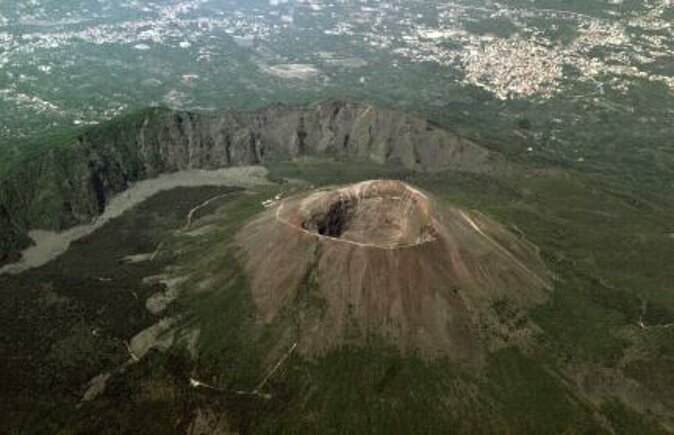
These ruins are famous for a reason. But they can also feel like a highlight reel: you see impressive stones, take photos, and still wonder what you just walked through. That’s where Fabrizio Bellini’s background matters. He’s a guide in Pompeii with 27 years of experience, and he’s an archaeologist, which means he explains how the city worked, not just what it looks like.
The big value here is that you don’t do Pompeii and then rush off to Herculaneum. You get context at each site, plus museum stops that prepare you emotionally before you enter the next stretch of ruins. That order helps a lot. It turns the day from a checklist into a story you can follow.
And yes, the day includes a winery visit on Vesuvius. That’s not a random add-on. It’s a palate and breath reset between two heavy archaeology mornings and afternoons—vineyards, views, a real meal, and wine tasting included with your lunch option.
Pompeii’s Forum to Teatro Grande: where the city’s daily life comes into focus
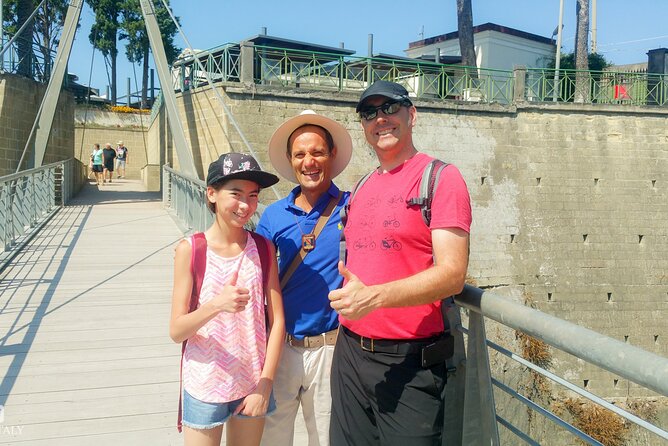
Pompeii is huge, so pacing and selection decide whether you feel energized or overwhelmed. This route starts by getting you oriented at the Piazza Porta Marina, the gateway area that acts like a practical entry point and a history primer at the same time. You pass through the Porta Marina gate area and move toward the Forum zone, so you don’t start in the middle of nowhere.
Then you hit the power core of Pompeian public life.
You can also read our reviews of more wine tours in Sorrento
- Sorrento Farm and Food Experience including Olive Oil, Limoncello, Wine tasting
★ 5.0 · 2,524 reviews


Temple of Apollo: religion, architecture, and a view line to Vesuvius
At the Temple of Apollo, you’re right at the edge of the Forum. This stop works well because it’s both visually dramatic and historically layered—Greek-to-Roman religious practice, columns around the sacred area, and an open-air museum feel.
You also get modern reference points like bronze replicas and a surviving sundial column. Those details help your brain connect the ruins to daily meaning. The view of Mount Vesuvius in the background makes the eruption story feel less abstract and more immediate.
Forum of Pompeii: politics, markets, and why the paving stones matter
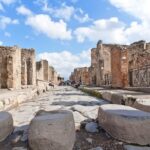
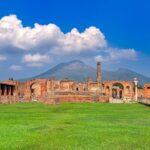
Walking across the original travertine paving stones puts you in the center of ancient Roman life: public speeches, religious meaning, and commercial activity all in the same zone. You’ll see major structures like the Temple of Jupiter and the Basilica, plus the Macellum market area and the mensa ponderaria weighing table.
Here’s the practical payoff: with a guide, you can actually imagine the noise and motion. Without that, the Forum can read like scattered monuments. With it, you understand how people moved, traded, gathered, and made decisions.
Casa dei Vettii and Insula dei Casti Amanti: luxury walls and new excavation tech
Pompeii’s houses can be a trap for self-guided visitors. You walk in, you see paintings, and you miss the big picture. The Casa dei Vettii stop is designed to avoid that. This is the kind of residence you remember because of its restored, high-impact fresco program and its household symbolism.
Then you get something newer and more dynamic at the Insula dei Casti Amanti. For 2026, this block includes a system of elevated walkways that lets you see down into an active excavation area. That matters, because it turns Pompeii from a frozen past into a living research project. You can watch how archaeologists remove pumice and dust with both practical tools and careful brushes.
This is also where kids often perk up. Charcoal sketches and small personal details feel less distant than big political history.
Teatro Grande: social class written into stone tiers
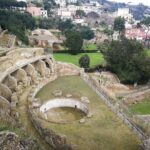
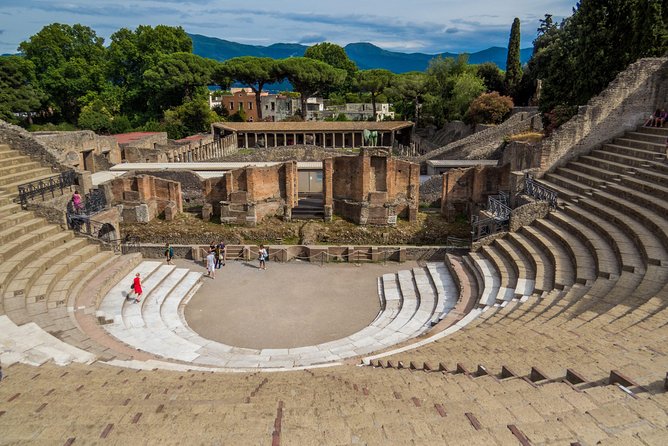
The Teatro Grande stop is a strong closer for the Pompeii portion. It’s an early stone theater with a horseshoe shape and seating tiers that reflect social hierarchy. The acoustics are a standout: even in open-air conditions, the design helps sound carry. When you hear that explained as part of how the Romans gathered, it becomes more than an architectural curiosity.
This stop also gives you a powerful combination of setting and story—the theater, the hills, and Vesuvius in the distance.
- Sorrento Farm and Food Experience including Olive Oil, Limoncello, Wine tasting
★ 5.0 · 2,524 reviews


Antiquarium di Pompei: the emotional handrail before the walk
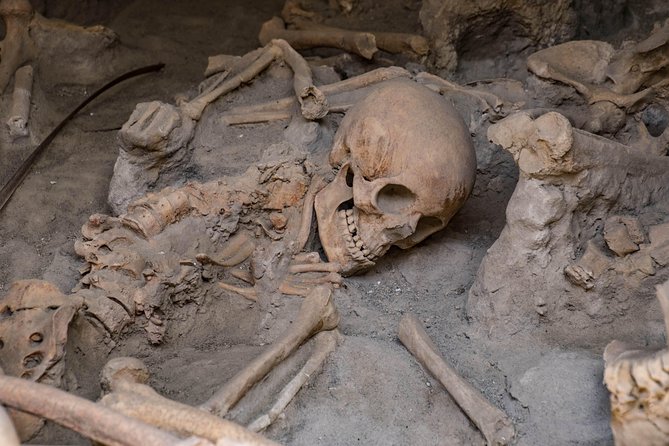
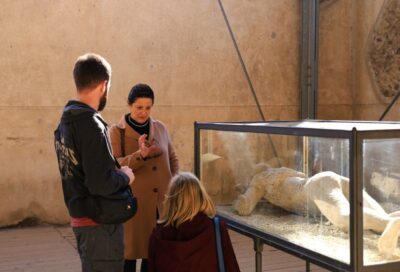
The Pompeii Antiquarium is the kind of museum stop that makes the ruins hit harder. It’s near the Porta Marina entrance, and it focuses on fragile finds and plaster casts that show victims in the final moments, plus artifacts that give a human scale to the tragedy.
Digital displays also help connect what you’ve seen outside to what the eruption did. You’ll usually feel this museum stop as a reset: you go from “cool ruins” to “I understand the stakes.”
Herculaneum next: organic preservation and seaside Roman life
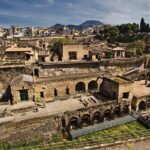
If Pompeii is the big stage, Herculaneum is the close-up. The eruption buried both cities, but Herculaneum preserved more delicate materials. That difference is why this tour puts a lot of time into Herculaneum’s specific highlights.
You’ll also notice something in how the day is structured: the Herculaneum route is planned to avoid missing hidden corners, and it’s described as an insider route through the city’s most spectacular areas.
Antiquarium di Ercolano: wood, textiles, and the Herculaneum Treasure
At the Antiquarium of Herculaneum, the key value is what you don’t usually see in Roman archaeology. You can encounter carbonized wooden furniture and textiles—organic materials that survive far less often elsewhere.
The museum also includes the Herculaneum Treasure, described as a shimmering collection found with victims at the ancient shoreline. Even if you’re not a museum person, this stop works as the narrative bridge: it gives the ruins context before you step outside again.
Boat Pavilion: a carbonized keel and the tragedy by the waterline
The Boat Pavilion is one of the most moving parts of the day. You see the carbonized keel of a long boat (about 9 meters), found where it was upturned by pyroclastic flows. Smaller maritime items like fishing weights, nets, and carbonized rope help you connect daily life to the final chaos.
If you’ve been thinking the eruption is just stones and ash, this stop brings it back to real movement and real attempts to survive.
Ancient Beach and fornici: the shoreline you can actually walk
The Ancient Beach (reopened to the public in 2024) gives you a direct shoreline experience. It’s described as an area where volcanic sand and fornici arches (boat sheds) sit above remains found huddled in their final moments.
The beach also illustrates the physical scale of the disaster: it remains meters below modern ground level, showing how thoroughly the environment was reshaped. That makes it hard to treat the site as a “sightseeing stop.” It’s a place with weight.
Houses that signal wealth: Casa dei Cervi and Casa di Nettuno e Anfitrite
Herculaneum’s villas are famous for why Roman luxury was more than marble floors. The House of the Stags includes an inverted layout with a terrace designed for views and sea breezes, plus iconic marble stags statues.
Right next to that, the House of Neptune and Amphitrite focuses on a vivid mosaic scene and another strong detail: an attached shop described as one of the best-preserved grocery stores from antiquity. Seeing wooden shelves and carbonized storage bins makes the household and commercial sides of the city feel inseparable.
Terme Femminili and Palestra: social life, privacy, and civic pride
The women’s baths (Terme Femminili) are another standout because they’re described as exceptionally well preserved, with a black-and-white mosaic in the apodyterium and original wooden shelving details. The route through tepidarium to caldarium also helps you understand how the heating system supported comfort and routines.
Then comes the Palestra, the gymnasium. The courtyard and the monumental cross-shaped natatio pool communicate civic pride in physical culture. The hydra-shaped fountain is a specific detail that helps the site feel like engineering and art working together. You can also see how a city can feel “alive” even when it’s empty, because the layout invites your imagination of practice, youth organization, and daily movement.
A quick wink: the ancient wine advertisement
There’s also an included stop described as an ancient wine advertisement from a wine seller. It’s brief, but it helps the day feel less like solemn history only. It reminds you that Herculaneum and Pompeii were full of commerce, humor, and normal human cravings for the next drink.
Cantina del Vesuvio on Vesuvius: lunch, views, and wine tasting without the stress
This tour’s lunch option is one of the clearest signs of value. The winery is Cantina del Vesuvio (Russo family since 1930), located within Mt. Vesuvius National Park.
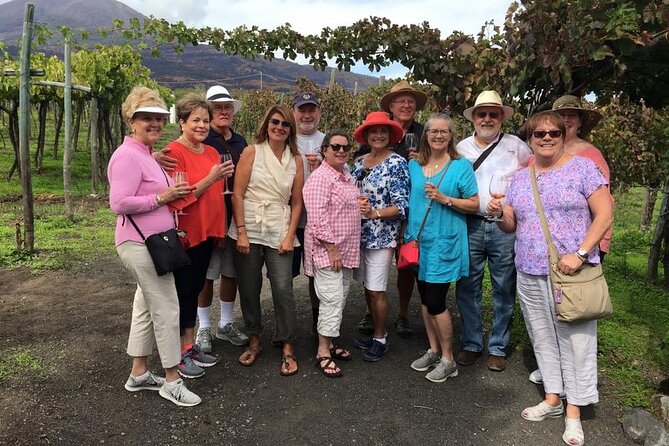
You start with a guided 15-minute stroll through the vineyards to learn about Lacryma Christi wines. Then you settle in for an all-inclusive set menu lunch paired with five local wines. The sample menu includes appetizers like bruschetta, cheeses, and cured meats; pasta with Vesuvius cherry tomatoes; and traditional Pastiera for dessert (with vegetarian and gluten-free options mentioned).
Cost matters here:
- The winery lunch experience is about €50 per person.
- There’s a superior wine upgrade option around €60 per person.
- You pay on-site by card or cash, and Fabrizio handles the reservation.
- You can ship wine and olive oil home if you want.
One practical consideration: the tour does not reach the top of Mount Vesuvius. You’re visiting within the park via the winery area, which is usually more comfortable for a full day schedule and helps keep timing under control.
What the $861 per group really buys you (and what you’ll still pay)
This is priced at $861.07 per group, up to 7 people, with an 8 to 9 hour duration. You’re paying for private transportation and private guided time in both Pompeii and Herculaneum, led by Fabrizio Bellini.
Included costs:
- Air-conditioned vehicle
- Water and Wi-Fi on board
- Private guided tour in Pompeii and Herculaneum
- Private transportation
- Mobile ticket
- Pickup offered in Naples or Sorrento area
- English
Not included:
- Admission fees: about €40 per adult for both sites (free under 18 with valid ID)
- Winery lunch and tasting: about €50 per person (or €60 for superior wine upgrade)
So is it a bargain? It depends on how you travel. If you’re splitting costs with a group of friends or family, the private guide and private vehicle can be a strong value. If you’re solo, it can feel pricey compared with public transport and self-guided tickets—but you’re buying time, interpretation, and crowd management.
Also, the reviews strongly suggest that Fabrizio’s planning and flexibility can save your day. When heat hits, when kids need a slower pace, or when you want to swap the order of sites, private touring is where that control lives.
Pace, comfort, and family time that actually works
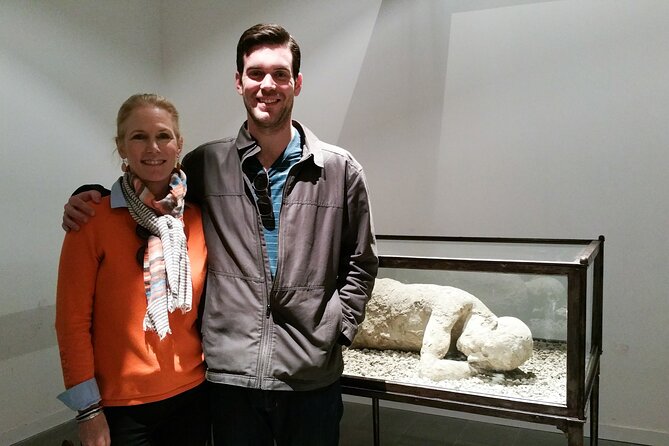
This is a full-day plan, but it’s not rigid. The tour is described as flexible, with the guide walking at your pace and adapting to your group’s needs.
A couple of details stand out from real experiences:
- Fabrizio brings water and is attentive about comfort during the day.
- The guide is described as very kid-friendly, using questions and engagement to keep children focused.
- The tour can be tailored based on energy levels, especially when it’s hot.
- There’s also practical help with uneven stones in Pompeii, which matters if you have small kids or anyone with mobility challenges.
You should still plan for moderate physical fitness. Pompeii and Herculaneum involve lots of walking on uneven ancient surfaces, and the day is long. But for families who want more than a standard bus tour, this setup is a good fit.
Practical tips before you go: shoes, heat, and how to get the most from each stop
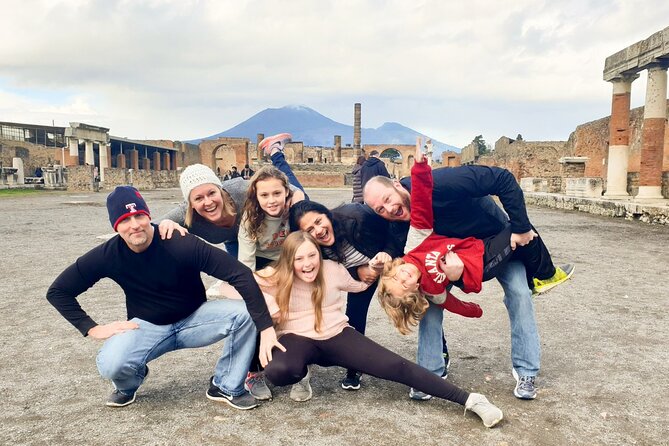
Here’s how I’d plan your day if you want it to feel smooth rather than exhausting.
First: wear shoes you trust. Pompeii’s surfaces are ancient and uneven, and you’ll walk enough that blisters become a real threat if you’re in the wrong pair.
Second: pack for heat. The day can involve midday sun exposure, and you’ll be walking between sites and stopping at museums. The guide may look for shade and pacing options, but you’re the one wearing your shoes and carrying your water bottle if you choose to bring it.
Third: decide how you want the order to feel. This tour can flex, including suggestions to swap the Pompeii/Herculaneum sequence if it helps you experience fewer crowds. The value is that you’re not stuck with a fixed route.
Fourth: plan your lunch decision in advance. If you want the winery experience, budget the €50 per person amount (or €60 upgrade). If you don’t, you’ll want to manage your energy with other food breaks so you don’t crash during the archaeology.
Should you book this Pompeii, Herculaneum, and Vesuvius winery tour?
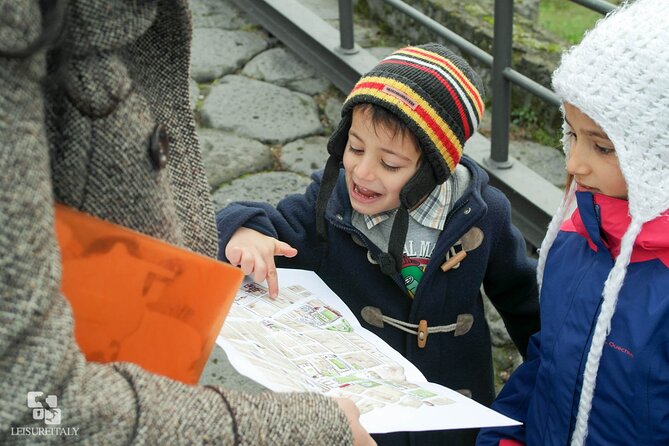
Book it if you want:
- A private archaeologist-led day rather than a self-guided sprint
- A tour that explains what you’re seeing in Pompeii and Herculaneum, including the museums and the emotional context of the sites
- A lunch + tasting option that breaks up the day in a very scenic place on Vesuvius National Park
- A guide (Fabrizio Bellini) who has a reputation for flexibility and family-friendly engagement
Skip or consider another option if:
- You’re expecting a low-walking day. This is a long outing with uneven terrain.
- You want to also climb to the top of Mount Vesuvius. This tour does not reach the summit.
If your goal is one “best day” in the Naples area with meaning, variety, and expert guidance, this is a strong pick.
FAQ
How long is the Pompeii and Herculaneum plus winery day trip?
It runs about 8 to 9 hours.
Where does pickup happen?
Pickup is offered anywhere in the Naples or Sorrento area. If you’re staying on the Amalfi Coast, you need to contact the provider.
Are admission tickets included?
No. Admission fees are not included and are approximately €40 per adult for both sites. Under 18 can be free with valid ID.
Is the Vesuvius winery lunch included in the tour price?
The winery lunch and wine tasting are not included in the base price. The all-inclusive winery lunch is about €50 per person (about €60 with a superior wine upgrade). Payment is made on-site, and the reservation is handled by Fabrizio.
Is this tour suitable for families and kids?
The tour offers a family-friendly upgrade designed to entertain children, and the pacing can be adjusted to keep kids engaged. Travelers should have moderate physical fitness.
Is there free cancellation?
Yes. You can cancel up to 24 hours in advance for a full refund.
You Might Also Enjoy

More Wine Tours in Sorrento
- Sorrento Farm and Food Experience including Olive Oil, Limoncello, Wine tasting
★ 5.0 · 2,524 reviews


More Tour Reviews in Sorrento
- Sorrento Farm and Food Experience including Olive Oil, Limoncello, Wine tasting
★ 5.0 · 2,524 reviews