REVIEW · POSITANO
Pompeii Herculaneum small group tour from AmalfiCoast
Book on Viator →Operated by SUNLAND - SOVI TURISMO SRL · Bookable on Viator
Two ruined cities in one long coastal day. That mix is the point here: Pompeii and Herculaneum together with live guided commentary all day, plus air-conditioned driving so you’re not roasting on your commute. The trade-off is simple: it’s a long, walk-and-stand day, and Pompeii is intense in the heat if you’re not used to archaeological sites.
I also like how this stays organized. You get headsets to hear your guide clearly, an expert local guide keeps the route efficient, and the group stays small (up to 25). One thing to watch closely before you go: the site admission tickets are not included in the itinerary, so you should plan for payment and possible ticket-handling differences when you arrive.
In This Review
- Key Highlights You’ll Care About
- Price and Logistics: What the $138.47 Really Covers
- Driving the Amalfi Coast to Pompeii: Comfort Before You’re Exhausted
- Pompeii in 3 Hours: How the Tour Chooses What Matters
- Ticket Handling at Pompeii: A Small Detail That Can Change Your Day
- Lunch Break Between Sites: Plan for Food You Pay For
- Herculaneum in 90 Minutes: Why It Feels Different
- The Real Value: Live Commentary, Headsets, and Keeping the Group Moving
- Physical Demands: This Is Not a Sit-Back Tour
- Who Should Book This Combo Tour (and Who Might Skip It)
- Should You Book Pompeii and Herculaneum From the Amalfi Coast?
- FAQ
- How long is the Pompeii Herculaneum small group tour?
- Where does the tour start from?
- Is the tour offered in English?
- Is lunch included?
- Are Pompeii and Herculaneum admission tickets included?
- What’s the group size?
- Do I need to bring ID or a passport?
- Is there a bag size limit for Pompeii?
- Is this tour physically demanding?
- What is the cancellation policy?
- Does the tour provide headsets?
Key Highlights You’ll Care About
- Two sites, one day: Pompeii’s key stops plus Herculaneum’s better-preserved feel
- Headsets included: You won’t lose the story when the group slows down
- Air-conditioned vehicle: Heat control during the drive between sites
- Expert local guides: Real narrative, not just a list of monuments (Lucia and Alessandra are named in guides’ feedback)
- Smart bag rules: Pompeii limit is 30x30x15; larger bags go on the bus
Price and Logistics: What the $138.47 Really Covers
At about $138.47 per person, you’re paying for the whole framework that makes these two places doable in one shot: a small-group tour, air-conditioned transportation, and a guide who handles the flow and explanations on-site. You also get headsets, which is a big quality-of-life upgrade at Pompeii, where sound carries poorly and groups spread out.
Here’s the part to treat as non-negotiable: Pompeii and Herculaneum admissions are listed as not included in the tour schedule (3 hours at Pompeii and 1.5 hours at Herculaneum both show admission ticket not included). That means you should budget for entry fees separately and be ready to purchase or confirm tickets on arrival.
There’s also a little friction risk because people report different ticket-handling experiences depending on the day and process. So, do yourself a favor: when you book, double-check what you personally will be responsible for at the gate—entry fee payment, or a ticket already arranged for you. The tour can still be worth it, but surprises here are avoidable.
Finally, note how the day ends. This tour includes one-way pickup from Praiano/Positano if that option is selected, but it does not include a shuttle back to Positano/Praiano afterward. The tour ends in the Amalfi center, so plan your next transfer accordingly.
You can also read our reviews of more tours and experiences in Positano.



Driving the Amalfi Coast to Pompeii: Comfort Before You’re Exhausted
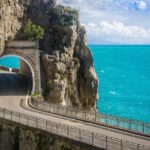
If you’ve spent time on the Amalfi Coast before, you already know the views can distract you—in a good way. This tour includes the drive along the Amalfi Drive route from the area to Pompeii, with chances to enjoy coastal scenery and small villages along the way.
The practical win is the private, air-conditioned vehicle. It’s not just comfort; it’s time management. You’ll arrive with a little more energy because you’re not spending the whole morning in the sun. Most days on this coast start bright, and Pompeii is all about walking and standing, so every bit of cooling helps.
Your timing can vary by pickup points. The tour is run with a group size of up to 25, and your pickup may be part of a routing chain (multiple towns feeding the main departure). When that happens, don’t expect a clean one-stop pickup—expect a little waiting if your pickup is in a smaller town.
One more useful detail: the day can be long (about 8 to 10 hours). Bring patience like it’s part of the packing list.
Pompeii in 3 Hours: How the Tour Chooses What Matters
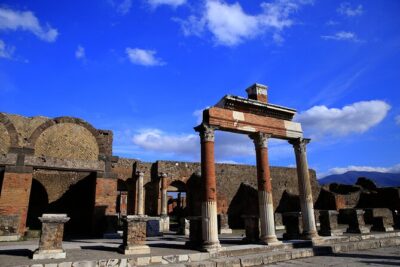
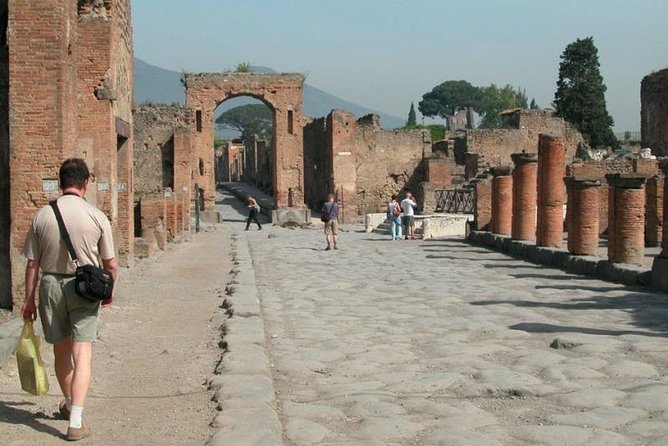
Pompeii is huge. Even if you know the city from movies or photos, you’ll quickly feel how much there is to see. This is why the guide’s job is crucial: in about 3 hours, you can’t do Pompeii by browsing. You need a route that hits the big anchors and explains what you’re looking at.
You’ll focus on standout areas such as:
- Gladiator’s Gym: the kind of space that helps you picture public life
- Thermal Baths: daily routines made visible in stone
- The big theatre: where community events likely gathered people
- House of Menander (or House of Sirico): domestic art and layout you can connect to everyday culture
- The forum: civic space where the city’s rhythm becomes clear
- Lupanare: a reminder that even a ruin includes complicated human behavior
- Fullonica: a useful stop if you want to understand work and trades
- Thermopolius: a window into how people ate and bought food
What makes this time-box work is the live commentary. A good guide doesn’t just point. They help you understand why these areas were important, and what the layouts suggest about how Pompeii worked.
Heat is the limiting factor in Pompeii. One of the strongest themes in feedback is that guides pay attention to it—stopping in shaded areas to give relief while still keeping the group moving. If you’re sensitive to sun or you’re not confident walking on uneven ground, you’ll feel Pompeii most between the midday hours. Come prepared.
Ticket Handling at Pompeii: A Small Detail That Can Change Your Day
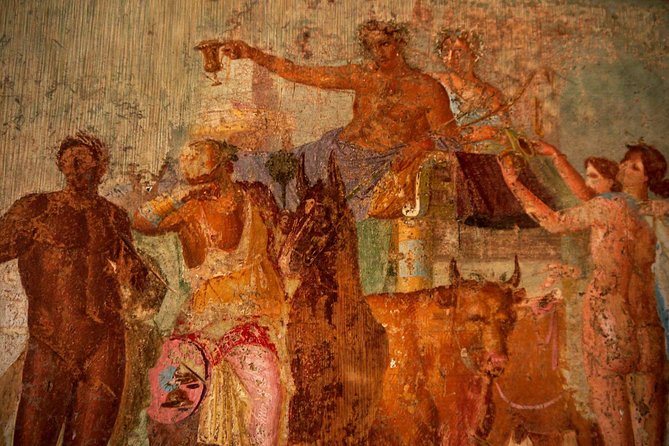
This tour’s ticket situation is the one place where you should be extra alert.
The schedule lists admission tickets not included. At the same time, the tour includes skip-the-line entry tickets in the included features list, and some participants describe tickets being managed in advance so they didn’t queue at Pompeii.
So here’s the reality check for you: don’t assume the gate will work like a typical included-ticket tour. Plan for at least one of these scenarios:
- You’ll pay admissions yourself during the day
- Or you’ll be directed through a faster line due to pre-arrangement
Either way, keep your ID ready. You must bring a passport/ID card (or a copy) on the tour day. Also remember the Pompeii bag rule: max bag size is 30x30x15. Bigger bags can be stored on the bus during the visit. This is common at Pompeii, but it matters because it can slow you down at entry if you show up with a large backpack.
Practical move: travel light. If you’re debating between a daypack and a full camera bag, choose the smaller option unless you’re sure you’ll be comfortable storing gear.
Lunch Break Between Sites: Plan for Food You Pay For
Lunch is not included. Instead, the tour builds in a break between Pompeii and Herculaneum where you can grab food at a restaurant stop.
What I’d take from the available info is this: it’s designed to be quick, not an all-you-can-photoshoot lunch. Some people report a set meal option around 18 euros per person, including choices and a cold beverage, served at a stop that’s convenient for the schedule.
So if you have dietary needs, don’t assume it’ll be a big menu buffet. You should be ready to pick from what’s offered at that particular restaurant.
Also, if you’re sensitive to heat, treat lunch as part of your pacing strategy. Eat, drink something cold if available, and reset your energy before the next ruins.



Herculaneum in 90 Minutes: Why It Feels Different
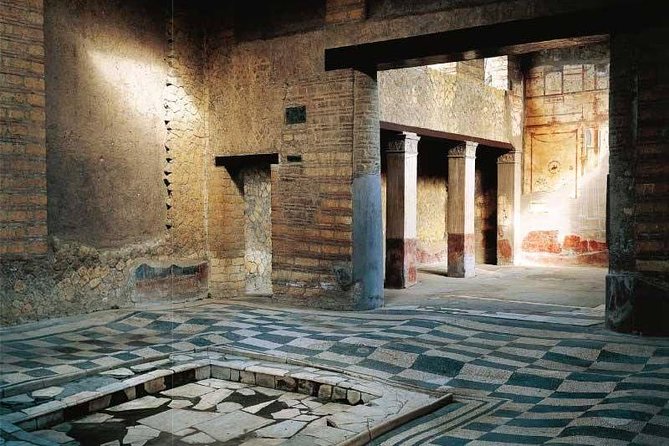
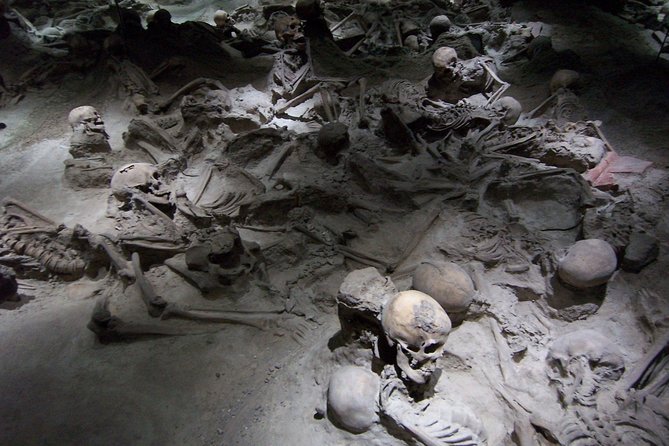
If Pompeii feels like a giant open-air museum, Herculaneum often feels like a tighter, better-preserved snapshot of daily life. This tour gives you about 1 hour 30 minutes at Parco Acheologico di Ercolano.
You’ll spend your time with the guide, focusing on how the ruins still show textures and structures that make the city feel lived-in. The big practical point is pacing: 90 minutes is short, but it’s a realistic window if you already walked a lot in Pompeii.
This is also where the guide’s narrative matters again. If your guide is strong (and the tour has had standouts like Lucia), the shift from Pompeii to Herculaneum can feel like a story moving forward, not two separate checklists.
And yes, there’s often a little breathing room at the end. Some participants describe time to explore on your own after the guided portion, which is helpful because it lets you look longer at one area without worrying about falling behind.
The Real Value: Live Commentary, Headsets, and Keeping the Group Moving
Let’s talk about what actually makes a guided ruins day feel worth the money.
First, you get live commentary both on the bus and in the ruins. That matters because Pompeii and Herculaneum can become a blur if you only see them visually. With story and context, you start recognizing patterns: civic spaces vs. domestic spaces, public entertainment vs. neighborhood commerce.
Second, headsets are included. Without them, you spend your time leaning and straining to hear your guide, especially when paths get crowded. With headsets, you can keep your pace and still follow the explanation.
Third, you’re not alone in logistics. The guide takes you from pickup to drop-off, and also manages the transitions between sites. That’s not glamour, but it’s what prevents you from losing half your day to confusion.
The small-group size (max 25) is a big plus. You’re less likely to get swallowed by a giant crowd, and your guide can usually slow down for the spots that need extra attention.
Physical Demands: This Is Not a Sit-Back Tour
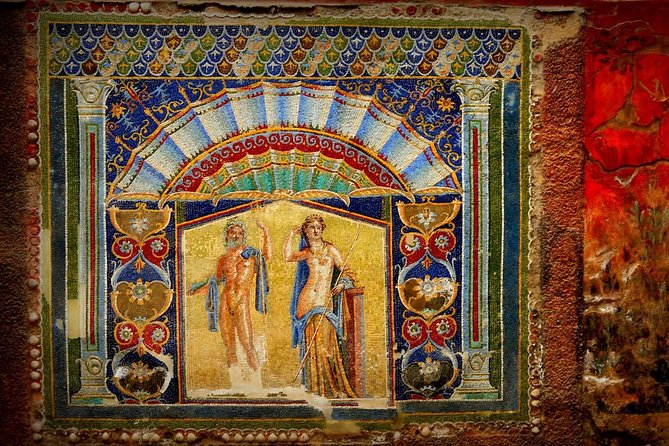
Even with air-conditioned transport, this day is still about ruins and walking. The tour calls for moderate physical fitness, and that lines up with the reality of Pompeii terrain.
In plain terms, you should be ready for:
- uneven ground and lots of stone paths
- standing to see features explained by the guide
- sun exposure at Pompeii even if the guide tries to break up the hottest stretches
One participant put it bluntly: Pompeii and Herculaneum can be almost too much for one day. That’s not a reason to avoid the tour, but it is a reason to be honest with yourself. If you get tired quickly, or if you hate long days without extended breaks, you might prefer splitting the cities into different days.
Who Should Book This Combo Tour (and Who Might Skip It)
This tour is a great match if you want:
- one-day access to both Pompeii and Herculaneum
- a guided route that hits key areas without you needing to plan every turn
- air-conditioned comfort while commuting between sites
- an English-language experience
It’s also a good fit for first-timers. Pompeii is easy to get lost in, and Herculaneum is easier to appreciate when someone frames what you’re seeing.
I’d think twice if:
- you want lots of free time in Pompeii itself (the schedule is time-tight)
- you’re not comfortable with heat and walking
- you strongly dislike paying multiple separate items during the day, since admissions are not included in the itinerary
Should You Book Pompeii and Herculaneum From the Amalfi Coast?
If you want the most efficient use of your Amalfi-area time, I’d say yes—with a small checklist. The tour shines when you care about getting context fast and staying on track without the stress of arranging two sites yourself. The best part is the combination of expert guide storytelling, headsets, and a route that fits Pompeii’s scale into one guided session.
But book smart. Verify what you’ll pay for admissions, pack for Pompeii’s bag limits, and bring water. Also plan for a long day and an ending in Amalfi center rather than a return shuttle to your exact starting town.
If that sounds like your style, you’ll likely find this is a practical, high-impact way to experience two of Italy’s most memorable ruins—without spending days on logistics.
FAQ
How long is the Pompeii Herculaneum small group tour?
It runs about 8 to 10 hours.
Where does the tour start from?
It’s based in the Amalfi area, with one-way pickup from Praiano/Positano if that option is selected.
Is the tour offered in English?
Yes, the tour is offered in English.
Is lunch included?
No, lunch is not included.
Are Pompeii and Herculaneum admission tickets included?
The itinerary lists admission tickets as not included for both Pompeii and Herculaneum. You should be prepared to pay for site admissions as part of the day, and confirm the exact process when booking.
What’s the group size?
The maximum group size is 25 travelers.
Do I need to bring ID or a passport?
Yes. A passport/ID card (or a copy) is mandatory on the day of the tour.
Is there a bag size limit for Pompeii?
Yes. The maximum bag size is 30x30x15. Bigger bags can be stored on the bus during the visit.
Is this tour physically demanding?
It requires moderate physical fitness, since there is significant walking and time spent on uneven ground.
What is the cancellation policy?
You can cancel for a full refund up to 24 hours in advance of the experience start time.
Does the tour provide headsets?
Yes. Headsets are included so you can hear the guide clearly.