REVIEW · SORRENTO
Sorrento through the eyes of a local
Book on GetYourGuide →Operated by Caluga House · Bookable on GetYourGuide
Sorrento feels different when you walk like locals. This 2-hour experience pairs street-level sights with a guide who shares what matters, starting at Piazza Tasso and then steering you into quieter corners.
I love getting local hints from a real person who knows the area beyond the obvious views. And I really like the free tasting stop, with limoncello plus local sweets, so the walk feels like part sightseeing, part local break.
One consideration: you’ll be on your feet for the full route, including a climb toward the Mills Valley, so go in with comfy shoes and a flexible pace.
In This Review
- Key highlights at a glance
- Starting at Piazza Tasso, with a local’s way of seeing the town
- Pity Road and inlay making: the crafts-and-streets chapter
- Sorrento Cathedral and the nativity from the 800s
- The O’ Parruchiano garden and Italian pergola access
- Villa Fiorentino, Sedil Dominova, and the art-on-the-outside moment
- Limoncello and sweets: the break that turns sightseeing into Sorrento
- Piazza della Vittoria panorama and the St. Francis cloister with graffiti
- Comunal Villa viewpoint: seeing the whole coast in one stretch
- St. Antonino church and the cripta finale before the Mills Valley walk
- Price and value: where your $30 actually goes
- Who this Sorrento walk suits best
- Should you book this Sorrento local walk?
- FAQ
- Where do we meet for the Sorrento walk?
- How long is the tour?
- What’s included besides the guided walking?
- Is the tour in English?
- Is the tour wheelchair accessible?
- Can I get a refund if my plans change?
- What if I’m late to the meeting point?
Key highlights at a glance
- Local meeting + personal hints that help you understand Sorrento as more than postcard angles
- Pity Road and narrow lanes that show how the town once moved people by carriage
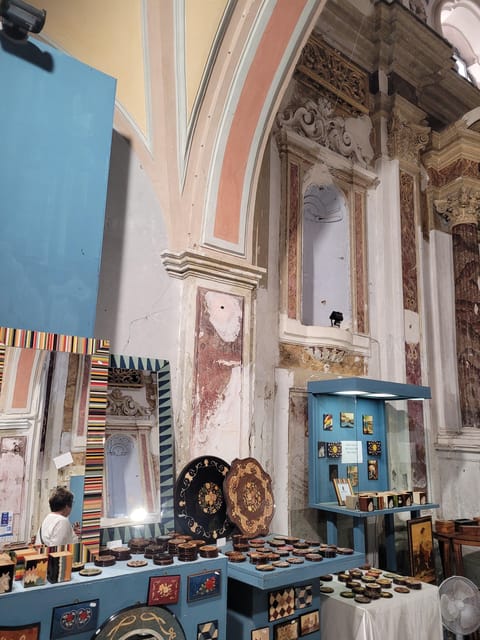
- Sorrento inlay workshop access inside an older, deconsecrated church space
- The O’ Parruchiano garden and its famous Italian pergola, a place you would likely miss on your own
- Multiple photo-and-view pauses including Sedil Dominova and Piazza della Vittoria
- End with cripta + Mills Valley for a finish that feels both historical and practical
Starting at Piazza Tasso, with a local’s way of seeing the town

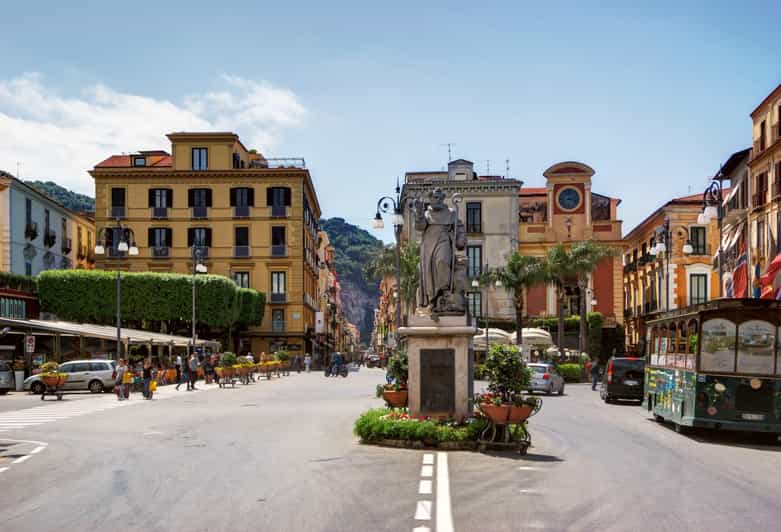
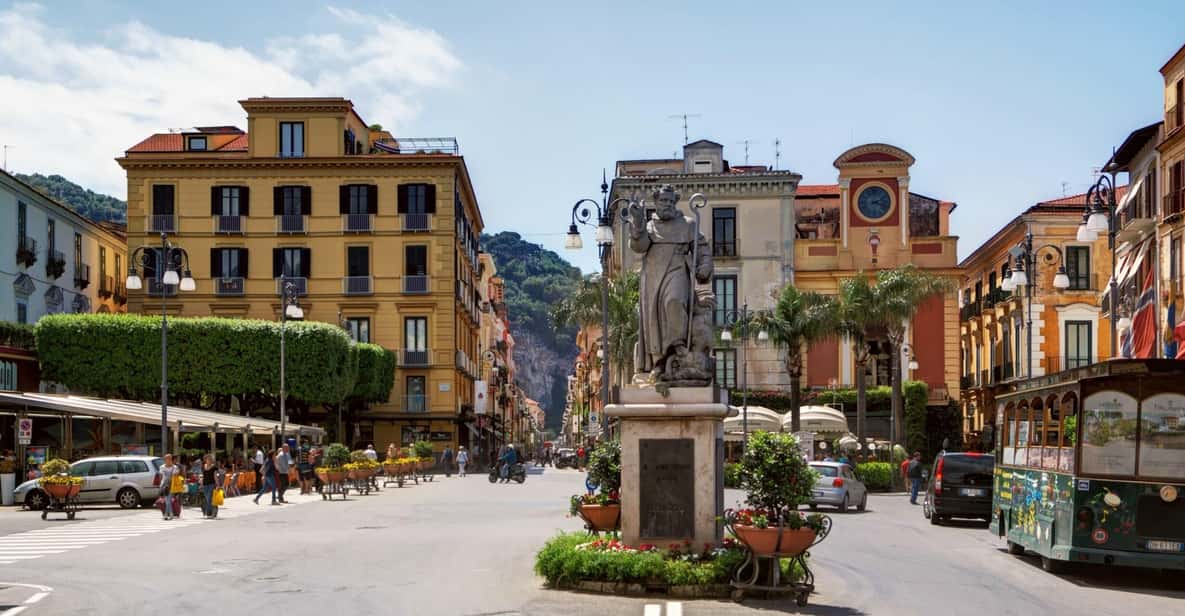
Your walk begins right in front of the statue of Torquato Tasso in Piazza Tasso, next to Bar Fauno. That first landmark matters, because the guide doesn’t just point at the statue and move on. You get the story of why the plaza is important and what the statue represents, which makes the rest of the route click into place faster.
I also like how this tour keeps the mood conversational. In past departures, guides like Camilla and Alessandra have been praised for bringing Sorrento to life with enthusiasm and an attention to pacing. You’re not dragged from stop to stop. The rhythm feels human, more like walking with someone who wants you to notice details than checking boxes.
Practical tip: arrive a few minutes early if you can. And if you’re late, the guide asks that you message them. In a town like Sorrento, a small delay can snowball into a big one.
You can also read our reviews of more tours and experiences in Sorrento.
- Sorrento Farm and Food Experience including Olive Oil, Limoncello, Wine tasting
★ 5.0 · 2,524 reviews



Pity Road and inlay making: the crafts-and-streets chapter
After Piazza Tasso, you head toward the Pity Road, described as an ancient, very narrow road where people once passed with carriages. This section is more than atmosphere. It’s a quick reminder that Sorrento’s streets were designed for a different kind of life—slower, tighter, more intimate with the town’s walls and turns. You’ll feel it as you walk, especially when the road narrows and you can’t rely on a wide sidewalk to set your pace.
Next comes one of the tour’s best “only on a guided walk” moments: you’ll see how Sorrento inlay is made inside an older, deconsecrated church. The value here isn’t just that it’s interesting. It’s that you’re viewing a working craft space tied to the town’s identity, in a setting you’d probably never think to look up.
If you like learning how things are made (even briefly), this stop can be a mental reset. It’s not just buildings and views. It’s a small window into local production and the way Sorrento expresses itself through materials.
Sorrento Cathedral and the nativity from the 800s
From the street-craft transition, the route moves into the sacred side of Sorrento at the Sorrento Cathedral. You’ll have a chance to see a nativity from the 800s inside. This isn’t a generic “stand in front of something old” moment. The guide frames it so you notice how the religious art fits into the town’s everyday identity.
What I like about adding a cathedral stop in the middle of a walking tour is the pause it creates. You step out of the narrow streets and views and into a more controlled, calmer environment. Even if you’re not deeply religious, the chance to see older devotional art can give the town a different texture.
One note: church interiors often feel cooler than the street, and seating can be limited. If you’re someone who needs to rest your legs, you might want to plan for short stops rather than long ones.
The O’ Parruchiano garden and Italian pergola access
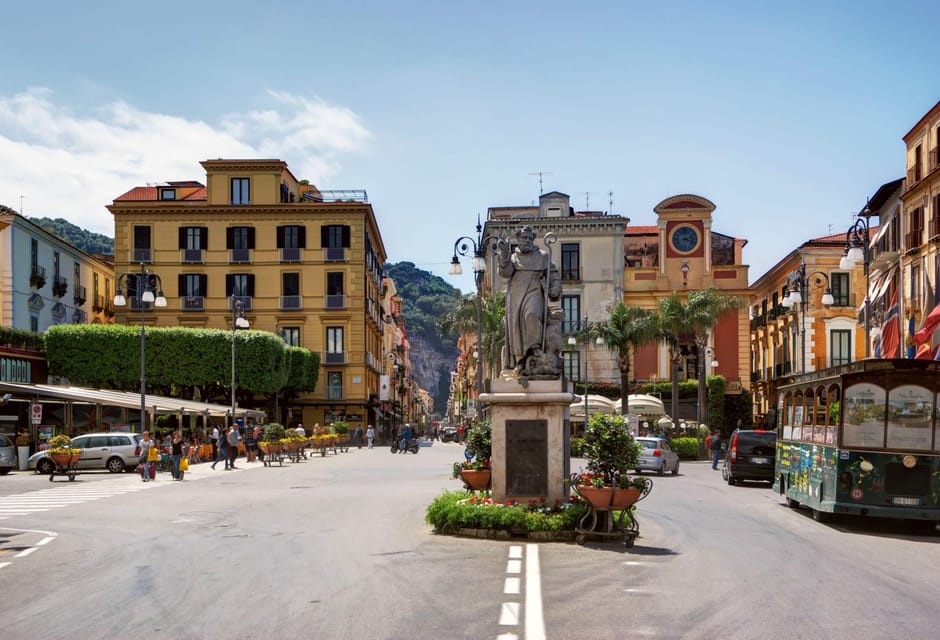
Then you get a highlight that’s hard to replicate on your own. During the walk, the guide takes you to a hidden garden inside the O’ Parruchiano restaurant. The centerpiece is the famous Italian pergola.
This is the kind of stop that makes the whole tour feel worth it: you’re entering a space you normally wouldn’t see unless you were part of the restaurant’s world. And since it’s tucked into the flow of the walking route, it doesn’t feel like a detour. It feels like a reward.
If you’re the type who collects details for later photos, this is also where you’ll come back with images that look different from the typical Sorrento shots. Pergola shadows, garden corners, and that tucked-in feeling all create a visual story of the town’s quieter side.
Villa Fiorentino, Sedil Dominova, and the art-on-the-outside moment
Next up is Villa Fiorentino, viewed from the outside. The guide explains that the building often hosts art exhibitions and that it has included famous paintings associated with artists like Dalì and Picasso. You won’t be walking through galleries here, but you’ll get enough context to understand why the villa matters.
I like this approach because it keeps the pace realistic. It’s still a “see and understand” stop without dragging the tour into a time sink.
After that, you head to the Sedil Dominova, described as an old meeting point in the heart of Sorrento. Even without a long historical lecture, it makes sense immediately: that’s where people would have gathered. It helps you imagine daily life centered on conversations, news, and community decisions—things you can’t always feel when you’re just passing by streets.
- Sorrento Farm and Food Experience including Olive Oil, Limoncello, Wine tasting
★ 5.0 · 2,524 reviews



Limoncello and sweets: the break that turns sightseeing into Sorrento
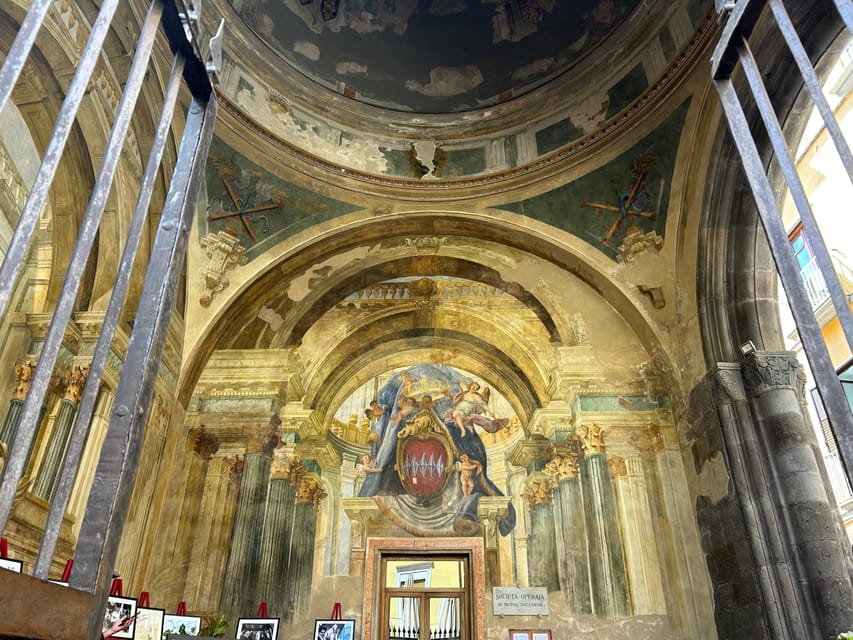
Now comes one of the most practical and enjoyable moments: a refreshing stop where you can try the local limoncello, and also local sweets are included as part of the free tasting experience.
This matters because limoncello isn’t just a drink here—it’s tied to Sorrento’s identity as a place that celebrates its flavors. After a couple of hours of walking, the tasting gives you a simple payoff. It’s also a good time to slow down and let the guide’s stories land.
A small strategy: if you’re sensitive to alcohol, sip slowly. You’re still walking afterward, including viewpoints, churches, and the final uphill stretch toward Mills Valley.
Piazza della Vittoria panorama and the St. Francis cloister with graffiti
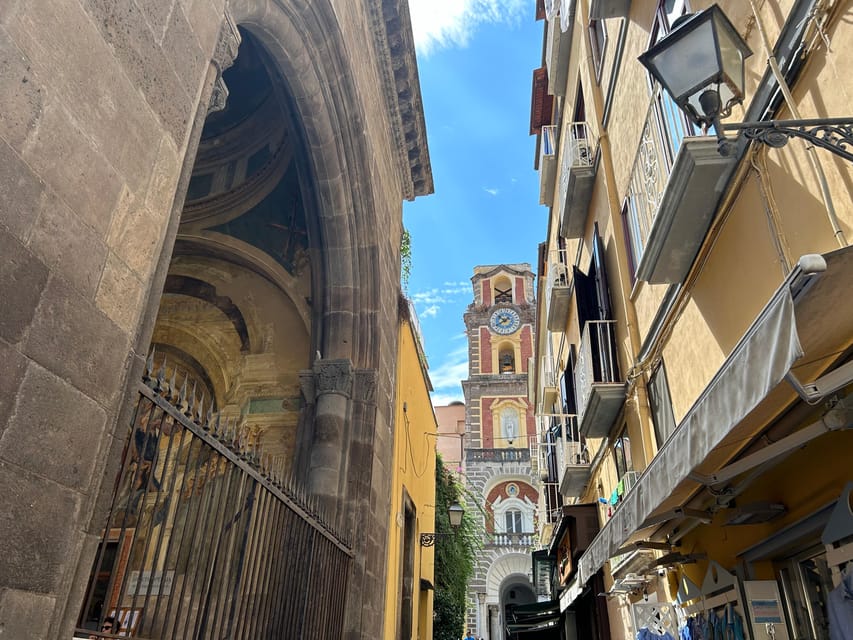
From the tasting break, the route continues toward Piazza della Vittoria for a panorama. This is one of the classic “look out over Sorrento’s story” moments. It helps you reconnect the town’s tight streets with the wider coastline picture.
Then you’ll head to the cloyster of St. Francis. This stop includes a surprising contemporary twist: you’ll see modern graffiti art from a famous singer. That contrast is part of the charm. Sorrento isn’t frozen in time. Even historic spaces get interpreted through modern creativity.
If you’re someone who likes your tours to include both old and new, this is a smart pairing. You get heritage in one breath, then a pop of street culture in the next.
Comunal Villa viewpoint: seeing the whole coast in one stretch

Next is the Comunal Villa, where you can look out across the whole Sorrento coast. This viewpoint is the tour’s “make it make sense” stop. After churches, narrow streets, and small craft spaces, this gives you the big picture of how the town sits and why it has the views it has.
I’d treat this as your main photo window. If you want postcards that don’t look identical to every other one in your feed, spend a minute changing your angle and looking for the way the coastline curves. The guide’s timing here helps, because you’re reaching it while the tour still has momentum.
St. Antonino church and the cripta finale before the Mills Valley walk
The route then moves to St. Antonino church, including a visit to the cripta. This is another “slow down and look carefully” moment, similar in feeling to the cathedral stop earlier—more interior, more atmosphere, less street rushing.
From there, you walk up toward the Mills Valley, where the tour ends with a goodbye. This final climb is the tour’s gentle reality check: you’re not just doing scenic stops on flat ground. It’s a walking loop that ends with a bit of uphill energy.
That’s also why the tour’s good for travelers who actually like walking. If you prefer a bus ride with a few quick stops, you might feel this is too active. But if you want to feel like you belong on the streets, it’s a strong finish.
Price and value: where your $30 actually goes
At $30 per person for a 2-hour guided walk, you’re paying for three things that add up quickly.
First, you’re paying for access. The standout example is the special garden walk inside O’ Parruchiano, a space you would likely not see if you were just passing through.
Second, you’re paying for guided interpretation. The tour isn’t only “what you can read on a sign.” You get explanations of Piazza Tasso, the statue of Torquato Tasso, the meaning of Sedil Dominova as a meeting point, and the context around the nativity and the craft stop for inlay making.
Third, you’re paying for the tasting. The free limoncello and local sweets are small, but they’re also a real part of the experience. They turn the day from sightseeing into something more local and personal.
If you’re comparing against tours that cost more but only add viewpoints and generic narration, this one tends to feel fair for the time you get—especially because the pacing is described as not rushed.
Who this Sorrento walk suits best
This is a great choice if you want Sorrento through the eyes of a local, not just a checklist of famous angles. I’d put it on your shortlist if you like:
- learning why certain plazas and buildings matter
- stepping into places you wouldn’t find alone (like the inlay-making stop and the O’ Parruchiano garden)
- mixing viewpoints with quieter interior stops
- a short 2-hour format that doesn’t take over your whole day
It’s less ideal if you want mostly open sea views with minimal walking. This route is built around old streets, churches, and a last uphill stretch.
Should you book this Sorrento local walk?
Yes, if you want the kind of afternoon where Sorrento starts to feel understandable, not just photogenic. The best reason is the combination: local conversation, craft viewing, and special access to spaces like the O’ Parruchiano garden, plus the free limoncello and sweets.
If you’re comfortable with walking and you enjoy historical stops that don’t feel stiff, book it. If you’re expecting a drive-by tour with lots of sitting, you’ll probably feel it’s too active.
Either way, show up on time at the Piazza Tasso meeting point, and you’ll get the most out of the route’s flow.
FAQ
Where do we meet for the Sorrento walk?
You meet right in front of the statue of Torquato Tasso in Piazza Tasso, near Bar Fauno.
How long is the tour?
The duration is 2 hours.
What’s included besides the guided walking?
The tour includes a guided walking tour plus a free tasting of local limoncello. The experience highlights also mention free local sweets.
Is the tour in English?
Yes, the tour guide provides the tour in English.
Is the tour wheelchair accessible?
Yes, the tour is wheelchair accessible.
Can I get a refund if my plans change?
Free cancellation is available up to 24 hours in advance for a full refund.
What if I’m late to the meeting point?
If you’re late, send the guide a message.
You Might Also Enjoy



More Tour Reviews in Sorrento
- Sorrento Farm and Food Experience including Olive Oil, Limoncello, Wine tasting
★ 5.0 · 2,524 reviews