REVIEW · ERCOLANO
Ercolano: Herculaneum Entry Ticket with Optional Audio Guide
Book on GetYourGuide →Operated by GetYourGuide Tours & Tickets GmbH · Bookable on GetYourGuide
A Roman town, frozen in ash. This Herculaneum (Ercolano) entry ticket takes you into one of the best-preserved cities from ancient Rome, buried under Vesuvius in 79 AD—and still shockingly intact. It’s a UNESCO World Heritage site where you can walk cobbled streets and look at houses, frescoes, and everyday objects that survived far better than at nearby Pompeii.
I especially love how much “real life” you can see here. Roofs, beds, doors, food, and even around 300 skeletons are part of the experience, so the site feels less like ruins-as-rocks and more like a community with routines. I also like that you can shape your visit with an optional audio guide, either on your phone or with a physical device, so you can go fast when you want and slow down when a detail catches you.
One consideration: the audio setup and navigation can be hit-or-miss depending on your device and signal. Some people find the app confusing to follow on-site, so plan to download content early and be ready to rely on your own pacing if the guide gets frustrating.
In This Review
- Key things to know before you go
- Herculaneum (Ercolano) is the quieter answer to Pompeii
- What your ticket includes (and how the audio guide changes the day)
- Redeeming your voucher and getting into the site without headaches
- Timing matters: opening hours and how early affects your visit
- Walking Herculaneum: streets, houses, frescoes, and what you’re really seeing
- The eruption story: why the skeletons hit harder here
- Audio guide on your phone vs the physical device
- How long should you plan for Herculaneum?
- Value check: is the $21 entry ticket worth it?
- Practical tips that make a noticeable difference on-site
- Who should book this Herculaneum entry ticket?
- Should you book this Ercolano (Herculaneum) ticket?
- FAQ
- What does the Ercolano (Herculaneum) entry ticket include?
- How long is the ticket valid?
- Where do I redeem my ticket on site?
- What are the opening hours?
- What languages are available for the audio guide?
- Can I cancel for a refund?
Key things to know before you go

- Exceptional preservation: everyday items like beds, doors, and food are still visible in many areas.
- UNESCO site, self-paced: you control your route and pace with an entry ticket plus optional audio.
- Real scale of 79 AD: the eruption context feels immediate, including the presence of about 300 skeletons.
- Frescoes and intact buildings: you’ll see wall painting and surviving structures across the excavated town.
- Audio guide options: choose a phone app (digital) or a physical device, with multiple language choices.
- Heat and shade strategy: summer can run hot, but you can find shade under roofs in parts of the town.
Herculaneum (Ercolano) is the quieter answer to Pompeii

Most people plan Naples and immediately think Pompeii. I get it—Pompeii is huge and famous. But Herculaneum is where the story can feel more personal. The town was buried under ash after Vesuvius in 79 AD, and the ash acted like a protective coat. Compared with Pompeii, a lot more of the city’s fabric endured: you’re not just looking at outlines of buildings. You’re walking through a place that still shows how spaces worked.
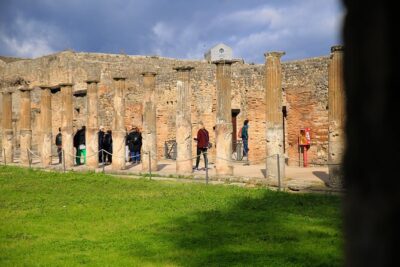
What makes this ticket a strong choice is the way you can read the town in layers. You can notice how people moved from street to shop, how public areas like the gymnasium and swimming baths fit into daily routine, and how houses were built to shelter residents. This is also why Herculaneum feels less overwhelming. It’s easier to spend real time with details instead of racing to tick off big sights.
If you’re short on time, the “smaller but intense” feel matters. You can plan a focused visit rather than guessing how much ground you can cover.
You can also read our reviews of more tours and experiences in Ercolano


What your ticket includes (and how the audio guide changes the day)
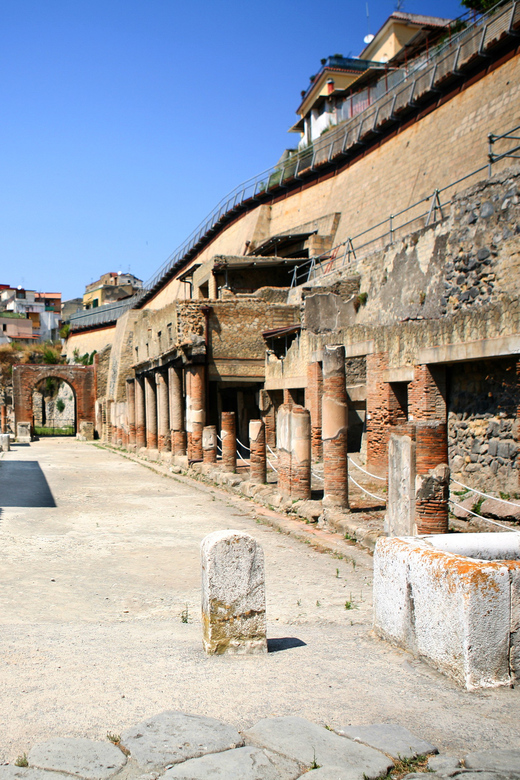
This is an Ercolano entry ticket for the Herculaneum archaeological site, valid for 1 day. Your ticket includes admission plus an optional audio guide.
You’ll see two audio options:
- A digital audio guide app you download on your phone (English, French, Italian, Spanish are listed for the app).
- A physical audio guide device (language options are listed broadly as English, French, German, Italian, Spanish).
A key value point here is that you’re not paying extra for a full guided tour. You’re getting the freedom to wander and still have context while you look. That matters at a site like this, where the most interesting parts are often the subtle ones: preserved surfaces, room function, and how daily life might have looked before the eruption.
If you think you’ll mainly want to look at frescoes and architecture and you’re comfortable reading on your own, you might not need the audio heavily. But if you want the story tied directly to the places you’re standing—shops, baths, the gymnasium, and the houses—the audio guide usually makes the time feel more complete.
Redeeming your voucher and getting into the site without headaches
After booking, you redeem your ticket by showing your mobile voucher at the on-site online ticket desk. That’s the main “meeting point” for this experience: you don’t meet a guide, you redeem for entry.
Here’s what I’d do to avoid stress:
- Keep your voucher accessible on your phone (and make sure it’s easy to find fast).
- If you chose the digital audio option, read the instructions you received with your booking confirmation before you arrive.
- Plan for a small amount of time at the entry area. Even when the site is quiet, ticket redemption can take a moment.
Some people get tripped up by where exactly to redeem, which usually comes down to not realizing the desk is at the actual ticket-entry area. Once you’re there, redemption is straightforward.
Also note: the ticket does not include any guided tour. If you want a tight narrative and a structured route, you’ll need to arrange that separately.
Timing matters: opening hours and how early affects your visit

Your visit depends on the season. The site runs on two different schedules:
- March 16 to October 14: 9:30 AM–7:30 PM
Last admission 6:00 PM and you must leave the archaeological area by 7:00 PM.
- October 15 to March 15: 8:30 AM–5:00 PM
Last admission 3:30 PM and you must leave by 4:40 PM.
That closing rule matters because it changes your real visiting time. If you arrive late in the day, you can end up rushing just to meet the exit deadline.
Practical advice: plan to start earlier rather than later. The site can be far more enjoyable when you’re not fighting heat, crowds, and your own fatigue. And if you’re coming in summer, remember that parts of the town are open to the sun—so being early helps.
Walking Herculaneum: streets, houses, frescoes, and what you’re really seeing
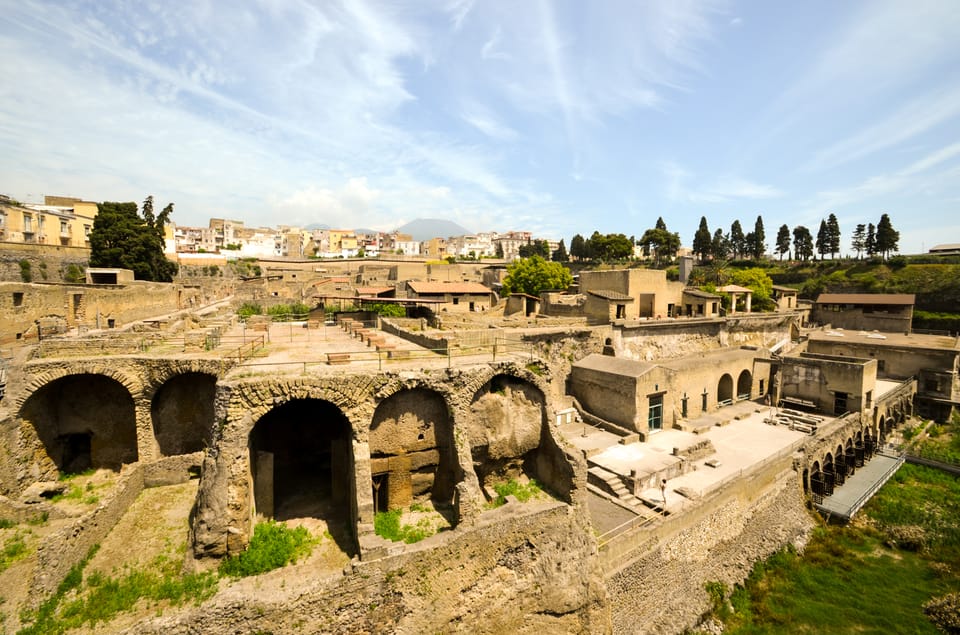
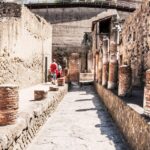
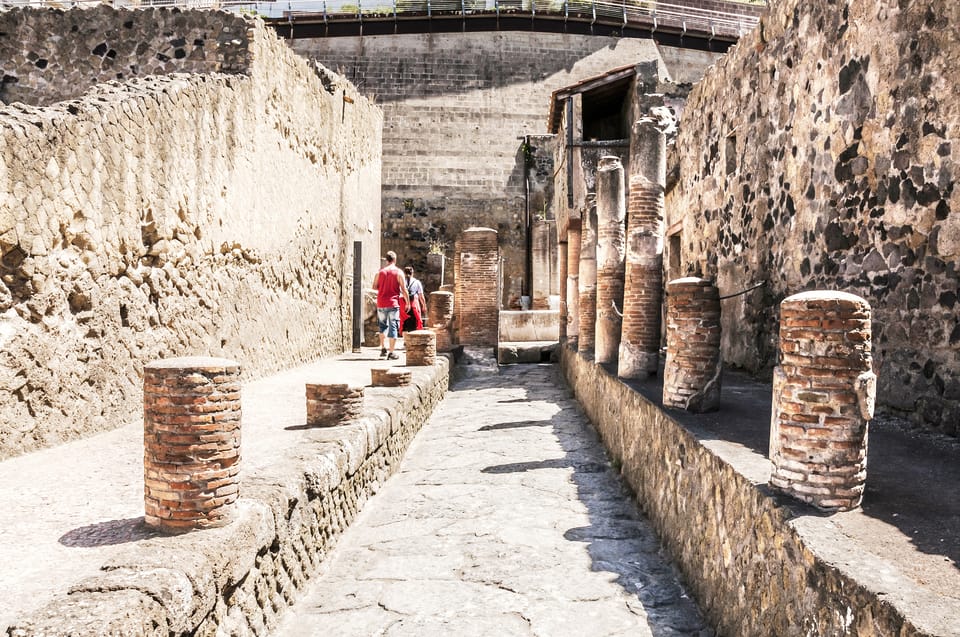
Once you enter, the experience becomes a walking loop through excavated neighborhoods. The streets are cobbled, and the town layout gives you an immediate sense of how dense everyday life once was.
The highlights that you’ll want to slow down for:
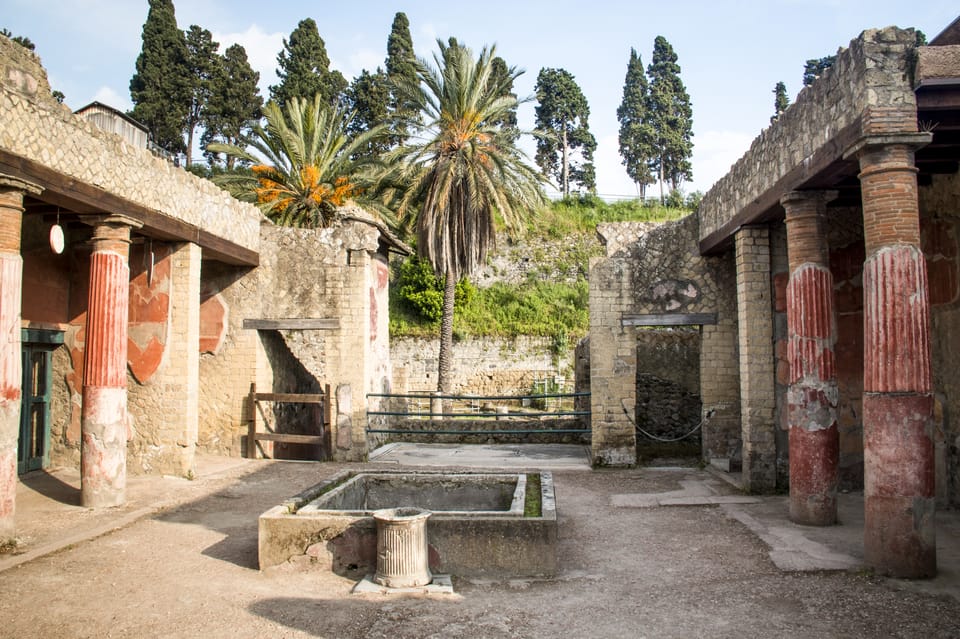
- Intact buildings at your own pace: roofs, beds, doors, and preserved interiors help you visualize what lived here.
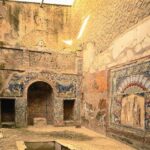
- Frescoes: you’ll see wall paintings that survived in remarkable condition, letting you connect art to room life.
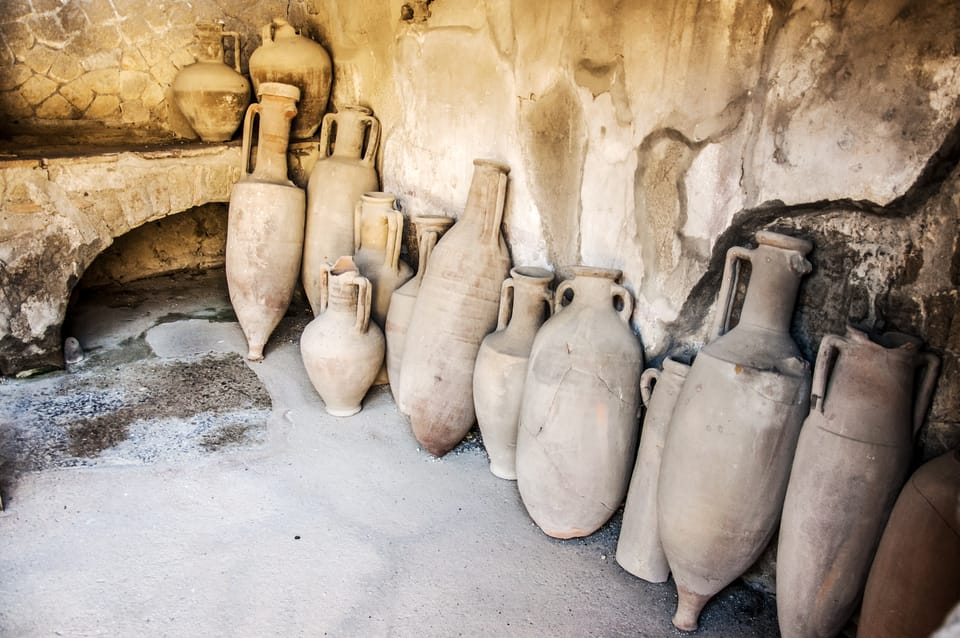
- Shops and everyday spaces: you can imagine goods moving through doorways and street fronts.
- Public spaces: the public gymnasium and public swimming baths are visible, giving you a peek into communal routines rather than only private homes.
I like this style of touring because it doesn’t force you to stay on a single “big attraction path.” Instead, you can pause when something small grabs you—like a preserved doorway, a room layout, or a detail around where people likely spent time.
Also, the site encourages thoughtful looking. You’re not just viewing objects; you’re standing where those objects were used. That’s the difference between seeing a museum display and reading the town itself.
You can also read our reviews of more guided tours in Ercolano


The eruption story: why the skeletons hit harder here
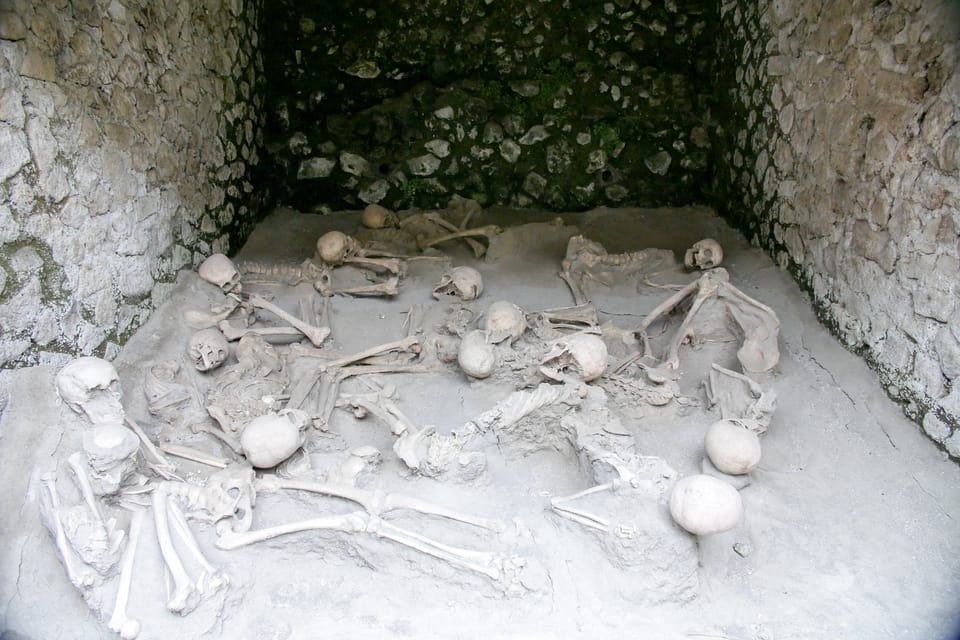
Herculaneum is famous for tragedy, and the site makes it difficult to stay detached. The city was buried under ash in 79 AD. Unlike Pompeii, Herculaneum preserved more of the town’s materials, so the eruption isn’t just an historical footnote—it’s tied to a physical place you walk through.
You’ll encounter the grim fact that about 300 skeletons were found here. Even without heavy-handed storytelling, the presence of those remains makes the whole visit feel haunting. It’s the part of the visit that most people remember afterward, because it connects daily life to sudden disaster.
If you like history that feels human-scale, this is the moment. It turns archaeology into a story about bodies, time, and what it meant to live in a city that suddenly stopped.
Audio guide on your phone vs the physical device

The audio guide is optional, but it’s also where your experience can either click or feel awkward. You’ll have language options (English, French, German, Italian, Spanish), and you can choose between a digital app and a physical device.
If you go with the phone app, I strongly recommend you download the audio before you arrive. The site can have spotty coverage, and the app can be data-hungry. If you wait until you’re already inside, you might end up hunting for signal or replaying the wrong section.
Some audio navigation issues can also happen. If the app doesn’t line up neatly with where you are standing, you may feel like you’re walking while trying to sync audio with location. In that case, a physical device can be more straightforward. The physical device is also useful if you don’t want to drain battery or deal with app controls while walking cobbled streets.
A good backup plan: treat audio as a support, not a boss. If you turn it off for a while and just look, you’ll still get a great visit. If the audio works well, it adds context—especially about how spaces functioned and how the town likely worked socially.
How long should you plan for Herculaneum?
This isn’t a whole-week project. You can see a lot in a few hours if you focus on the major areas and keep moving at a comfortable pace. In practice, many people finish in about 3 hours when they use the audio at a normal speed and don’t force a strict sprint.
That said, you can easily spend longer if you:
- linger over frescoes,
- stop often at preserved rooms and details,
- or want a slower, more contemplative rhythm.
My suggestion: plan for a comfortable window rather than an aggressive one. The site has fixed closing times, so build in buffer for ticket redemption at the entry and for pauses in sun or shade.
Value check: is the $21 entry ticket worth it?
At around $21 per person for the entry ticket plus optional audio, the value comes from what’s included. You’re not paying for a bus tour or a private guide. You’re paying for direct access to one of the most preserved Roman towns you can visit in Italy, plus the option to add interpretive audio.
Where the value really shows:
- You get to walk through a UNESCO World Heritage site without being tied to a group schedule.
- The preservation level means your time is spent looking at real structures and objects, not just guessing what used to be there.
- Audio guide access helps you translate what you’re seeing into how it worked for residents.
If you’re the type who wants a deeply structured historical lecture, you might feel audio alone is not enough—especially if you prefer clear, guided pacing. But for most self-directed history lovers, audio plus self-guided walking is a smart use of time.
Also keep your expectations aligned with the format. There’s no separate “highlight tour” included. You’ll build your own highlights by where you spend attention.
Practical tips that make a noticeable difference on-site
These are small things that can change your day.
- Wear comfortable shoes. Cobblestones plus uneven excavation areas are not forgiving.
- Dress for long walking and sun. If you’re visiting in warmer months, bring a plan for shade and heat.
- Download or prepare your audio guide before you enter. If you rely on in-site signal, you can waste time.
- Don’t expect perfect signage density. Some details are easier to understand when your audio matches your location, so give yourself time to match up.
- Food-wise, on-site café options exist but can be basic. If you have specific needs, plan accordingly rather than assuming it will be a full restaurant stop.
And if you’re trying to avoid crowds, timing helps. Visits in quieter seasons tend to feel more personal, with more space to pause at each doorway and wall.
Who should book this Herculaneum entry ticket?
Book it if you want:
- a self-paced visit where you can take your time with preserved rooms and frescoes,
- an experience that feels less crowded and less chaotic than the bigger Pompeii plan,
- and history that connects everyday life to a sudden event in 79 AD.
It’s also a good fit if you like the idea of doing the main sights efficiently. The site is compact enough that a half-day to three-hour visit is realistic, so it works well for a Naples base trip.
If you strongly prefer a live guide’s storytelling and clear route control, you can still use this ticket, but consider pairing it with a guide service separately to reduce the risk of audio confusion.
Should you book this Ercolano (Herculaneum) ticket?
I think you should book it if your goal is to walk through an ancient city that still looks and feels like a lived-in place. The preservation is the star: beds, doors, rooftops, frescoes, and the reality of the eruption context all make this more than a quick stop.
Pick the digital audio app if you’re comfortable managing your phone and you’ll download everything in advance. Choose the physical audio device if you want less phone hassle while walking.
Skip it only if you’re expecting a guided, turn-by-turn tour experience for the price. This ticket is built for independent exploration. Used well, that freedom is exactly what makes Herculaneum memorable.
FAQ
What does the Ercolano (Herculaneum) entry ticket include?
Your ticket includes entry to the Herculaneum archaeological site. It also includes an optional audio guide choice: a digital audio guide app (for the app option) and a physical audio guide device if you select that option.
How long is the ticket valid?
The ticket is valid for 1 day. You should also check availability for starting times.
Where do I redeem my ticket on site?
Redeem your ticket by showing your mobile voucher at the online ticket desk on site.
What are the opening hours?
From March 16 to October 14, opening hours are 9:30 AM to 7:30 PM (last admission 6:00 PM; you must leave by 7:00 PM). From October 15 to March 15, opening hours are 8:30 AM to 5:00 PM (last admission 3:30 PM; you must leave by 4:40 PM).
What languages are available for the audio guide?
The audio guide languages listed are English, French, German, Italian, and Spanish.
Can I cancel for a refund?
Yes. You can cancel up to 24 hours in advance for a full refund.