REVIEW · ERCOLANO
Herculaneum – Small Group Tour (admission included)
Book on GetYourGuide →Operated by Pompeiify di Parlato Gabriella · Bookable on GetYourGuide
Herculaneum hits different than Pompeii because the city feels closer up and more personal. In this small-group tour, you get a guided walk that centers on how the 79 A.D. eruption buried the town and what that means for what you can still see today, including the feel of wealthy everyday life. I also like that it includes skip-the-line admission, so your time goes toward the ruins instead of waiting at the entrance.
The only catch is time: at just 2 hours, you’ll cover major highlights, not every street, villa, and wall detail. If you like to linger for photos or reading inscriptions at length, you’ll want to arrive with some extra stamina (or plan to spend a bit more time after the tour on your own).
In This Review
- Key highlights to expect
- Why Herculaneum feels more personal than Pompeii
- The eruption-focused introduction: what your guide makes click
- Inside the walking route: ruins that explain daily Roman life
- The boat museum stop: a different kind of evidence
- What the guide quality adds (and why it matters)
- Skip-the-line admission and the 2-hour format
- Price and what you’re actually buying for $75
- Who should book this Herculaneum tour
- Tips to get more from the ruins during your 2-hour walk
- Should you book this Herculaneum small-group tour?
- FAQ
- How long is the Herculaneum small-group tour?
- Is admission included?
- Where do I meet the guide?
- What languages are available for the live guide?
- How much does the tour cost?
- Can I cancel if my plans change?
Key highlights to expect
- A tight story about the eruption and preservation that explains why Herculaneum looks the way it does today
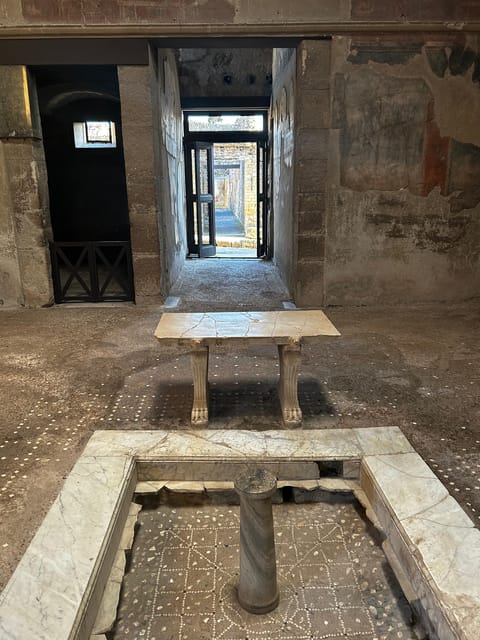
- Wealthy Roman residential life, with attention to the elegant style inside homes
- The boat museum visit, which adds a surprising material piece to the tragedy
- A licensed Regione Campania guide, delivered as a live explanation in your language
- A small group dynamic, with room for questions during a 2-hour format
Why Herculaneum feels more personal than Pompeii
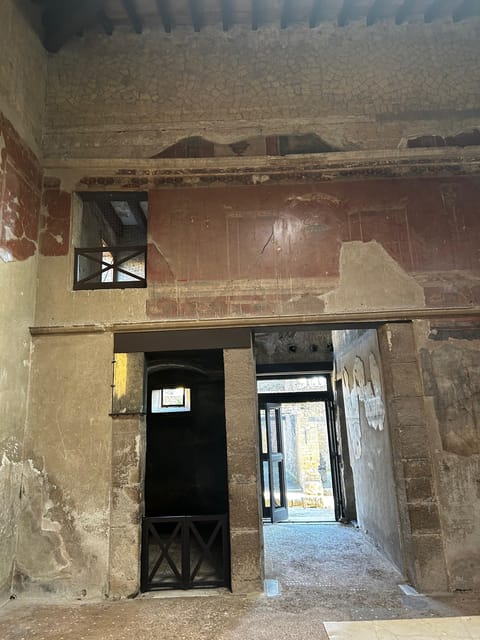
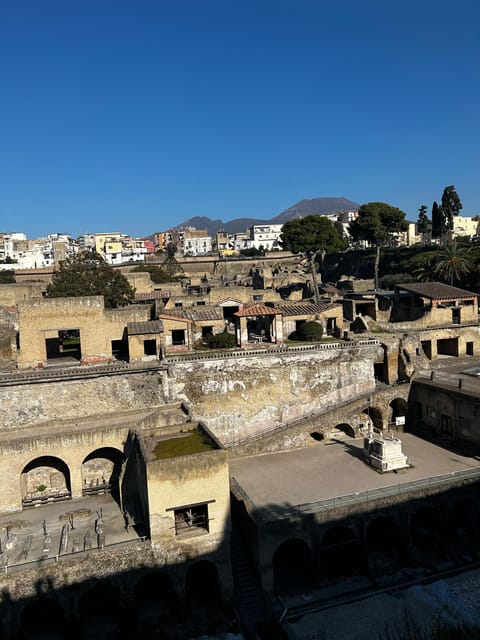
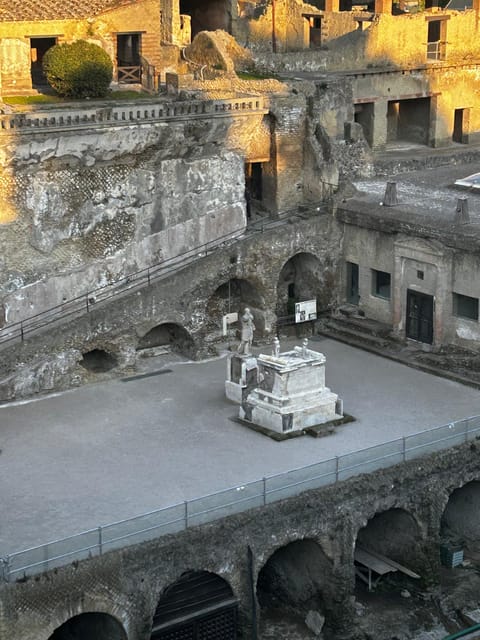
Herculaneum and Pompeii were both buried by Mount Vesuvius in 79 A.D., but the results are not the same. Herculaneum was hit by pyroclastic flows that covered the town under about 60 feet of scalding ash, creating a kind of accidental storage system. That’s why you can still make out details that feel domestic and specific—things you might miss when you only think of big-city ruins.
I like that this tour frames Herculaneum as a residential place, not just a disaster site. You’ll see the city as a wealthy suburb with homes that are smaller than Pompeii’s overall footprint, but often richer in their original design and decorations. That shift helps you imagine daily routines rather than only dramatic moments.
Also, the guide’s job here is to connect the why to the what. Preservation isn’t a trivia topic for this tour—it’s the reason you’re looking at surfaces, layouts, and artwork that still feel close enough to reach out and touch (figuratively speaking).
You can also read our reviews of more tours and experiences in Ercolano.


The eruption-focused introduction: what your guide makes click
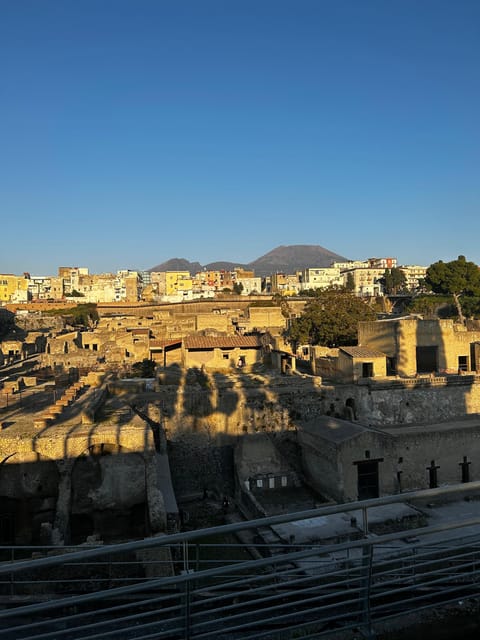
The tour starts with an orientation that centers on the eruption itself and the nature of the city. That matters because Herculaneum can be confusing if you show up thinking you’re just going to walk through a “second Pompeii.” Your guide will explain the mechanics behind the burial and what it did to the city fabric.
Here’s what you’ll take away: the disaster destroyed the city, but it preserved parts of it differently than in Pompeii. The tour keeps returning to that idea as you walk, so the ruins aren’t just impressive. They become understandable.
In real life, it’s the difference between staring at stones and following a logic. If you’ve seen Pompeii already, this kind of explanation is what prevents your second visit from feeling repetitive.
Inside the walking route: ruins that explain daily Roman life
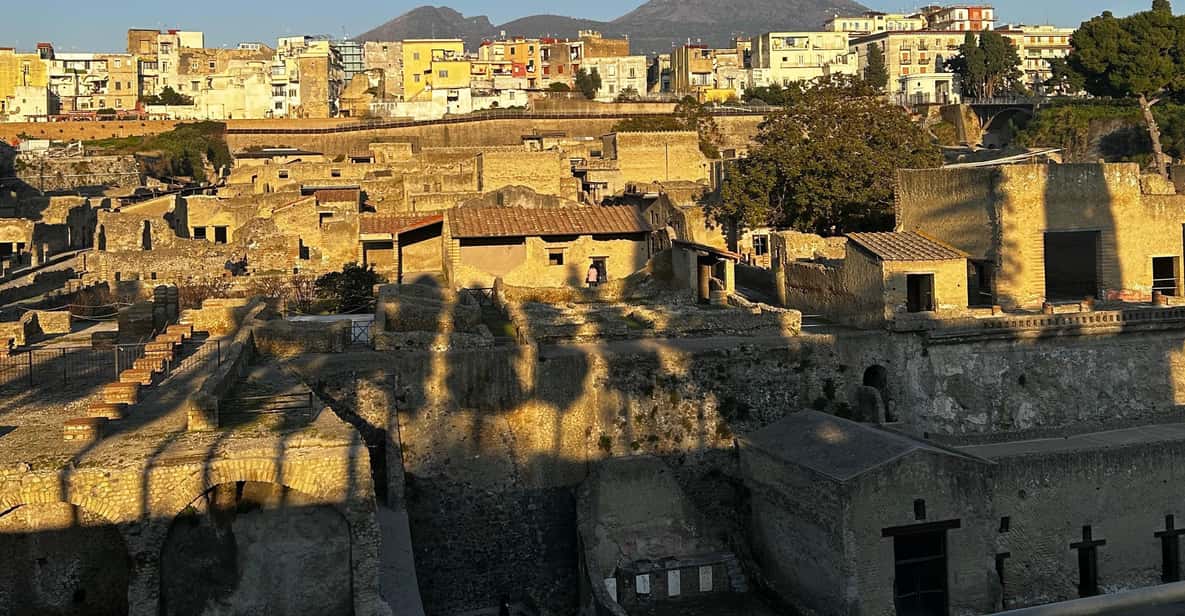
After that opening context, you move into the archaeological area for a guided walk with a clear focus. The route is structured around typical life in an ancient Roman center, with particular attention to how wealth shaped what people owned, built, and displayed.
You’ll spend time on the kinds of spaces that help you picture everyday living:
- residential areas and private-house character
- architectural and decorative choices that signal status
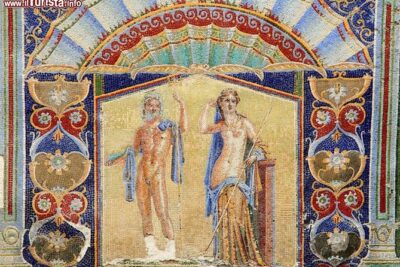
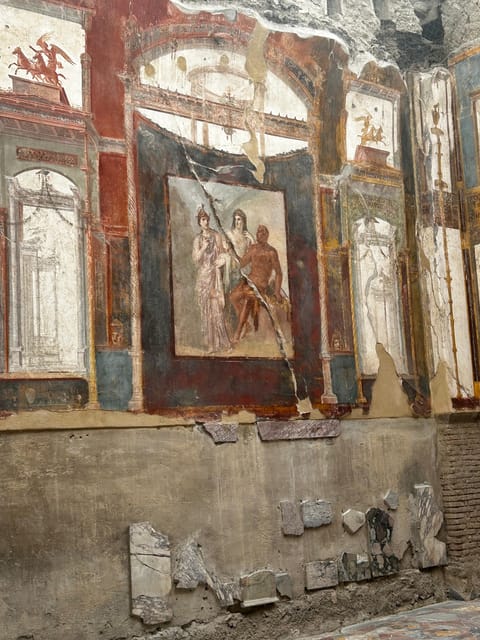
- visual details that survive well enough to teach you something about Roman taste
One of the smartest parts of this experience is the balance between big picture and hands-on observation. You’re not only told that wealthy Romans lived here—you’re encouraged to look for the evidence of affluence in how the site is laid out and how interiors once felt.
The guides on this tour are also described as making explanations fit the group. For example, one Italian-language guide, Gabriella, was reported as adjusting the storytelling for children’s curiosity without turning the tour into a lecture. That’s a good sign if you want a guide who can communicate, not just recite facts.
The boat museum stop: a different kind of evidence
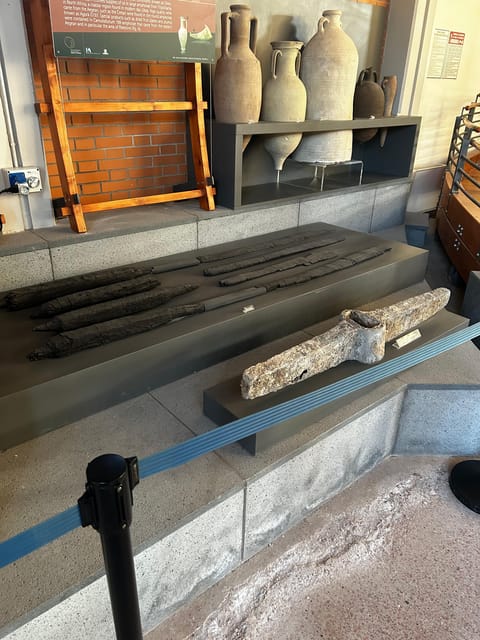
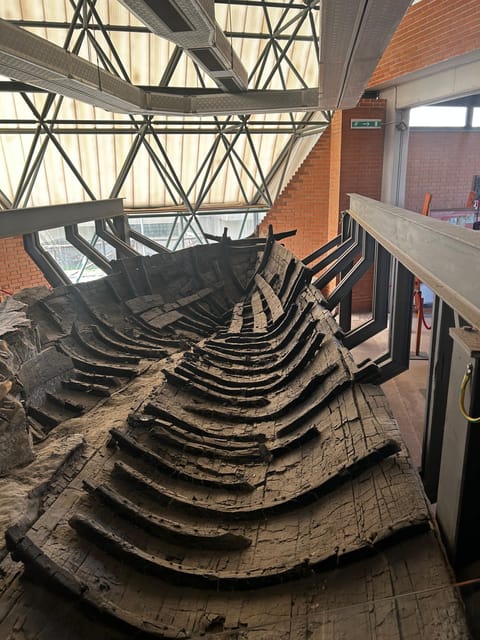
A standout element is the focus on the boat museum. This is where the story stops being purely architectural and becomes physical in a new way. It’s not just about what buildings looked like—it’s also about what people used, moved, and depended on.
For many visitors, that shift is a relief. Roman ruins can feel like endless stone and walls. A museum stop breaks that rhythm and adds an emotional and practical dimension: the eruption affected a real working coastline and the lives connected to it.
Even if you already know about Herculaneum’s preservation, the boat museum visit is a useful reminder that archaeology isn’t only about grand structures. It’s also about everyday objects surviving by accident.
What the guide quality adds (and why it matters)
This tour includes a live guide licensed by the Regione Campania, and the language options are German, Italian, and English. That licensing point is worth noticing. It usually correlates with structured, accurate interpretation, not just friendly commentary.
The guides’ delivery also shows up strongly in the feedback you can read in the reviews. Roberta was described as superb and perfectly paced, while Marzia and Marcia (spelled variants in the notes) were highlighted for answering questions with detail and patience. In one case, the guide even took time at the end to connect exhibits nearby from the town—helpful if you want to connect what you saw in the ruins to objects you can view more closely.
You should expect a guide who:
- explains the eruption in a way that makes the preservation logical
- points out domestic and decorative elements rather than only naming rooms
- leaves space for questions, especially in smaller groups
If you’re the type who likes to understand how facts connect, this is where you’ll get your money’s worth.




Skip-the-line admission and the 2-hour format
Let’s talk value in practical terms. You pay $75 per person, and admission is included. On top of that, you get skip-the-line entry, which matters at busy archaeological sites where waiting can eat your schedule.
The tour runs about 2 hours. That’s enough time to understand the site’s main story, but not enough time to treat Herculaneum like a full-day self-guided project. Think of it like a guided “best of” that teaches you what to look for. Then, if you want more, you can return to spend extra time at specific areas while your brain already has context.
The meeting point is straightforward: just outside the Herculaneum ticket office on Corso Resina, 187. I’d plan to arrive a few minutes early so you don’t start the tour with stress.
Price and what you’re actually buying for $75
At $75 per person with skip-the-line admission included, you’re buying three things at once:
- entrance access without the ticket queue
- a licensed guide with structured interpretation
- a short, efficient time investment (2 hours)
If you were to do it alone, you’d still need to figure out how to read the site’s preservation differences and how to connect the ruins to Roman daily life. Guides help you avoid the common trap of treating Herculaneum as a photo stop only.
Is it expensive compared to a simple entry ticket? It depends on your travel style. If you love architecture details and want the story tied together, a guided format is often the better deal. If you’re purely into wandering slowly, you might prefer to go independently and spend as long as you want. But you’ll still need some way to understand why Herculaneum looks the way it does.
Who should book this Herculaneum tour
This tour is a great fit if you:
- have limited time and want the main story of Herculaneum in one go
- already visited Pompeii and want a different angle on the Vesuvius eruption
- prefer small-group conversations and the chance to ask questions
- want a guide who can explain preservation in plain, practical terms
It also works well for families, based on accounts of guides adjusting explanations to children’s curiosity while keeping content real and age-appropriate.
If you’re the type who needs hours to read every inscription and sketch every corner, treat this as a launchpad. Do it first, learn what matters, then return for slower exploration.
Tips to get more from the ruins during your 2-hour walk
You’ll do best if you go in with a simple goal: observe with the eruption story in mind. When your guide explains why preservation differs between cities, watch for how that changes what you can still recognize—especially in domestic spaces and decorative details.
A few practical moves:
- Wear comfortable shoes for a walking tour on archaeological terrain
- Bring a camera, but also leave space to look without photographing everything
- If you have questions about daily Roman life, ask early; the flow is designed for discussion
Because the tour is short, it helps to stay mentally engaged even when you feel tempted to treat it like a scenic stroll.
Should you book this Herculaneum small-group tour?
If you want Herculaneum to make sense—not just look impressive—this is a strong choice. The focus on eruption context, preservation, wealthy residential life, and the boat museum gives you a complete narrative arc in two hours. Add in skip-the-line access and a licensed guide in multiple languages, and you’re getting a focused experience without wasting time.
I’d especially recommend it if you’ve done Pompeii and want something more intimate and specific. If you’re unsure, consider your priority: do you want interpretation and time efficiency, or do you want a fully self-paced day? This tour is best for the first goal.
FAQ
How long is the Herculaneum small-group tour?
It runs for about 2 hours.
Is admission included?
Yes. Admission is included, and you also get skip-the-line entry.
Where do I meet the guide?
You meet just outside the Herculaneum ticket office at Corso Resina, 187.
What languages are available for the live guide?
The live guide is available in German, Italian, and English.
How much does the tour cost?
The price is $75 per person.
Can I cancel if my plans change?
Yes, free cancellation is available up to 24 hours in advance for a full refund.