Pompeii hits harder when you have a guide. This private tour takes you through Pompeii’s buried city with authorized local guides and a route that aims for the quieter, less-frenzied parts of the ruins. I like how the tour connects major landmarks with smaller, more human details, so the city starts to feel like more than a checklist.
I really love two moments: first, walking into the southern stretch where you’ll see the famous plaster casts of people who died during the eruption of Vesuvius in 79 A.D.; second, the way guides bring the stories together across public buildings, private homes, and even the brothel area. One possible drawback: the core sightseeing time is about 2 hours, and park admission tickets cost extra (16 euro per person), so plan to pay separately before you go.
In This Review
- Key highlights you’ll care about
- Pompeii feels different with a guided, off-main-route focus
- Meeting at Porta Marina and starting in the right place
- The 2-hour Pompeii route: what you’ll actually see
- Forum and thermal baths: the public city at human scale
- Menandro’s House: seeing wealth and daily life together
- Lupanare brothel and erotic frescoes: context matters
- The quieter southern ruins and the plaster casts
- Theaters and the north side streets: how the city moved
- Price and value: $229.28 per group up to 6
- Tickets, mobile access, and timing inside the park
- Weather, walking level, and why comfort matters
- Who should book this Pompeii private tour
- Should you book this Pompeii buried city tour?
- FAQ
- How much is the Pompeii private tour?
- How long is the tour?
- Where does the tour start?
- Is this tour private?
- Are Pompeii admission tickets included in the price?
- Do under-18 visitors get free entry?
- Do I need a certain fitness level?
- Is there a mobile ticket?
- What happens with bad weather, and when can I cancel?
Key highlights you’ll care about
- Authorized Campania-region local guides who lead a focused, structured walk
- Lupanare brothel and its erotic frescoes, handled with context
- Plaster casts in a more relaxed southern section of the ruins
- A route that links public life and private homes instead of only the big sights
- Private group up to 6, so you can ask questions and move at a good pace
Pompeii feels different with a guided, off-main-route focus
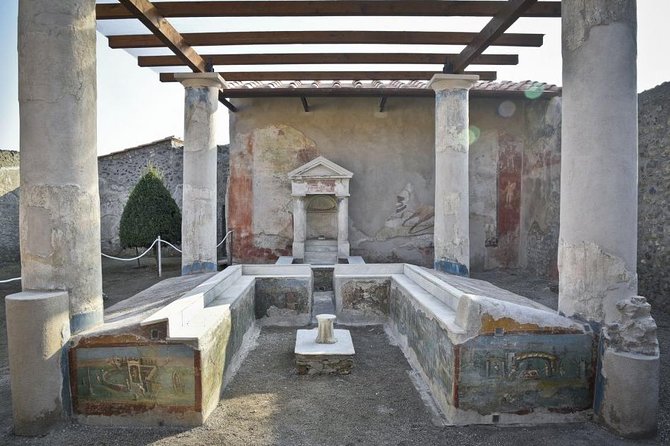
Pompeii is one of those places where it’s easy to get lost in the rocks. A self-walk can work if you already know what you’re looking at. But if you want meaning, you need someone who knows how the pieces fit. This tour is built for that.
What I like most is the emphasis on off the beaten path sections, not just the same handful of stops. That matters because Pompeii can get crowded near the headline sites. When you’re guided into calmer streets, the ruins feel more readable: doorways, courtyards, street layouts, and the way people moved through the day.
You’ll also get a clear narrative thread as the tour moves between the city’s public spaces and more private areas. That’s what helps you leave with a stronger mental picture of how Pompeii functioned—daily routines, status, entertainment, and shock.
Finally, the format is private. You’re not sharing your experience with a huge crowd. Groups are capped at up to 6 in this offering, which makes questions easier and pacing less frantic.
You can also read our reviews of more city tours in Pompeii

Meeting at Porta Marina and starting in the right place
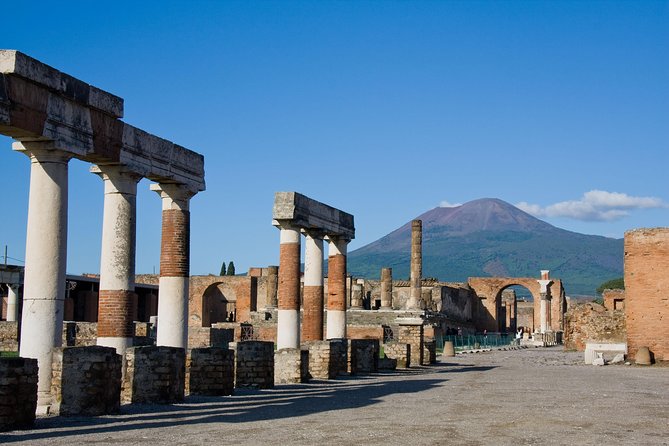
The meeting point is Pompei-porta Marina – scavi (80045 Pompei). It’s a practical spot and it’s described as near public transportation, so you’re not forced into a complicated logistics puzzle.
This tour runs during opening hours listed as 9:00 AM to 1:00 PM (Monday–Sunday) for the season dates shown. Plan to arrive a few minutes early so you can settle in. Pompeii mornings can move fast, and a smooth start keeps the rest of the walk enjoyable.
Because it’s a private tour, you’ll stay with your guide for the whole route. That helps because Pompeii is large and the distances can add up. A guided start keeps you from spending that first part of the visit trying to orient yourself.
The 2-hour Pompeii route: what you’ll actually see
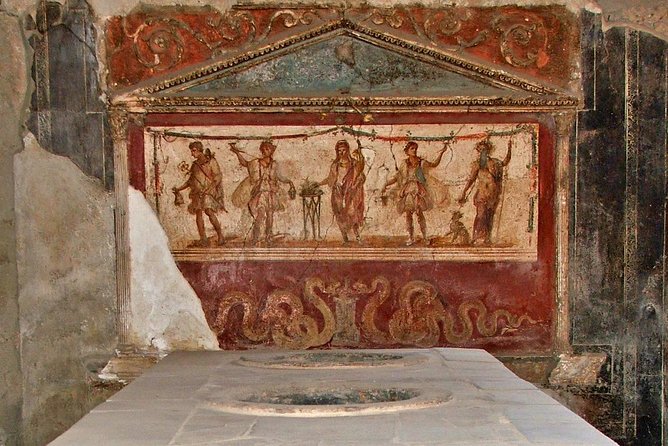
This experience is about 2 hours (approx.), and that time is used intentionally. You won’t get every wall and corner of Pompeii. Instead, you’ll get a curated arc through key buildings and neighborhoods—plus the emotionally powerful stretch with plaster casts.
Here’s the structure you can expect:
- You start at the Pompeii Archaeological Park area and get your bearings with your guide.
- The tour visits several landmark zones, including major public buildings and notable private properties.
- You’ll spend meaningful time in sections that help you understand both the city’s layout and day-to-day life.
- Then the route shifts toward theater areas and northern-side streets, wrapping back toward the meeting point.
The value of a short route is focus. In 2 hours, it’s realistic to absorb the city’s story without feeling like you’re sprinting. The drawback is obvious: if you fall in love with one specific building, you may want more time there.
Forum and thermal baths: the public city at human scale
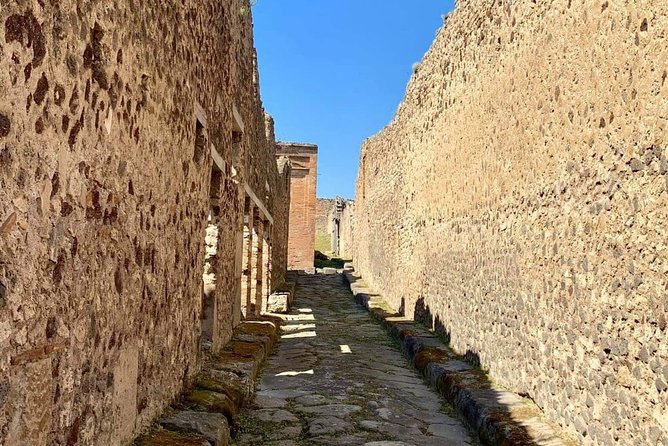
One of the tour’s strengths is that it doesn’t treat Pompeii as only a set of ruins. It treats it like a city.
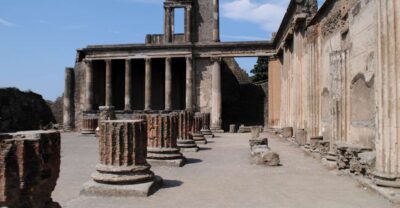
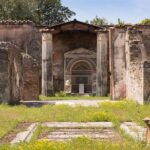
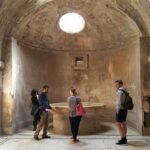
You’ll visit major public spaces such as the Forum and the Thermal Baths. These stops are useful because they show what was communal. The Forum is where civic life happens—meetings, commerce, and public identity. The baths show a different kind of public culture: routine wellness, social interaction, and the way people had fun or kept up appearances.
If you’ve ever wondered why ancient cities feel more familiar than you expected, these are the kinds of places that make the connection. You can stand in a space and imagine the flow: people arriving, gathering, moving in patterns that match the architecture.
The guide’s job here matters. Even the best photos won’t teach you what different rooms were for. A guide can point out details so the ruins stop looking like random fragments and start looking like a functioning system.
Menandro’s House: seeing wealth and daily life together
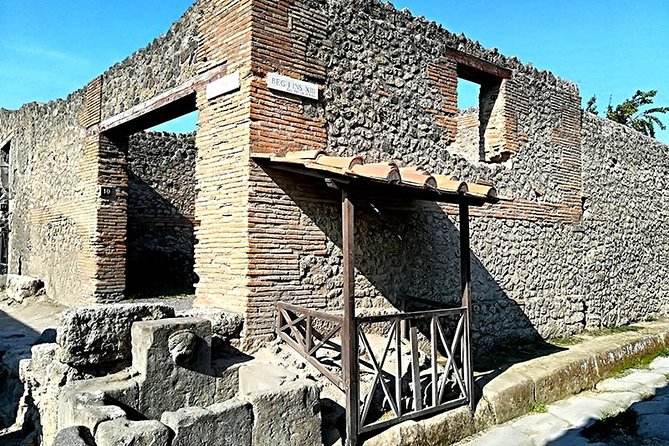
You’ll also visit Menandro’s House. This is the kind of place that’s easy to misunderstand if you only see it as a museum stop.
In Pompeii, private homes often reveal status in clear ways—size, layout, decorative choices, and how rooms are arranged around shared open spaces. Menandro’s House helps you connect everyday life to the city’s larger social structure.
What you’ll likely appreciate here is the contrast. After public buildings, stepping into a home gives you a clearer idea of the difference between how the city presented itself and how people lived inside it. Even without “luxury” being the goal, homes in Pompeii show how residents organized their lives around light, privacy, and household activity.
This stop tends to be one of those moments where you start noticing patterns. Doorways, courtyards, and room spacing begin to make sense.




Lupanare brothel and erotic frescoes: context matters
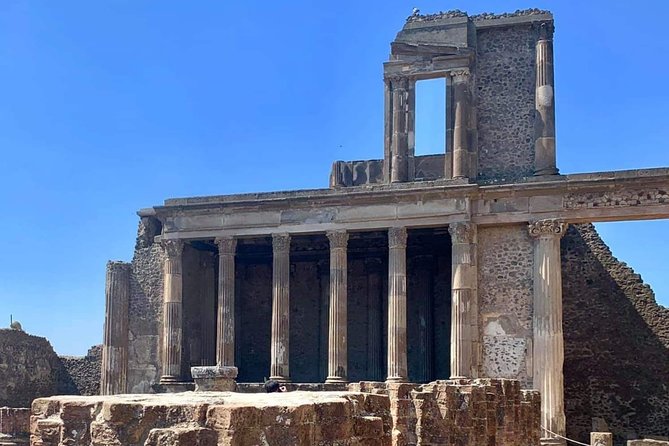
Yes, you’ll see the Lupanare, the brothel known for erotic frescoes. This is one of Pompeii’s headline subjects, but a guide’s framing is what makes it worthwhile and not just shocking.
What makes this stop valuable is context. Without help, it’s easy to treat the frescoes like spectacle. With a guide, you can understand how this space fit into the city—how commerce and entertainment worked, how visitors and residents would have interacted with the building, and what the art communicated beyond its explicit imagery.
It’s also the kind of stop that reminds you Pompeii wasn’t only preserved tragedy. It was a living, complicated place with routines, desires, and contradictions. That’s part of why these ruins feel so immediate.
If you’re sensitive to explicit artwork, you should know this is included. The tour doesn’t hide it, and it’s better to mentally prepare so you can handle it on your terms.
The quieter southern ruins and the plaster casts
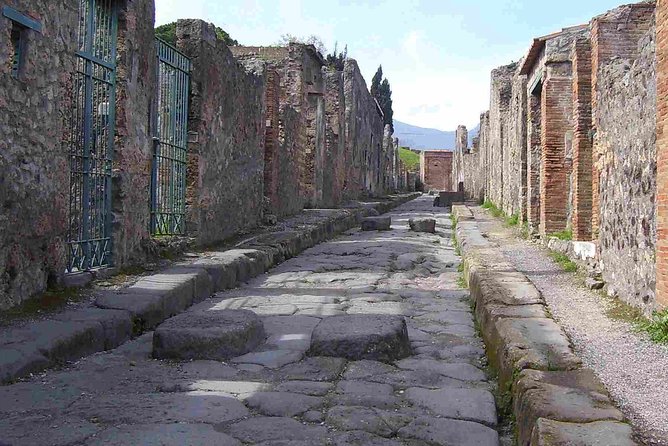
This is the emotional center of the itinerary.
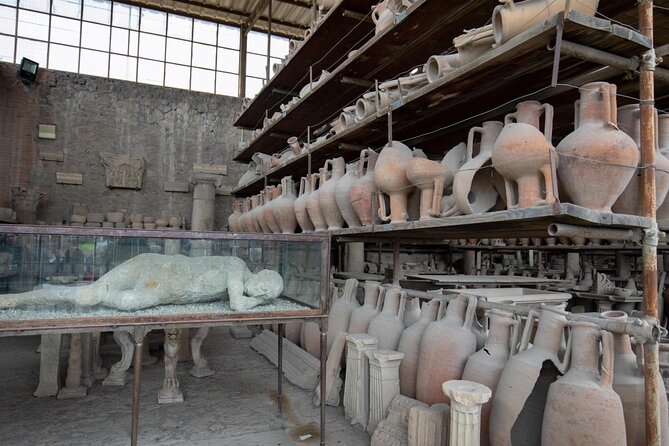
You’ll stroll into the southern part of the ruins where you’ll see the famous plaster casts—the body molds of people who died during the eruption of Mount Vesuvius in 79 A.D. This isn’t just a visual moment. It’s a lesson in what “catastrophe” means in physical, human terms.
The reason the tour emphasizes this area is practical: the southern section is described as uncrowded, and that helps. When you’re not elbow-to-elbow with a crowd, you can actually take in what you’re seeing. You can look longer. You can process.
If you’ve seen Pompeii photos before, you may already know the casts exist. But seeing them in a walk that leads from ordinary streets and buildings makes the tragedy hit differently. It turns the story from distant history into something you can almost feel.
This segment also tends to work well for people who want a deeper connection without spending extra hours on the site. It’s powerful and focused.
Theaters and the north side streets: how the city moved
After the casts area, the tour heads toward the theaters and then crosses streets along the north side.
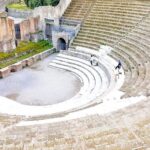
The theaters matter because they show public entertainment and cultural rhythm. Pompeii had spaces for gathering and watching, not just working and living. That’s a big part of daily life in any city, ancient or modern.
The tour description notes that for a good stretch—about an hour—you may be able to feel like you’re in Pompeii with its ancient inhabitants. That’s the kind of comment you usually hear about guides who can interpret what you’re looking at. With the architecture, street layout, and a guide’s narration, it’s easier to imagine the movement and purpose of each space.
Then the streets along the north side help you connect the dots. Instead of bouncing randomly between far-apart spots, you’re walking a logical arc that reinforces how Pompeii was laid out.
Price and value: $229.28 per group up to 6
Let’s talk money in plain terms.
The price is listed as $229.28 per group (up to 6). That means your per-person cost depends on how many people are in your group. If you’re traveling as a small group, it can be a strong value because you’re paying for a private guide, not a seat on a crowded bus-and-walk.
What you get for that money is:
- a guided service led by professional local guides authorized by Campania Region authorities
- a focused route through several major and notable Pompeii sites, including the plaster casts and Lupanare
What you don’t get is the park admission ticket. Tickets are 16 euro per person, with free entrance for those under 18 with a valid ID document.
So the real value math is: private guidance + curated route + shorter time investment. If you’re the kind of traveler who likes asking questions and leaving with a clearer story, the price usually makes sense. If you just want to wander, you’d probably spend less on a self-guided visit.
Tickets, mobile access, and timing inside the park
This tour uses a mobile ticket, which is convenient. The bigger practical point is that the admission ticket is not included. You’ll need to plan for the 16 euro per person park ticket on top of the tour cost.
Because this is a guided experience within Pompeii’s park area, timing matters. The tour is only about 2 hours, and that’s not the time you want to burn queuing or sorting out payment issues.
My practical advice:
- Bring whatever you need for your mobile ticket.
- Budget for the entrance ticket separately.
- If you’re traveling with teens, remember the under-18 rule requires valid ID.
Also keep the park hours in mind: the listed operating time is 9:00 AM to 1:00 PM. If your day is packed, this tour is a good fit as a morning anchor.
Weather, walking level, and why comfort matters
Pompeii is outdoors. Surfaces can be uneven, and in wet conditions it can feel slippery. This experience explicitly says it requires good weather.
It’s also described as suitable for people with a moderate physical fitness level. That’s a fair heads-up. You’ll be walking, and you’ll likely move between different parts of the site within a short window.
If you’re comfortable with regular walking and can handle cobbles or rough ground, you should be fine. If you struggle with uneven terrain, plan to bring a realistic attitude: this is still a big archaeological park, even with a guide.
One more practical note: because it’s private, your guide may be able to help your group keep a steady pace. Still, you should expect some walking effort.
Who should book this Pompeii private tour
This tour is a great fit if you:
- want a private group experience (up to 6) instead of a crowded shuffle
- care about understanding how Pompeii worked, not only photographing it
- are drawn to the Forum, baths, houses, and Lupanare rather than only the biggest postcard spots
- want the emotional power of the plaster casts without adding extra hours
- like getting clear answers from a guide; guides such as Ilaria are highlighted in past experiences as people who can explain what you’re seeing
It may not be the best match if you’re hoping for:
- lots of free time to linger in one single building
- a full-day Pompeii plan that covers everything
- a visit that hides explicit imagery, because Lupanare is part of the route
Should you book this Pompeii buried city tour?
If you want the best balance of meaning and time, I’d lean yes. A 2-hour, guided private route through public buildings, private homes, the plaster casts, and the theaters is a strong way to “get Pompeii” without turning the day into a marathon.
Book it especially if your group is small enough to benefit from the private format, and if you’re willing to pay the separate 16 euro per person park ticket. The extra cost is normal here, and the guide-led storytelling is usually what makes the difference between seeing ruins and understanding a city.
If your priority is speed plus a lot of wandering on your own, you might not need a guided route. But if you want your visit to feel coherent—like the city has logic and human rhythm—this is a solid choice.
FAQ
How much is the Pompeii private tour?
The price is listed as $229.28 per group, up to 6 people.
How long is the tour?
It’s approximately 2 hours.
Where does the tour start?
You meet at Pompei-porta Marina – scavi, 80045 Pompei.
Is this tour private?
Yes. It’s a private tour/activity, and only your group participates.
Are Pompeii admission tickets included in the price?
No. Tickets of 16 euro per person are not included with the tour price.
Do under-18 visitors get free entry?
Yes. Free entrance is provided for under 18 with a valid ID document.
Do I need a certain fitness level?
The tour is for travelers with a moderate physical fitness level.
Is there a mobile ticket?
Yes. The experience includes a mobile ticket.
What happens with bad weather, and when can I cancel?
This experience requires good weather. If it’s canceled due to poor weather, you’ll be offered a different date or a full refund. You can cancel up to 24 hours in advance for a full refund, with cut-off times based on local time. The listed operating hours are Monday–Sunday from 9:00 AM to 1:00 PM during the dates shown.