REVIEW · SORRENTO
Vesuvius,Herculaneum,Pompeii from Naples or Sorrento
Book on Viator →Operated by Mondo Guide Srl · Bookable on Viator
Vesuvius and two ruined cities in one day. This tour strings together three huge experiences in a smooth circuit: a volcano summit above the Bay of Naples, then two Roman cities preserved under ash—Pompeii with its streets and storefronts, and Herculaneum with villas and wall art still clinging to place. Vesuvius views reach out toward Capri, Ischia, and Procida, which is a strong reason to do this as a single-day loop.
I love the payoff at the top of Vesuvius: a short climb over volcanic gravel, a peek into a massive crater, and big sightlines over the whole peninsula. I also love Herculaneum’s preservation—mosaics, frescoes, and even traces of everyday materials help you picture Roman life in a way Pompeii can’t quite match.
One consideration: the Vesuvius tickets must be pre-purchased online and are not changeable or refundable, and the major site entry fees are not included in the tour price. Plan for that upfront so the morning doesn’t turn into a scramble.
In This Review
- Quick Hits: what makes this day trip work
- Vesuvius, Pompeii, and Herculaneum—why this route is a smart day
- Vesuvius National Park: crater views plus a real short hike
- Ticket timing matters more here than you think
- Pompeii Archaeological Park: the classic streets-and-buildings experience
- Why Pompeii hits differently after the volcano
- Herculaneum: the “small sister” that feels close to real life
- Guides and group size: what comfort looks like on a long day
- Price and value: what $246.68 really becomes on site
- What to bring so the day feels easier
- Where this tour fits best—and where it might not
- Should you book this Vesuvius, Pompeii, and Herculaneum tour?
- FAQ
- What is the total duration of the tour?
- What time does the tour start?
- What are the main stops during the day?
- Is there a hike at Vesuvius?
- Are the entrance fees included in the tour price?
- What time slot is used for Vesuvius entrance from Sorrento?
- What time slot is used for Vesuvius entrance from Naples?
- Will there be an English-speaking guide?
- Is food and drinks included?
- How does cancellation work?
- Is this tour suitable for kids?
Quick Hits: what makes this day trip work
- Vesuvius summit climb with a 25-minute hike over volcanic gravel after a drive up toward the crater area
- Craterside views: about 700 ft deep and 2,000 ft wide, plus island views (Capri, Ischia, Procida) from the top area
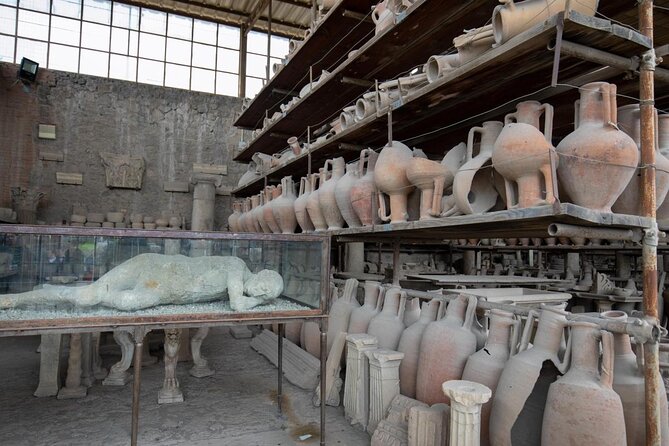
- Herculaneum’s intact feel with villas, mosaics, and frescoes, plus an unusual level of material preservation
- Guides who know the sites (names you may hear in the group include Corrado, Tiziana, Floriana, Andrea, and Dario)
- Efficient timing: roughly 3 hours at Vesuvius, 2 hours at Herculaneum, and 2 hours at Pompeii, all in about 8 hours
Vesuvius, Pompeii, and Herculaneum—why this route is a smart day
If you only have one day in the Naples-Sorrento area, this is one of the most efficient ways to connect the dots between nature and disaster. You go from the living drama of a volcano (Vesuvius National Park) to the stark, human scale of Roman streets and homes (Pompeii), then to the quieter, more intimate preservation of Herculaneum.
I like the logic of the order. Seeing Vesuvius first makes the later ruins hit harder—because you’re looking at the source of the ash, not just the result. And by the time you reach Herculaneum and Pompeii, you’ll already understand why the ash worked like a time capsule.
The tour is built for group travel, with a maximum of 19 people and a start time of 8:00 am from the Sorrento area. You end back at the meeting point, so you’re not forced to figure out buses or connections after a long day of walking.
You can also read our reviews of more tours and experiences in Sorrento.
- Sorrento Farm and Food Experience including Olive Oil, Limoncello, Wine tasting
★ 5.0 · 2,524 reviews


Vesuvius National Park: crater views plus a real short hike
The Vesuvius portion is where you feel the scale. You’ll drive up through the volcano area (about 3,000 feet), then make the final climb: roughly 25 minutes on a zigzag path of volcanic gravel. It’s short, but it’s not a casual stroll. Bring proper footwear and expect some uneven ground.
Once you’re at the top area, you can peer into the crater. The crater is described as about 700 ft deep and 2,000 ft wide. That size matters—standing there gives you a better mental map for how something that large could bury an entire city system.
Then comes the best part for many people: the views. From the summit area, you’re looking across the Bay of Naples and out toward the islands of Capri, Ischia, and Procida. Even if you’ve seen postcards before, being up there changes the whole geography. It’s one thing to read that the cities are “near Naples.” It’s another to see the water and islands spread out under you.
Ticket timing matters more here than you think
Vesuvius entrance requires a specific time slot, and the tour uses that structure. If you’re joining from Sorrento, the entrance timing is listed as 10:00 am. If you’re joining from Naples, it’s 9:30 am.
Also, the Vesuvius admission ticket is not included, and it is not changeable and not refundable. You’ll need to pre-purchase online ahead of time. This is the one “paperwork” risk in the whole experience—handle it early so you can focus on the views.
Pompeii Archaeological Park: the classic streets-and-buildings experience
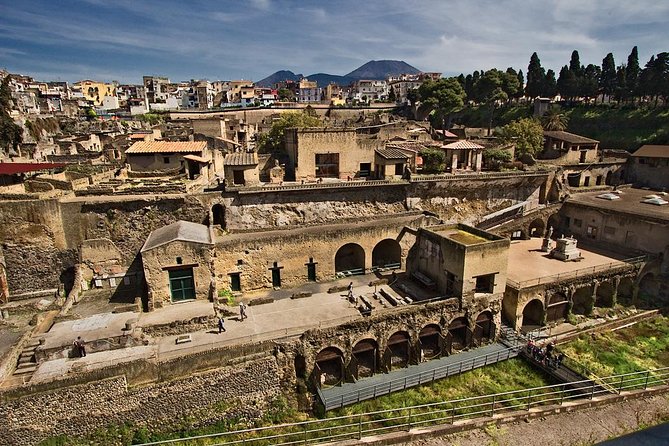
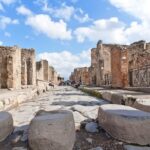
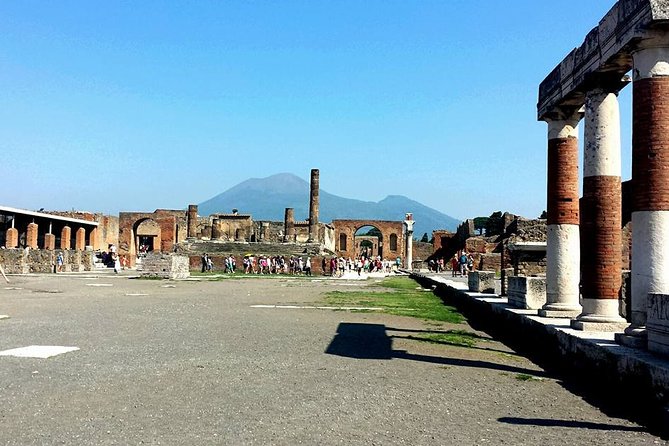
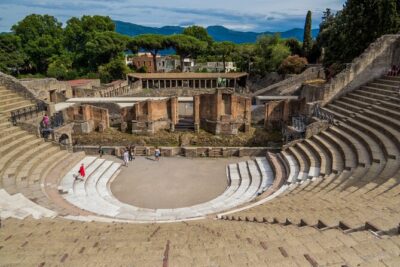
After Vesuvius, you head into the other half of the day: a site where you walk through layers of everyday life. Pompeii is set up as an open-air museum, and it’s one of the most visited places in Italy for a reason—its streets, buildings, and urban layout let you imagine daily routines rather than just admire ruins from afar.
Timing is about 2 hours at Pompeii. That’s enough time to hit the highlights and get a sense of how the town worked. It’s also enough time to feel the rhythm: you’re not just standing in one spot; you’re moving through the grid of what used to be a real city.
You’ll also likely notice how the ruins are framed by history: Pompeii was buried in ash, and it was only rediscovered much later (the information for this tour references 1748). That timeline adds punch. The city wasn’t “planned to be a museum.” It was preserved, then found again—and now you’re touring that find.
Why Pompeii hits differently after the volcano
Here’s the mental trick I recommend: before you arrive at Pompeii, let Vesuvius do the heavy lifting. Once you’ve seen the crater and felt the idea of the ash coming from above, Pompeii stops being just a sightseeing checklist. The streets feel less like scenery and more like a frozen moment.
- Sorrento Farm and Food Experience including Olive Oil, Limoncello, Wine tasting
★ 5.0 · 2,524 reviews



Herculaneum: the “small sister” that feels close to real life
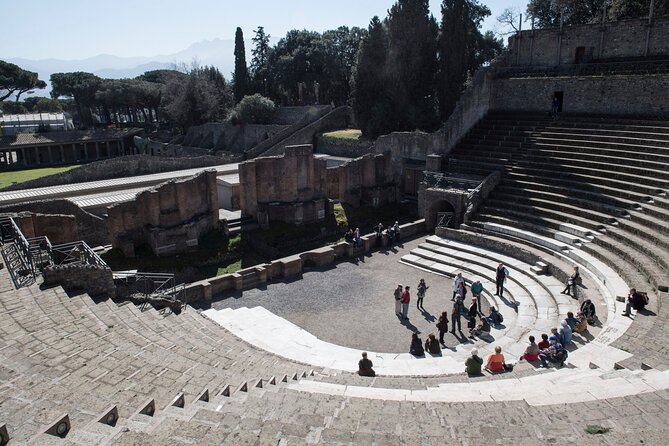
Herculaneum is the surprise for many people because it can feel more personal than Pompeii. It’s smaller, yes—but that helps. You get a stronger sense of how villas and homes looked, and you can focus on detail without feeling swallowed by the size.
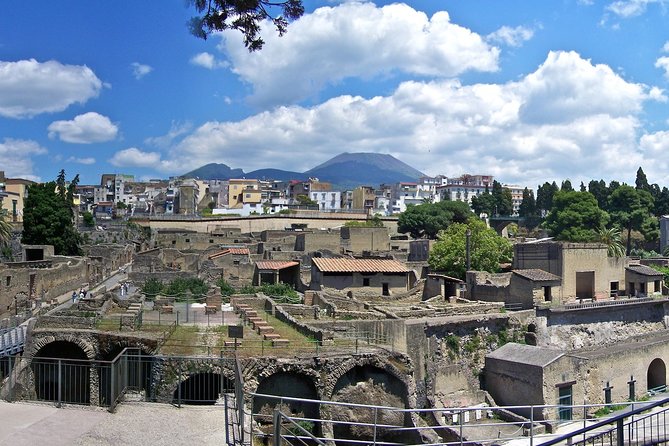
The tour allocates about 2 hours here, and the emphasis is on preservation. This site is described as having intact patrician villas and a rare level of survival—mosaics and frescoes included. It’s also noted that materials associated with the city’s age can still be seen, like wood and ropes displayed from the 2,000-year-old context. The preservation is especially striking given the violence attributed to the volcanic flows (the tour description references flows around 500°C).
Translation for your visit: Herculaneum can make you slow down. You’re not only looking at walls; you’re trying to picture the rooms and the people who used them. Even in a group setting, the site’s “stillness” tends to nudge you toward calmer attention.
Guides and group size: what comfort looks like on a long day
Group size is capped at 19, with a minimum of 6 people. That matters because it affects pacing. A smaller group tends to make it easier to hear explanations and keep moving without long clogs of bodies at every corner.
There’s also a guide structure that depends on your group size:
- For groups of 6–8, you have an English-speaking guide in Pompeii and Herculaneum.
- For groups of 9–19, you get a minibus plus an English-speaking guide for the entire excursion.
From the names shared in past experiences, the guidance can be a real highlight. People have praised Corrado as a driver who smoothed things along, while guides such as Tiziana and Floriana have brought the sites to life. Others have highlighted Andrea at Herculaneum and Dario for Pompeii, with a clear focus on daily life and what made the places feel human.
So yes, the ruins do the talking—but a good guide helps you read what you’re seeing fast.
Price and value: what $246.68 really becomes on site
The tour price listed here is $246.68 per person, for an approximately 8-hour day. That includes transport, taxes, parking, tolls, and gasoline, plus an English-speaking guide setup depending on group size.
What’s not included are the site admissions:
- Pompeii: €19 per person
- Herculaneum: €18 per person
- Vesuvius: €12 per person
So, if you add the three entrance fees together, you’re looking at about €49 in additional admission costs, not counting anything you buy for food and drinks. Food and drinks are explicitly not included.
Is it a good value? For me, the value is in not having to coordinate three separate tickets and logistics across two archaeological sites plus the volcano. You’re paying for the “chain” to work—getting you from one major place to the next without you spending your day figuring out bus routes and timing.
What to bring so the day feels easier
This day includes a short climb at Vesuvius and a lot of walking in Pompeii and Herculaneum. To make it comfortable, I’d plan like this:
- Comfortable closed-toe shoes with grip for volcanic gravel and uneven ground
- A light layer for early-morning cool and warm afternoon sun (the Bay of Naples area can shift)
- Water and small snacks since food and drinks aren’t included
- Sun protection (hat/sunglasses/sunscreen), especially at the summit area
Also, keep your entrance plans organized. The Vesuvius ticket is not changeable and not refundable, so you’ll be glad you handled it early.
Where this tour fits best—and where it might not
This is a great fit if you want a full “volcano to ruins” day with English explanations and a fixed timeline. The order helps you understand what you’re seeing, and the total time at each stop (3 hours Vesuvius, 2 hours Herculaneum, 2 hours Pompeii) makes the experience feel balanced.
It might be less ideal if:
- You strongly dislike hikes or uneven ground (there’s a 25-minute climb at Vesuvius)
- You’re hoping for lots of free time to roam on your own; the schedule is structured, so you’ll be moving at a guided pace
The tour says most people can participate, but that doesn’t remove the need for basic walking comfort. If you’re unsure about your ability on rough paths, think carefully before signing up.
Should you book this Vesuvius, Pompeii, and Herculaneum tour?
I’d book it if you’re trying to get the most meaning out of one day. The combination of Vesuvius crater views plus two different “time capsules” is the kind of pairing that makes the whole trip stick in your memory. And when the guidance is on point—as it has been with named guides like Corrado, Tiziana, Floriana, Andrea, and Dario—the sites come alive in a practical way.
I’d think twice if you don’t like being locked into a specific ticket time slot. The Vesuvius ticket is not changeable and not refundable, and entrance fees for all three stops are separate. If you’re the kind of person who hates pre-planning, you’ll feel that pressure here.
FAQ
What is the total duration of the tour?
The tour runs for about 8 hours.
What time does the tour start?
It starts at 8:00 am.
What are the main stops during the day?
You’ll visit Vesuvius National Park, then Herculaneum, then Pompeii.
Is there a hike at Vesuvius?
Yes. After driving up through the volcano area, you’ll make a final hike of about 25 minutes along a zigzag path of volcanic gravel.
Are the entrance fees included in the tour price?
No. Pompeii is €19 per person, Herculaneum is €18 per person, and Vesuvius is €12 per person. Vesuvius tickets also require pre-purchase online.
What time slot is used for Vesuvius entrance from Sorrento?
From Sorrento, the Vesuvius entrance time listed is 10:00 am.
What time slot is used for Vesuvius entrance from Naples?
From Naples, the Vesuvius entrance time listed is 9:30 am.
Will there be an English-speaking guide?
Yes, the exact setup depends on group size. For groups of 6–8, there’s an English-speaking guide in Pompeii and Herculaneum. For groups of 9–19, you’ll have a minibus, driver, and an English-speaking guide for the entire excursion.
Is food and drinks included?
No. Food and drinks are not included.
How does cancellation work?
You can cancel up to 24 hours in advance for a full refund.
Is this tour suitable for kids?
Children under 18 enter for free at Pompeii and Herculaneum with valid ID.
You Might Also Enjoy


More Tour Reviews in Sorrento
- Sorrento Farm and Food Experience including Olive Oil, Limoncello, Wine tasting
★ 5.0 · 2,524 reviews