REVIEW · SORRENTO
Private Pompeii Tour with Archaeologist & Winery on Mt Vesuvius
Book on Viator →Operated by Fabrizio Belleni - Leisure Italy Private Guide · Bookable on Viator
A day of Pompeii, then wine above Vesuvius. This private outing combines Pompeii with an archaeologist and a stress-free plan that’s adjusted to your pace. You’ll be guided by Fabrizio Belleni (Leisure Italy Private Guide), and the route is built around the Forum area so you get the big ideas fast without wandering in circles.
What I really like is the customization. The Pompeii walk is described as tuned to your will and physical attitude, which matters when ruins are huge and uneven. Another big win is the food-and-wine finish: a winery lunch paired with five local wines, plus the option to choose a classic or superior wine experience.
One consideration: this day involves a real amount of walking, and the tour does not reach the top of Mount Vesuvius. If your main goal is crater-to-crest views, you’ll need a separate Vesuvius climb.
In This Review
- Key reasons this Pompeii + winery day is a strong plan
- The private-day flow: hotel pickup, Mercedes ride, and skip-the-line access
- Pompeii with Fabrizio Belleni: pacing the Forum so it makes sense
- Porta Marina into the Forum: the dramatic entrance you remember
- Basilica Pompeiana: law, commerce, and the city’s serious business
- Temple of Apollo: Greek-Italic roots with a Vesuvius view
- Forum of Pompeii: the car-free plaza that ran the city
- Macellum food market: shopping, imperial ties, and street-level life
- Forum Baths (Terme del Foro): Roman engineering you can actually see
- House of the Faun: elite life, peristyles, and famous art as context
- Casa dei Vettii: restored frescoes and that special Pompeii drama
- Insula dei Casti Amanti: seeing the city and the excavation at once
- Teatro Grande: Roman entertainment with acoustics you can test
- Antiquarium di Pompei: the modern museum that sets your ruins in context
- Cantina del Vesuvio winery lunch: organic wines with crater views, minus the summit
- Price and logistics: what $434.46 per person buys you in real time
- Who should book this Pompeii + winery day
- Book it or skip it: my decision guide
- FAQ
- Is this Pompeii tour private?
- How long is the tour?
- Does the tour include skip-the-line entry for Pompeii?
- Do you reach the top of Mount Vesuvius?
- Is lunch included in the price?
- What language is the tour offered in?
- Are service animals allowed?
- What do I need to know about pickup?
Key reasons this Pompeii + winery day is a strong plan
- Fabrizio Belleni customizes the Pompeii route so you can focus on what you care about most
- Skip-the-line Pompeii Express entry means less time stuck at gates and lines
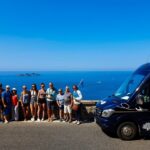
- Mercedes van transfers from Naples or Sorrento keep the day smooth and low-stress
- Forum-focused highlights help you understand Pompeii’s layout instead of just collecting sights
- Winery lunch with five wines is a proper finale, not an afterthought
- No summit climb keeps the schedule realistic and avoids the hardest portion of Vesuvius
The private-day flow: hotel pickup, Mercedes ride, and skip-the-line access
This is built as a do-it-once day. You get private pickup and drop-off, and the transport is by air-conditioned Mercedes minivan. That means you’re not figuring out buses, ferries, or timing gaps between Pompeii and the winery.
Once you reach Pompeii, the big practical help is the skip-the-line Pompeii Express ticket handling. Many visitors lose time at the entrance or get stuck waiting to start their guided portion. Here, the point is to get you walking with context as early as possible.
The tour length runs about 4 to 7 hours, depending on pacing and how you want to spend time inside each stop. Since it’s private, the guide can slow down for questions and adjust for comfort, which makes a huge difference on uneven stone and in crowded pockets.
You can also read our reviews of more private tours in Sorrento


Pompeii with Fabrizio Belleni: pacing the Forum so it makes sense
Pompeii is massive—about 150 acres—and it once held around 18,000 inhabitants. Your day focuses on the highlights around the Forum, the heart of public life. That choice is smart. If you try to cover everything solo, you’ll end up “seeing stuff” but not really understanding how the city worked.
Stop 1 is essentially your orientation: the archaeological park with a walk that centers on the Forum area. You’re also invited to request special interests ahead of time, and the itinerary is described as tuned to your physical attitude. If you’ve ever left a big site feeling overwhelmed, this Forum-first approach is designed to prevent that.
A quick mindset shift helps here: you’re not just touring buildings. You’re learning how Romans lived, argued, bought food, bathed, and ate—then watching how the eruption froze it all in place.
Porta Marina into the Forum: the dramatic entrance you remember
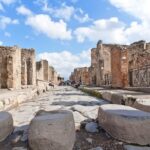
Stop 2 is Piazza Porta Marina, the main entrance point tied to movement toward the sea. Porta Marina is a dramatic dual-arched gate built to handle both pedestrians and cart traffic. It’s integrated into Pompeii’s Cinta Muraria defensive walls, so you can actually see how the city protected itself and managed incoming flow.
Why this matters: this entrance shows Pompeii as a working town, not a museum backdrop. From here, you’re guided uphill on Via Marina toward the administrative and religious core. It’s like stepping into a movie scene where you finally understand where you are.
A small drawback: since this is an approach route, you may feel like you’re “still walking toward the good stuff.” The benefit is that once you hit the Forum, you already understand the direction and why the layout is the way it is.
Basilica Pompeiana: law, commerce, and the city’s serious business
Stop 3 is the Pompeian Basilica at the southwest edge of the Forum. This large three-aisled building was a secular powerhouse: courthouse functions and major commercial transactions. It dates back to the 2nd century BC, and it’s striking because you can still walk the length of the grand central nave.
The details to look for are architectural, and your guide will help connect them to daily life. You’ll see the bases of 28 brick columns that once rose high, plus the raised tribunal platform where magistrates presided.
One nice note for visitors: even if legal systems aren’t your thing, the Basilica helps you “decode” Roman public buildings. It’s easier to understand the next sites once you’ve seen what mattered politically and commercially.
Temple of Apollo: Greek-Italic roots with a Vesuvius view
Stop 4 is the Temple of Apollo, among the oldest significant sacred sites in Pompeii. It includes Greek and Italic architectural influences and is known for the surrounding portico with 48 columns and the elevated podium that once supported the cella.
You’ll also notice how the temple positions you. A direct, iconic view of Mount Vesuvius is part of the experience here. That visual link is powerful because it reminds you what this city faced in 79 AD.
What can feel tricky: the temple area can be busy, and some features are easier to understand with a guide pointing them out. This is one of those stops where paying for a guide pays off immediately, because you’re looking at fragments and replicas rather than a single perfect scene.
You can also read our reviews of more wine tours in Sorrento





Forum of Pompeii: the car-free plaza that ran the city
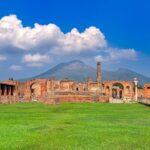
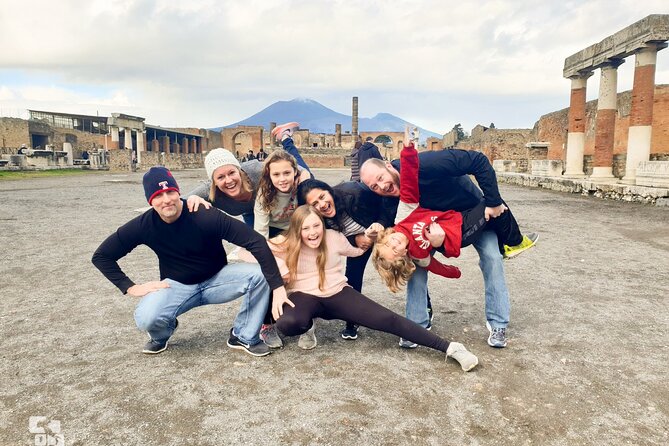
Stop 5 is the Forum itself: the political, commercial, and religious heart. It’s a rectangular car-free plaza with major public buildings surrounding it. The travertine paving and remaining pedestals help you picture the scale of ceremonies, markets, and public movement.
The Forum is also where you feel Pompeii’s rhythm. Daily markets happened nearby, legal proceedings unfolded, and ceremonies brought people together. And again, Mount Vesuvius looms north, so the city’s geography and destiny feel connected rather than random.
If you’re short on patience for crowds, plan to slow down with the guide. This stop is at its best when you take breaks to orient yourself and let the story connect.
Macellum food market: shopping, imperial ties, and street-level life
Stop 6 is the Macellum, Pompeii’s main covered food market. The setting is part of the magic: a rectangular complex with a central courtyard and a circular tholos pavilion. Even the drainage findings—fish bones and scales—signal cleaning and seafood trade.
Around the edges are small shops (tabernae) for meat, fruit, and vegetables. On the eastern side, there’s a dedicated shrine honoring the imperial family. That’s a real-world detail: commerce wasn’t separate from politics and state religion.
Why this stop is worth your time: it’s the most human-feeling place in the Forum area. You start thinking about what people ate, how they shopped, and what fairness meant when weights and measures were verified.
A practical consideration: like much of Pompeii, it’s partly exposed and partially ruin. If you want everything to be fully restored to modern standards, you might find this less immediately satisfying. But the trade details make it come alive.
Forum Baths (Terme del Foro): Roman engineering you can actually see
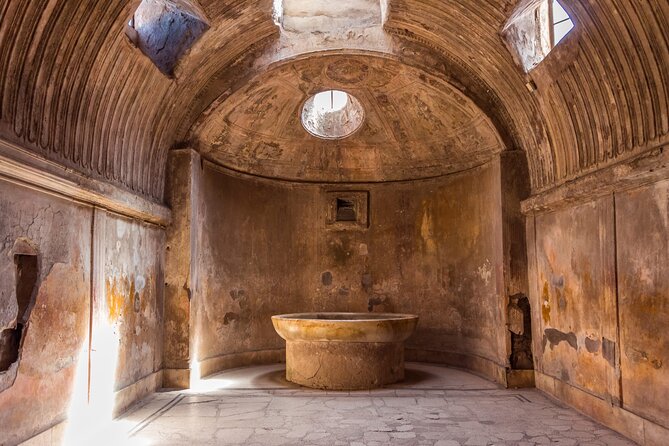
Stop 7 is the Forum Baths, one of the best-preserved bath complexes because it was still fully operational during the eruption. You’ll move through rooms that show a daily ritual: apodyterium (changing room), frigidarium (cold bath), tepidarium (warm room), and calidarium (hot room).
What makes this stop special is the engineering clarity. You can observe stucco reliefs, the system for circulating hot air (hypocaust), and heating details like the original bronze brazier used for heat.
If you like “how it worked” sites, this is a standout. It turns bathing from a vague Roman pastime into an actual process you can picture. Your guide also points out how people socialized here, not just how they washed.
House of the Faun: elite life, peristyles, and famous art as context
Stop 8 is the House of the Faun, one of Pompeii’s largest and most luxurious residences. It covers an entire insula block and features peristyle gardens plus atriums. This is the kind of place where scale alone tells you money lived here.
You’ll focus on big iconic items—often known through replicas—like the bronze Dancing Faun and the Alexander Mosaic. The originals are kept in Naples, so you’ll be seeing what’s available in Pompeii, while your guide connects it back to the masterpieces’ real-world locations.
Even if you’ve seen photos before, this house works better in person because you can grasp the flow between rooms and the way gardens structure the home. It also gives you a contrast to the market and baths, so you feel how different social levels experienced the city.
Casa dei Vettii: restored frescoes and that special Pompeii drama
Stop 9 is the Casa dei Vettii, often described as the Sistine Chapel of Pompeii, with Fourth Style frescoes and vivid interior scenes. It reopened after a long restoration period of 20 years, so it’s a current, working display rather than a static ruin.
This home belonged to two brothers who rose from slavery to become wealthy merchants. Their story adds bite to what you see, especially in the peristyle garden that’s been replanted according to ancient patterns. The dining rooms and the Cupids Room help you understand how decoration signaled identity and status.
One note: Casa interiors depend on light and crowds. If you’re sensitive to museum-like crowds, go slowly and ask your guide to point out key fresco areas first, then take a second pass if time allows.
Insula dei Casti Amanti: seeing the city and the excavation at once
Stop 10 is Insula dei Casti Amanti, also called the Block of the Chaste Lovers. This is tied to ongoing discoveries, and the big change is the elevated walkway that reopened to the public in 2024.
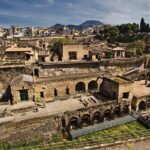
The advantage here is perspective. You can look down and see architecture and excavation activity together. It’s not just a preserved snapshot. It’s history still being uncovered, organized in a way you can actually experience.
The tour description also ties this area to a barrier-free itinerary via the Pompeii for All approach. Even with that, the day still lists a moderate physical fitness level, so don’t assume it’s “no walking.” Still, the design can make this stop more manageable than some other areas of the park.
Teatro Grande: Roman entertainment with acoustics you can test
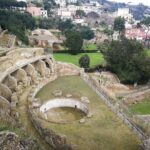
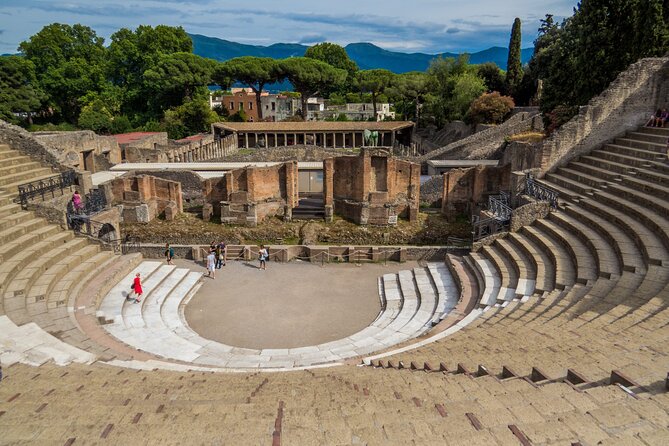
Stop 11 is the Teatro Grande, a horseshoe-shaped theatre carved into a hillside. It could seat roughly 5,000 spectators, and the tiers show social structure, from areas for elites to sections for the general populace.
One practical detail you’ll likely enjoy is the theatre’s acoustics. Your guide points out that you can test them by speaking from the center of the orchestra. It’s a simple moment, but it makes the space feel alive.
A drawback to consider: theatres can get windy and chilly compared to other areas, depending on the day. Bring a layer.
Also, if you’re a performer type, this site can feel more personal than you expect.
Antiquarium di Pompei: the modern museum that sets your ruins in context
Stop 12 is the Antiquarium di Pompei near Porta Marina. This is a climate-controlled museum that houses the site’s most precious and fragile artifacts. The smart move is to visit this after you’ve walked key blocks of Pompeii, because then the museum items connect to places you already saw.
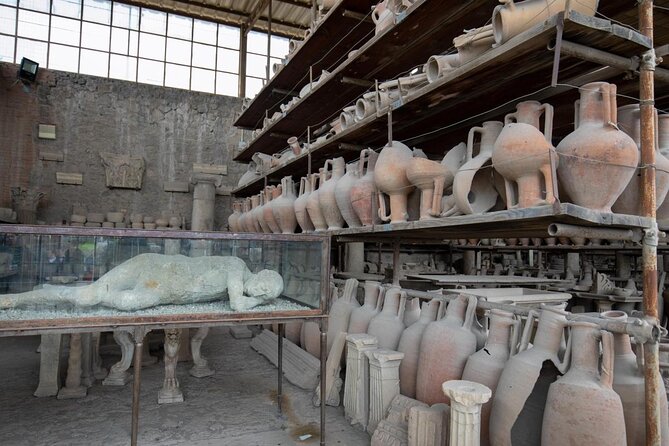
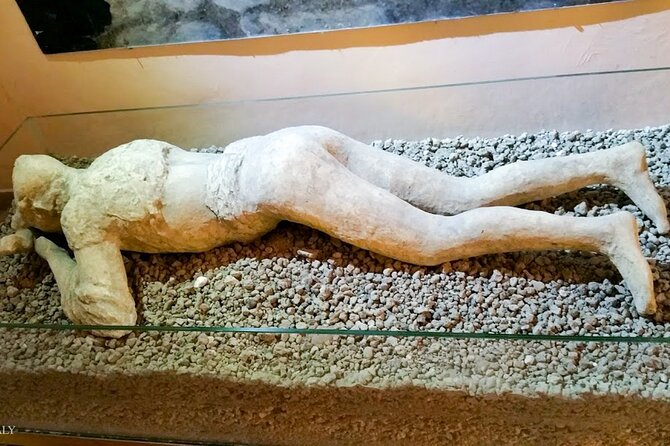
You’ll encounter exhibits that trace Pompeii from pre-Roman Samnite roots to the tragedy of 79 AD. Expect world-famous plaster casts, including the Dog of Pompeii and victims preserved in their final moments. That human dimension can hit harder than you expect, so be ready.
The museum is also described with multimedia projections and digital assistants enhanced for 2026, which can help if you’re the kind of visitor who wants a bit more audio-visual support before walking the ruins again.
Cantina del Vesuvio winery lunch: organic wines with crater views, minus the summit
Stop 13 is Cantina del Vesuvio, an organic winery inside Mt. Vesuvius National Park. The pitch here is simple: a guided stroll through vineyards, then lunch paired with Vesuvius-focused wines, with views of the Bay of Naples and the volcano’s crater area.
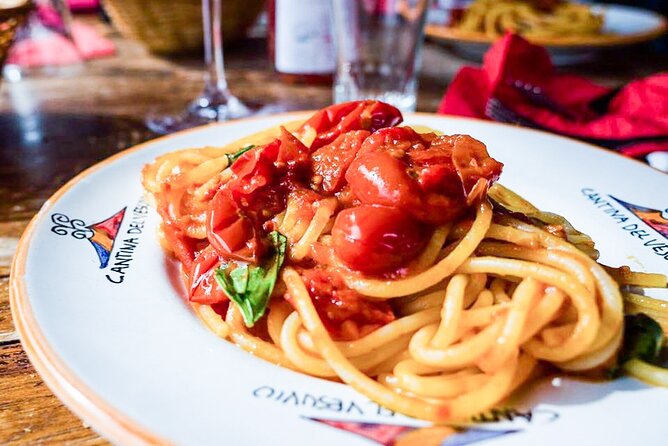
Your visit begins with a guided 15-minute stroll through sun-drenched vineyards, learning about Lacryma Christi wines. Then the highlight is a lunch with a set menu and pairing: five separate local wines.
The food plan includes appetizers like bruschetta, cheeses, and cured meats, plus spaghetti with Vesuvius cherry tomatoes and meatballs. Dessert is Pastiera, and vegetarian/GF options are available as listed.
Cost matters here. The winery lunch and tasting are described as an additional on-site expense. The information you’re given lists a classic experience at €50 or €55 for the classic package, and a superior option around €60 or €65. The exact total depends on the option you choose at the winery.
Big picture: this stop is relaxing compared to Pompeii. It’s also where the day’s emotional arc softens, because you’re outside, looking at open views instead of walls and floors frozen in ash.
Price and logistics: what $434.46 per person buys you in real time
At $434.46 per person, this isn’t a cheap day trip. The value is in avoiding the two biggest time thieves: messy transportation and generic “walk around and read signs” touring.
Here’s what you’re paying for:
- Private transfers in a Mercedes van from Naples and Sorrento
- Private walking tour with an official guide
- Pompeii Express skip-the-line tickets handled as part of the day
- A Forum-centered archaeologist-led route that’s tailored to your pace
- A booked winery experience on Mt. Vesuvius (lunch paid on-site, depending on wine option)
If you’re traveling with a group that wants personal attention, this price can start to feel reasonable because you’re buying time and clarity, not just access. If you’re a solo budget traveler, you’ll likely find cheaper ways to reach Pompeii. But you’ll be trading away the pacing control and the guided structure that helps the ruins make sense.
Who should book this Pompeii + winery day
This tour is a great fit if you want:
- A private archaeologist-guided Pompeii experience focused on the Forum instead of random coverage
- A day plan that includes transport from Naples or Sorrento, not just a ticket and a map
- A break afterward with real local food and a wine pairing at a winery in the national park
- Flexibility in pacing, especially since the tour is described as tuned to physical attitude
It’s less ideal if:
- You’re hoping for a full climb to the summit of Mt. Vesuvius
- You want a fully included lunch with no on-site payment (the winery meal and tasting are paid on-site)
Book it or skip it: my decision guide
I’d book this if your ideal day is: get oriented in Pompeii, understand how the Forum worked, and then finish with a winery lunch that feels like Naples-area life rather than a rushed add-on. The private guide approach, plus skip-the-line entry and Mercedes transfers, makes it much easier to enjoy instead of manage logistics.
If your #1 goal is simply crater-top views, then consider a separate Vesuvius summit plan and keep this one for Pompeii and the vineyard. And because the day is listed for moderate physical fitness, choose it confidently only if you’re comfortable walking through uneven historic areas.
If your plans might shift, there’s free cancellation up to 24 hours before the experience for a full refund, so you can book with less stress.
FAQ
Is this Pompeii tour private?
Yes. It’s a private tour/activity, and only your group participates.
How long is the tour?
The duration is listed as approximately 4 to 7 hours.
Does the tour include skip-the-line entry for Pompeii?
Yes. Pompeii Express skip-the-line tickets are included.
Do you reach the top of Mount Vesuvius?
No. The tour does not reach the top of Mt Vesuvius.
Is lunch included in the price?
Lunch is arranged as part of the winery experience, but it’s paid on-site. The classic and superior options are listed as additional costs.
What language is the tour offered in?
The tour is offered in English.
Are service animals allowed?
Yes, service animals are allowed.
What do I need to know about pickup?
Pickup is offered. You’ll be asked where to meet you and your phone number for the day of the tour.
You Might Also Enjoy


More Private Tours in Sorrento

More Tours in Sorrento




More Tour Reviews in Sorrento
- Sorrento Farm and Food Experience including Olive Oil, Limoncello, Wine tasting
★ 5.0 · 2,524 reviews