REVIEW · SORRENTO
Tour in the ruins of Pozzuoli with an archaeolgist.
Book on Viator →Operated by Svelaria guided tours · Bookable on Viator
Roman ruins in Pozzuoli feel personal. This private, English-guided walk ties together major stops in a compact 2-hour route, from the Anfiteatro Flavio Neroniano to the views off Rione Terra. You’ll get commentary from an archaeology-focused guide as you move through layers of the ancient city.
I especially like how the pacing stays sensible: a full 40 minutes inside the monumental amphitheatre, then shorter, focused segments outside and up on the promontory. I also like the small-group setup—your group only—so questions come fast and the guide can tailor the explanations.
The main consideration is cost at the door. Entrance tickets add up (about €5 per person), and the walk is aimed at people with a moderate fitness level.
In This Review
- Key things to know before you go
- Why Pozzuoli ruins work so well in just 2 hours
- Meeting at Anfiteatro Flavio Neroniano: your 40-minute amphitheatre block
- Rione Terra promontory views: the 30-minute payoff
- Macellum and the Temple of Serapis: seeing meaning from the outside
- Finishing at the port of Pozzuoli: closing the loop
- Price and ticket math for a private group up to 10
- What makes the guide-led format feel worth it
- Who should book this Pozzuoli ruins tour
- Should you book this tour?
- FAQ
- How long is the Pozzuoli ruins tour?
- Is the tour private?
- What language is the tour offered in?
- Where does the tour start?
- Where does the tour end?
- Are entrance tickets included?
- Which stops are free to enter?
- Do I get a ticket on my phone?
- What’s the physical requirement?
- What if the minimum number of travelers isn’t met?
- Is free cancellation available?
Key things to know before you go
- Anfiteatro Flavio Neroniano: guided time in a major Roman amphitheatre (about 40 minutes)
- Rione Terra promontory: a 30-minute panoramic stop with the best “wow” views on the route
- Temple of Serapis (Macellum): you’ll see it from outside the ruins/market area, about 20 minutes
- Port of Pozzuoli finish: the tour rounds out with a final look at the waterfront area
- Private tour for up to 10: one group, English guide, about 2 hours total
- Entrance tickets are extra: plan for the €5 per person fee for entry
Why Pozzuoli ruins work so well in just 2 hours
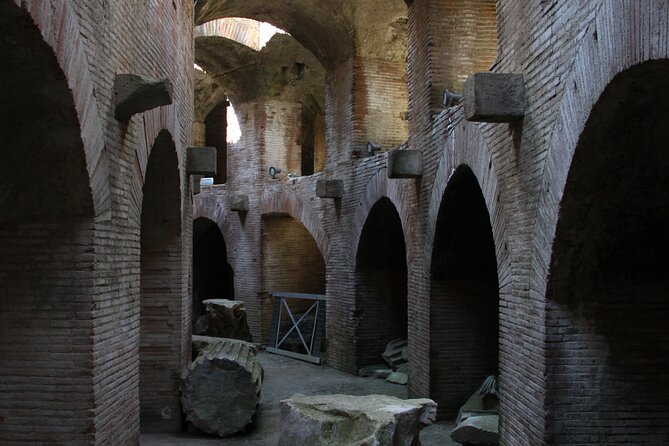
Pozzuoli has a different feel than the bigger, louder archaeology stops people often rush through. Here, the route is built around a practical idea: you don’t need all day to understand the place if your guide gives you the right map in words.
This tour is especially good if you like your ancient sites explained in plain terms. You’ll move from the amphitheatre—where you can imagine crowds and events—to the elevated promontory of Rione Terra, and then over to the commercial-religious complex called the Macellum and linked to the Temple of Serapis. It’s not a “checklist.” It’s a guided walk that helps you connect function (entertainment) to space (views and topography) to civic life (markets and worship).
And because it’s private, you’re not stuck listening in while strangers wander off. The guide can keep you on the thread, slow down when you want more, and skip what you already get.
You can also read our reviews of more tours and experiences in Sorrento.
- Sorrento Farm and Food Experience including Olive Oil, Limoncello, Wine tasting
★ 5.0 · 2,524 reviews



Meeting at Anfiteatro Flavio Neroniano: your 40-minute amphitheatre block
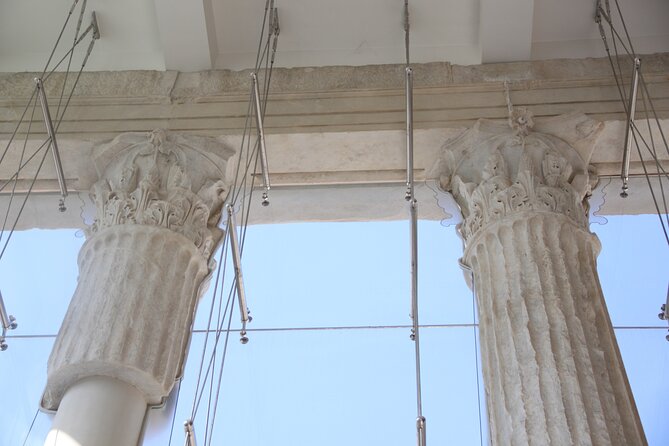
The tour starts right at Anfiteatro Flavio Neroniano, at Corso Nicola Terracciano, 75. That matters because amphitheatres can feel abstract until you stand in the right place. Starting here keeps the story focused from the first minute.
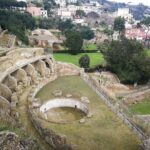
You’ll spend about 40 minutes with the official guide for a guided tour in the monumental Roman amphitheatre. The time block is long enough to do more than just point and move on. You can usually follow a good explanation of how the space was used—where people sat, what the structure is telling you, and what to notice in the stone and layout.
Two practical tips for this stop:
- Bring your eyes, not just your phone. Take a moment to look around before you start listening too hard. Amphitheatres are geometry-heavy, and the guide’s comments land better once you’ve done your first visual scan.
- Plan for tickets. Entrance tickets are not included for this stop. Budget for the listed €5 per person entrance fee, so the tour doesn’t end up feeling more expensive at the last moment.
Even if you’ve seen other Roman amphitheatres, this one is worth anchoring your visit. The guide’s job is to help you compare—what’s similar, what’s different, and what the local setting changes about the experience.
Rione Terra promontory views: the 30-minute payoff
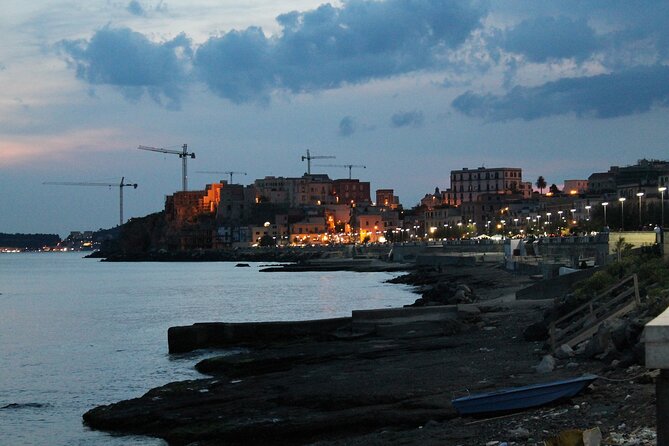
Next comes Rione Terra, a promontory area where the city’s shape becomes part of the archaeology. The stop is about 30 minutes, and it’s designed as a panoramic tour—so the explanation and the scenery work together.
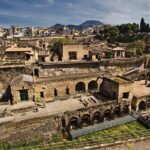
Why this stop matters: amphitheatres are about gatherings, but promontories are about perspective. When you’re above the surrounding streets and coast, you start to understand why ancient towns developed where they did. You’ll see how the higher ground gives control, visibility, and a natural sense of order to the urban layout.
Since the admission here is free, it’s also a low-friction moment in the day. You can focus on learning rather than worrying about extra costs or a timed entry window.
A small, real-world reminder: viewpoints can mean uneven ground. You don’t need to be an athlete, but the tour does require moderate physical fitness, so wear shoes you trust on stone and steps.
Macellum and the Temple of Serapis: seeing meaning from the outside
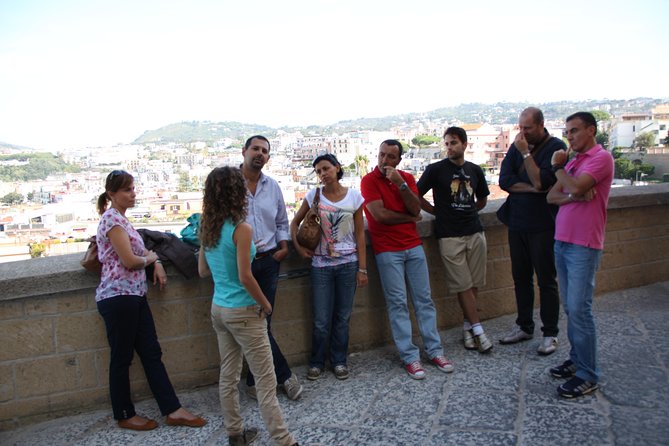
The third stop is Macellum (Temple of Serapis). You’ll view it from outside the ruins area of the Roman market, with about 20 minutes for this portion. Admission is free for this stop.
This is one of those moments where the guide earns their fee. Outside-only viewing can sound limiting at first, but it often works well because you can connect the building’s role to the kind of daily life that happened around it. Markets and sacred spaces in Roman cities weren’t always separated the way modern travelers imagine. When you understand that, the outlines and setting become more informative than you’d expect.
Here’s what to focus on while you’re there:
- Think “civic day.” Don’t just picture worship or trade in isolation. The guide should help you understand how these spaces fit together in a functioning city.
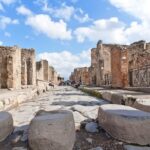
- Notice how you’re positioned. Since you’re not inside the structure for this stop, your angle matters. Stand where the guide tells you to stand, then look again before you move on.
If you want one stop to linger at, this is usually the one to ask the guide to slow down—especially if you like the quieter, everyday side of Roman life.
Finishing at the port of Pozzuoli: closing the loop
One detail that makes this tour feel more complete is the finish. The tour ends with a visit to the port of Pozzuoli.
Ports are where ancient cities traded, imported goods, and moved people. After your amphitheatre and your promontory, the port gives you a last “functional” piece of the puzzle: how a Roman city connected to the wider world beyond its walls.
Even if you only spend a short amount of time there, it helps you walk away with a more rounded mental picture instead of just a few separate monuments.
If you’re combining this with other time in the area, the port finish is also convenient for continuing your day on foot—just plan your next stop after you’re done, since the tour ends near the Macellum/Temple of Serapis area at Via Serapide, 13.
- Sorrento Farm and Food Experience including Olive Oil, Limoncello, Wine tasting
★ 5.0 · 2,524 reviews



Price and ticket math for a private group up to 10
The price is $272.20 per group, up to 10 people, for about 2 hours. That means your per-person cost depends on how many you bring. At the maximum group size, you’re effectively paying about $27 per person for a private English guided tour—before entrance fees.
Then there’s the extra cost: entrance tickets are €5 per person. The information you have also tells you the amphitheatre entry is not included, while the other stops are free. In practical terms, you should plan around that €5 per person figure as the one predictable add-on.
Is it value? For me, it is if:
- you want the private factor (no waiting for strangers, fewer distractions)
- you care about getting explanations (the guide time is the product here)
- you’re traveling with up to 10 people, where the group price really spreads out
It may not be the best fit if you’re traveling solo and aren’t interested in a guide-led pace. In that case, you might compare other options that don’t rely on a group-rate price.
What makes the guide-led format feel worth it
When a tour is private, the best guides do two things: they keep you oriented, and they help you notice what matters. In this case, the route is structured so you’re not just standing in front of ruins. You’re moving between spaces that served different roles in ancient life.
The amphitheatre gives you the big, event-driven context. Rione Terra lets you understand why the city’s geography matters. The Macellum/Temple of Serapis connects the sacred and civic worlds. Then the port makes the whole story travel outward again.
That flow is why the “architecture plus explanation” format is worth paying for. You get a guided chain of meaning rather than three isolated photo stops.
Who should book this Pozzuoli ruins tour
This tour is a strong match if you:
- want a private English guide and are traveling as a small group (up to 10)
- like Roman sites explained with clarity rather than academic-only detail
- prefer a compact route that still covers distinct parts of the ancient city
It’s also a good pick if you enjoy asking questions. With a private setup, your questions don’t get drowned out.
It might be less ideal if:
- you’re looking for a fully indoor, ticket-heavy museum day (this is a mixed format with outside viewing at the Temple of Serapis stop)
- you’re not comfortable with moderate physical fitness needs (it’s not described as strenuous, but it does involve walking on uneven historic surfaces)
Should you book this tour?
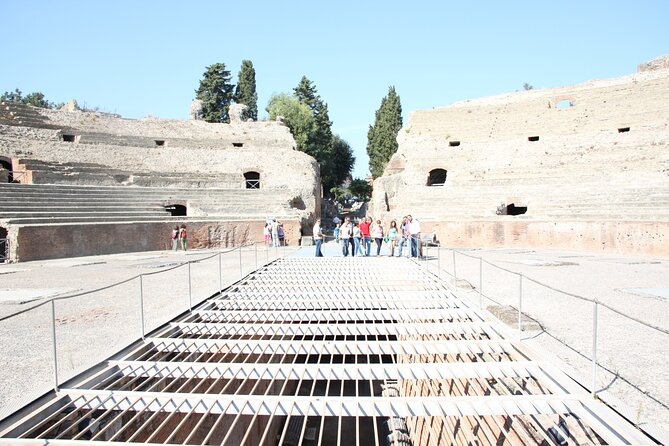
If you want a focused, guide-led walk through Pozzuoli ruins—with the amphitheatre, the Rione Terra panoramic viewpoint, and an outside look at the Macellum/Temple of Serapis—this is an easy yes to consider. The private group setup makes it feel tailored, and the route is short enough to keep energy up while still covering meaningful ground.
I’d book it when:
- you’re traveling with 2–10 people and want real value
- you want the guide’s interpretation more than a self-guided stroll
- you like the idea of finishing at the port of Pozzuoli for a more complete mental picture
FAQ
How long is the Pozzuoli ruins tour?
It’s about 2 hours.
Is the tour private?
Yes. It’s a private tour/activity, and only your group participates.
What language is the tour offered in?
The tour is offered in English.
Where does the tour start?
The meeting point is Anfiteatro Flavio Neroniano, Corso Nicola Terracciano, 75, 80078 Pozzuoli NA, Italy.
Where does the tour end?
The tour ends at the Macellum (Temple of Serapis) area, Via Serapide, 13, 80078 Pozzuoli NA, Italy, and it also includes a visit to the port of Pozzuoli.
Are entrance tickets included?
Entrance tickets are not included. The cost is listed as €5.00 per person.
Which stops are free to enter?
Rione Terra and the Macellum (Temple of Serapis) are listed as admission free.
Do I get a ticket on my phone?
Yes, the tour includes a mobile ticket.
What’s the physical requirement?
The tour notes a moderate physical fitness level.
What if the minimum number of travelers isn’t met?
If the tour is canceled because the minimum isn’t met, you’ll be offered a different date/experience or a full refund.
Is free cancellation available?
Yes, you can cancel for a full refund up to 24 hours in advance of the experience’s start time.
You Might Also Enjoy




More Tours in Sorrento


More Tour Reviews in Sorrento
- Sorrento Farm and Food Experience including Olive Oil, Limoncello, Wine tasting
★ 5.0 · 2,524 reviews