REVIEW · SORRENTO
From Naples: Pompeii Skip-the-Line Guided Tour
Book on GetYourGuide →Operated by IAMME IA! - Gray Line Amalfi Coast · Bookable on GetYourGuide
Pompeii hits hardest before the crowds. This Naples tour uses early departure and priority access so you can start at Porta Marina and get context fast, with a licensed guide calling out what you’re actually looking at.
I especially love how the route moves through the city’s “everyday life” moments: the Civil Forum, Via dell’Abbondanza with its wagon grooves, the Large Theater, the bath complex, and the House of the Faun with the Alexander Mosaic. One thing to keep in mind: this is an active walking tour on uneven ancient ground, and groups may be split into smaller parties at the site.
In This Review
- Key Highlights Worth Getting Excited About
- Naples Pickup, Air-Conditioned Ride, and Why Timing Matters
- Skip-the-Line Access and How You Actually Experience Pompeii
- Porta Marina to the Civil Forum: Pompeii’s Power Center
- Via dell’Abbondanza: Street Life, Shops, and Chariot Grooves
- Theater District and the Large Theater: Public Entertainment as Social Glue
- Terme Stabiane Baths: Roman Wellness You Can Still Feel
- Lupanare: A Tough Stop With Real Human Context
- Thermopolium and Pistrinum: How People Ate on the Run
- House of the Faun and the Alexander Mosaic
- Large Theater, Basilica, Macellum: The City Keeps Speaking
- The Plaster Casts: Where Pompeii Turns From Ancient to Personal
- Groups, Headsets, and Language: What Might Change Day to Day
- Practical Tips That Make the Tour Feel Easier
- If You Want Mount Vesuvius Too (What’s Possible)
- Price and Value: Is $71 a Good Deal?
- Who This Tour Fits Best
- Should You Book This Pompeii Skip-the-Line Tour?
- FAQ
- Where is the meeting point in Naples?
- How long is the Pompeii skip-the-line guided tour?
- Does the tour include skip-the-line entry?
- What languages are available?
- Are audio headsets provided?
- What should I bring?
- Is this tour suitable for everyone?
Key Highlights Worth Getting Excited About
- Early departure from Naples to beat the worst crowd crush
- Priority entrance using a separate route, so you waste less time at the gate
- A guided highlights walk focused on the big emotional moments, from market life to the plaster casts
- Stop-by-stop Roman details like Roman “street food” shops and the Lupanare frescoes
- Audio headsets for groups of 8+ to keep you connected to your guide in busier areas
Naples Pickup, Air-Conditioned Ride, and Why Timing Matters
The day starts with meeting your guide outside the main entrance of the Starhotel Terminus at Piazza Giuseppe Garibaldi 91. Expect a short air-conditioned coach ride—about 30 minutes—to reach Pompeii, then another 30 minutes back after you’re done.
The big win here is timing. Early entry means you get Pompeii while it still feels like a place, not a stampede. You also get more out of the story because you’re not trying to learn Roman life with everyone else jostling for the same angle.
You can also read our reviews of more guided tours in Sorrento
Skip-the-Line Access and How You Actually Experience Pompeii
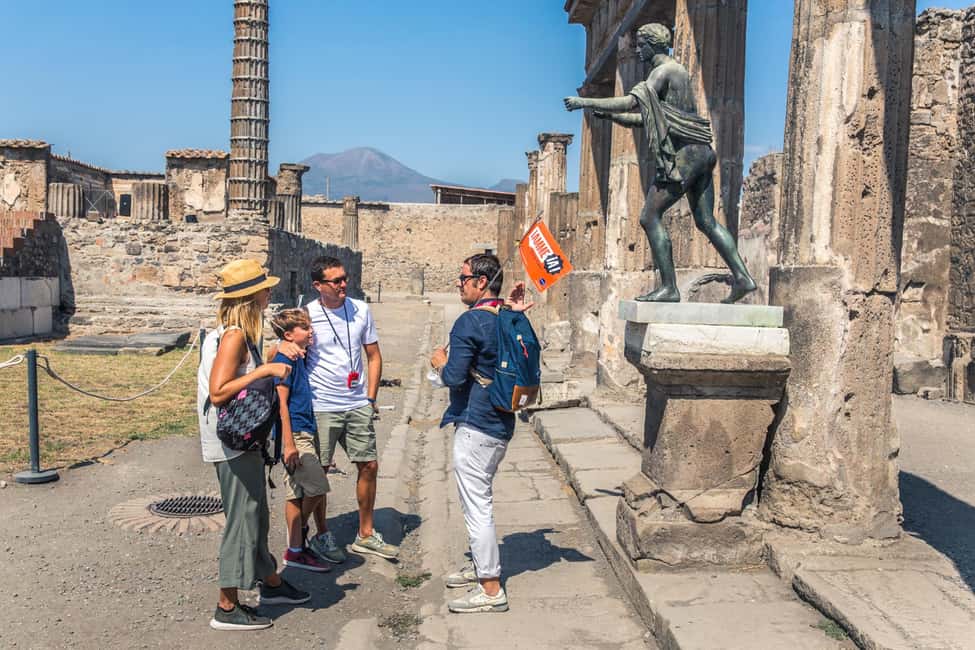
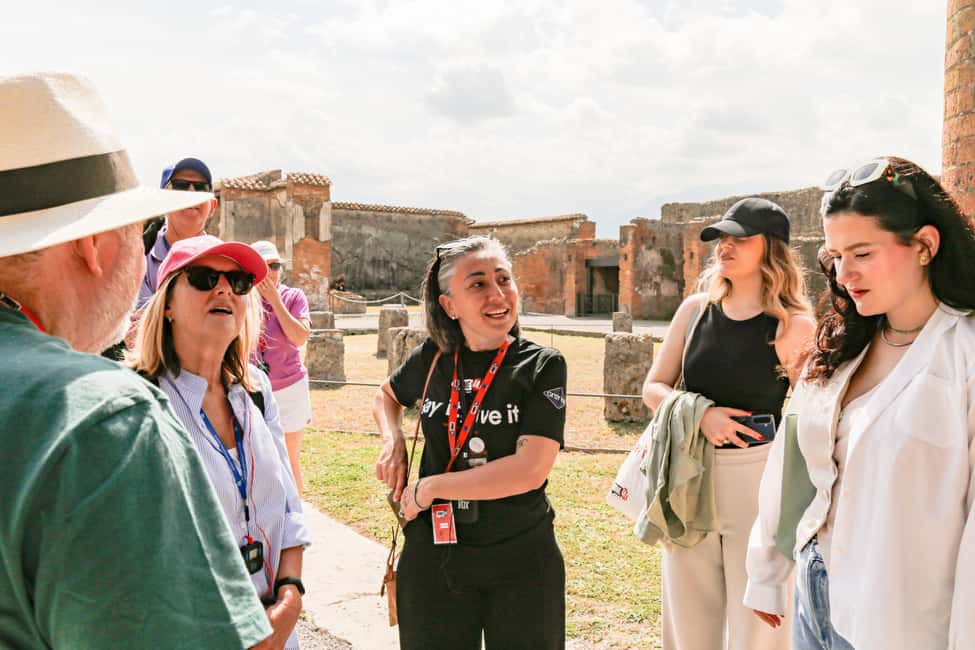
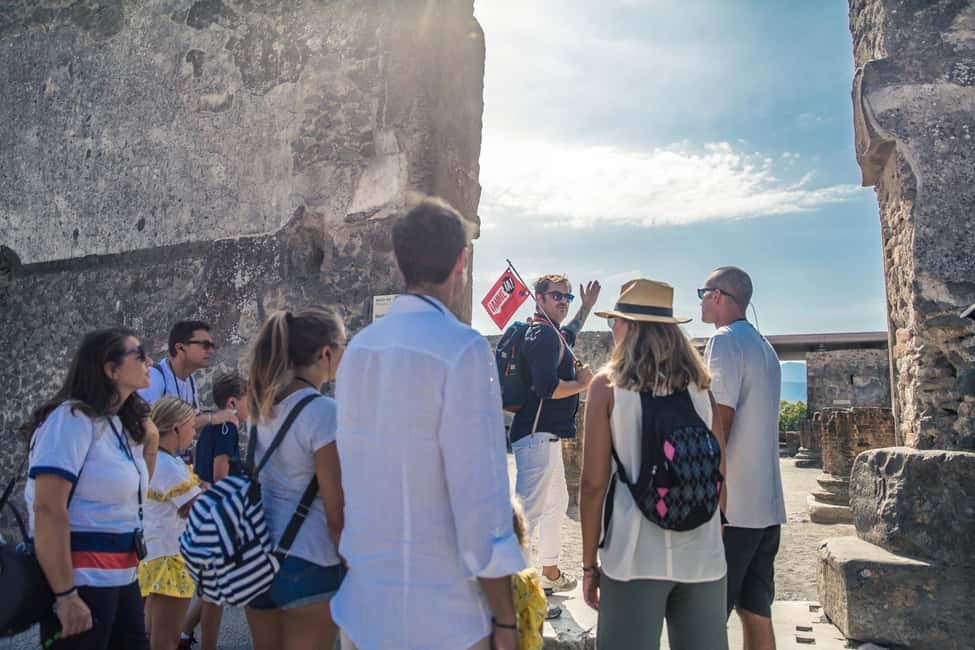
Once you’re in, the tour is built around a guided walking route rather than a hop-on/hop-off scavenger hunt. You’ll be using priority access through a separate entrance, which helps you skip the slow part and start seeing real streets and rooms sooner.
Also, don’t expect one single “everyone stays together forever” flow. Pompeii is a regulated site, and the operator notes that groups may be divided into smaller parties, each with its own licensed guide. If you’re the type who hates being separated, it helps to mentally prep for it.
If you’re in a larger group (8+), you’ll get audio headsets, which is a practical touch for a site this big. In past experiences, radios/headsets can lose clarity near heavy crowding, so if your signal ever gets fuzzy, just look up—your guide is still in motion.
Porta Marina to the Civil Forum: Pompeii’s Power Center
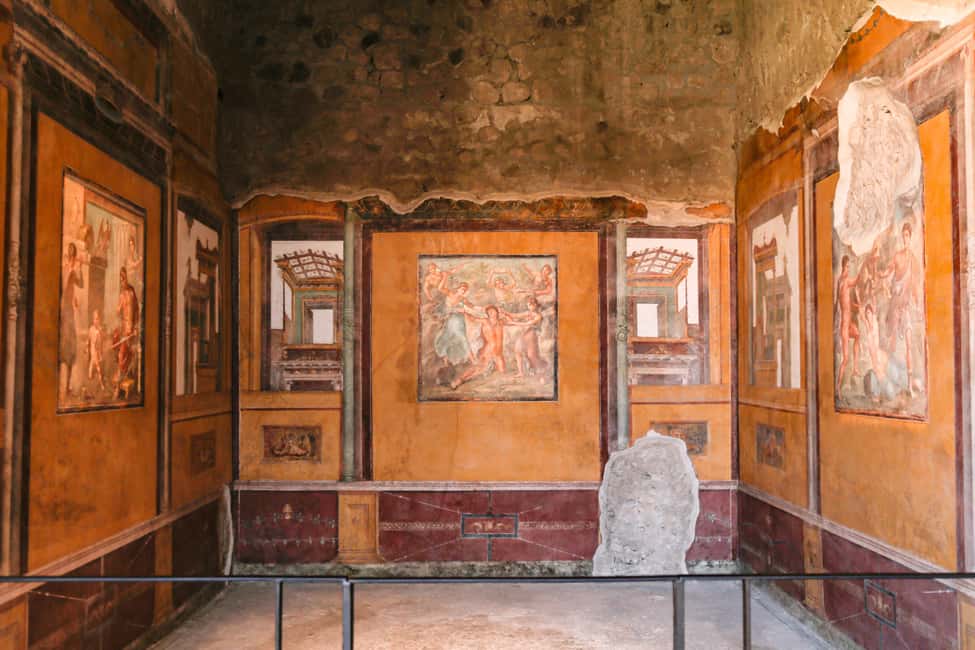
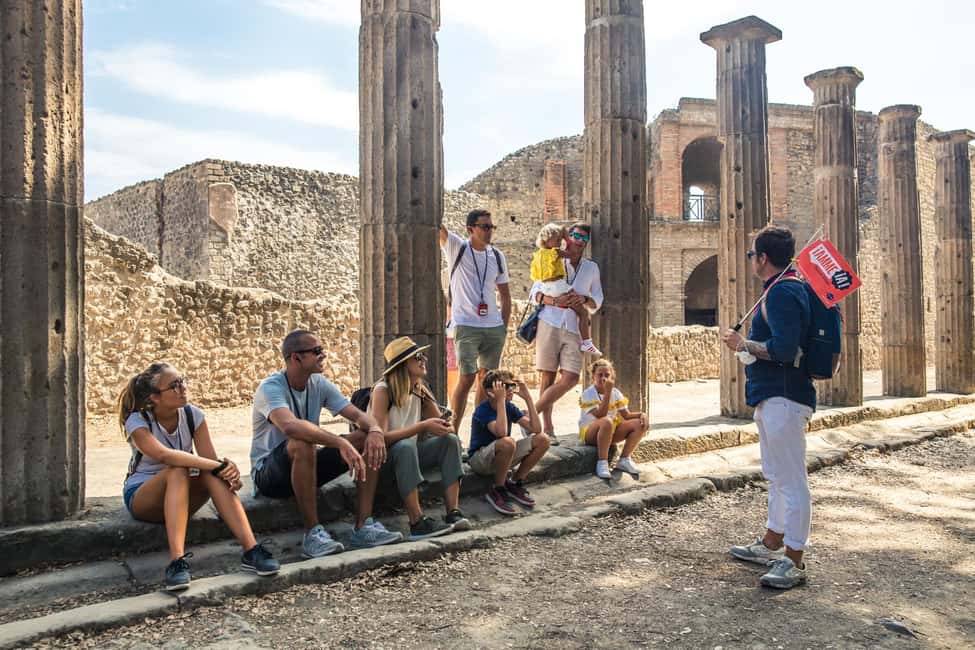
Your walk begins at Porta Marina, one of the original city gates. It’s a good way to start because gates explain movement and control—how people entered the city, where traffic funneled, and why Pompeii’s layout mattered.
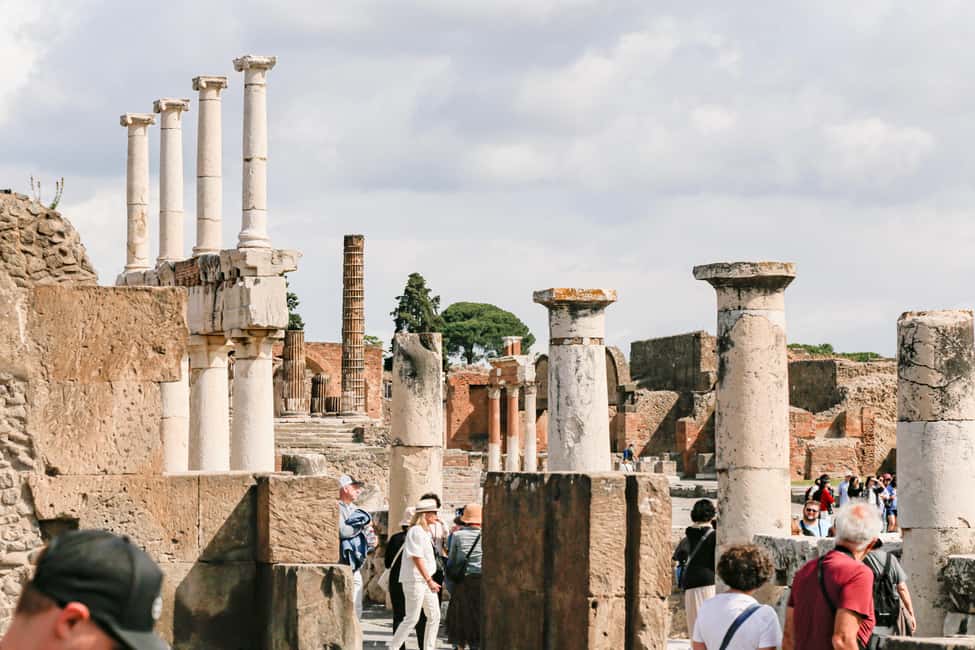
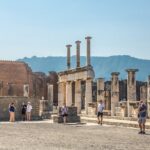
Next comes the Civil Forum, described as the political, religious, and commercial heart of Pompeii. You’ll see grand buildings, including the Basilica—once tied to legal affairs and business dealings. This stop is where Pompeii stops feeling like ruins and starts feeling like a functioning city with rules, schedules, and money.
Try to take a moment to look over the space the way your guide explains it. Reviews also highlight how guides like Lucia and Luigi have a way of turning piles of stone into a lived-in map—so you’re not just collecting facts, you’re building a picture.
Via dell’Abbondanza: Street Life, Shops, and Chariot Grooves
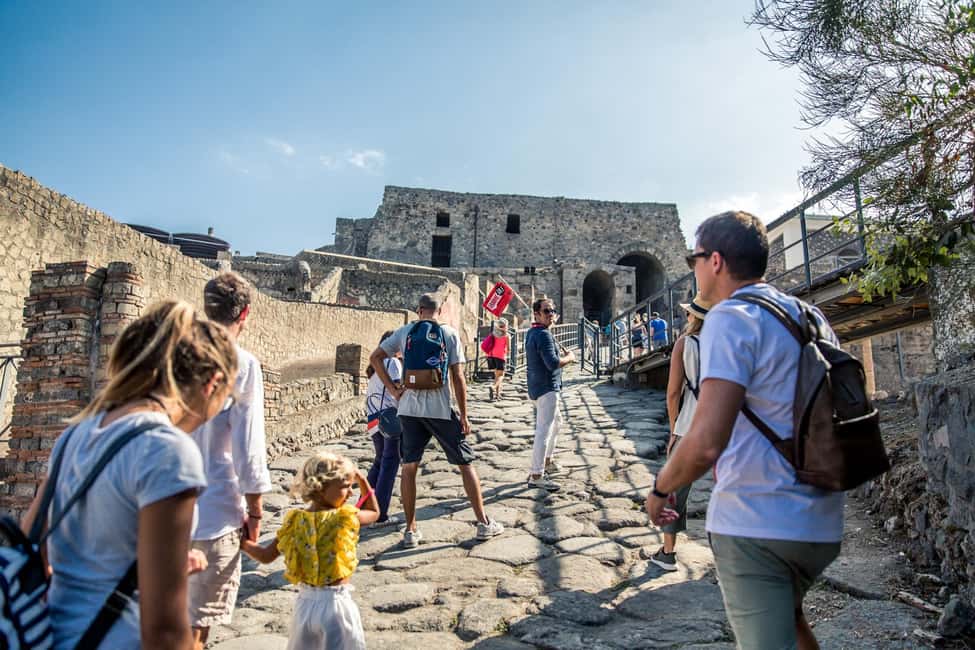
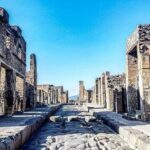
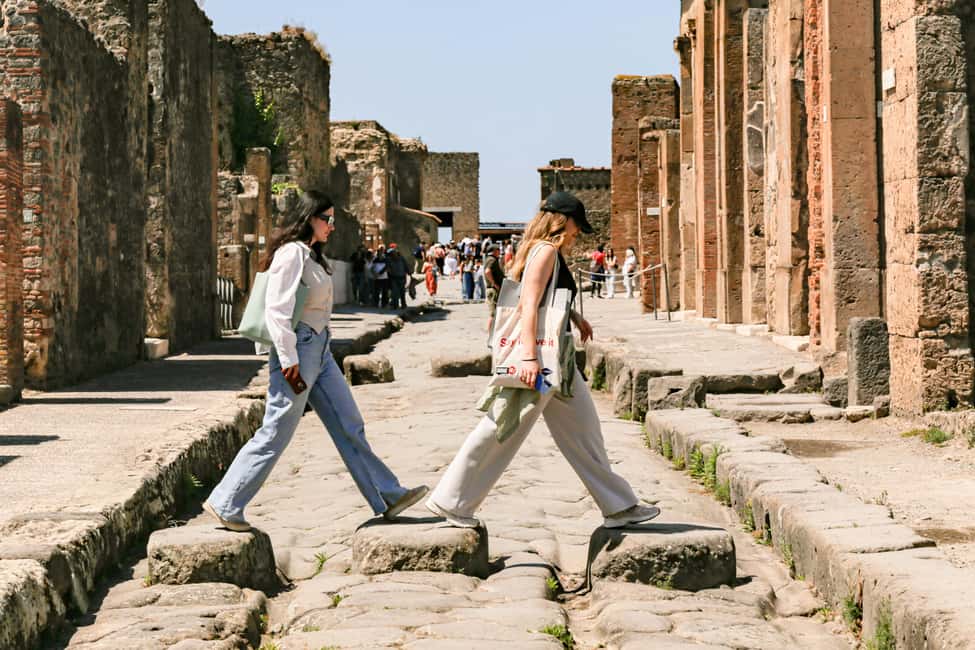
Then the tour heads down Via dell’Abbondanza, Pompeii’s main street lined with shops and houses. What really grabs you here is the physical evidence: deep chariot grooves carved into stone. It’s the kind of detail that makes the city feel mechanical, like wheels have been running there since yesterday.
You’ll also see how streets link different “worlds” of Pompeii—politics near the forum, shopping and daily movement along the main road, and public culture farther on. If you like travel days that feel well paced, this middle stretch is often the sweet spot: not too early, not too late, just enough walking to keep your brain awake.
Theater District and the Large Theater: Public Entertainment as Social Glue
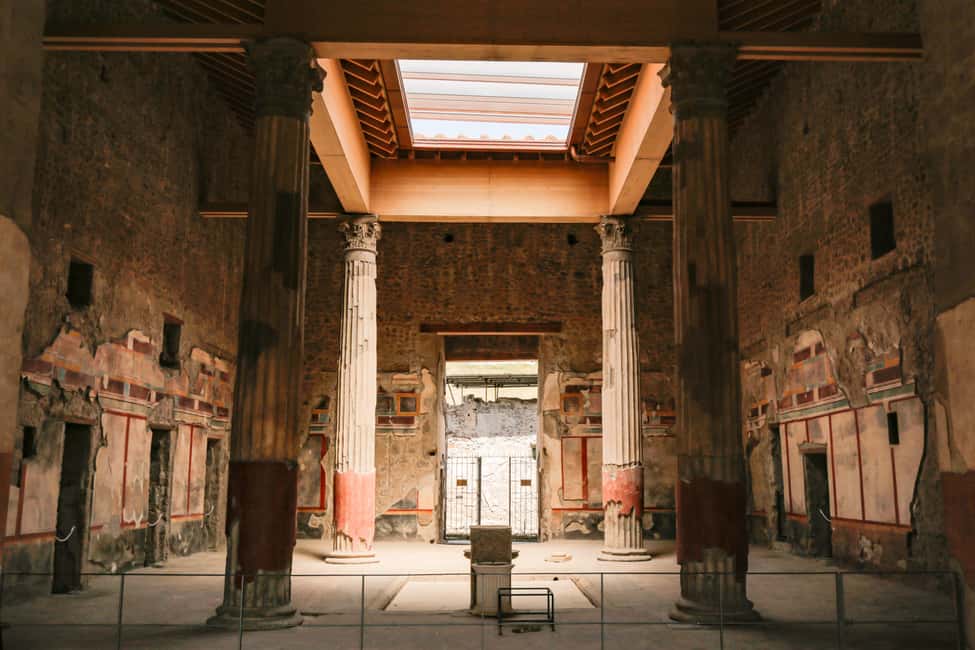
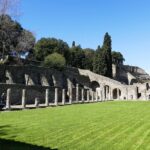
Next up is the Theater District, a cultural hub where art and performance shaped social life. You’ll visit the Large Theater, an open-air venue where people once gathered for plays and performances.
This stop is more than photo time. A guided explanation helps you understand how theater fit into Roman culture—who attended, why public performances mattered, and how the architecture shaped the crowd experience.
If you’re the type who worries about getting bored in big ruins, this is one of your antidotes: theaters are built for emotion, and Pompeii still has that sense of crowd energy.
You can also read our reviews of more tours and experiences in Sorrento

Terme Stabiane Baths: Roman Wellness You Can Still Feel
From there, the route includes a preserved bath complex (Terme Stabiane). Even if you’ve never been a bath person, Roman baths are fascinating because they were daily ritual spaces, not just luxury.
Think of it like the ancient version of a community hub—people gathered, talked, relaxed, and worked through a routine. Pompeii’s advantage is that you’re seeing the structure and layout clearly, which makes it easier to picture how it worked day to day.
In hot weather, baths also give you a brief shift from “full sun walking” to shaded, stone-built spaces—good for both the eyes and the legs.
Lupanare: A Tough Stop With Real Human Context
One of the most striking parts of the tour is the Lupanare, Pompeii’s ancient brothel. The frescoes and compact stone rooms aren’t pleasant in a modern way, but that discomfort is part of the story Pompeii tells.
This is the stop where I’d encourage you to slow down and let your guide’s wording do the heavy lifting. A well-run tour doesn’t glamorize; it explains what we can know, what we can’t, and how life still included places people wanted to avoid talking about.
Thermopolium and Pistrinum: How People Ate on the Run
Next you’ll see two food-related stops: a Thermopolium (ancient street food shop) and a Pistrinum (bakery). These scenes are great because you’re not just looking at wealth; you’re seeing practical eating.
The bakery connection is especially visual: millstones, ovens, and counters once used to serve hot food quickly. It’s a reminder that even in a city famous for tragedy, everyday life revolved around feeding people.
If you like travel that feels tactile, this area is a highlight. It’s hard to fake the feeling of real work being built into stone.
House of the Faun and the Alexander Mosaic
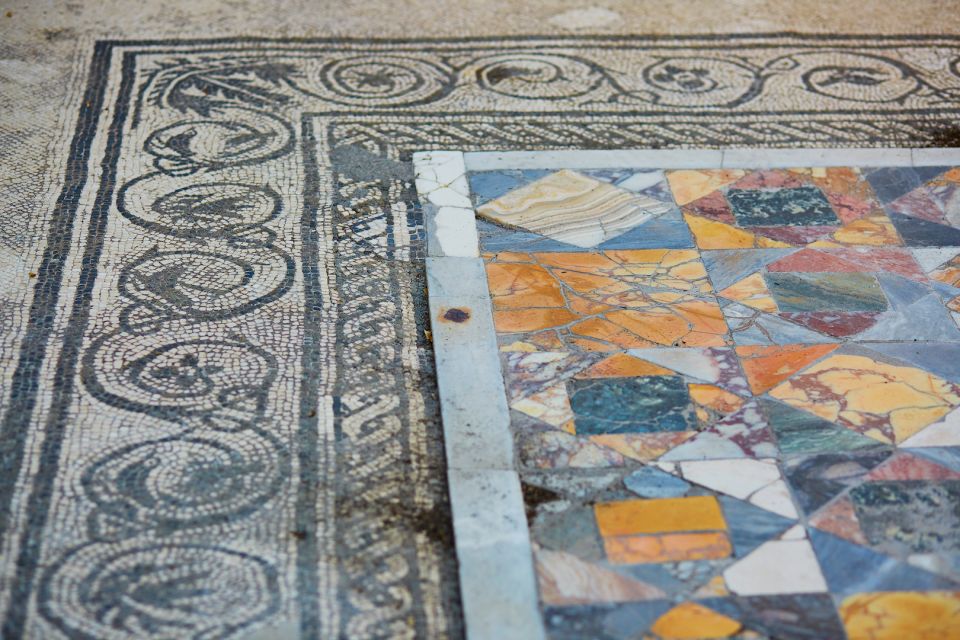
The tour then steps into the House of the Faun, one of the grand Roman villas in Pompeii, famous for its mosaics. You’ll hear about the Alexander Mosaic, which is the kind of artwork that makes you stop walking even if the schedule is tight.
This is one of the biggest “wow” moments, because it shows how art lived alongside private life and status. Even if you’re not a mosaic nerd (no judgment), the scale and artistry are worth it.
In reviews, guides like Vincenzo and Sasa come up repeatedly for explaining these scenes in a way that makes you understand why the rich cared about what they cared about.
Large Theater, Basilica, Macellum: The City Keeps Speaking
Later in the route, you’ll circle back through more major landmarks: the Large Theater again for a proper guided look, the Basilica for context, and then the Macellum, Pompeii’s food market.
Markets are where stories get human fast. You can almost hear trade happening, even though what you’re really hearing is your own footsteps and the faint echo of the site. A guide helps connect the dots so the market doesn’t feel random—it becomes part of a living rhythm: buy, cook, eat, talk, repeat.
The Plaster Casts: Where Pompeii Turns From Ancient to Personal
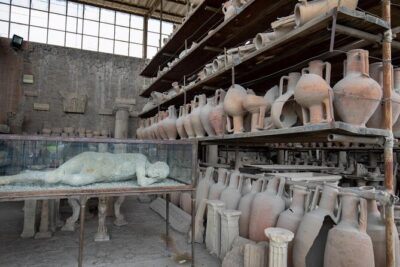
Near the end of the tour, you’ll see the plaster casts of Pompeii’s victims—men, women, and children frozen in their final moments. This is one of the emotional anchors of the entire experience.
You don’t need a lecture for it to hit. It just works. A good guide frames it respectfully, focusing on what the casts communicate about the suddenness of the eruption, not on spectacle.
If you’ve ever left a major museum and felt oddly quiet, this stop is that feeling, but stronger.
Groups, Headsets, and Language: What Might Change Day to Day
The tour runs in multiple languages: English, French, Spanish, and German. If the minimum number of French or Spanish-speaking participants isn’t met, the tour will run in English, with French or Spanish commentary provided only during the guided visit of the Pompeii archaeological site.
That’s useful to know so you don’t assume you’ll hear full commentary in your language across the whole day. The headsets for groups of 8+ also help, but the practical takeaway is simple: your guide leads the rhythm, and your ears follow the guide.
Practical Tips That Make the Tour Feel Easier
Bring comfortable shoes, sunglasses, and a sun hat. Pompeii is famously exposed in lots of spots, and the walk adds up.
Two extra pointers I picked up from real-world experiences:
- Bring a water bottle. One guide-hosted tip was to refill using fountains inside Pompeii.
- If you plan to use public washrooms, keep a little cash on hand. A reviewer specifically suggested having about €0.50 available.
If you’re worried about food, it’s worth planning ahead: food and beverages aren’t included. Some tours like this can optionally stop for lunch at a restaurant, but you should treat any meals as separate from the core ticket price unless you see it clearly included in your booking.
If You Want Mount Vesuvius Too (What’s Possible)
Your title and structure here are Pompeii-focused, but some booking experiences you’ll see around this format include Mount Vesuvius as an added portion or separate option. One person said they could purchase the Vesuvius portion on the bus, and others described walking up and returning on a set time window.
If Vesuvius is part of your plan, treat it as a separate challenge: expect more uphill time and heat. It can be great, but it also shrinks your margin for lingering in Pompeii.
Price and Value: Is $71 a Good Deal?
At $71 per person for about 4 hours, you’re paying for three things that matter in Pompeii: priority access, a live licensed guide, and round-trip transportation from Naples.
What I think makes this price feel fair is the way the tour compresses the most important Pompeii scenes into one guided loop. Pompeii is huge, and doing it alone can easily turn into time wasted at entrances, followed by confusion about what you’re looking at.
Also, a lot of the value is in clarity. Reviews repeatedly praise guides like Luigi, Lucia, and Sasa for explaining so you’re not just seeing stone blocks—you’re understanding street layout, civic life, food, entertainment, and the eruption’s impact.
If you’re traveling with limited time in Naples, this is one of those “pay to protect your day” choices. If you have a full day and want full freedom to wander slowly, you might choose a lighter self-guided plan. But for many visitors, $71 buys you momentum and a story you can follow.
Who This Tour Fits Best
This is a strong match if:
- You want Pompeii highlights in one morning/early loop, not a multi-day puzzle
- You like guided context that turns architecture into real-life explanations
- You value getting in earlier to avoid the worst crowds
It’s not a match if:
- You have mobility impairments (the tour isn’t suitable)
- You have heart problems (the tour isn’t suitable)
Should You Book This Pompeii Skip-the-Line Tour?
I’d book it if you want an organized, guide-led Pompeii walk that starts early, uses priority access, and hits the key stops with enough time to understand them. The route covers forum life, street life, entertainment, daily routines, the darker corners like the Lupanare, and ends with the plaster casts—so you leave with more than photos.
I’d think twice if you hate group logistics, dislike active walking, or are hoping for total freedom to linger at every site. Pompeii’s size makes this kind of tour a highlights sprint, not a leisurely stroll.
If you’re short on time in Naples, this is one of the cleaner ways to see Pompeii without turning the day into queue management.
FAQ
Where is the meeting point in Naples?
You meet your guide outside the main entrance of the Starhotel Terminus at Piazza Giuseppe Garibaldi 91.
How long is the Pompeii skip-the-line guided tour?
The total duration is 4 hours.
Does the tour include skip-the-line entry?
Yes. Priority Access is included so you enter Pompeii using a separate entrance.
What languages are available?
The live guide is available in English, French, Spanish, and German. If minimum numbers for French or Spanish aren’t met, the tour runs in English, with French or Spanish commentary only during the guided visit of the Pompeii archaeological site.
Are audio headsets provided?
Audio headsets are provided for groups of 8+.
What should I bring?
Wear comfortable shoes, and bring sunglasses and a sun hat.
Is this tour suitable for everyone?
No. It is not suitable for people with mobility impairments or people with heart problems.
You Might Also Enjoy



More Guided Tours in Sorrento


More Tours in Sorrento





More Tour Reviews in Sorrento
- Sorrento Farm and Food Experience including Olive Oil, Limoncello, Wine tasting
★ 5.0 · 2,524 reviews