REVIEW · SORRENTO
Pompeii & Mount Vesuvius Tour with Guided Visit, Tickets & Lunch
Book on Viator →Operated by Buyourtour di Amo Italy Travel · Bookable on Viator
Volcano ash turned a Roman city into a time machine. This full-day tour links Pompeii’s key sights with a climb up Mount Vesuvius, plus lunch at a winery on the slopes.
I really like that Pompeii is handled with a guide—fast enough to keep momentum, focused enough that you don’t miss the story behind the Forum, temples, markets, baths, and even the famous Lupanar. Another big plus is the included winery lunch with a wine tasting, so you’re not hunting for food or budgeting extra once the day gets rolling.
One consideration: the Vesuvius part is not a stroll. The path can be uneven and the hike is steep, so comfortable shoes (and a realistic pace) matter.
In This Review
- Key Highlights You’ll Feel on This Day
- A Full Day Out of Sorrento: Timing, Group Size, and What 9 Hours Means
- Pompeii With a Guide: How a 2-Hour Visit Can Still Make Sense
- The Forum Core: Where Pompeii Ran on Law, Religion, and Business
- Via dell’Abbondanza and the Market: The Everyday Street You Should Picture
- Lupanar and Stabian Baths: The Stops That Shock, Then Teach
- Theatre Grande: Why It Was Built to Last Through the Ash
- Winery Lunch on the Vesuvius Slopes: Included Meal Worth Planning Around
- Climbing Mount Vesuvius: The Steep Part, the Views, and When to Skip
- Small Logistics That Can Make or Break Your Day
- Price and Value: Is $187.53 a Smart Deal?
- Who This Tour Fits Best (and Who Might Prefer Another Plan)
- Should You Book This Pompeii and Vesuvius Tour?
- FAQ
- What’s included in the Pompeii and Vesuvius tour price?
- How long is the tour?
- Is the tour offered in English?
- Do I need to buy Pompeii and Vesuvius admission tickets separately?
- What does lunch include, and is wine tasting part of it?
- Do you have to hike Mount Vesuvius?
- What if Mount Vesuvius is closed due to bad weather?
- How large is the group?
Key Highlights You’ll Feel on This Day
- Guided Pompeii in a tight 2-hour window so you get the layout and the meaning, not just random ruins
- Tickets handled for multiple Pompeii zones and Vesuvius, which removes planning friction
- Winery lunch on the Vesuvius slopes with a structured meal and wine tasting
- Steep, sun-exposed hike options at Vesuvius—views are the payoff, effort is the price
- Small-ish group experience for the day with a max of 100 travelers on the tour
A Full Day Out of Sorrento: Timing, Group Size, and What 9 Hours Means
This is a long, active day. You’re looking at about 9 hours from pickup through the full run of Pompeii, lunch at the winery, and time at Mount Vesuvius. Expect a schedule that keeps moving—Pompeii alone is built around short, guided stops.
The group size is capped at 100 travelers. In practice, you’ll still want to be ready for classic Italy-day-trip realities: buses, lines, and crowd pressure around the biggest sites. A few guests also noted the bus can feel tight (limited leg room and A/C), so I’d pack for comfort even if you’re only riding for part of the day.
Language-wise, it’s offered in English, and the operator notes multilingual guiding is possible depending on how the day runs. You may also experience a guide handoff at Pompeii (different guides can cover different sections), which can be fine as long as you listen closely when you’re regrouped.
You can also read our reviews of more tours and experiences in Sorrento

Pompeii With a Guide: How a 2-Hour Visit Can Still Make Sense
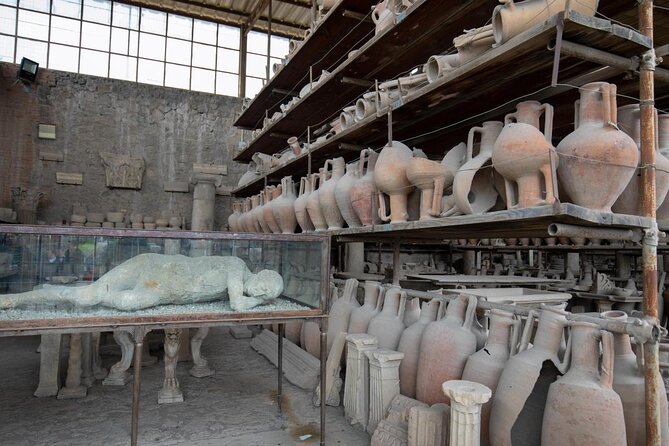
Pompeii is huge. Without a guide, it’s easy to wander for hours and remember only the most obvious sights. With a guide, you get a route through the city’s “greatest hits” while learning what each place was actually doing in daily Roman life.
The tour includes admission for Pompeii, and then it moves through a sequence of high-value stops—each one short, but intentionally chosen.
Here’s what the guided format gives you:
- You understand the city layout faster. The Forum and the main streets aren’t just ruins; they’re the social and administrative spine.
- You get context for buildings you might otherwise skip: baths, markets, a theatre, and the Lupanar.
- You spend more of your time looking at the “why” rather than just scanning for cool photos.
You’re not going to “see all of Pompeii” in one day. But you can leave with a much clearer mental map.
The Forum Core: Where Pompeii Ran on Law, Religion, and Business
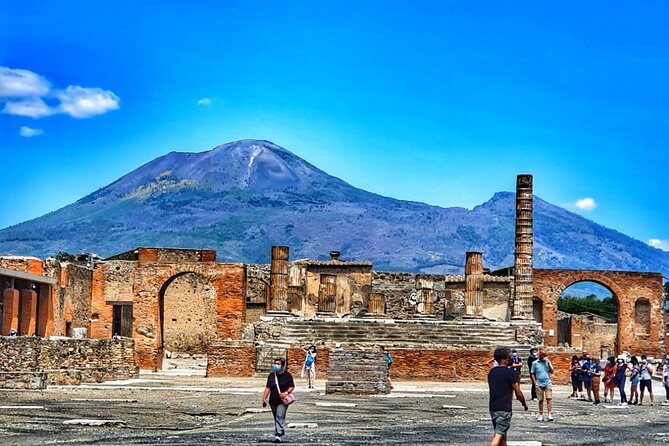
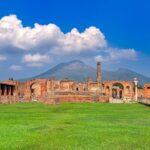
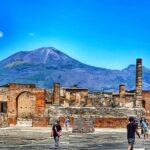
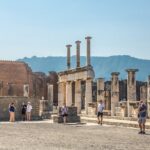
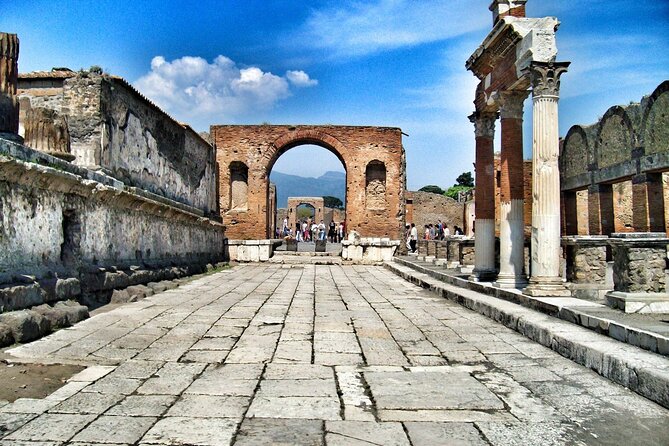
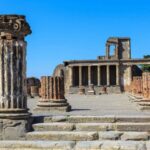
If you only care about one Pompeii stop, make it the Foro (Forum of Pompeii) area. This is the civic center—the place that tied together administration, justice, commerce, and religious practice.
This is also where the guide’s job matters most. In short visits, the best guides point out what you’re looking at and how the space would have felt during a normal day: people moving between public functions, merchants nearby, and religious statues shaping the mood of the square.
The tour then adds a quick hit on the Temple of Jupiter (Tempio di Giove Capitolino), located on the Forum’s northern side. It’s a great stop to connect Pompeii to Rome: the temple’s statues of Jupiter, Juno, and Minerva echo the monumental religious model of the Capitol in Rome. Even if you’re not a religion-history person, it helps you understand how power and belief were displayed in stone.
Via dell’Abbondanza and the Market: The Everyday Street You Should Picture
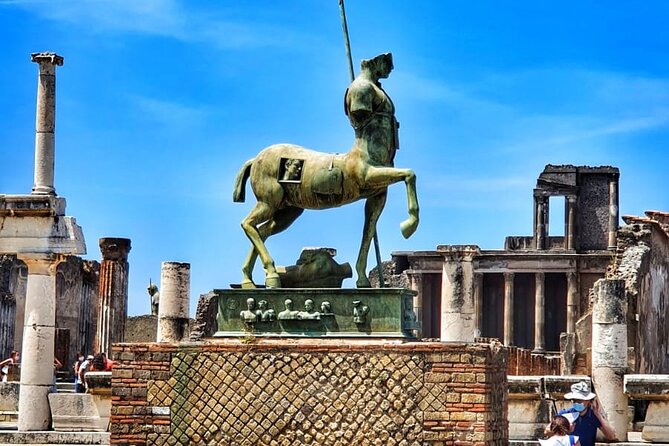
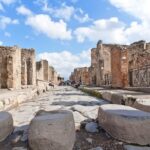
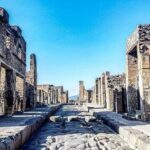
Next comes Via dell’Abbondanza, the main street that connected the Forum to the amphitheatre. This is where you can start imagining motion—what kinds of crowds moved along the road, how public life flowed, and how important streets were more than just transportation routes.
Then you’ll get to the Macellum, the marketplace area. In Pompeii, markets weren’t just where you grabbed food—they were a hub of activity. If you pay attention here, you’ll feel the difference between “ancient buildings” and “ancient infrastructure.” The Macellum is set up with porticoes and market halls, and it’s the kind of place where life would have clustered.
A good tip: don’t race through these moments. Even though the timing is tight, slow down for 30 seconds at each stop and locate where you think the crowd would have been. Your brain fills in the blanks, and Pompeii stops feeling like a museum and starts feeling like a neighborhood.
Lupanar and Stabian Baths: The Stops That Shock, Then Teach

The tour includes the Lupanar, Pompeii’s brothel. You’ll see erotic paintings, and the guide context is what turns this from “tabloid curiosity” into actual history. It’s connected to how Pompeii functioned under Roman society, including details about the people who worked there.
After that comes the Stabian Baths (Terme Stabiane), which are among the oldest and largest public baths in Pompeii. This is the perfect contrast stop: the brothel is all about sexuality and power; the baths are about daily routine, social mixing, and public hygiene.
If you like human-scale history—the stuff that tells you how people lived—you’ll probably enjoy pairing these two. One place shows private transactions; the other shows communal routines.
You can also read our reviews of more guided tours in Sorrento
Theatre Grande: Why It Was Built to Last Through the Ash

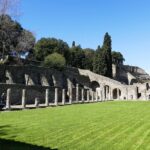
The Teatro Grande is a quick stop, but it gives you a snapshot of Pompeii’s entertainment culture. Roman theatre wasn’t only about performance—it was about public identity.
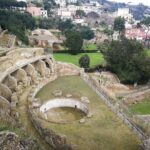
What I like here is the symbolism. This theatre was one of the first major public buildings freed from deposits of the eruption, so it feels like one of the earliest “recovered” stages of Pompeii’s story. Even in a short visit, it’s a reminder that Pompeii is more than streets and houses. It’s also a city that gathered people for art, drama, and spectacle.
Winery Lunch on the Vesuvius Slopes: Included Meal Worth Planning Around
The midday break is at a Sorrentino winery on the slopes of Vesuvius. This isn’t just a checkbox lunch stop. It’s your chance to reset after a walking-heavy Pompeii visit and before the Vesuvius hike.
Lunch is served as a typical winery meal, and the tour lists a clear structure:
- Starter: Bruschetta, salumi, formaggi, and seasonal vegetables
- Wine tasting: a three-wine tasting (Prosecco, Rosso, and Bianco)
- Main: pasta with pomodorini del piennolo, a local specialty
- Dessert: a homemade traditional sweet
Some guests said the lunch quality was solid and filling, while a few felt portions or service didn’t match the price. I’d set expectations like this: it’s a winery lunch experience with tasting included, not a fine-dining tasting menu. If you’re the kind of person who expects a huge portion after a long hike day, plan for that reality.
Also, in hot weather, having a real sit-down break matters more than you think. Even the most interesting ruins feel like work after hours in sun.
Climbing Mount Vesuvius: The Steep Part, the Views, and When to Skip
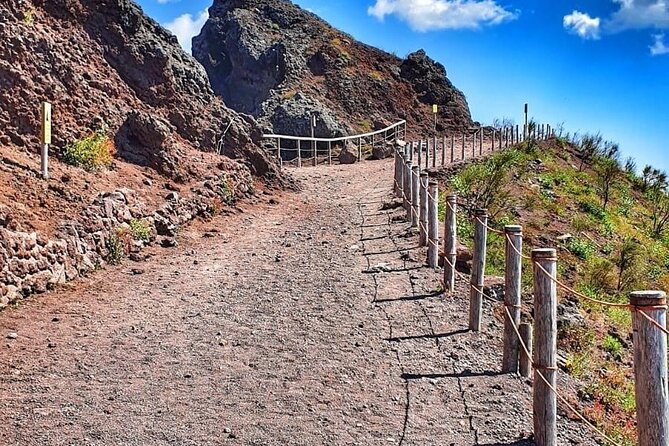
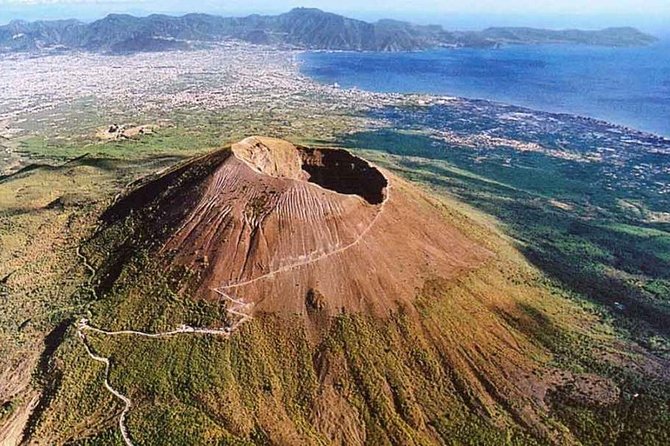
Now the star. Vesuvius is described as a challenging, uneven path in parts, with the payoff being huge views over the Gulf of Naples.
Here’s the practical truth: you’re climbing a volcano. Some people find it doable in 30–40 minutes; others feel it much longer depending on pace and heat. If you don’t hike often, you’ll still manage if you go slow and take breaks. If you go too fast, the last stretch will feel brutal.
A couple of useful points from guest feedback and tour details:
- The hike can be steep with switchbacks.
- There’s limited shade, so heat becomes part of the challenge.
- Time at Vesuvius is substantial enough to enjoy the views, but you’ll still want to stay aware of the group schedule.
- The crater experience may not feel like a movie scene to everyone, but the panoramic bay views tend to win the day.
If you’re worried about fitness, you can still make the day worthwhile without pushing to the top—some guests arranged to be taken back rather than climbing.
Small Logistics That Can Make or Break Your Day
This tour is good at hitting major places, but your comfort depends on how prepared you are.
1) Heat management is not optional. Even if the day is mild, Pompeii + Vesuvius adds up. The tour specifically advises comfortable shoes, sunglasses, and sunscreen in summer. I’d also bring water (if allowed by the day’s rules) and take short pauses whenever the group stops.
2) Expect limited breaks. One theme from guests is that restroom options can be limited throughout the day, so use stops wisely. Don’t wait until you’re desperate.
3) The bus ride can feel snug. A few guests pointed out limited leg room and A/C. If you’re tall or sensitive to discomfort, consider packing a lightweight layer and keeping water handy.
4) Guides make the difference. Multiple guests praised named guides like Paula/Paola, Gino, Miguel, and Maria for keeping the information clear and moving at a pace that felt comfortable. If you get assigned one of these guides, you’re in good hands.
5) Keep an eye on regroup times. One guest experienced a situation where guidance felt shorter than expected, and Pompeii included a guide handoff. That’s not unusual on group tours, but it means you should always listen for where you’re meeting next and when.
Price and Value: Is $187.53 a Smart Deal?
At $187.53 per person, this isn’t an impulse purchase. The good news is the price isn’t only paying for a bus and a ticket.
What you’re getting built into the deal:
- Admission coverage for Pompeii stops and Vesuvius
- A guided visit that helps you understand what you’re seeing
- Lunch at a winery with a three-wine tasting
- A day that includes both major sites without you coordinating transport yourself
For value, the key question is how you like to travel:
- If you want structure and context, you’ll likely feel the price makes sense because the guide route compresses a lot of learning into one day.
- If you’re picky about lunch quality or you expect restaurant-level service, you may feel disappointed. Several guests described lunch as okay-to-good, while a handful called it mediocre or rushed.
My take: for most people, this is a solid value if you treat lunch as part of the tour experience, not as the highlight.
Who This Tour Fits Best (and Who Might Prefer Another Plan)
This works best for you if:
- You want to see Pompeii without getting lost in a huge site.
- You like history explained in an organized route with specific stops.
- You’re okay with walking and a real hike at Vesuvius.
- You appreciate a planned winery lunch rather than searching for food on your own.
You might reconsider if:
- You hate steep climbs or you’re traveling with limited mobility.
- You want a long, slow, unhurried Pompeii day. This format is efficient, not lingering.
- You’re very sensitive to crowd discomfort and tight seating on buses.
This day suits couples, solo travelers who like guided structure, and families with teens who can handle walking and stairs. For anyone with limited stamina, I’d treat Vesuvius as the variable. Pompeii alone can be enough if you choose a different day format.
Should You Book This Pompeii and Vesuvius Tour?
I’d book it if you want a one-day “big impact” itinerary: Pompeii with a guide, a winery meal with tastings, and the chance to stand on the slopes of an iconic volcano. The included tickets and lunch reduce decision fatigue, and the best part is the guide-driven route through the Forum, markets, baths, theatre, and Lupanar.
I wouldn’t book it blindly if you’re hoping for a leisurely walk, a top-tier restaurant lunch experience, or a no-effort Vesuvius visit. The hike is real. Go in prepared, and you’ll come away with a day that feels like an actual story, not just a checklist.
FAQ
What’s included in the Pompeii and Vesuvius tour price?
The price includes a guided visit, admission tickets for Pompeii and Vesuvius, and lunch at a winery with a wine tasting. It’s also listed as having a mobile ticket.
How long is the tour?
The tour runs about 9 hours (approx.).
Is the tour offered in English?
Yes. The tour is offered in English.
Do I need to buy Pompeii and Vesuvius admission tickets separately?
No. Admission tickets are included for the Pompeii stops and for Vesuvius.
What does lunch include, and is wine tasting part of it?
Lunch includes a starter of bruschetta, salumi, cheeses, and seasonal vegetables, a main of pasta with pomodorini del piennolo, and a homemade dessert. There’s also a tasting of three wines (Prosecco, Rosso, and Bianco).
Do you have to hike Mount Vesuvius?
You’ll visit Vesuvius National Park and the path to the top can be uneven and challenging at times. The tour notes that most travelers can participate, but comfortable shoes and a realistic pace help.
What if Mount Vesuvius is closed due to bad weather?
If Vesuvius is closed due to bad weather, the tour provides a partial refund as an alternative. If the experience is canceled due to poor weather, you can choose another date or receive a full refund.
How large is the group?
The tour has a maximum of 100 travelers.
You Might Also Enjoy

More Tickets in Sorrento

More Tours in Sorrento


More Tour Reviews in Sorrento
- Sorrento Farm and Food Experience including Olive Oil, Limoncello, Wine tasting
★ 5.0 · 2,524 reviews