REVIEW · POMPEII
Pompeii: Exclusive Private Walking Tour with an Archaeologist
Book on Viator →Operated by Hili Travel s.r.l. · Bookable on Viator
Pompeii is big, so smart routing matters. This exclusive private walking tour brings you face-to-face with Pompeii’s best-known spaces and explains what you’re seeing in plain language—powered by an archaeologist and private pacing. I especially like how the stops balance daily life (baths and streets) with high-status architecture (like Casa del Menandro) and how guides can make the site feel readable instead of just overwhelming stone. One thing to consider: the Pompeii entry ticket is not included, so factor that into your day (and keep an eye on meeting details so you don’t lose time).
You’ll walk for about 2 hours, moving through a tight set of must-sees without trying to cram in everything. The group is limited (up to 12), and it’s truly private for your group, which tends to mean fewer awkward pauses and more time for questions.
My other “good to know” note is logistics. One review flagged difficulty finding the guide at the meeting spot and a name mismatch, so I’d treat the meeting point as a real appointment—check the company name and message details right before you go. If you do that, this tour is a strong way to get real value out of a short Pompeii visit.
In This Review
- Key highlights at a glance
- Why an archaeologist guide changes Pompeii fast
- Price and what you’re really paying for
- Meeting point near Via Mare: start clean, save time
- Casa del Menandro: why the House of Menander hits so hard
- Stabian Baths: the oldest big public bath vibe
- Lupanar: the art and the social reality
- Casa del Fauno: grand palace energy with peristyle framing
- Teatro Grande: the biggest stage in Pompeii
- Via dell’Abbondanza: the best-preserved street feeling
- Foro di Pompeya: the city’s main square energy
- What group size and exclusivity feel like in real life
- Included vs not included: plan for entry tickets
- Who this tour is best for (and who should think twice)
- Should you book Pompeii with a private archaeologist?
- FAQ
- How long is the Pompeii private walking tour?
- Is this tour private?
- What’s the group size limit?
- Is the Pompeii entry ticket included?
- What language is the tour offered in?
- Where do we meet for the tour?
- Does the tour use a mobile ticket?
- Will I get confirmation after booking?
- Is this tour suitable if I’m using public transportation?
- Are service animals allowed?
- What is the cancellation policy?
Key highlights at a glance
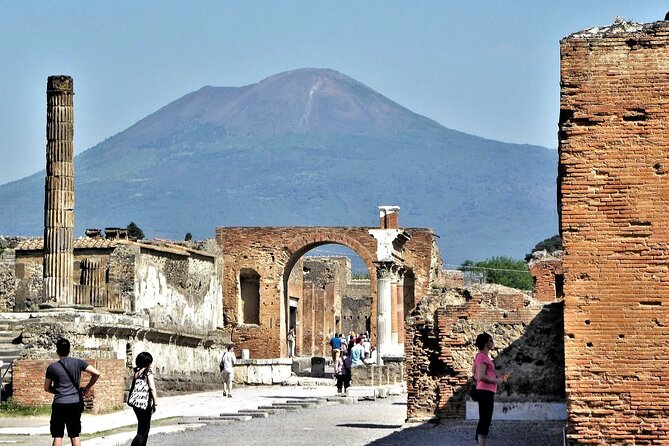
- Archaeologist-led explanations for houses, public baths, and major public spaces
- Exclusive private group (up to 12) so you’re not squeezed into a crowd rhythm
- A focused 2-hour route covering standout sights without wasting time
- Top Pompeii anchors: Casa del Menandro, Casa del Fauno, Teatro Grande, Foro
- English-speaking local guides with a history-forward, practical storytelling style
Why an archaeologist guide changes Pompeii fast
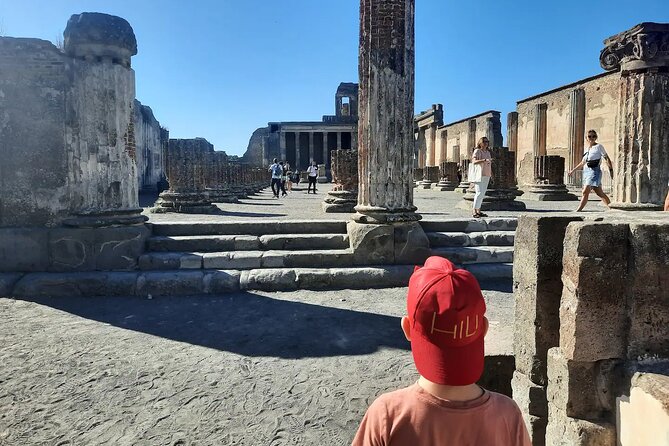
Pompeii can feel like a pile of ruins until someone connects the dots for you. With an archaeologist guide, you’re not just looking at walls. You’re learning how the spaces functioned—who used them, what the layouts suggest, and why certain buildings matter more than others.
I like that this tour’s structure pushes you toward the parts that are easier to understand quickly. Instead of scattering you across the site, it funnels you into big, legible places: a lavish house, major bath complex, a socially loaded building, a grand palace, and then the city’s big public stages (the theater, the main street, and the forum). That’s how you come away with an actual mental map.
The other practical win: you’ll be walking with a guide who can point out details that most people miss when they’re left to wander. When your guide has a sense of humor and a knack for making connections, the whole place stops being static. You start picturing routines—morning bathing, street movement, big gatherings in the forum area.
You can also read our reviews of more walking tours in Pompeii

Price and what you’re really paying for
The price is $421.03 per group (up to 12) for about 2 hours. On paper, that can look high if you compare it to the cost of a standard bus-group tour. But compare it to the value of private archaeologist time.
You’re paying for:
- A licensed, top-rated English-speaking local guide
- Exclusive private access for your group
- An archaeologist-style explanation matched to what you’re seeing in each stop
One caution: Pompeii entry tickets are not included. So your true total depends on your own ticket cost for the archaeological area. If you’re budgeting tightly, estimate that extra expense early so you’re not surprised when it’s time to enter.
Meeting point near Via Mare: start clean, save time
The tour starts at Coffee Shop Vittoria, Via Mare, 80045 Pompei NA, Italy, and ends back at the meeting point. It’s near public transportation, which is helpful if you’re coming from Naples by train and then walking to meet your guide.
Still, do yourself a favor: confirm the guide details right before you head out. One past guest noted issues locating the guide and suggested that the company name in the message didn’t match what they expected. That’s not something you can fix from your couch, but you can reduce the risk by double-checking the name and instructions in your confirmation message.
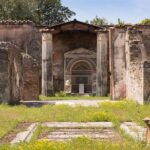
Casa del Menandro: why the House of Menander hits so hard
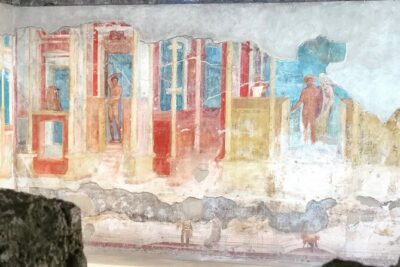
Casa del Menandro (House of Menander) is one of Pompeii’s richest residential spaces, known for architecture, decoration, and contents—and it covers about 1,800 square metres (around 19,000 sq ft), taking up most of its insula.
This stop is a smart early move because it sets the “status level” of Pompeii. Lavish houses aren’t just pretty backgrounds; they show how wealth expressed itself—through layout, ornament, and how rooms were arranged around open-air space.
What to watch for as you walk through: look for the contrast between the “public-facing” feel of certain areas and the more private rhythm of others. A good archaeologist will connect those cues to everyday life and social behavior. Even in a short visit, this type of stop helps you understand Pompeii beyond tragedy and disaster.
Practical note: since you’ll spend only about 20 minutes here, keep your questions focused. Ask what feature matters most and what you should look at first, rather than trying to memorize everything at once.
Stabian Baths: the oldest big public bath vibe
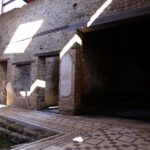
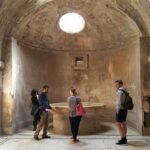
Next up are the Stabian Baths (Terme Stabiane), described as the oldest and largest of Pompeii’s five public bath complexes. Construction dates back to around 125 BC, making them among the oldest known public bath sites from the ancient world.
This is where the tour shifts gears from luxury to everyday routine. Baths were social. They were also part of health culture and daily schedule. You’ll see the scale and form of a system designed for movement through different spaces.
Why this stop matters: the baths help you build a real sense of the city’s routine. Houses tell you about status. Baths tell you how people spent time, talked, and kept up a kind of public rhythm.
Time is short again (about 20 minutes), so aim to connect what you’re seeing with the idea of flow: people entering, warming, cooling, and moving between spaces. If you can follow the route in your head, you’ll feel like you “got it” even after the stop ends.
You can also read our reviews of more private tours in Pompeii




Lupanar: the art and the social reality
The Lupanar is Pompeii’s brothel, noted for erotic paintings on its walls. It’s often a stop that divides people—some come for the shock factor, but a good archaeologist will steer it back to context.
In a tour like this, the value is not just what’s depicted. It’s the setting. You’re looking at how the building supported a specific commercial/social function in the city. That makes it a useful counterpoint to the grand houses and major public spaces.
A practical consideration: if you prefer to keep your day family-friendly and low-on-explicit content, you’ll want to mentally plan for this stop. The tour is only about 2 hours total, so it’s not an all-day affair, but it’s still part of the route.
Casa del Fauno: grand palace energy with peristyle framing
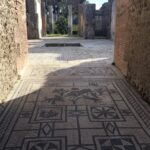
Casa del Fauno (House of the Faun) was built in the 2nd century BC during the Samnite period (around 180 BC). It’s described as a grand Hellenistic palace, framed by a peristyle in Pompeii.
This stop is more than “another big house.” It’s one of the key places that show how powerful elites wanted their space to look and function. The peristyle framing matters because it creates a structured, rhythmic setting—courtyard-centered life organized around architecture.
What I like about placing this stop after the other major contexts: by the time you reach Casa del Fauno, you’ve already seen everyday public space (baths) and the city’s social underbelly (the Lupanar). Now you get contrast: elite design and political/wealth expression in built form.
You’ll have about 20 minutes. Again, focus on the overall layout first, then any standout architectural elements your guide points out. If your guide is strong (and the guides listed in past experiences include people like Clelia, Leonardo, Paolo, Ines, and Lello/Lilo), you should leave with a clearer picture of how this house worked as a statement.
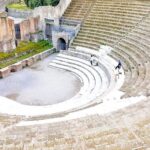
Teatro Grande: the biggest stage in Pompeii
Teatro Grande is the biggest theater in Pompeii. Even if you don’t sit down and analyze every architectural detail, the size helps you grasp how the city hosted large-scale events.
Why this stop is valuable: theater spaces connect you to public culture. This is where gatherings weren’t casual. This is where Pompeii’s citizens could come together for structured entertainment and spectacle.
Expect about 10 minutes here. That means your guide’s job is to help you read the space quickly: where people would be positioned, how the design focuses attention, and how theater ties back into civic life near the central forum zone.
Via dell’Abbondanza: the best-preserved street feeling
Via dell’Abbondanza is described as the best-preserved street in Pompeii. This kind of stop is a gift because it’s one of the easiest ways to understand how the city “moved.” Streets show you pacing—where traffic would flow, where shops and entrances likely shaped daily foot movement, and how important spaces connect.
With about 10 minutes allocated, you won’t become a street historian. But you can still do something practical: walk slowly and look at how buildings meet the walkway. That single act often unlocks your mental map for the rest of Pompeii.
If you like photography, this is usually a strong moment too. Not because you’ll have endless time, but because the street’s preserved condition makes it easier to frame a coherent view instead of just random fragments.
Foro di Pompeya: the city’s main square energy
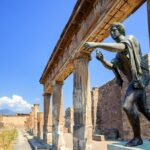
The Foro de Pompeya was the most important square of the city. This stop is about civic identity—where power, public life, and big gatherings happened.
In a short guided format, the forum stop works best when you treat it as a “main scene.” Stand where your guide encourages you to stand, and listen for how the square relates to nearby public structures like the theater and major roads.
You’ll get about 10 minutes. That’s not enough time to explore every corner on your own, but it’s enough to anchor the day. If you leave Pompeii knowing where the forum sits in relation to other key sites, you can return later (or wander after the tour) with a better sense of direction.
What group size and exclusivity feel like in real life
This is a private tour/activity, with only your group participating, and it accommodates up to 12. That matters more than it sounds.
In a large group tour, people often lose track because the guide has to keep momentum. In a smaller private group, you usually get:
- fewer awkward waiting gaps
- easier questions
- faster clarification when something doesn’t make sense
If you’re visiting with older teens, the structure can also work well because it’s paced and focused. One of the most repeated themes from guide performance in past experiences is that strong guiding makes two hours feel much shorter—because you’re getting meaning in real time, not just walking between stops.
Included vs not included: plan for entry tickets
Included:
- Guided tour of Pompeii with an archaeologist
- Exclusive private tour
- Licensed, top-rated English-speaking local guide
Not included:
- Entry ticket to Pompeii
So yes, you’ll need to budget for separate archaeological admission. If you’re deciding between tours, this is one of the cleanest “value” comparisons: your tour price covers the guiding and private experience, while your entry ticket covers access to the archaeological area itself.
Who this tour is best for (and who should think twice)
This works especially well if:
- you want a high-quality Pompeii introduction in about 2 hours
- you prefer guided context over wandering without a plan
- you like asking questions and getting straight answers
- your group includes people who want both famous stops and explanation
It might be less ideal if:
- you need a fully flexible route with lots of extra time at each site
- you’re very price-sensitive and want only the absolute cheapest access to Pompeii
- your group would be uncomfortable with the Lupanar stop content (explicit erotic paintings are part of the context)
Should you book Pompeii with a private archaeologist?
If you’re in Pompeii for a limited time, I think you should strongly consider booking this type of private archaeologist-led walking tour. The route hits the key “readable” spaces—Menander’s lavish house, major baths, Casa del Fauno, the biggest theater, the best-preserved street, and the main forum—so you leave with a working map of the city.
The main reasons to say yes:
- you get a focused, time-smart route in about 2 hours
- the guide makes the site easier to understand
- the private format helps you keep questions and pace under control
The main reasons to be cautious:
- Pompeii entry tickets are not included
- meeting the guide can be a make-or-break moment, so verify the meeting details before you arrive
If you want Pompeii to feel like a story you can follow—not a giant outdoor museum with no map—this is the kind of tour that usually delivers.
FAQ
How long is the Pompeii private walking tour?
It lasts about 2 hours.
Is this tour private?
Yes. It’s a private tour/activity, and only your group participates.
What’s the group size limit?
The tour is priced per group for up to 12 people.
Is the Pompeii entry ticket included?
No. Entry ticket to Pompeii is not included.
What language is the tour offered in?
It’s offered in English.
Where do we meet for the tour?
Meet at Coffee Shop Vittoria, Via Mare, 80045 Pompei NA, Italy.
Does the tour use a mobile ticket?
Yes, it includes a mobile ticket.
Will I get confirmation after booking?
Confirmation is received at the time of booking.
Is this tour suitable if I’m using public transportation?
Yes. The meeting point is near public transportation.
Are service animals allowed?
Yes, service animals are allowed.
What is the cancellation policy?
Free cancellation is available up to 24 hours in advance for a full refund. If you cancel less than 24 hours before the start time, the amount paid won’t be refunded.