REVIEW · POMPEII
Pompeii Private Tour with an Archaeologist and Skip The Line
Book on Viator →Operated by ELIANA SANDRETTI · Bookable on Viator
Pompeii is huge, and your time is not. This private Pompeii tour with an archaeologist is built for a focused hit of the best-known ruins plus a few moments you’d easily miss on your own.
I especially liked two things. I love the tight, 2-hour route that threads big, memorable stops like the Odeion acoustics, the Great Theater, the Forum, and the Stabian Baths. I also like the feel of a tailored experience, with guides such as Luisa, Eliana Sandretti, Antonio, and Viktoria praised for clear storytelling, smart pacing, and helping families stay engaged.
One possible drawback: Pompeii park entry tickets are not included in the tour price. You’ll still need to buy the site ticket (currently 19 euros per person), and skip-the-line only really makes sense once you have that entry handled.
In This Review
- Key highlights to know before you go
- A private archaeologist tour that turns ruins into a story
- Price and logistics: what you’re paying for (and what to double-check)
- Your 2-hour route: how they pack Pompeii into one visit
- Stop-by-stop: theaters, baths, Forum spaces, and the victims’ casts
- 1) Pompeii Archaeological Park: the core circuit
- 2) The Odeion (Small Theater): Roman acoustics in action
- 3) Teatro Grande (Great Theater): the big performance space
- 4) Via dell’Abbondanza: the main street feel
- 5) Granai del Foro: granaries plus the eruption casts
- 6) Stabian Baths (Terme Stabiane): the Roman spa moment
- 7) Foro di Pompei and the Basilica: power, justice, and markets
- 8) Temple of Jupiter: the Forum’s religious center
- 9) Quadriporticus of the Theatres: gladiator training spaces
- 10) Vicolo del Lupanare and Temple of Venus: the red district and the city’s deity
- 11) Casa del Fauno: a wealthy Pompeii home
- What the best guides do here (and why it matters for your photos)
- Who this tour suits best
- Practical tips so your day feels smooth
- Should you book this Pompeii private archaeologist tour?
- FAQ
- Is the Pompeii entrance ticket included?
- How much are Pompeii entrance tickets?
- Where is the tour meeting point?
- How long is the tour?
- Is this a private tour, and how many people are in the group?
- What language is the tour offered in?
- What if the weather is poor?
Key highlights to know before you go
- Skip-the-line support works best if you already have your Pompeii ticket
- A tight 2-hour plan that covers theaters, Forum spaces, baths, brothel area, and a grand house
- Casts and the tragedy of AD 79 at the Granaries of the Forum
- Stabian Baths described as the Roman Empire’s top spa highlight in Pompeii
- Tailored pacing that can work well for families and guests with mobility limits
- Meeting point at Piazza Esedra, 10 with the tour ending back there
A private archaeologist tour that turns ruins into a story
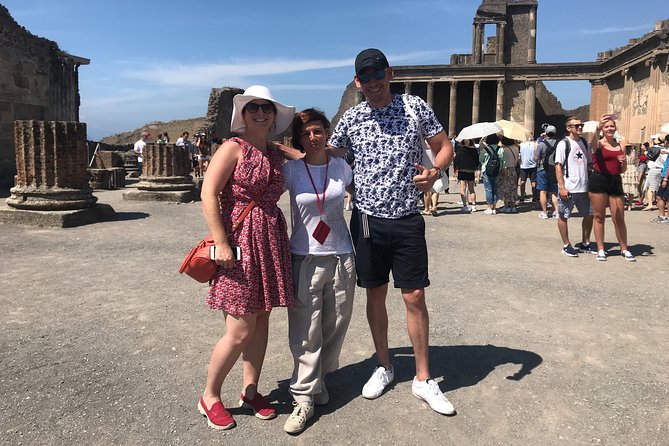
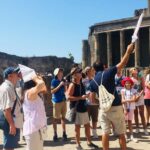
Pompeii can feel like a giant pile of streets and walls. This format helps you read the place like a living town. Your guide leads you through key spaces, explains what they were for, and connects the dots between daily life, religion, entertainment, and the eruption.
It’s also private, meaning you’re not stuck with a one-size-fits-all script. In practice, that matters because Pompeii rewards attention. The difference between looking and understanding is huge here.
And you get help with the logistics problem that trips people up: getting in quickly. The tour includes skip-the-line assistance, plus a link sent the day before so you can buy official entry tickets online.
You can also read our reviews of more private tours in Pompeii


Price and logistics: what you’re paying for (and what to double-check)
The tour price is $375.05 per group for up to 10 people, for about 2 hours. That sounds “pricey” until you compare it to buying a bunch of separate tours or trying to plan a perfect route yourself. For a family or small group, it can feel like a lot of value because one guide covers a lot of ground quickly.
But there’s a crucial note: Pompeii entrance tickets are not included. The entry ticket is 19 euros per person, and those under 18 have free tickets with ID or passport (they may be checked for date of birth).
Here’s the practical reality I’d plan around:
- If you want the smoothest arrival, buy your Pompeii site ticket in advance.
- The tour provider sends an official link the day before your tour so you can purchase online and avoid the ticket office line.
- If you arrive without the ticket, you can still buy it, but you may lose the time-saving benefit.
This is where I see most frustration come from. Some people book expecting the tour price includes admission. It doesn’t. Your guide is the key to the experience, but the site ticket is its own cost.
Your 2-hour route: how they pack Pompeii into one visit
This isn’t an all-day stroll. It’s a focused walk aimed at the “greatest hits” plus a few heavy-hitters tied to the eruption victims and everyday life.
The tour begins at Piazza Esedra, 10, 80045 Pompei NA, then walks into the archaeological park. From there, you’ll move through entertainment spaces (theaters and gladiator areas), religious landmarks (temples and the Forum), daily-life corners (shops, fast-food areas, and the street), and the “we survived, then we didn’t” parts (the casts).
What you trade for this speed? You won’t see everything. Pompeii is so big that even the best route still feels like highlights rather than a complete museum day. If you have only a short time and want the big, meaningful pieces in a smart order, that’s exactly what this tour is built for.
Stop-by-stop: theaters, baths, Forum spaces, and the victims’ casts
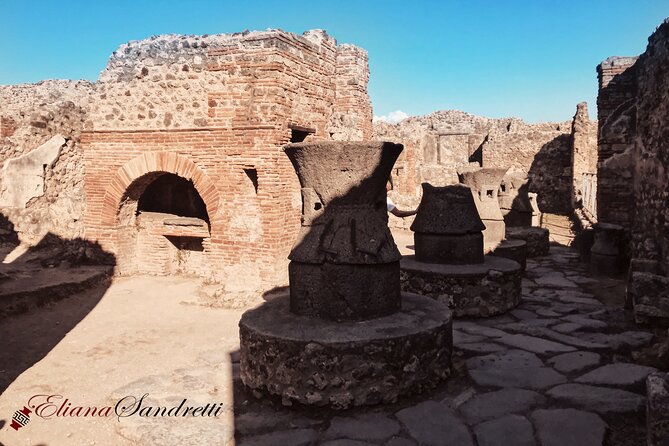
1) Pompeii Archaeological Park: the core circuit
Your main entrance experience starts with key areas inside the park, including:
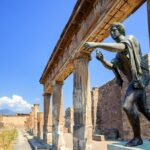
- The Theaters and Temples
- A rich house
- Stabian baths (spa)
- Shops and even fast food areas
- The Lupanar area (the brothel district)
- The Forum (main square)
- The Area of the Gladiators
- The casts of people who died during the eruption
A good guide makes this list feel real. You stop enough times to learn why each space existed, and you don’t waste time wandering. This is also where you get the “town layout” view: entertainment, work, worship, food, and politics all in one connected grid.
You can also read our reviews of more tours and experiences in Pompeii

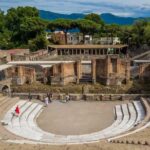

2) The Odeion (Small Theater): Roman acoustics in action
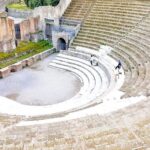
One standout stop is the Small Theater (Odeion). The point here isn’t just architecture. It’s how the Romans recreated perfect acoustics—so sound traveled in a way that supported performances.
This is a great stop if you like sensory history. You’re not only looking at ruins; you’re hearing what they were meant to do.
3) Teatro Grande (Great Theater): the big performance space
Next you visit the Great Theater. The tour emphasizes it as the most important theater in the archaeological site. That makes sense: it’s the stage where Pompeii’s public entertainment culture would have been most visible.
If you’re the type who hates long, empty sight-seeing, this is a good check-in. You get one “big-name” stop that anchors the entertainment theme, then you move on.
4) Via dell’Abbondanza: the main street feel
Then you cross via dell’Abbondanza, Pompeii’s main street. This helps you shift from single landmarks to how the city actually moved day to day.
Think of it as the “streets and storefronts” transition. It’s also a good moment for photos, since you’re moving through a classic Pompeii corridor rather than circling in a single square.
5) Granai del Foro: granaries plus the eruption casts
The Granaries of the Forum (Granai del Foro) give you two layers:
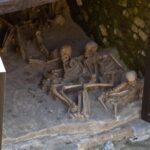
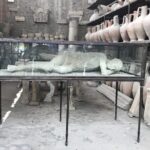
- Casts of people who died during the AD 79 eruption
- The archaeological deposit with amphorae and work tools
That combination hits hard. You’re standing in a practical storage area that also became a tragic stop on history’s timeline. A guide’s explanation matters here because you can’t just look at casts and fully grasp the scale without context.
If you want one emotional anchor in a short visit, this is often the place people remember most.
6) Stabian Baths (Terme Stabiane): the Roman spa moment
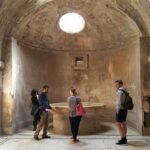
Next comes the Stabian Baths, described as the best spa of the Roman Empire in Pompeii. Even if you’ve heard the word baths before, Pompeii does this differently. These weren’t casual dips. They were social spaces with routine, architecture, and cultural rules.
The short stop time means you won’t tour every corner in depth. Still, you get the “why it mattered” overview that turns the space from ruins into a routine people actually lived.
7) Foro di Pompei and the Basilica: power, justice, and markets
You then reach the ancient Forum (Foro di Pompei), the main square with markets and temples. Right after that is the Basilica of Pompeii, described as the court area where justice was administered.
This pair is useful because it shows the civic side. You see where commerce happened and where decisions got made. It’s a break from entertainment and a return to governance and daily public life.
8) Temple of Jupiter: the Forum’s religious center
The tour includes the Temple of Jupiter in the main square area. If you want the “religion as politics” connection, this is where it becomes easier to understand how public spaces weren’t just for show.
9) Quadriporticus of the Theatres: gladiator training spaces
You also visit the Quadriporticus of the theatres, tied to the Gladiator Barracks. The tour notes you can see apartments and where gladiators trained.
This is one of those stops where a good guide helps you stop romanticizing. Gladiators were fighters, but they lived in a structured world with training routines and built-in living areas.
10) Vicolo del Lupanare and Temple of Venus: the red district and the city’s deity
Next is Vicolo del Lupanare, the ancient red district brothel area. Then you visit the Temple of Venus, tied to veneration of the city’s divinity.
This is an unusual pairing, and that’s why it works. You see how different “public meaning” spaces existed side by side: religion on one hand, sex-for-money culture on the other.
11) Casa del Fauno: a wealthy Pompeii home
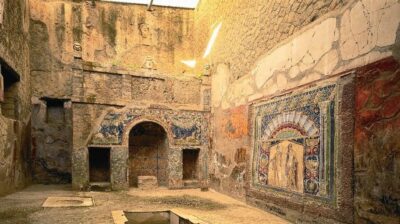
Finally, you visit the Casa del Fauno, described as one of Pompeii’s richest and most luxurious residences.
In a short tour, a grand house helps you understand the class difference. It also gives the day a satisfying conclusion because it’s where Pompeii starts to feel less like a historical site and more like an inhabited world.
What the best guides do here (and why it matters for your photos)
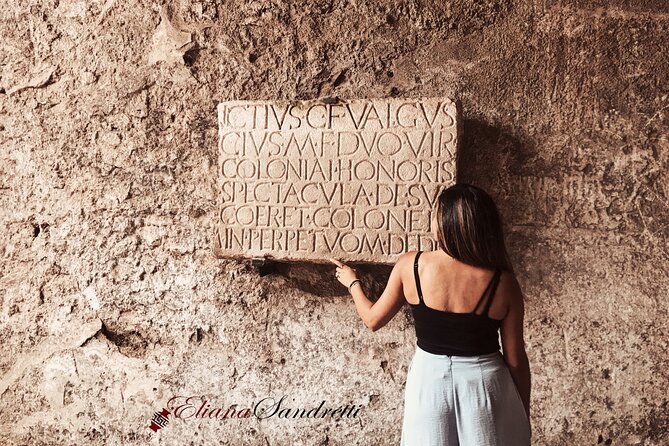
I kept seeing the same kind of praise from named guides, and it points to what you should look for in the experience:
- Efficient pacing that hits high-yield stops without dragging
- Clear explanations that answer questions in detail
- Smart ways to avoid crowds
- Extra help for families, including attention to comfort and shade
Names that came up in strong reviews include Luisa, Eliana, Antonio, Viktoria, Luciana, Mattia, Danilo, Raffaele, Francesco, and Marina. The common thread is that people felt they got more than a checklist.
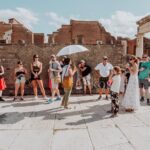
If you care about photos, you’ll likely appreciate the way the tour avoids crowd crush and still gives breaks for pictures. Pompeii is a place where lighting and timing matter, and a guide who knows where people pile up can save your best angles.
Who this tour suits best
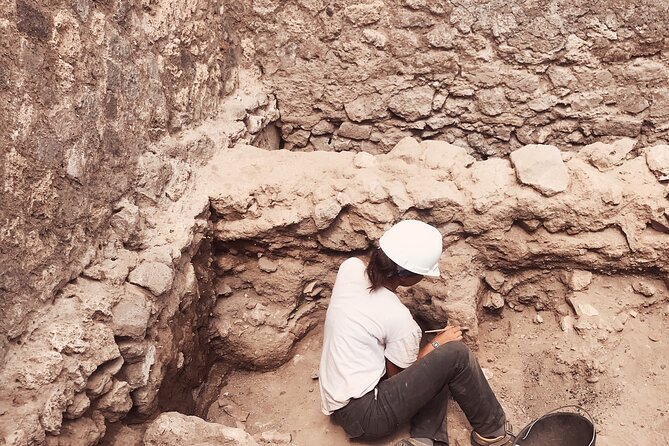
This is a smart choice if:
- You have limited time and still want the top Pompeii sites in a tight 2-hour format
- You want a private experience instead of weaving through strangers
- You’re traveling with kids or teens and want the route adjusted for engagement
- You’d like less crowd frustration and more “here’s what you’re looking at” guidance
It may feel less ideal if you want a slow, unstructured walk where you can linger at every inscription and corner for hours. Pompeii can absolutely fill days. This tour aims to get you the big story quickly.
Also consider this: you’ll be walking. Pompeii is not designed for stroller-speed touring, and there’s no hint in the tour data about short-cuts like accessibility elevators. Most people can participate, and service animals are allowed, but you should plan for uneven ground.
Practical tips so your day feels smooth
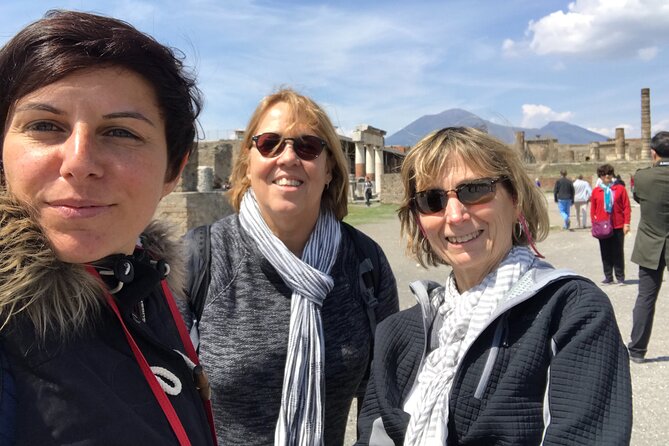
A few things I’d do to make this run like clockwork:
- Buy your 19-euro entry ticket ahead of time, since admission isn’t included and skip-the-line depends on having that sorted.
- Bring something that helps with sun and heat. Even in shoulder seasons, Pompeii gets intense.
- Wear shoes meant for stone paths, not fashion soles.
- If you’re traveling with teens, elderly relatives, or anyone who needs steadier pacing, mention it at the start so the guide can adjust the route.
If weather turns ugly, the experience notes you can choose another date or receive a full refund due to poor conditions. That’s worth keeping in mind since this is an outdoor site.
Should you book this Pompeii private archaeologist tour?
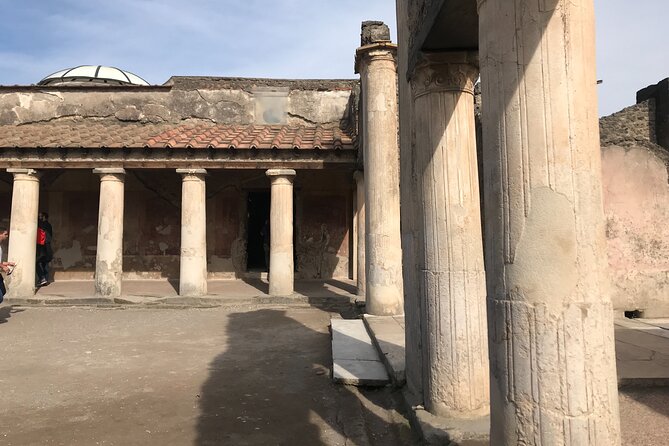
I think you should book it if your goal is simple: a high-quality Pompeii overview in two hours, led by an archaeologist-focused guide who can explain what you’re seeing and keep you moving through the most important places.
I’d hesitate only if you’re assuming the tour price includes the Pompeii admission ticket. It doesn’t. Once you’re clear on the separate 19-euro entry fee, the structure makes sense: you pay for guide time, route planning, and skip-the-line assistance.
One more decision factor: group size. Since it’s per group up to 10, this can be strong value if you can fill out a small party. For a solo traveler, it’s still a great comfort buy if you want privacy and speed, but the cost-to-person math won’t feel the same.
If you want a short, guided “this is what Pompeii really was” day, this tour is a good fit.
FAQ
Is the Pompeii entrance ticket included?
No. The tour does not include the Pompeii archaeological site entrance ticket. You need to buy it separately.
How much are Pompeii entrance tickets?
The entrance ticket costs 19 euros per person, and tickets are free for under 18 with ID or passport.
Where is the tour meeting point?
The tour starts at Piazza Esedra, 10, 80045 Pompei NA, Italy and ends back at the meeting point.
How long is the tour?
The tour lasts about 2 hours.
Is this a private tour, and how many people are in the group?
Yes, it’s a private tour. The price is per group (up to 10 people).
What language is the tour offered in?
The tour is offered in English. Multi-language options are available only on request.
What if the weather is poor?
This experience requires good weather. If it’s canceled due to poor weather, you can choose another date or get a full refund.