REVIEW · SORRENTO
Pompeii Guided Walking Tour with Ticket
Book on Viator →Operated by JOE BANANA LIMOS & TRAVEL S.R.L. · Bookable on Viator
Pompeii hits hard even when you know the story. This 2.5-hour guided walk is built for speed and clarity, with skip-the-line Pompeii entry and a licensed guide keeping the ruins legible. It’s also small, max 15 people, so you’re not just herded past stone.
I especially like two things about this tour. First, the tickets are handled for you, so you spend less time stuck at the entrance and more time inside the site. Second, you don’t get only the big monuments—you get the everyday stuff too, from the Forum’s civic heartbeat to the market and bath areas.
One possible drawback: the schedule is packed into about 2 hours 30 minutes, so you’ll have to accept a fairly brisk pace and limited time to linger. If you want a slow, sit-and-stare kind of visit, you may feel rushed.
In This Review
- Key highlights at a glance
- Sorrento-to-Pompeii timing: how the 2.5 hours really feels
- Meeting point at Ristorante Bar Sgambati and what to bring
- Skip-the-line Pompeii tickets: why it’s worth paying for
- Pompeii Archaeological Park: houses, baths, theatre, and the brothel zone
- Foro de Pompeya: the main square, plus why it matters
- Teatro Grande: Greek-Roman drama in Roman Pompeii
- Granai del Foro: market storage, artefacts, and plaster death casts
- Stabian Baths and Macellum: the everyday city behind the stone
- Stabian Baths (Terme Stabiane)
- Macellum
- Lupanar brothel: what you’ll see if there’s time
- Price and value: $112.35 for tickets, a licensed guide, and a small group
- Guides, humor, and staying on track
- Who should book this Pompeii guided walking tour
- Quick tips to make your Pompeii walk easier
- Should you book this Pompeii guided tour?
- FAQ
- What time does the Pompeii guided walking tour start?
- How long is the Pompeii tour?
- Is the Pompeii entrance ticket included?
- How big is the group?
- Where do I meet the guide in Pompeii?
- What should I bring for the walk?
- Is food or drink included?
- Is cancellation allowed after booking?
Key highlights at a glance
- Skip-the-line entry with tickets included so you start seeing Pompeii faster
- Small groups of 15 or fewer for a more human pace and Q&A time
- Forum + Theatre Grande with clear context for Roman public life
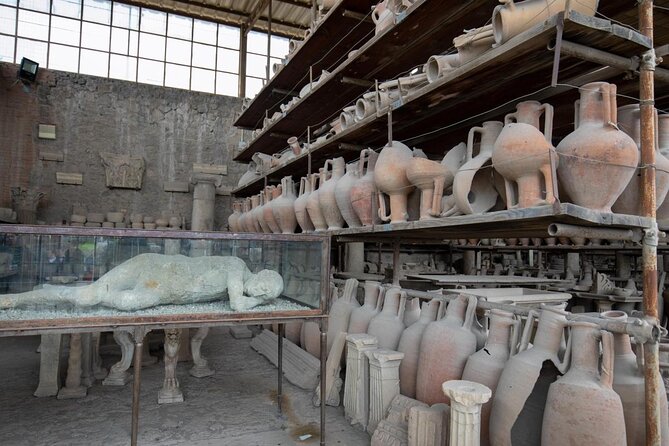
- Granary of the Forum with over 9,000 artefacts plus plaster death casts
- Stabian Baths and the Macellum for a feel of daily routines and street commerce
- Lupanar brothel stop when time allows if your timing works out
Sorrento-to-Pompeii timing: how the 2.5 hours really feels

This is a focused, half-day-style experience built around one idea: make Pompeii understandable without spending your entire day in lines. The tour runs about 2 hours 30 minutes, starting at 10:30 am, and it ends back at the same meeting spot.
The biggest practical win is that the visit is structured. You’re not wandering and guessing what you’re looking at. A guide keeps the route moving between key clusters—Forum, theatre zone, baths, main-road shops—so you get a storyline in real time.
That matters because Pompeii can be overwhelming. Streets, doorways, floors, and walls blur together fast if you’re reading everything like a puzzle. With a plan like this, you’ll usually know what each stop is, what it likely felt like, and why it mattered.
You can also read our reviews of more tours and experiences in Sorrento



Meeting point at Ristorante Bar Sgambati and what to bring
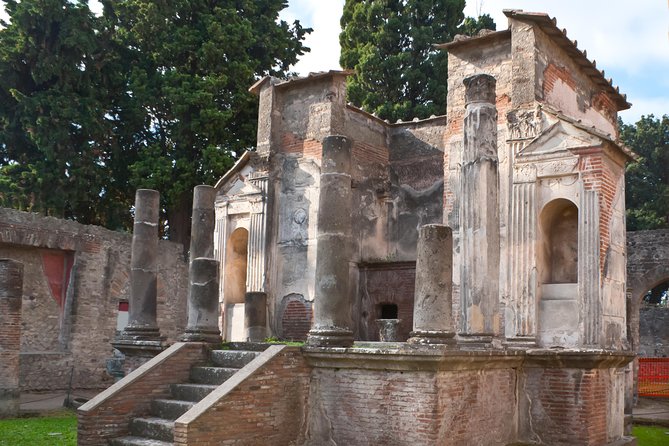
You’ll meet at Ristorante Bar Sgambati, Via Villa dei Misteri, 1, 80045 Pompei NA, Italy. The tour is near public transportation, and the organizer confirms details at booking time.
Plan around a straightforward walk on uneven ground. The activity calls for moderate physical fitness, so bring practical footwear and be ready for a fair amount of walking.
Pack these basics:
- Comfortable walking shoes (not soft sandals)
- Bottled water—Pompeii can feel hot and exposed
- No need to plan for food on the tour itself, since food and drinks aren’t included
If you’re the type who stops constantly for photos, you’ll still manage—but you may want to keep an eye on where the group is heading so you don’t fall behind.
Skip-the-line Pompeii tickets: why it’s worth paying for
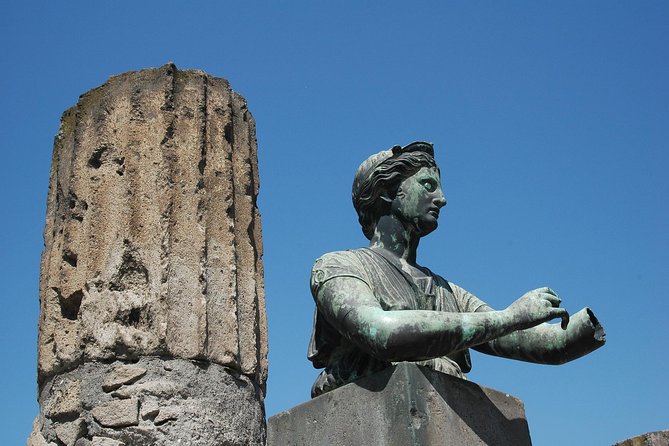
This tour includes skip-the-line Pompeii entrance tickets, plus an official guide. For Pompeii, that’s not a small perk. The site is huge, and time evaporates when you’re waiting.
By having entry handled up front, you reduce the biggest first-day friction: the moment where you’re standing still, thinking about time and weather while other people start walking. This tour pushes you into the ruins sooner, which means more time with actual sights instead of logistics.
Also, because it’s a small group (15 max), the guide can keep things moving at a tempo that works for most people. You get a rhythm: brief orientation, then a cluster of stops with explanations that connect.
Pompeii Archaeological Park: houses, baths, theatre, and the brothel zone
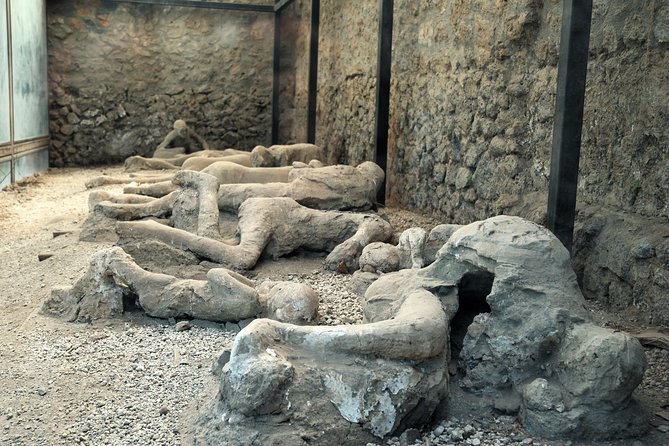
Your main start point is Pompeii Archaeological Park, where you explore the ruins together with a professional licensed guide. You’ll cover more than the postcard highlights, including houses, baths, theatres, and the infamous brothel area.
What makes this opening stretch valuable is how it sets the lens. Instead of treating Pompeii like a museum of isolated buildings, you get a sense of how the city worked as a lived-in place that later became a snapshot of ordinary life.
A few notes to help you enjoy this section:
- Listen for the guide’s explanations about what different buildings were for, because Pompeii’s function isn’t always obvious from the outside.
- Expect some rough textures and changes in level. This is ancient stone, not a smooth indoor display.
- If you’re curious about how people ate, shopped, relaxed, worked, and entertained themselves, the guide’s route is designed to hit those categories.
Foro de Pompeya: the main square, plus why it matters
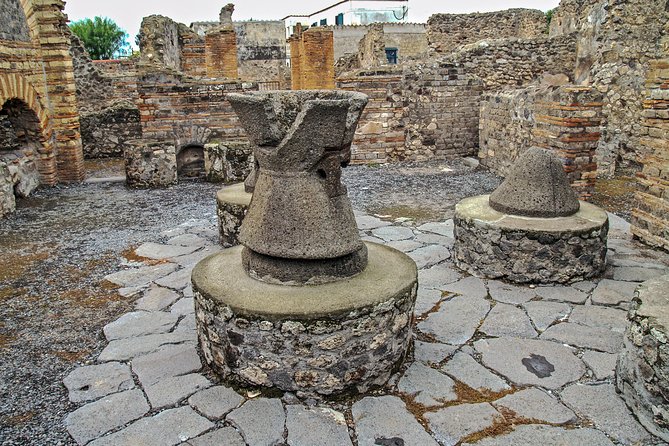
The route then moves to the Foro de Pompeya, Pompeii’s main square and the commercial, political, and religious center. This is one of the best places to start understanding the city’s social order.
Why this stop is useful: when you stand in a Roman forum area, you’re seeing the stage where public life happened. Even if the buildings look fragmentary, the layout tells you what types of activity were concentrated here—commerce, official business, and ritual space all in one civic hub.
The tour allocates about 15 minutes here. That’s short by museum standards, but it’s enough for a guided orientation if you listen for the “what was it used for?” cues.
You can also read our reviews of more walking tours in Sorrento






Teatro Grande: Greek-Roman drama in Roman Pompeii
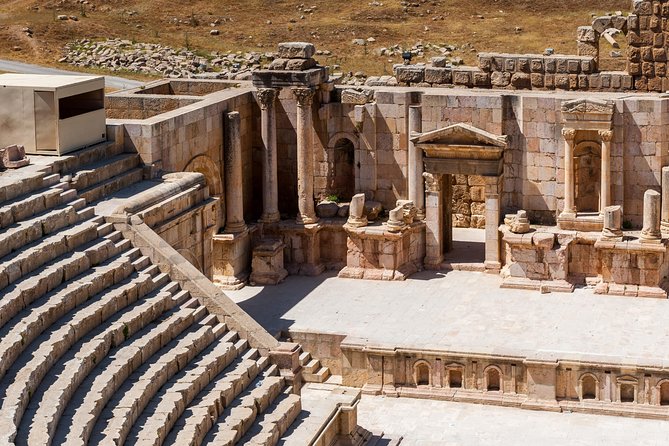
Next up is Teatro Grande, the main theatre of Pompeii. You’ll get to see it as a working part of the city’s culture, where plays from the Greek-Roman tradition were represented.
The time for this stop is about 10 minutes, so treat it like a focused viewing and explanation moment. The guide’s job here is key: theatres in ruins can look like piles of stone until someone shows you how the space likely functioned—how people gathered and what sort of performances this kind of venue hosted.
If you like architecture with a purpose, this is a strong stop. It’s one of the easier places to imagine the noise and crowd energy, even from a limited viewpoint.
Granai del Foro: market storage, artefacts, and plaster death casts
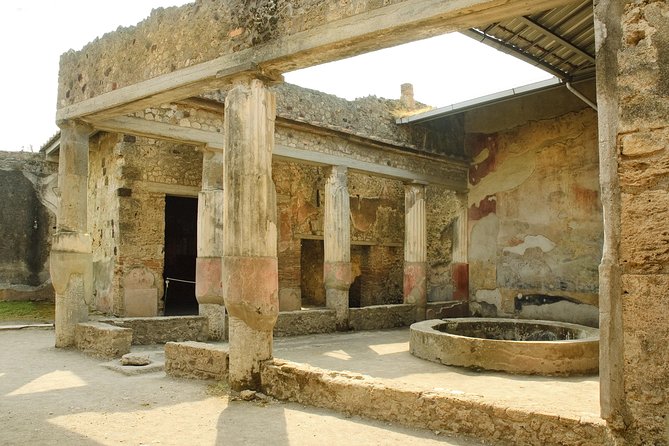
One of the most fascinating parts of the tour is Granai del Foro, where the Forum Granary was used for the fruit and vegetable market. Today, it houses more than 9,000 artefacts—including pots and pans for cooking, jugs and bottles, marble tables, and marble baths for fountains that adorned house entrances.
This is where Pompeii shifts from public spaces to objects. Seeing everyday items grouped together gives you a different kind of understanding: not just what people built, but what they used.
Even better, this area also includes casts of victims of the eruption, plus casts of a dog and a tree. That’s heavy material, so don’t rush it. Let the guide’s pacing work for you, and if you need a moment, take one. Even in a tight schedule, you can slow your own pace slightly and stay respectful of the content.
The stop is around 15 minutes, which means you’ll get highlights rather than a full browse. If this is the exact area you want most, this tour still works well because the guide helps you pick what to notice.
Stabian Baths and Macellum: the everyday city behind the stone
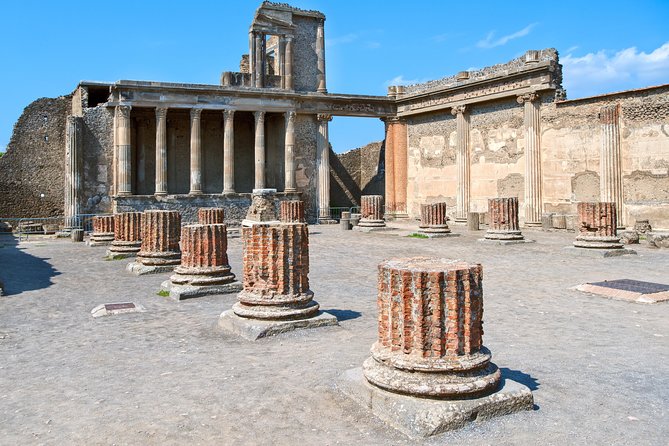
Pompeii isn’t only forums and theatres. One reason this walking tour scores points is that it includes more than the big-name sites.
Stabian Baths (Terme Stabiane)
You’ll visit the Stabian Baths, described as among the oldest Roman baths we know of in the Roman world. Even with only about 10 minutes here, the guide’s explanations can help you connect what you see to daily routine—bathing spaces weren’t just about hygiene; they were social and practical.
If you’ve ever toured Roman sites and thought, I get the architecture but not the routine, this stop helps bridge that gap.
Macellum
Then you move to the Macellum, the “shops” located on the main road. Expect this to feel more street-level and human. It’s a chance to picture a city moving goods, where daily needs were handled in familiar rhythms.
Again, time is about 10 minutes. Don’t expect a deep shopping-museum stop. Do expect the guide to point out the commercial logic in the layout so it clicks fast.
Lupanar brothel: what you’ll see if there’s time
If timing works out, you’ll get a visit to the Lupanar, Pompeii’s ancient brothel. This stop is listed as time permitting and takes about 15 minutes.
From a visitor’s perspective, this is one of the more striking stops because the walls still show erotic paintings that once advertised the services offered. It’s not comfortable for everyone, but it’s also part of the social reality of ancient cities—sex work existed, and it showed up in public messaging the way other trades did.
If you’re sensitive about explicit content, decide in advance whether you want to use your time for this. If you do go in, I’d treat it like a historical look: notice placement, messaging style, and how it fits into street life rather than focusing only on shock.
Price and value: $112.35 for tickets, a licensed guide, and a small group
At $112.35 per person, this isn’t the cheapest way into Pompeii. But it’s not just paying for access.
You’re paying for:
- Skip-the-line Pompeii entrance tickets
- An official tour guide
- A small group capped at 15 people
- A route designed to cover multiple high-value sight clusters in about 2.5 hours
For a first-time Pompeii visit, a guided approach can save more than time. It can save confusion. If you’re the type who wants to stand in a place and immediately understand what it was for, you’ll feel your money at work.
For repeat visitors or people who love reading ruins slowly on their own, this price might feel steep. But for a structured, high-signal walk with ticket handling done for you, the value is easier to justify.
Guides, humor, and staying on track
The experience seems to win on guide quality. In the feedback you’re likely to see names like Paulo and Pierpaolo tied to the tour, with emphasis on how they handle questions and keep the mood light without turning the site into a comedy set.
There’s also praise for navigation skills—like being able to route smoothly through the ruins even when someone arrives late due to transit delays. That’s a practical advantage in Pompeii, where the site is large and time matters.
If you want the tour to feel like a conversation (not a lecture), be the kind of person who asks one good question early. With a group this size, the guide can often answer in a way that sticks.
Who should book this Pompeii guided walking tour
This works best if you:
- Are visiting Pompeii for the first time and want a route that makes sense fast
- Prefer a small group over big buses
- Want both public buildings and everyday-life stops (Forum, theatre, baths, market street)
- Care about having tickets handled and avoiding entrance hassle
It’s less ideal if you:
- Want long pauses at each location
- Need a very low walking pace
- Are expecting food included (it isn’t)
Quick tips to make your Pompeii walk easier
A few practical moves can make the difference between great memories and end-of-tour fatigue.
- Wear shoes with good traction. Stone can be slick.
- Bring water and sip early. Waiting until you’re thirsty is how you lose energy.
- Use the guide’s stop points to plan your photos. If you chase perfect angles, you’ll run out of time.
- If you’re especially interested in the Granai artefacts and casts, listen closely in that segment. That’s where the tour leans most into objects and human stories.
Should you book this Pompeii guided tour?
If you want a smart first Pompeii visit with skip-the-line entry, a licensed guide, and a route that covers the biggest civic, cultural, and daily-life areas in about 2 hours 30 minutes, I’d book it. The small group size helps, and the stop selection feels balanced: forum and theatre up top, then baths and market street life, with the Lupanar as an extra if time allows.
If you dislike brisk pacing or you’d rather wander and read every detail at your own speed, consider booking a longer, more flexible format. Otherwise, this is a strong, efficient way to see Pompeii without getting lost in the ruins.
FAQ
What time does the Pompeii guided walking tour start?
The tour starts at 10:30 am.
How long is the Pompeii tour?
It runs about 2 hours 30 minutes (approx.).
Is the Pompeii entrance ticket included?
Yes. The tour includes skip-the-line Pompeii entrance tickets.
How big is the group?
The group is 15 people or fewer.
Where do I meet the guide in Pompeii?
The meeting point is Ristorante Bar Sgambati, Via Villa dei Misteri, 1, 80045 Pompei NA, Italy.
What should I bring for the walk?
Wear comfortable walking shoes and bring bottled water.
Is food or drink included?
No. Food and drinks aren’t included.
Is cancellation allowed after booking?
According to the policy, this experience is non-refundable and cannot be changed for any reason.
You Might Also Enjoy



More Tickets in Sorrento


More Tours in Sorrento






More Tour Reviews in Sorrento
- Sorrento Farm and Food Experience including Olive Oil, Limoncello, Wine tasting
★ 5.0 · 2,524 reviews