REVIEW · POSITANO
Positano Private Walking Tour
Book on GetYourGuide →Operated by Travmonde OÜ · Bookable on GetYourGuide
Positano has a way of catching your eye fast, then keeping it. This private walking tour is a focused 1.5-hour route through the village’s key layers, from a Byzantine church and icon to the older stories behind the cliffs. Two things I really like: you get a local professional guide who’s with your group only, and the walk connects what you see (architecture, streets, crafts) to why Positano mattered long ago.
One thing to plan for: entrance fees are not included, so if you want to go into any ticketed spots during the walk, you’ll need to cover those separately.
In This Review
- Key Things You’ll Notice on This Positano Walk
- Positano in 90 Minutes: What This Private Walk Really Delivers
- A quick look at the route flow
- Starting at Church of Saint Mary of the Assumption (Via Marina Grande)
- What the Byzantine icon teaches you about Positano
- From first century BC to Villa di Positano: why early wealth shows up
- Market-port days and the Amalfi Republic era
- Moorish-style architecture and the craft street feel
- Beachfront moments and how to handle the slopes
- Price and group size: is $283.21 per group good value?
- Who this Positano private walk is best for
- Practical tips to get more out of your 90 minutes
- Should you book this Positano Private Walking Tour?
- FAQ
- How long is the Positano private walking tour?
- Where does the tour start?
- Is this tour private?
- What languages are the guides available in?
- Are entrance fees included?
- How many people are in a group?
Key Things You’ll Notice on This Positano Walk
- A 13th-century Byzantine icon at the Church of Saint Mary of the Assumption (Virgin Mary).
- Ancient origins tied to the first century BC, not just postcard Positano.
- Villa di Positano history, including what that place suggests about early wealth and status.
- Amalfi Republic connections, helping you place Positano in a bigger regional story.
- Craft-heavy streets, where ceramic shops, handmade shoes, and local art show up around the corners.
- Your guide can tailor it on the spot, so the walk can match your pace and interests.
Positano in 90 Minutes: What This Private Walk Really Delivers
This tour is built for people who want the “wow” of Positano without spending half a day wandering and guessing. The duration is 1.5 hours, and it’s structured around a handful of meaningful stops rather than a long list of quick photo stops. You start at the Church of Saint Mary of the Assumption and end back at that same meeting point, which keeps the logistics simple on a sloped town where time can disappear.
I like that the tour stays practical. You’ll walk through the kinds of areas you’ll likely want to return to on your own, but with an explanation that makes the place click. Positano isn’t just a pretty coastline—it’s a village with deep roots, and you get those roots explained while you’re still standing right in the middle of them. If you’ve ever wondered how a place becomes the resort famous for today, this is the kind of walk that answers that.
Because it’s private, you’re not squeezed into a herd. Your private group stays together with a local professional guide, and the guide can adjust what you linger on. That matters in Positano, where you might want extra time at a craft shop or want to step aside for a better view over the pebbled beach.
You can also read our reviews of more walking tours in Positano



A quick look at the route flow
- Begin at the main church area.
- Learn the icon and what the church represents.
- Move through streets tied to ancient and medieval life.
- Get a feel for Villa di Positano and early wealth.
- Understand how the Amalfi Republic era shaped the region.
- End where you started, so you can continue at your own rhythm.
Starting at Church of Saint Mary of the Assumption (Via Marina Grande)
Your walk begins at the Church of Saint Mary of the Assumption on Via Marina Grande, 84017 Positano SA, Italy. That location is key. Via Marina Grande is one of the main coastal corridors, so it’s a natural starting line before you start weaving into the tighter village lanes.
This church is also where you’ll anchor your understanding of Positano. You’re not just taking in a building from the outside. The tour includes the 13th-century Byzantine icon of the Virgin Mary, and that icon gives the walk an emotional and cultural “center.” Even if you’re not into art history, religious art in a place like Positano is a clue to what communities valued and how they kept identity through changing eras.
If you’re the type who likes to understand what you’re seeing, you’ll appreciate how this stop sets the tone. You’ll learn what it means and then carry that context into the streets and coastal views that come next. If you’re less interested in religious art and more focused on architecture and crafts, you can still get value here because the church is a reference point for the rest of the story.
What the Byzantine icon teaches you about Positano
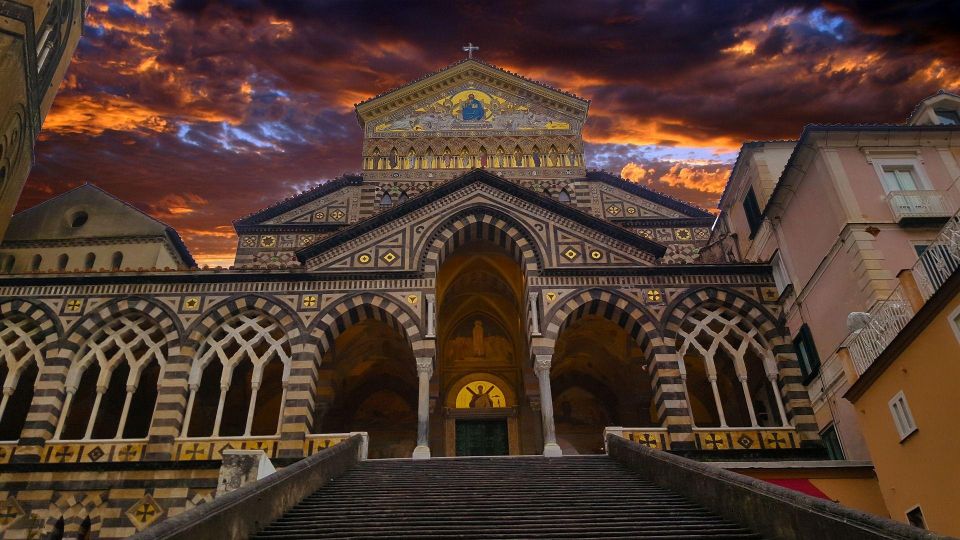
The icon is a 13th-century Byzantine-style piece of the Virgin Mary. The “Byzantine” angle matters because it tells you Positano was never isolated. Visual culture traveled, ideas moved, and styles lingered long enough to shape what ended up here.
This stop also makes the timing of the walk easier to digest. A 1.5-hour tour can’t cover everything, but it can pick the right moments. Starting with a church icon is a smart choice because it’s both visually striking and historically meaningful. It’s also practical: you’ll begin indoors or protected from sun and wind depending on the spot you’re standing in, then shift to outdoor views and streets.
One helpful thing to remember: icon and church details are best appreciated when you slow down for a minute. Ask questions if anything feels confusing. Your guide can explain what you’re looking at and how it relates to the broader local timeline.
From first century BC to Villa di Positano: why early wealth shows up
Positano’s story goes back much further than most people expect. The tour takes you into the concept of ancient origins reaching back to the first century BC. That’s an important clue for how you should look at Positano while you walk. You’re not just seeing today’s layers—you’re seeing evidence of settlement, status, and trade that shaped the town.
A central stop in that part of the story is Villa di Positano. The tour covers its historical significance, including what it suggests about wealth and social standing in earlier times. A villa isn’t just a fancy word for a big house. It points toward how the landscape was used, who had power, and how prosperity could be anchored near the coast.
Why this matters for you: once you connect the dots between a villa and the way Positano developed, the present-day town layout makes more sense. You’ll start noticing patterns: where people would have gathered, where movement toward the sea would have mattered, and how the coastal setting supported a lifestyle that depended on access and views.
In a short tour, the goal isn’t to memorize dates. It’s to build a mental model. The first century BC to Villa di Positano arc gives you that model fast.
You can also read our reviews of more private tours in Positano






Market-port days and the Amalfi Republic era
Positano wasn’t only a coastal view. The tour explains its past as a thriving market port with wealth. That concept is a big deal for understanding why the village looks the way it does now. Port towns develop stores, craft, trade routes, and money—all of which leave traces in street life and local culture.
You’ll also learn about Positano’s role during the influential Amalfi Republic. Even if you know Amalfi mostly as a day trip, this helps you place Positano in the political and economic network that shaped the whole area. It’s one thing to admire a town. It’s another to understand how it functioned.
What I like about this part of the walk is that it turns history into something you can picture while you’re outside. When a guide connects the idea of a market port to real spaces and street directions, you stop viewing the village as random twisting lanes. You see it as a town built to serve movement, goods, and people.
If you tend to rush through scenic towns, this history piece gives your time structure. It gives you a reason to pause at viewpoints. It also gives you language to describe Positano to yourself and others afterward.
Moorish-style architecture and the craft street feel
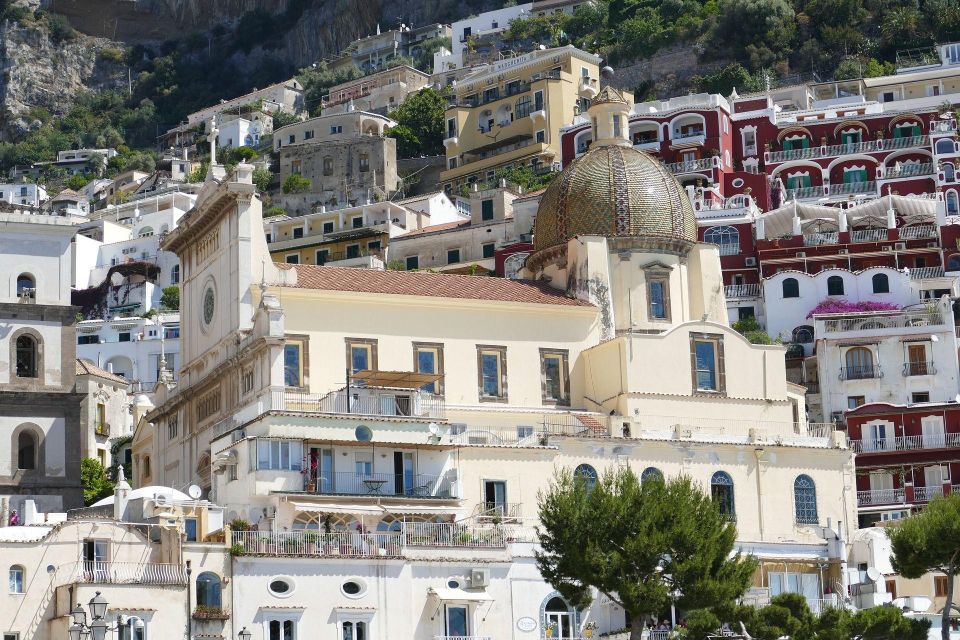
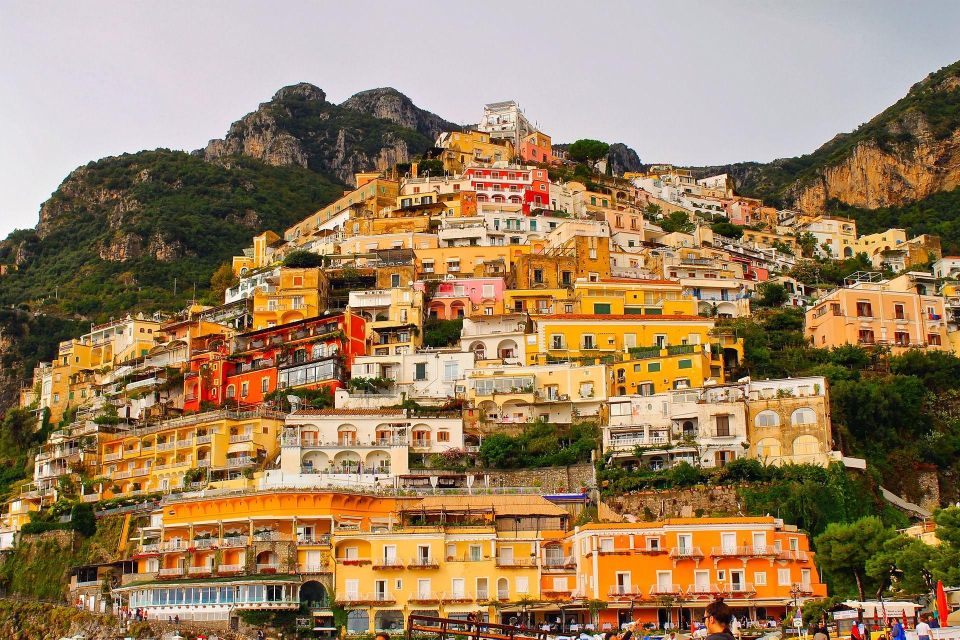
Positano is known for its Moorish-style architecture, and the tour works that into what you’ll notice as you move. Moorish-style influences can be subtle at street level, but the overall look tends to create that distinctive coastal-village feel: textured surfaces, distinctive shapes, and a sense of style that doesn’t try to look like any single era.
Then the tour turns toward the craft side of Positano. You’ll pass streets where you’ll find ceramic shops, handmade shoes and sandals, and galleries featuring local artists. This isn’t just shopping advice. It’s a way of understanding how Positano’s economy and identity still lean on the creative work of locals.
Here’s the practical part for you: if you plan to buy something, use the tour as your research time. Notice what feels local versus what looks like generic souvenir stock. Check price and materials with your guide’s context in mind. Even if you don’t buy, walking the craft lanes with explanations makes the whole experience feel less like browsing and more like cultural observation.
Also, your guide can point out what’s worth slowing down for, since they’ll be watching your interests and your pace. With a private group, you’re not forced to move on just because another set of people wants the next photo spot.
Beachfront moments and how to handle the slopes
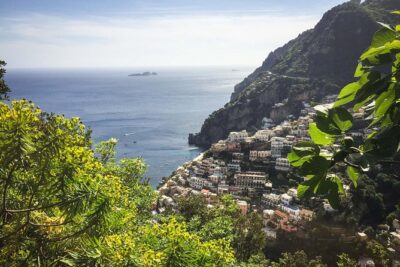
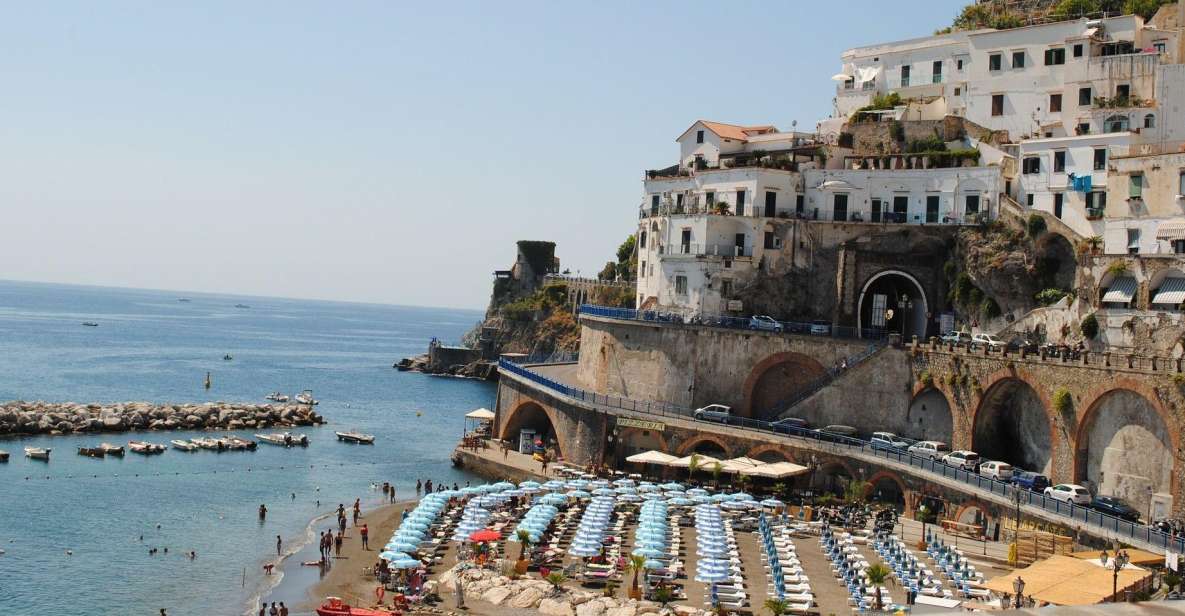
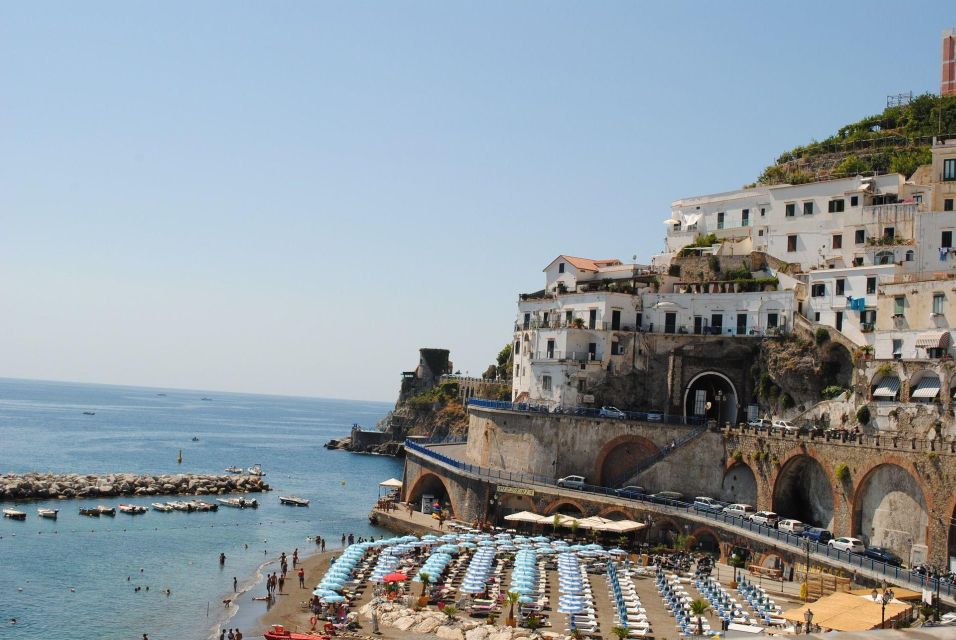
Positano is a sloped seaside village. That means two things for your body: you’ll climb at some point, and the views will be worth it. The tour includes the beachfront feel in its route concept, and you’ll experience the pebbled shoreline atmosphere even if you’re not spending long stretches sitting on the sand.
The goal is not a beach day. The goal is to connect the coastline setting to the history and architecture you’re learning. When you’re standing in the right spot, the height makes the port story click. Trade and travel made the sea the center of the town’s life, and the steep layout shows how people built around that reality.
My advice: wear comfortable shoes you trust on uneven ground. Positano is not the place for fragile footwear. If you know you get tired on hills, plan on a slower pace and let the guide know early. The guide can customize the walk on the spot, so you’re not locked into a rigid speed.
Price and group size: is $283.21 per group good value?
The price listed is $283.21 per group, up to 15 people, for a tour that lasts 1.5 hours. That’s a group-price model, which can feel different than per-person pricing. In plain terms: the more people in your group, the more the cost tends to make sense.
So the value question depends on your situation:
- If you’re traveling as a couple or small group, you still get a private guide and a guided explanation that helps you get context fast. You’re paying for time efficiency plus a guide who can respond to your questions.
- If you’re a larger group (still within the up-to-15 cap), the per-person value becomes more attractive because the guide attention is shared across the group while you keep the walk private to your party.
- Entrance fees aren’t included, so budget separately if you want to go into any ticketed areas during the walk. That’s the main cost surprise to watch.
Compared with “wandering alone,” this tour saves you the effort of figuring out what to look at and what it means. Positano can be overwhelming in peak season, especially around the church area and the busiest lanes. A private walking tour gives you a structured path and a local guide to translate what you’re seeing into something you actually remember.
If you want value, go in with a plan: pick what you care about most (church art, ancient roots, crafts, or viewpoints) and let your guide tailor the pace accordingly.
Who this Positano private walk is best for
This tour is a strong fit if you want more meaning than just photos.
It’s especially good for:
- First-time visitors who want the main story of Positano fast.
- People who like culture but don’t want a long, exhausting day.
- Groups that want their own schedule and the freedom to linger in craft streets.
- Travelers who care about the “why” behind the look of the town: ancient origins, villa wealth, port trade, and the Amalfi Republic connection.
It may be less ideal if:
- You want a long beach-focused itinerary (this is 1.5 hours).
- You hate walking uphill or uneven ground.
- You’re counting on entrance fees being covered.
Practical tips to get more out of your 90 minutes
A short private walk can still feel long if you’re underprepared, so I’d plan for comfort and questions.
- Start with shoes for slopes. Positano is a village of steps and changes in grade.
- Bring a light layer. Coastal weather can shift quickly, and church areas can feel cooler or breezier than expected.
- If you see ceramics or handmade shoes you like, ask for a moment. The tour is private, and your guide can adapt the timing.
- If you want a specific angle, tell the guide early. This includes craft shops, architecture like Moorish-style details, or history from the first century BC to the Amalfi Republic.
- If you meet your guide later than planned, stay calm and adjust. In one real-life example, a guide named Floriana was able to handle a late start after a driver got lost and still showed the group the best view while explaining Positano so it made sense. A good guide can smooth out the bumps.
If you’re the kind of traveler who reads labels, asks how things worked, and likes to connect old and new, you’ll enjoy this tour’s pacing.
Should you book this Positano Private Walking Tour?
Yes, you should consider booking if you want a fast, guided path through Positano’s most meaningful layers: the 13th-century Byzantine icon, the ancient roots to the first century BC, the idea of Villa di Positano, and the town’s role as a market port in the Amalfi Republic era. You’ll also get time in the craft lanes where ceramic shops, handmade shoes, and local artists’ work shape the daily feel of the village.
I’d book with a “realistic expectations” mindset. It’s only 1.5 hours, entrance fees aren’t included, and Positano is built on slopes. If you prepare for that, you’ll get a lot of understanding per minute.
In short: this is a smart choice for people who want to look at Positano and instantly know what they’re looking at, not just see it.
FAQ
How long is the Positano private walking tour?
The tour lasts 1.5 hours.
Where does the tour start?
It starts at the Church of Saint Mary of the Assumption, Via Marina Grande, 84017 Positano SA, Italy.
Is this tour private?
Yes. It’s listed as a private group, with your guide with your group only.
What languages are the guides available in?
The tour guide is available in English and Italian.
Are entrance fees included?
No. Entrance fees are not included.
How many people are in a group?
The price is per group up to 15 people. The group size is limited to that maximum.