REVIEW · POSITANO
The real life in the old Pompeii tour with Archaelogical Guide All Inclusive
Book on Viator →Operated by Pompei Trip&Transfer · Bookable on Viator
Pompeii, minus the queue. This private tour from Sorrento uses skip-the-line admission and a private speaking guide to help you read Pompeii like a living place, not just a pile of ruins. You’ll spend the morning focused and efficient, then get back to the coast without the stress of logistics.
I love the way the route is organized around memorable stops, from House of Menander to the Temple of Isis, so you don’t end up bouncing randomly across the park. The biggest trade-off is time: the guided exploration is about two hours, so if you like slow wandering and long stops at every corner, you may feel slightly rushed.
In This Review
- Key highlights at a glance
- Pompeii from the Sorrento Coast: the easy start at 8:00 am
- Skip-the-line admission: why it’s worth paying for
- Your two-hour Pompeii walk: houses you’ll actually remember
- House of Menander and the homes people lived in
- The House of the Gladiators: spectacle and lifestyle
- House of Julie Felix and Loreius Tiburtinus
- House of Sallust and the House of the Tragic Poet
- House of the Vettii Lupanar: a stop that makes the site feel human
- Temple of Isis and suburban baths: where daily life clicks
- Temple of Isis: a landmark with a point
- Suburban baths: the everyday routine angle
- Meeting point flow: pickup, entrance, guided walk, and the driver waiting
- Guides and real-world control: what makes the day feel smooth
- Duration and pace: planning your other stops around Pompeii
- Price and value: is $296.71 per person fair?
- Who this Pompeii tour fits best
- Quick FAQ about Real Life in Old Pompeii
- FAQ
- What time does the tour start?
- How long is the tour in total?
- Do I get pickup, or do I need to meet somewhere else?
- Is admission included?
- How long do we spend with the guide inside Pompeii?
- What sites are included in the walk-through?
- Is this a private tour?
- Do I need anything to enter, like a printed ticket?
- What’s the cancellation policy like?
- Should you book this Pompeii tour?
Key highlights at a glance
- Skip-the-line entry at the Pompeii main entrance to avoid the longest waiting
- Hotel pickup from the Sorrento Coast plus a driver who stays connected to your schedule
- A focused highlight walk through major villas and key landmarks in about two hours
- Temple of Isis and suburban baths included, not just the “big name” houses
- Private, small-group feel since it’s only your group on the activity
Pompeii from the Sorrento Coast: the easy start at 8:00 am
You start early, with a 8:00 am pickup from hotels along the Sorrento Coast area. The drive to Pompeii takes about 40 minutes, which matters more than it sounds. If you’re building a day around Pompeii, reducing transit friction gives you more of the useful daylight for seeing things, not just sitting in traffic.
This setup also helps if you’re traveling without a car. You don’t need to figure out parking, ticket lines at the right time, or how to get back. You just show up, get in the vehicle, and roll.
The tour is scheduled as a half-day experience that runs about 4 to 5 hours total. That total includes the drive and the guided walk through the park highlights, so you get a realistic sense of how much day you’re handing over.
You can also read our reviews of more guided tours in Positano


Skip-the-line admission: why it’s worth paying for
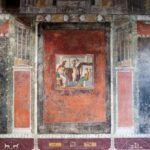
Pompeii can mean lineups. This tour is built around skip-the-line admission, and that’s not a fancy extra—it’s the difference between a pleasant visit and a visit where your motivation dies while you wait.
With the guide meeting you at the Pompeii main entrance, you’re positioned to get moving quickly. Once you’re inside, the pacing stays tight and purposeful, with the guide directing your attention to the spots that tell the most story in the time you have.
If you only do Pompeii once (and most people do), skipping the waiting protects your main investment: your hours in the site. It also helps your photos and timing. You get to plan your day instead of reacting to the line.
Your two-hour Pompeii walk: houses you’ll actually remember
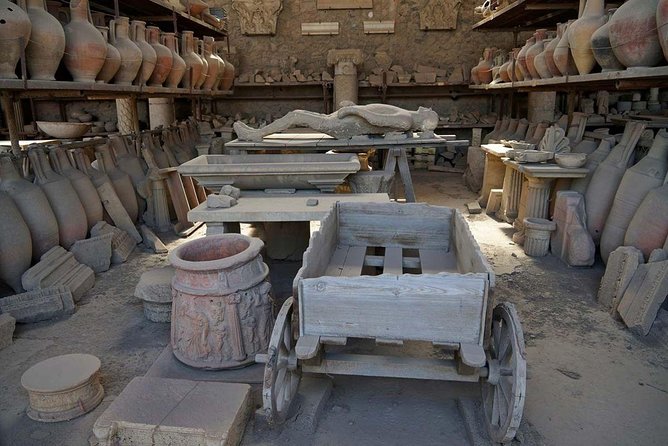
The core of the visit is about two hours of guided exploration through a selection of major houses and landmark spaces. Instead of trying to cover the entire park, you get a route designed around comprehension—why these buildings mattered and what daily life looks like when you connect the pieces.
Here’s what you can expect to see, with the practical “why it matters” behind each stop:
House of Menander and the homes people lived in
The walk includes the House of Menander, which is the kind of stop that helps you move from vague ruins to real rooms and real routines. When a guide points out what you’re looking at—layout, function, and the feeling of movement through space—you stop seeing it as scattered walls.
If you’re the type who likes to understand how people used the space, a guided format like this works well. You’re not just looking; you’re learning what the building was for.
The House of the Gladiators: spectacle and lifestyle
Next comes the House of the Gladiators. Even if you don’t know much about Pompeii ahead of time, a good guide turns the house into a clue about interests and social life. You get a sense that people weren’t living in isolation. Their home spaces connect to entertainment, status, and what they valued.






House of Julie Felix and Loreius Tiburtinus
The route continues with the House of Julie Felix and House of Loreius Tiburtinus. These stops are useful because they diversify what you’re shown. Pompeii isn’t just one kind of house or one kind of wealthy dwelling. You’re more likely to walk away with a broader sense of how varied domestic life could be.
House of Sallust and the House of the Tragic Poet
Then you’ll hit House of Sallust and the House of the Tragic Poet. These are the kinds of names that sound dramatic, but with a guide, you start thinking in terms of what’s visible: how parts of the home are connected, how the spaces would have felt, and how the site tells stories beyond the name on the door.
This is also where the tour’s “highlight” approach shines. In a short timeframe, you see enough distinct houses to understand Pompeii’s domestic side without getting lost in repetition.
House of the Vettii Lupanar: a stop that makes the site feel human
One of the most memorable items on the route is the House of the Vettii Lupanar. It’s the sort of stop that turns the site from abstract history into lived-in reality. With a guide explaining what you’re looking at, it helps you understand how different spaces fit together in the everyday rhythm of the city.
Not every traveler wants the guide to steer them through sensitive or unusual topics. Still, if you want Pompeii to feel real—rather than sanitized—you’ll likely appreciate this kind of inclusion.
Temple of Isis and suburban baths: where daily life clicks
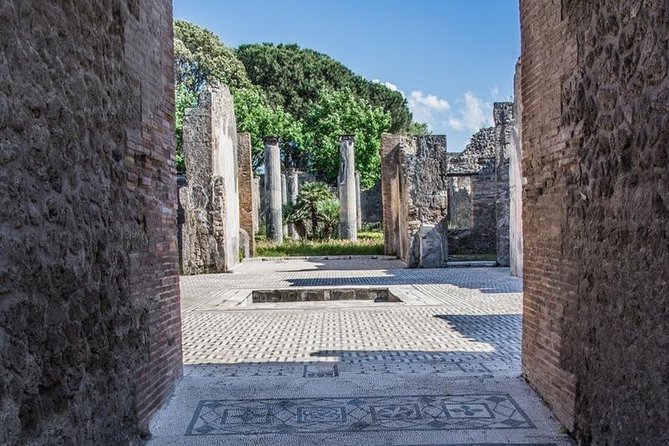
After the houses, the tour brings you to two additional anchors that help the site feel like a functioning city rather than a museum.
Temple of Isis: a landmark with a point
The Temple of Isis is included as part of the guided highlights. For many visitors, temples are where the scale of a city becomes obvious. A guide can connect what you see to how people gathered and what these spaces meant to them, even if you’re not arriving with deep background knowledge.
This stop is also a good reset from domestic interiors. You get a different kind of “reading” of Pompeii: civic and religious space rather than home space.
Suburban baths: the everyday routine angle
Then you’ll visit the suburban baths. Baths are a smart inclusion because they’re practical. You don’t just learn that the city had buildings; you see how daily habits shaped the layout and movement of people.
A guided approach matters here too. Bathrooms and bath complexes can be confusing if you’re scanning on your own. With a guide, you’re more likely to understand how spaces connect—so the complex stops being confusing and starts being understandable.
Meeting point flow: pickup, entrance, guided walk, and the driver waiting

The routine is simple and designed to keep you from wandering into time trouble.
You’re picked up from your hotel area on the Sorrento Coast, driven to Pompeii, and met at the Pompeii main entrance. From there, you get your skip-the-line entry and a focused route through the highlights.
After the guided walk, the driver waits at the same entrance so you can return to the vehicle and head back. That “driver waits” detail is quietly important. It means you’re not guessing, and you’re not chasing a timed exit while trying to find your transport.
This matters even more if you’re traveling with others. In a place with lots of people and lots of turning points, having a fixed re-meet spot reduces stress.
Guides and real-world control: what makes the day feel smooth
This tour is positioned as a private experience with a private speaking guide. That part isn’t just about exclusivity. It changes the whole shape of the visit. If you can ask questions and get a straight answer right then, the site stops feeling like random fragments.
One guide named Rosario has been described as an expert in the area, and the standout detail wasn’t only knowledge—it was the way the visit felt organized and satisfying. Another practical win mentioned in real-life stories: the guide and driver team were helpful when small problems popped up, like re-checking for something you forgot. You’re not stuck in the “figure it out yourself” mode.
Also, the guide is able to point you toward good photo moments. That sounds minor until you realize how many people spend time shooting the same angle and missing the better pause spot.
Duration and pace: planning your other stops around Pompeii

The day is 4 to 5 hours total, with about two hours of actual guided sightseeing. That pacing is realistic for Pompeii, which is large and easy to underestimate.
What I like about this structure is that it’s not trying to sell you a rushed marathon. Instead, it gives you enough time to see the meaningful highlights and then leave while you still feel energized.
If you want to tack on a separate activity after, you’ll usually have that flexibility—especially if you’re based in Sorrento area. If your schedule is tight, the fixed start at 8:00 am helps you plan the rest of your day without guessing.
Price and value: is $296.71 per person fair?
At $296.71 per person, this is not a bargain-basement option. The value comes from a bundle: private guided time, skip-the-line admission, and round-trip transportation from the Sorrento Coast, with the ticket included.
So the question isn’t just “Is it expensive?” It’s “Is it expensive for what it replaces?”
- If you were to arrange your own transport, manage entry tickets, and still aim for a coherent visit, you’d spend time and attention—and possibly money—on the parts that this tour already handles.
- If you’re traveling with a small group, the pricing often starts to feel more reasonable because the transportation and guide value stretch across your shared logistics.
- The skip-the-line element is one of the few things that directly changes your experience quality, not just your convenience.
For solo travelers, it may feel like a premium. But if your top priority is seeing Pompeii without the headache, this price is easier to justify. You’re paying to trade uncertainty for a clean plan.
Who this Pompeii tour fits best
I’d steer you toward this tour if:
- You want a private guide and a clear route instead of wandering the park on your own.
- You care about understanding what you’re seeing, not just ticking off attractions.
- You’d rather pay for skip-the-line entry than gamble on timing.
It can be a strong fit for couples, families, and friends who want structure. The tour says most travelers can participate, and service animals are allowed, which helps with planning.
If you’re the type who wants hours of unscheduled time in every corner, you might find the two-hour guided core limiting. Still, you’ll at least walk away with a grounded view of the parts you visited.
Quick FAQ about Real Life in Old Pompeii
FAQ
What time does the tour start?
The start time is 8:00 am.
How long is the tour in total?
Plan on about 4 to 5 hours overall, including driving and the guided time.
Do I get pickup, or do I need to meet somewhere else?
Pickup is offered from hotels on the Sorrento Coast. You’ll be driven to the Pompeii main entrance.
Is admission included?
Yes. Admission ticket is included, and you also get skip-the-line entry assistance.
How long do we spend with the guide inside Pompeii?
The guided exploration is about two hours at Pompeii.
What sites are included in the walk-through?
The highlights include villas such as the House of Menander, House of the Gladiators, House of Julie Felix, House of Loreius Tiburtinus, House of Sallust, House of the Tragic Poet, House of the Vettii Lupanar, plus the Temple of Isis and the suburban baths.
Is this a private tour?
Yes. It’s described as a private tour/activity, so only your group participates.
Do I need anything to enter, like a printed ticket?
A mobile ticket is provided.
What’s the cancellation policy like?
You can cancel for a full refund up to 24 hours in advance. If you cancel less than 24 hours before the start time, the amount paid isn’t refunded.
Should you book this Pompeii tour?
If you want Pompeii to feel organized and understandable, I think you’ll like this tour. The combo of skip-the-line entry, a private speaking guide, and round-trip transportation from the Sorrento Coast is the practical formula for a smooth half-day.
Book it if you want the major villas and landmarks—Menander, the Gladiators, Temple of Isis, and the suburban baths—without spending your morning trapped in lines or figuring out logistics.
Skip it (or adjust expectations) if you dream of a slow, self-directed Pompeii day where you can linger and wander without any schedule pressure. In that case, the guided highlights route may feel too time-bound.