REVIEW · POSITANO
Ceramic Class in Positano 2 hours workshop
Book on Viator →Operated by Ceramica Assunta Positano · Bookable on Viator
Paint your own Amalfi majolica. This 2-hour ceramic workshop in Positano turns local tradition into something you can hold in your hands: majolica-style decoration guided in a real studio by Giovanna Parlato. I love that it is hands-on, not a lecture tour. I also like the practical touch that your piece gets fired in the kiln and then ships after cooking, so you do not have to worry about breaking it on the way home.
The main drawback to plan for is time. You will decorate during the class, but the final ceramic is cooked at around 950°C and only later sent to you.
In This Review
- Key highlights you will care about
- Majolica in Positano: why this class feels genuinely local
- Where the class starts (and how to show up ready)
- The 2-hour rhythm: from tradition talk to decorating your piece
- Majolica technique, explained in practical terms
- Limoncello time and the feel of working in a real ceramic store
- Kiln firing at 950°C: what happens after you leave
- Price and value: is $242.93 worth it?
- Who should book this workshop, and who might skip it
- FAQ
- How long is the ceramic class in Positano?
- What does the price include?
- Do I get my ceramic piece the same day?
- What is the temperature used for firing?
- Where do we meet for the class?
- How many people are in the group?
- Is there a limoncello tasting?
- What is the cancellation policy?
- Should you book the ceramic class in Positano?
Key highlights you will care about
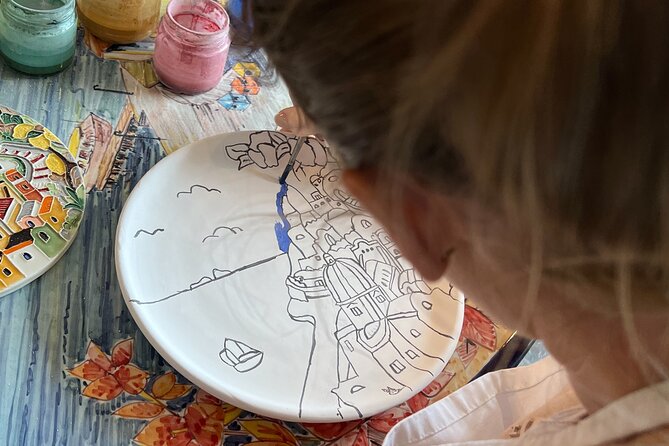
- Majolica technique practice in a Positano ceramic studio
- Guidance from Giovanna Parlato and working professionals
- Limoncello tasting included during the workshop
- Firing in a kiln to 950°C, then shipping your finished piece
- Souvenir photo included so you remember the moment, not just the finished item
- Small group (max 8) for a more personal class
Majolica in Positano: why this class feels genuinely local
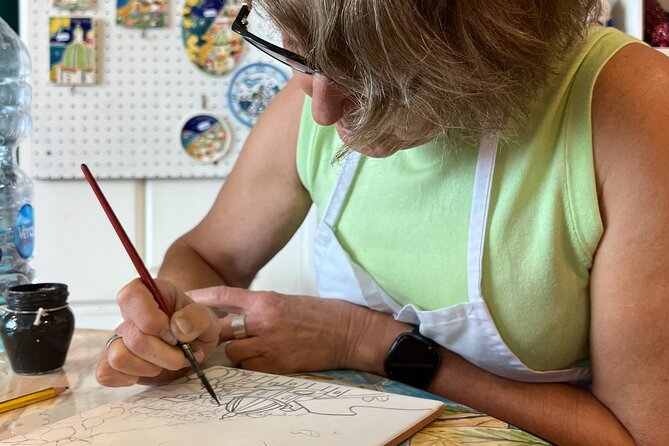
If you want a souvenir that is not just another magnet, this ceramic class is a strong option. Positano is famous for craftsmanship, and this workshop focuses on one specific tradition: majolica-style decoration on a ceramic object. You start with a short explanation of the ceramic tradition of the Amalfi Coast, then you move to the fun part—decorating your own piece by hand.
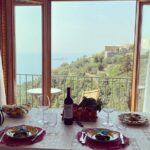
What makes it click is that you are not doing a craft demo from behind a rope. You are working in a store with a lab setup, and the day is built around making something yourself. The setting also matters. The class takes place in one of their stores in Positano, in a spot described as overlooking the sea from a small road. Even if you only steal a few quick looks, that view gives the whole session a sense of place.
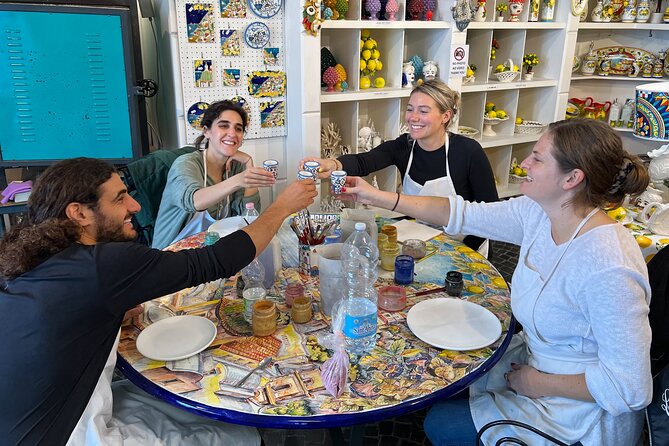
And yes, there is a sensory, grounded touch too: a taste of local limoncello is included. It is not a gimmick. It fits the idea that you are learning a local technique inside a local shop.
You can also read our reviews of more tours and experiences in Positano


Where the class starts (and how to show up ready)
You meet at Viale Pasitea, 202, 84017 Positano SA, Italy. The activity ends back at the same meeting point. That simple loop is helpful in Positano, where wandering around without a plan can turn into a lot of extra walking.
This workshop is near public transportation, and the group size is capped at 8 travelers. That small cap is a quiet quality signal. It usually means you get more time with the instructor and less waiting around while someone else is getting help.
Also, you will use a mobile ticket. When you arrive, have your phone ready so the check-in is quick. With crafts, you do not want to start the clock late—there is a lot to do in two hours, and you want to be settled when the explanation begins.
The 2-hour rhythm: from tradition talk to decorating your piece
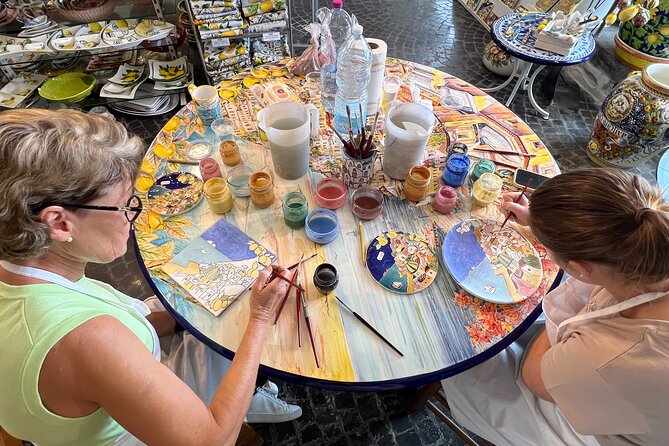
The class is designed to move at a good pace for a vacation. It lasts about 2 hours, and it follows a clear flow:
First, you get a brief explanation of the ceramic tradition of the Amalfi Coast. This matters more than it sounds. When you understand what majolica is and how the tradition is treated in the region, your decorating choices stop feeling random. You are not just filling space—you are placing decoration with an eye toward a technique people have practiced for generations.
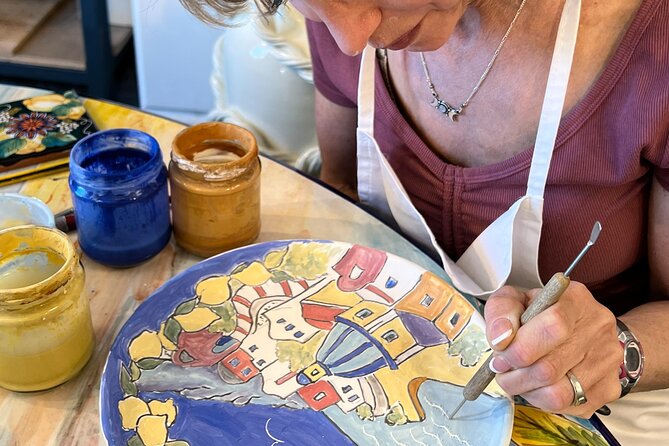
Then you do the main activity: decorating an object using the majolica technique. The instructor is Giovanna Parlato, an artist from Positano who creates terracotta objects modeled and decorated by hand. In a class like this, the big value is learning what to do and how to think about it while you are doing it. You get the structure of the technique, plus the freedom to make it yours.
Finally, you finish and the piece goes to the kiln process. That last part is key: you do not just paint and leave. Your work gets handled as an actual ceramic object that needs firing to become stable and finished.
Majolica technique, explained in practical terms
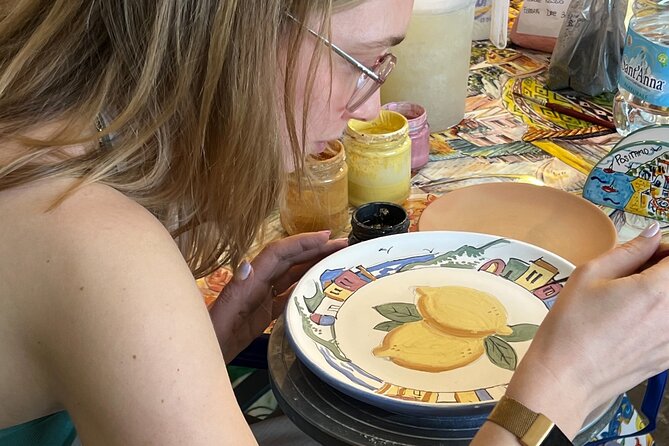
Majolica can sound technical, but the experience keeps it practical. Here is what you can expect conceptually: you decorate the ceramic surface using the majolica approach taught in the studio, and the goal is to create a finish that works after firing. In other words, what you put on the object during the class is not just for decoration in the moment. It is meant to survive the kiln step.
The studio work is also where the class earns its authenticity. The workshop is managed by an artist from Positano, and it is run as an artistic laboratory rather than a quick activity stand. When you are working on your own piece, you can feel the difference between a craft you do for fun and a craft people do seriously as their work.
And for first-timers, do not overthink it. The class is set up for people who want to learn and deepen basic local craftsmanship. You are there to try, not to arrive already knowing everything.
Limoncello time and the feel of working in a real ceramic store
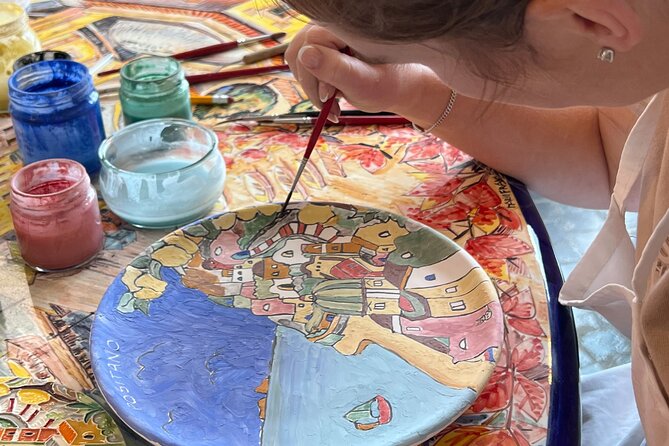
One reason this class works even for people who usually skip craft tours: it mixes technique with atmosphere. You taste local limoncello as part of the workshop. That adds a relaxed pause in the middle of the lesson, and it makes the studio feel more like a place where locals actually spend time.
I also like that the workshop is in one of their stores in Positano, described as overlooking the sea. That matters for motivation. When you can look out and see the coast between steps of your project, you end up more engaged. You are not trapped in a windowless room for two hours.
Your job as a participant is simple: follow along, decorate your object, and enjoy the process. If you are the type who likes learning by doing, this fits.
You can also read our reviews of more tours and experiences in Positano



Kiln firing at 950°C: what happens after you leave
Here is the most important part to plan for: you do not leave with a fully finished ceramic in hand. After you decorate your piece, it is carefully placed in a special kiln. The work is slowly brought to a temperature of 950°C.
That kiln step is what turns your decorated ceramic into a real finished souvenir. It is also why the class includes the next service: shipment.
They take care of the shipment of the object after cooking. That is a huge practical win. Instead of trying to transport a fragile item through Positano streets and onto buses or planes, you get your souvenir later, handled properly.
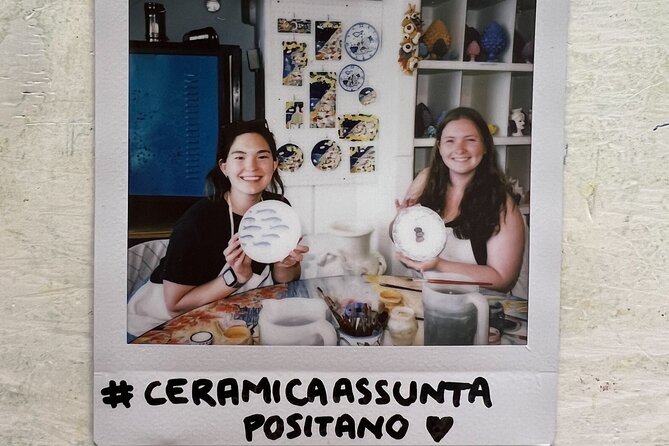
You also get a nice souvenir photo as part of the experience. That photo is a smart backup keepsake if you are picturing yourself carrying around a piece you have not picked up yet. It helps you remember the process—and it means you do not have to worry about the timing mismatch between decorating and receiving the finished ceramic.
Price and value: is $242.93 worth it?
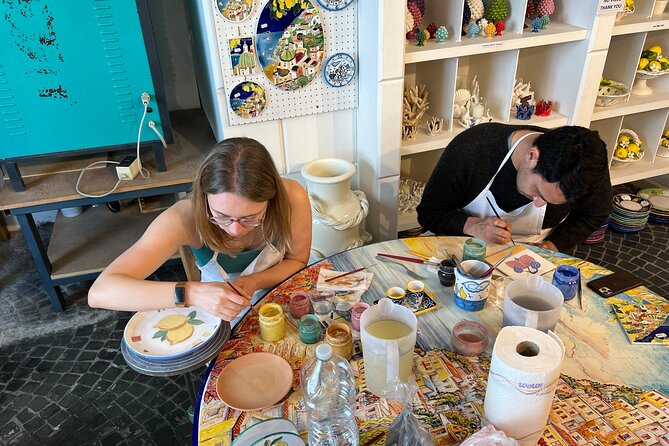
At $242.93 per person for about 2 hours, this is not a cheap “do it yourself” activity. But the value comes from what is included, not from the clock.
You are paying for:
- instruction in the majolica technique
- materials for the object
- kiln firing, including careful cooking to about 950°C
- limoncello included in the workshop
- a souvenir photo
- shipping of your finished piece after cooking
When you compare it to paying separately for art classes, then adding firing fees, then handling shipping, the price starts to make more sense. In short: you are buying the whole craft process, not just the decorating time.
Also, the small group size (max 8 travelers) helps the value feel less like mass tourism. It is easier to ask questions and get help while you work.
If you are a budget traveler hunting for free views and low-cost activities, this might feel steep. But if you want a meaningful ceramic keepsake and you like the idea of a local technique turned into something you can actually own, it is a reasonable package.
Who should book this workshop, and who might skip it
This ceramic class is a good match if you:
- want a hands-on souvenir tied to Amalfi Coast tradition
- like learning a specific technique, not just doing a quick painting session
- prefer experiences where your finished item is handled for you (shipping is included)
- enjoy small-group settings (this one caps at 8)
You might consider skipping if:
- you need a souvenir you can take home the same day
- you are not interested in the craft process and would rather do sightseeing only
The best part is that the class covers enough basics to make it accessible, while still treating the ceramic work as real work—by an artist and in an actual kiln-driven process.
FAQ
How long is the ceramic class in Positano?
The workshop lasts about 2 hours.
What does the price include?
The experience includes the lesson, materials, a limoncello tasting, a souvenir photo, and shipment of your ceramic piece after cooking.
Do I get my ceramic piece the same day?
The piece is fired in a kiln after the class, and the shipment is handled after cooking. That means you should plan on receiving it later rather than right away.
What is the temperature used for firing?
Your decorated ceramic is fired in a kiln and slowly brought to 950°C.
Where do we meet for the class?
You meet at Viale Pasitea, 202, 84017 Positano SA, Italy.
How many people are in the group?
The class has a maximum of 8 travelers.
Is there a limoncello tasting?
Yes. A taste of local limoncello is included in the experience.
What is the cancellation policy?
You can cancel for a full refund if you cancel at least 24 hours before the experience’s start time. Free cancellation is available, and cut-off times are based on local time.
Should you book the ceramic class in Positano?
If you want one truly personal Amalfi Coast souvenir, I think this is a strong yes. You get more than decoration time. You get instruction in majolica, a real studio approach, kiln firing to 950°C, and the practical benefit of shipping plus a souvenir photo.
Book it if ceramic arts and hands-on making sound like your kind of vacation afternoon. Skip it only if you must leave with the finished object in your hands the same day.