REVIEW · POMPEII
Pompeii PRIVATE TOUR With Locals: Ticket & Guide Included
Book on Viator →Operated by Withlocals · Bookable on Viator
Pompeii can overwhelm you quickly. This private Pompeii tour with locals includes fast-track tickets and a guide who focuses on the Forum and the Teatro Grande, so you spend less time fighting the crowds.
I love that it stays private for just your group, with the host shaping the walk to fit your pace. I also like that hosts such as Noami are praised for slowing down when someone needs an easier rhythm, which makes the site feel doable.
One consideration: with only about 2 hours, this is a highlights plan, not a full, every-corner exploration of Pompeii.
In This Review
- Key things that make this tour work
- Private Pompeii: why the highlights feel easier in 2 hours
- Getting into Pompeii fast: tickets, meeting point, and smart start
- Foro de Pompeya: where trade met politics
- Teatro Grande: Roman entertainment from the late Republican era
- A flexible route: that third stop depends on your host
- What “private” really buys you at Pompeii
- Price and value: is $202.34 per person worth it?
- Who this tour fits best (and who might prefer something else)
- Quick planning checklist so you enjoy the walk
- Should you book this private Pompeii tour with locals?
- FAQ
- How long is the Pompeii private tour?
- What stops are included during the tour?
- Is the entrance ticket to Pompeii included?
- Is hotel pickup included?
- Where do we meet the host?
- Can I get a refund if I cancel?
Key things that make this tour work

- Fast-track entrance gets you moving faster than standing in line
- Private guide for your party means questions, pauses, and pacing stay in your control
- Forum + Teatro Grande are the two stops that anchor the tour with major Roman landmarks
- Local hosting style can flex for slower walkers (Noami is specifically mentioned)
- Carbon-neutral experience is included, so you don’t have to think about it later
Private Pompeii: why the highlights feel easier in 2 hours
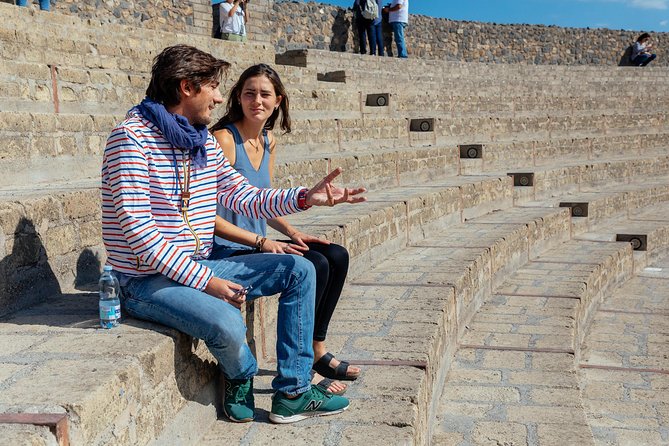
Pompeii is huge, and the crowd flow can feel like a conveyor belt. This tour is built to cut through that problem. Instead of wandering and guessing, you get a local guide who brings the site into focus with a short, high-impact route.
I also like that the tour is genuinely private. That sounds like a marketing line until you imagine the alternative: a big group where you can’t stop for a question, where everyone has to keep the same speed, and where you end up rushing past the details that actually make the stones come alive.
With a 2-hour format, your expectations need to be realistic. You’re not trying to cover every street. You’re seeing the places that best explain how Pompeii worked: public life (the Forum), entertainment and civic identity (the theatre), and the surrounding sense of everyday Roman routine.
You can also read our reviews of more tours and experiences in Pompeii


Getting into Pompeii fast: tickets, meeting point, and smart start
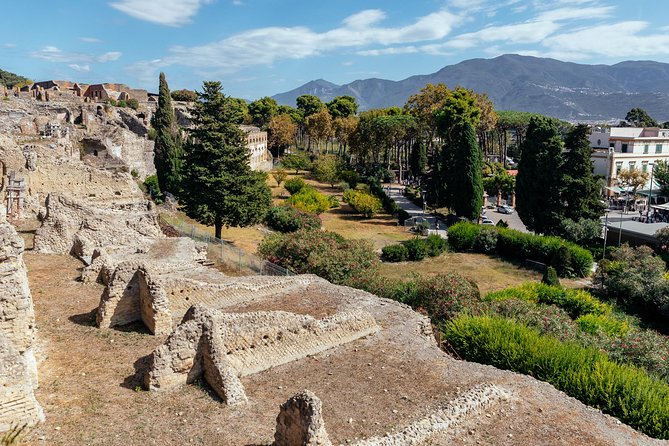
Time matters at Pompeii. The tour includes entrance tickets and uses fast-track entry, so you spend less of your limited time waiting. That’s a big deal when your tour window is around 2 hours.
You’ll meet at Via Villa dei Misteri, 80045 Pompei NA, Italy. The tour begins at the Pompeii entrance—your host will meet you outside the main entrance/exit—and the activity ends back at that same meeting point. There’s no hotel pickup, so you’ll want to plan your arrival so you’re at the entrance area on time.
A practical tip: arrive a touch early, even with fast-track tickets. It gives you a buffer for finding your host and settling shoes, water, and sun protection. Pompeii can be hot and bright, and the stones don’t forgive bad footwear.
Foro de Pompeya: where trade met politics
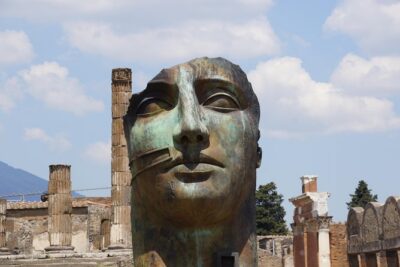
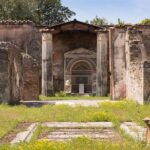
The Foro de Pompeya is the tour’s anchor stop, and for good reason. This was at the heart of the city: a thriving market and trade centre with strong ties to politics. In other words, it wasn’t just where people bought things—it was where power and public life showed up.
Expect your guide to help you connect what you see with how people lived around it. The Forum layout can feel abstract until someone points out how the space functioned in daily routine. You’re looking at a place where conversations, business, and civic decisions all shared the same public stage.
One reason I’d choose the Forum as a first stop is that it sets the tone. You land in a Roman mindset quickly: work, status, public announcements, and the rhythms of a city centered on the forum. Once you understand that, the next stop—an entertainment space—hits differently. It becomes part of the same social world rather than a separate sightseeing item.
Worth paying attention to: how public buildings and open space relate. Even if you’ve seen Pompeii photos before, being guided through the logic of the city makes it feel less like a ruin tour and more like a real town with rules, routines, and roles.
Teatro Grande: Roman entertainment from the late Republican era
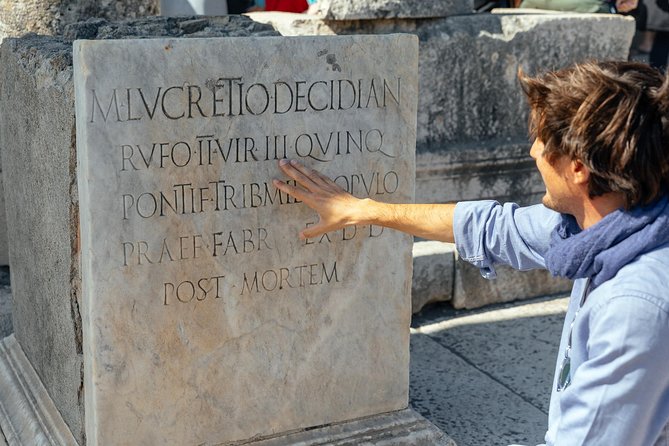
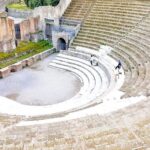
The Teatro Grande is the other major “must-see” in this plan. The theatre was built during the latter part of the Roman Republican era, which helps you understand it in historical context, not just as an impressive structure.
In the theatre, your guide’s job is to translate stone geometry into social meaning. In Roman cities, theatres weren’t only about performances. They were also about identity—public culture, civic pride, and the idea that leisure had a place in everyday life.
This is where a guided visit adds value fast. Without context, a theatre can turn into “nice seating area, big building.” With a host explaining the architecture and era, you start noticing how the space was designed for people to gather, watch, and participate in shared public moments.
The upside of pairing the Forum with the theatre is pacing of understanding. You go from a political-economic public hub to a civic entertainment venue. It’s a clear story arc for a short visit: how Pompeians structured public life, from commerce and politics to performance and assembly.
A flexible route: that third stop depends on your host
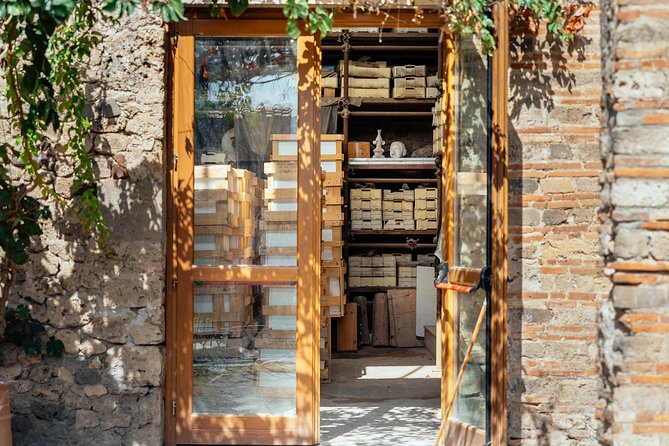
There may be an additional stop depending on the route your host chooses. That means you’re not locked into a rigid checklist where everyone gets the exact same experience down to the minute.
This flexibility can be a plus, especially if you care about specific themes—like daily public activity versus standout architectural remnants. It also helps the guide adjust based on what makes sense on-site (foot traffic, timing, and how your group moves).
When you meet your host, a simple question helps: what’s the plan for the third stop, and how does it connect to what we’ve already seen? A good host will be able to tie it back to Pompeii’s bigger picture without turning the tour into a lecture.
You can also read our reviews of more guided tours in Pompeii




What “private” really buys you at Pompeii
At Pompeii, the difference between group tours and private tours is usually the small stuff. But that small stuff is what makes ruins feel human instead of exhausting.
Here’s what private hosting practically means for you:
- You can slow down without apologizing. Pompeii surfaces, crowds, and sightlines can wear people out quickly.
- You get real-time answers instead of trying to hear over a dozen conversations.
- You can ask for clarifications about what you’re seeing—Forum functions, the theatre’s historical period, and how the site layout connects.
One detail that stands out from the tour’s feedback is the pacing. Noami is specifically mentioned as adjusting to slower walkers in the group. That’s not just kind—it’s strategic. When someone moves more slowly, the entire experience can either become stressful or become comfortable. Here, the approach is built to keep it comfortable.
Also, the tour is described as accessible for most people. That matters because you’re not choosing a “perfect only” route. The walking time is short—about 2 hours—so you can still enjoy Pompeii without turning the trip into a test of stamina.
Price and value: is $202.34 per person worth it?
At $202.34 per person, you’re paying for three things you’d otherwise have to piece together yourself:
- A local private guide
- Entrance tickets to Pompeii
- Fast-track entry, which saves time and stress
If you were to DIY this, you’d still pay the site entry fee, and you’d still have to navigate lines, directions, and the “what am I looking at?” problem. A guide turns Pompeii from a list of sights into an understandable walk. For many people, that translation is the real value.
The carbon-neutral experience is also included. The data doesn’t provide technical details, but it does confirm that it’s part of the package—so you’re not paying extra later or making decisions mid-trip.
Finally, the tour notes group discounts. If you’re traveling with friends or family, that can improve value quickly compared with booking separate guided experiences.
The bottom line: this is a good match if you want high-impact Pompeii in a short window and you prefer a guide-led story over self-navigation.
Who this tour fits best (and who might prefer something else)
This Pompeii private tour is a strong option if you:
- Have limited time and want the Forum and Teatro Grande covered well
- Prefer a calmer pace than large group tours
- Want a local’s context for what you’re seeing in Roman urban life
- Have mixed walking speeds in your group and want the guide to adjust
It may be less ideal if you’re the type who wants to wander for hours, stop wherever you want, and return to every corner of the site. In that case, a longer independent plan could feel better than a tight 2-hour route.
It’s also worth noting the meeting style. You’ll meet the host outside the main entrance/exit of Pompeii, near Via Villa dei Misteri. If you’re expecting hotel pickup, you’ll need to plan your own way to the entrance.
Quick planning checklist so you enjoy the walk
This is the kind of place where small planning moves make a big difference. Keep it simple:
- Wear comfortable shoes with grip. Pompeii paths can be uneven and sun-baked.
- Bring water and a hat or sunscreen. You’ll be outside for part of the visit.
- Give yourself a few minutes to regroup at the meeting point area before your tour starts.
- Think about one question you want answered when you get there (for example, how the Forum connected commerce and politics).
If you go with a short list of what you want from Pompeii—public life, entertainment culture, architecture context—you’ll get more out of the two hours.
Should you book this private Pompeii tour with locals?
I’d book it if you want a guided, private Pompeii experience with fast-track entry and a route that focuses on the big pieces of Roman city life in a short time. The Forum and Teatro Grande pairing is smart because it gives you public politics and civic entertainment in one clean arc.
Skip this tour if you want a full-day plan that covers a wider portion of Pompeii with lots of unstructured wandering. This one is for people who value focus, pacing, and interpretation over sheer quantity of stops.
If you’re traveling with friends or family and you want everyone to enjoy the site without sprinting, this private format is a practical win—especially with hosts like Noami known for pacing the group.
FAQ
How long is the Pompeii private tour?
The tour lasts about 2 hours.
What stops are included during the tour?
The tour includes the Foro de Pompeya and the Teatro Grande. There may also be an additional stop depending on your host’s chosen route.
Is the entrance ticket to Pompeii included?
Yes. Entrance tickets to Pompeii are included in the tour.
Is hotel pickup included?
No. Hotel pickup and drop-off are not included. You meet your host at the entrance of Pompeii.
Where do we meet the host?
You meet outside the main entrance/exit of Pompeii at Via Villa dei Misteri, 80045 Pompei NA, Italy. The tour ends back at the same meeting point.
Can I get a refund if I cancel?
No. This experience is non-refundable and cannot be changed for any reason.