REVIEW · POMPEII
Skip the Line Guided Tour of Pompeii led by an Archaeologist
Book on Viator →Operated by Tours of Pompeii with Lello & Co. · Bookable on Viator
Pompeii clicks into place fast. This archaeologist-led tour gives you an efficient, on-foot circuit through Pompeii’s biggest highlights with skip-the-line entry, so you can spend your time looking instead of waiting.
I especially like the way the guide ties ruins to real daily life, from street scenes to public spaces. I also like that you’re not shuffled through a huge crowd; it’s a small group that keeps the pace comfortable and the explanations clear.
One thing to consider: this is real walking on original streets, typically in hot sun, so bring comfortable shoes and expect a moderate effort level.
In This Review
- Key things to know before you go
- Pompeii with fewer lines: why the skip-the-line part matters
- The meeting point and the real shape of the 2-hour walk
- Stop-by-stop: what you’ll see and why it’s worth your time
- Archaeological Park of Pompeii: the eruption that froze a city
- Via dell’Abbondanza: Pompeii’s main street, seen the Roman way
- The Forum: markets, squares, and Roman public life
- Stabian Baths (Terme Stabiane): more than just ruins
- The Lupanar: the city’s sharper, stranger side
- A final round in the park: tying it all together
- Price and value: what $95.53 buys you (and what it doesn’t)
- Guides make this tour: Lello, Italo, Ana, and the storytelling edge
- Who this tour suits best (and who might rethink it)
- Should you book this Pompeii guided tour?
- FAQ
- What is the duration of the Pompeii skip-the-line guided tour?
- Where does the tour meet, and where does it end?
- Is it offered in English?
- What does the price include?
- Is this a ticket I can use on my own?
- How big is the group?
- What should I wear or bring?
- Is the tour suitable for children?
- Do I need an ID?
- Can I cancel for a refund?
Key things to know before you go
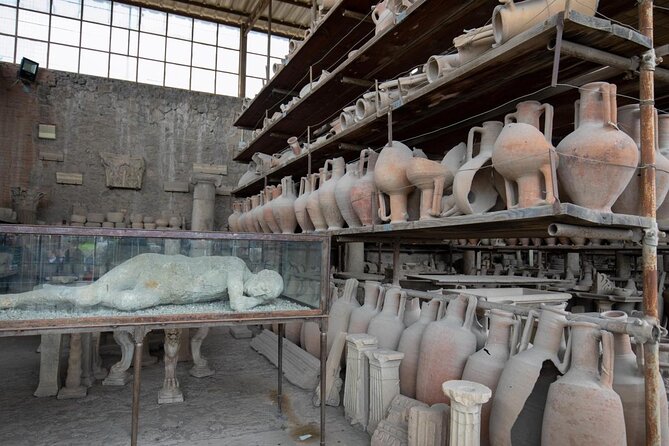
- Skip-the-line entry helps you avoid long waits and start seeing Pompeii sooner
- Small group size (max 15) keeps the tour feel personal and paced
- A tight 2-hour route hits major stops without trying to cover everything
- Archaeologist-led storytelling brings the city’s layout and daily routines to life
- Stabian Baths and the Lupanar add variety beyond the usual “main street” photos
- ID matters for site entry, and being late can mean missing the tour
Pompeii with fewer lines: why the skip-the-line part matters
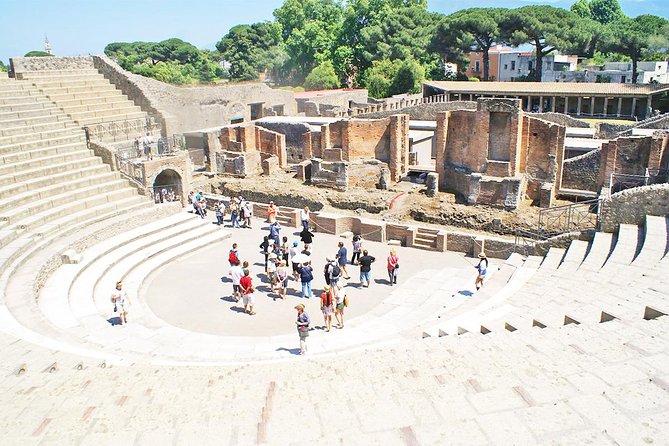
Pompeii is famous for one thing: it’s large, and the crowds can be brutal. If you arrive during a peak window, the difference between waiting at the entry and walking in is the difference between seeing Pompeii with energy—or losing your best hours to queues.
This tour includes skip-the-line tickets described as guaranteed no long waits. In practice, that means you spend more time in the archaeological park and less time stuck with your neck craned toward the entrance. For a place like Pompeii, where the site is spread out and the day can feel long, saving time at the start pays off.
Also, this is a guided tour confirmation, not a standalone ticket you can use without your guide. You’ll still use your tour materials together with the group to enter the areas planned for your route. If you like to roam solo after a tour, you can still do that—but you’ll want to follow your guide’s lead for what’s included in the timing.
Quick practical note: the tour requires IDs matching the names used in your reservation for entry. It’s one of those “paper cuts” that can ruin the morning if you show up with the wrong documents.
You can also read our reviews of more guided tours in Pompeii


The meeting point and the real shape of the 2-hour walk
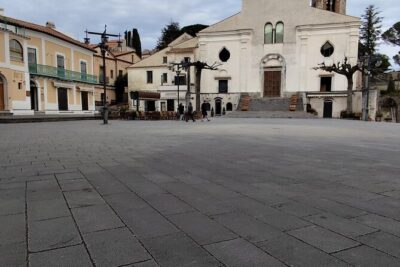
The tour starts at Piazza Esedra, 80045 Pompei NA, Italy, and ends back at the meeting point. Duration is about 2 hours, and the route is built around short segments at key highlights. Each stop is paced to keep momentum without turning it into a sprint.
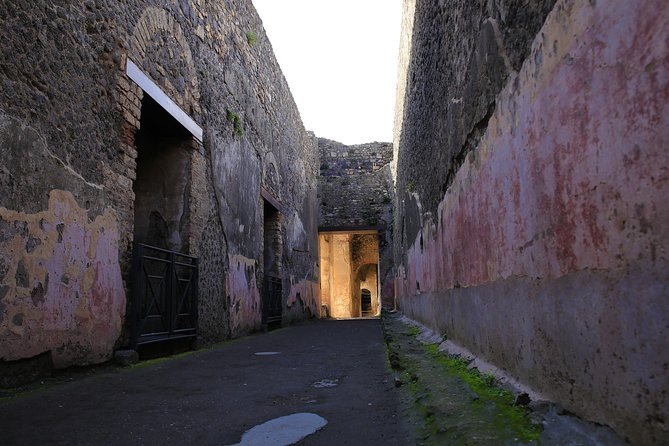
Expect a smart casual dress code, but the real rule is footwear. You’ll be walking on original ancient streets, which means uneven ground and a surface that doesn’t forgive flimsy shoes. I’d treat this as a “good walking day,” not a museum stroll.
This is also set up for people with at least moderate physical fitness. Most of the tour is outdoors. If you’re visiting in peak heat, pace yourself. A smart strategy is to keep your water intake steady and don’t try to “power through” every photo. You’ll get better results by stepping into the guide’s rhythm.
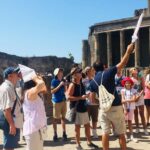
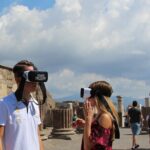
Group size is capped at 15 travelers. That size is big enough to feel like a group, but small enough to get the guide’s attention and keep things moving without the herding feeling you can get in larger tours. One review detail that I think matters: some guides may provide earbuds/headsets so you can hear instructions clearly even when the group is close to other visitors.
Stop-by-stop: what you’ll see and why it’s worth your time
Archaeological Park of Pompeii: the eruption that froze a city
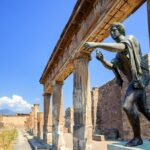
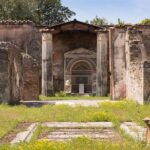
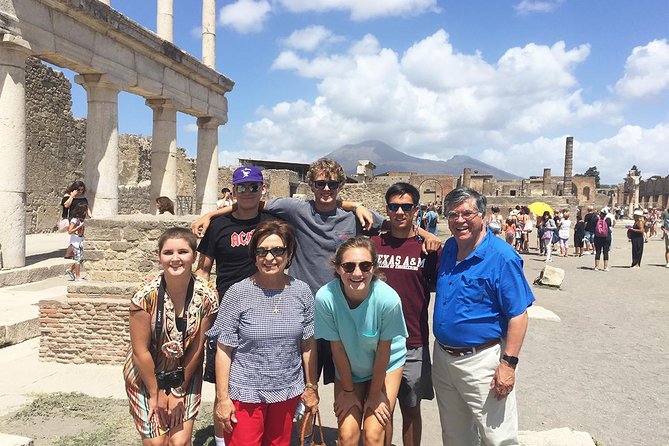
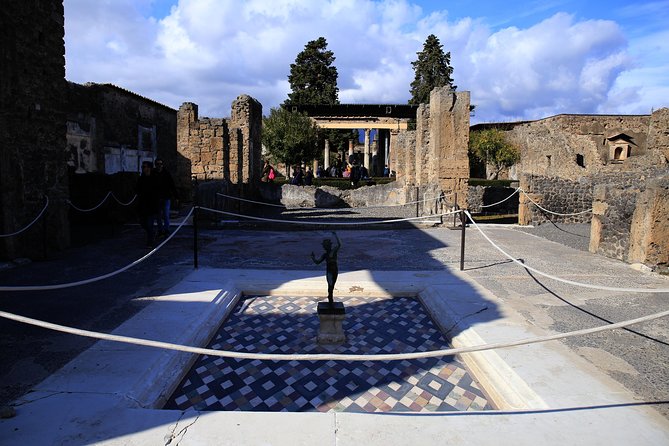
You begin inside the Archaeological Park of Pompeii, a UNESCO World Heritage site. The core idea you’ll hear right away is simple and haunting: Pompeii was a Roman city buried after the eruption of Mount Vesuvius in 79 A.D.
This first segment is where the guide builds the mental map. You’ll learn how Pompeii’s story isn’t just ruins—it’s a snapshot of daily life that survived under ash and pumice. That framing changes how you look at everything else. The longer you stare at doorways, street ruts, and wall markings, the more the city becomes a place people lived in—not just stones you walk past.
The “value move” here is listening first, then observing. If you try to take in everything at once, you’ll feel overwhelmed. If you take in the explanation and then look, you’ll notice details you’d normally miss.
Via dell’Abbondanza: Pompeii’s main street, seen the Roman way
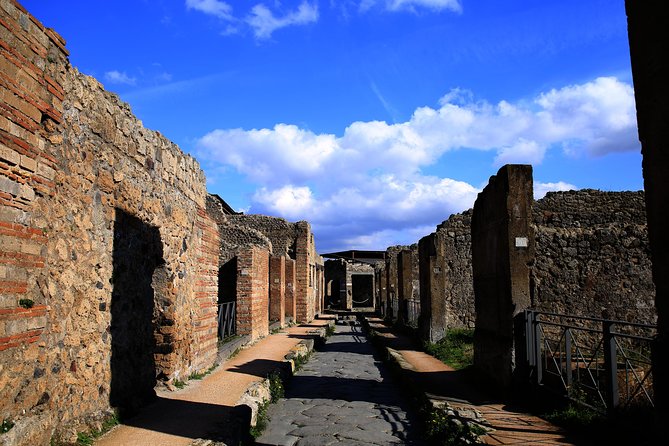
Next you’ll walk along Via dell’Abbondanza, one of Pompeii’s main streets. This isn’t just an iconic road for photos. It’s an easy way to understand how the city worked: streets weren’t empty. They were storefront lines, movement corridors, and public spaces.
The guide helps you read the street like a system. You’ll likely connect things you see—buildings, entrances, street patterns—to how people shopped, worked, and passed through the city. The point isn’t to memorize dates; it’s to recognize how the layout shaped everyday life.
A possible drawback at this stage: it’s still a major walkway, so it can feel busy in places. A small-group format helps here. You’re less likely to get stuck behind a wall of people waiting for someone else to finish a photo.
You can also read our reviews of more tours and experiences in Pompeii




The Forum: markets, squares, and Roman public life
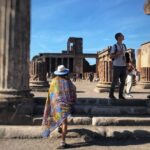
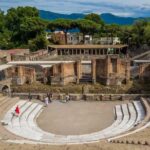
Then you move to the Forum—the main square and the heart of civic life. This is where the tour gets especially practical for your brain. Once you understand the Forum area, you start seeing the city as a grid of decisions: where people gathered, where commerce happened, and where public roles played out.
The Forum stop is designed to help you connect the “street life” you saw on Via dell’Abbondanza to “public life” in the square. You’ll hear how Roman daily routines played out in markets and public spaces, walking through the city’s main arteries to end at the center.
This is also a stage where a good guide can change your experience instantly. The best ones tell stories with a light touch—so you don’t just hear facts, you visualize scenes. In this tour, guides like Lello and Italo are repeatedly praised for that mix of humor, patience, and clarity.
If you want to explore afterward, this is a helpful area to understand. Even if your official time is limited, you’ll know what you’re looking at when you glance back at the Forum map.
Stabian Baths (Terme Stabiane): more than just ruins
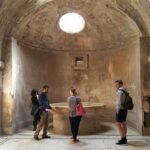
Next comes Stabian Baths (Terme Stabiane), Pompeii’s thermal baths. A lot of visitors expect temples and houses. Baths are a better reminder that Roman life included leisure, routine, and social time.
You’ll see the thermal-bath space and get context for how bathing worked as part of public life. This stop breaks up the “street and square” pattern and adds variety—architecture, movement, and the idea of daily habits that repeated across the city.
Practical note: even though it’s part of the ruins, it can still feel exposed to sun depending on where you stand. If you’re heat-sensitive, this is a good time to take short shade breaks and keep your pace steady.
The Lupanar: the city’s sharper, stranger side
The last highlight is the Lupanar, known for its erotic frescoes. This is the stop that gives Pompeii its reputation for being both fascinating and a little unsettling. The guide’s job here is to place it in context, so it doesn’t become just shock value.
The value is in how the guide helps you see human behavior through everyday spaces. People lived in a world with humor, rules, and taboos—just like today. When a guide explains what you’re looking at, you can appreciate the art and the society without it turning into a one-note stop.
One consideration: if you’re traveling with younger kids or you prefer to avoid sexual content, you may want to prepare them (or decide if you’re comfortable with this particular highlight). The tour does allow kids as long as they’re with an adult, but the Lupanar topic is part of the standard route.
A final round in the park: tying it all together
The route includes additional time back in the Archaeological Park of Pompeii after the main highlights. Think of this as the stage where the guide helps connect the dots between what you’ve seen: street life, civic life, bathing culture, and the more private corners.
Even in a short tour, you can walk away with a clearer sense of how Pompeii is organized. Some guides also take the extra step of helping you understand how to use the onsite layout and map so you can explore a bit more after the tour ends. If yours does this, take advantage of it—it’s the kind of tip that makes the rest of your Pompeii day feel less like wandering and more like purposeful looking.
Price and value: what $95.53 buys you (and what it doesn’t)
At $95.53 per person, you’re paying for three things: an expert archaeological guide, skip-the-line entry, and admission ticket inclusion for the planned stops.
Is it worth it? For Pompeii, the value often comes from the combination, not any single piece. If you go alone, you can absolutely buy entry and walk around. But you’ll spend a lot more time figuring out what you’re looking at, and you may lose time to lines or crowd flow. With a guide, you’re paying to shorten the learning curve—and to keep your time efficient.
Also, the tour’s structure matters. It’s about 2 hours, which is long enough to get real context but short enough to keep the day manageable, especially when Pompeii is hot and walking is constant. If you’re trying to see Pompeii as part of a wider trip around Naples or Vesuvius, this kind of timed route can fit better than a full-day plan.
What you won’t get: private transportation. The experience also doesn’t present itself as a self-guided ticket you can use independently. It’s built as a guided circuit.
Guides make this tour: Lello, Italo, Ana, and the storytelling edge
This kind of tour lives or dies on the guide, and here the pattern is very consistent. Guides such as Lello and Italo are praised for making Pompeii feel like a story with a point—plus a sense of humor that keeps the tour engaging even when walking gets long.
You’ll also benefit if your guide:
- explains how the city layout works, not just what each building is
- keeps the group from getting swallowed by larger crowds
- maintains a pace that doesn’t feel rushed
If you’re the type who worries about wasting time on generic facts, this tour format is designed to reduce that risk. The short stops mean you get targeted explanations tied to what you’re seeing right now.
Who this tour suits best (and who might rethink it)
This Pompeii experience is a strong fit if you want:
- a short, high-impact Pompeii visit
- a guide-led understanding of daily life, not just isolated monuments
- skip-the-line convenience
- a small group feel
It’s also a good choice if you’re traveling with someone who’s curious but not sure where to start—like a friend who’s read about Pompeii but hasn’t built a mental map yet.
You might rethink the tour if:
- you’re extremely sensitive to walking and uneven ground
- you’re traveling during peak heat with low tolerance for outdoor time
- the Lupanar content won’t work for your group
Should you book this Pompeii guided tour?
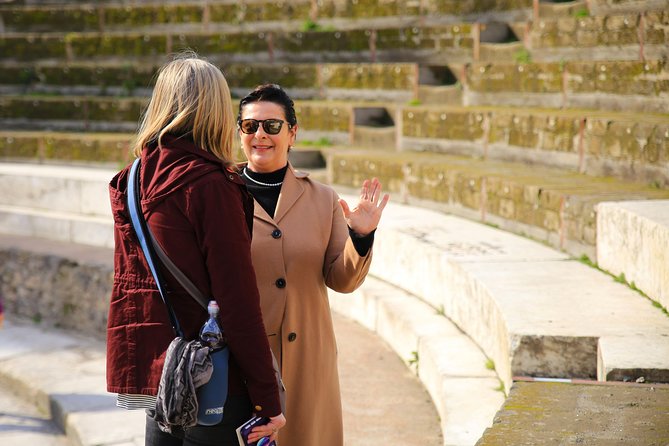
If you want your Pompeii day to feel structured and understandable, I’d book it. The skip-the-line entry plus a small-group pace saves energy, and the archaeologist-led stop plan helps you see more than the obvious photo spots.
I’d especially recommend it if this is your first time in Pompeii or if you’re short on time and need the highlights without guesswork. Just do two things before you go: bring comfortable walking shoes, and arrive early. If local roads or transit slow you down, you can miss the tour with no refund, and that’s not a risk you want to take.
If that sounds like your kind of day—set expectations for a focused 2 hours, then you’ll leave Pompeii knowing what you saw and why.
FAQ
What is the duration of the Pompeii skip-the-line guided tour?
The tour is approximately 2 hours.
Where does the tour meet, and where does it end?
It starts at Piazza Esedra, 80045 Pompei NA, Italy, and ends back at the meeting point.
Is it offered in English?
Yes, the tour is offered in English.
What does the price include?
It includes a professional guide and skip-the-line tickets, and admission is included for the scheduled stops.
Is this a ticket I can use on my own?
No. It’s a guided tour confirmation, and you can use it only with the guide.
How big is the group?
The tour has a maximum of 15 travelers.
What should I wear or bring?
Wear smart casual clothing and plan on comfortable shoes for walking on original ancient streets.
Is the tour suitable for children?
Children must be accompanied by an adult. The tour also notes moderate physical fitness needs, so expect walking.
Do I need an ID?
Yes, IDs are mandatory on the day of the tour, and the names provided during reservation have to match your ID.
Can I cancel for a refund?
Yes. Free cancellation is available up to 24 hours in advance for a full refund.