REVIEW · POMPEII
Explore Pompeii with an Archaeologist
Book on Viator →Operated by Askos Tours · Bookable on Viator
Pompeii hits hard—especially with an archaeologist. This 2-hour walk pairs skip-the-line admission with an English-speaking expert guide, so you get explanations as you move from square to street to house.
I like the small group size (max 20) because questions don’t get swallowed by the crowd. I also like that the route is packed with big Pompeii landmarks—forum, houses, baths—so you can see the essentials fast without guessing.
One possible drawback: Pompeii is still a big, open-air site. Expect lots of walking on uneven ground, and during busy periods you may find it harder to hear at every stop even with audio support.
In This Review
- Quick key points
- Entering Pompeii via Porta Marina Superiore
- Why an archaeologist guide makes the ruins click
- The forum core: Foro, Basilica, granaries, and the Lupanar
- Granular details on everyday streets: Via dell’Abbondanza and the Thermopolium
- Houses that you can read: Menander and the Faun
- Public pleasure and spectacle: Stabian Baths and Teatro Grande
- House of the Vettii: the final showpiece
- Two hours is fast—so plan your energy
- Group dynamics and audio
- Price and value: what $35.67 actually buys
- Who this tour fits best
- Should you book this tour?
- FAQ
- How much does the Pompeii archaeologist tour cost?
- About how long is the tour?
- Is the tour offered in English?
- What’s the maximum group size?
- Where do I meet the guide, and where does the tour end?
- Is Pompeii admission included, and do I get skip-the-line entry?
- Are headsets included?
- What does the tour stop at?
- Is transportation or food included?
- What’s the cancellation window, and are there any rules for minors or pets?
Quick key points
- Skip-the-line admission helps you start faster at Porta Marina Superiore
- Archaeologist-led guidance turns buildings into stories you can actually picture
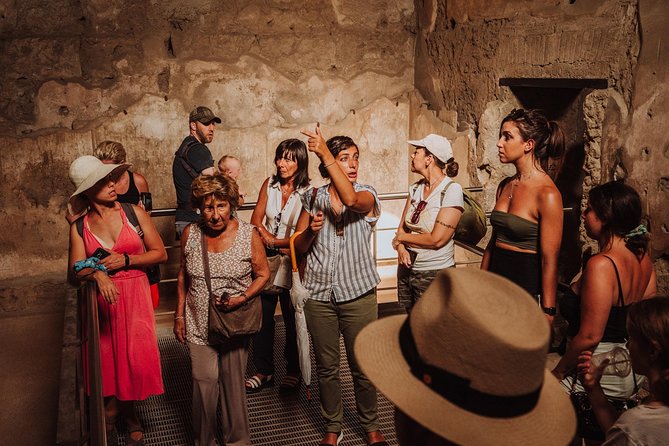
- Small group (20 max) means more chances to ask practical questions
- Headsets for groups of 16+ help you keep up at louder, crowded moments
- Two hours covers a smart route through forum life, home life, and public spaces
Entering Pompeii via Porta Marina Superiore
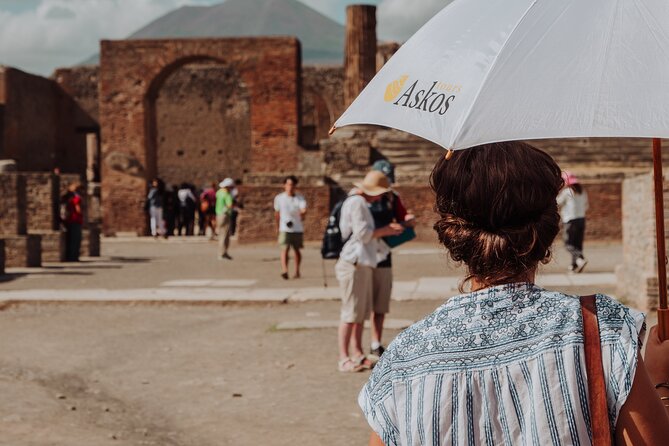
Your tour meets at the main entrance area called Porta Marina Superiore, with the guide holding a sign for Askos Tours. That matters more than it sounds. Pompeii can feel like a maze once you’re inside, and a clear entry point helps you avoid wasting the first part of your time getting your bearings.
You’ll also get an included admission ticket right up front. In practice, that means less time dealing with ticket counters and more time watching the guide work out the site like a map.
Even if you’ve read about Pompeii before, this start usually sets your frame of mind: not ruins as random piles, but a real city with neighborhoods, routines, and rules.
You can also read our reviews of more tours and experiences in Pompeii.


Why an archaeologist guide makes the ruins click
The biggest value here isn’t just seeing famous locations—it’s getting the why behind them. An archaeologist guide can point out how the layout, decoration, and surviving details connect to daily life in a Roman city.
This is also a format that rewards questions. Many guides you might meet are praised for pace and for handling lots of curiosity—names that come up include Mario Celentano, Alexandra, Julia, Diego, Ilaria, Antonio, Rosanna, Teresa, and Sergio. The common thread: you’re not just collecting photos, you’re learning how to read what you’re looking at.
That said, Pompeii is not a museum hallway. You’ll move between stops quickly, so your best chance to ask follow-ups is during the brief pauses at each location.
The forum core: Foro, Basilica, granaries, and the Lupanar
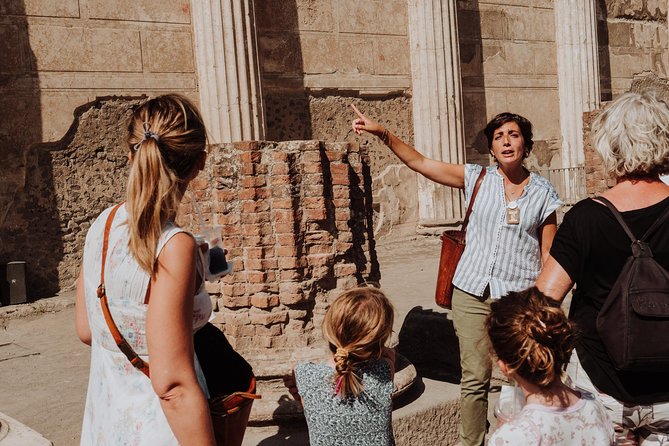
After you settle in, the tour hits the heart of civic Pompeii: the Foro de Pompeya (the main square) and the Basilica (the court house). This combo is smart because it shows you how power worked in street-level Rome. You can usually see why the forum mattered just by standing in the space and hearing how it functioned.
From there, you’ll pass through the granaries of the Forum. Even if grain sounds boring, this stop often lands well because it turns the forum from “pretty square” into “economy and survival.” Food supply was big business.
Then comes Lupanar, the brothel. It’s one of Pompeii’s most talked-about stops, but the point isn’t shock value. With an archaeologist guiding you, it’s easier to understand the building’s purpose, the layout, and what this kind of business says about social life and regulation.
Practical note: the Lupanar can feel emotionally heavy for some people. If you’re sensitive to that kind of topic, ask the guide to frame it historically, not sensationally.
Granular details on everyday streets: Via dell’Abbondanza and the Thermopolium
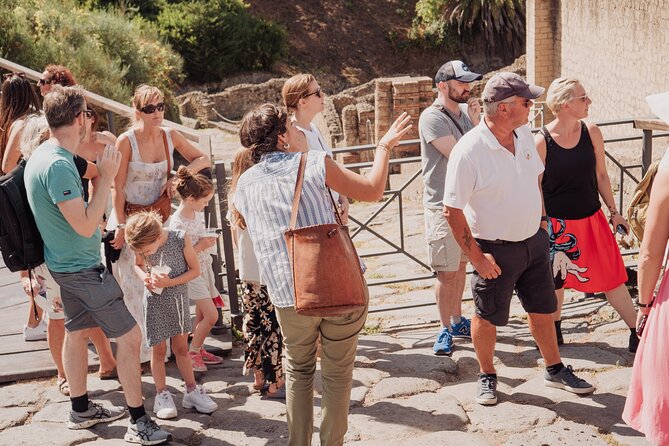
Pompeii doesn’t only run on big monuments. The tour makes sure you see street life too.
Via dell’Abbondanza is one of the best-known streets in the city, and it’s a great place to understand scale. You’re walking the kind of corridor where people moved between neighborhoods, shops, and daily errands. It also helps you connect the earlier forum stops to the rest of the city—because now it’s not just “where officials met,” it’s “how regular life moved.”
A standout contrast follows at Thermopolium VI. A thermopolium is basically a Roman street-side snack and drink place. Seeing one of these is like watching food history in 3D. You can grasp how meals worked for people who weren’t sitting down in a private dining room all day.
If you like travel that includes habits—where people ate, how they gathered, how they passed time—these two stops are the kind you’ll remember when you’re back home.
Houses that you can read: Menander and the Faun
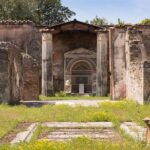
Next, the tour moves into private life with two major homes: the House of Menander and the House of the Faun. These stops help you shift from “city functions” to “household identity.”
What I like about this pair is the variety. Even in a short time, you’ll get a sense of how wealthy Pompeiians used space, art, and layout to display status and personality. The guide’s job here is to help you look beyond surviving walls and notice patterns you might otherwise miss.
For you, the win is pattern recognition. After these houses, you’ll start spotting how Pompeii repeats themes—courtyards, room arrangements, and decorative choices—and you’ll feel more in control of what you’re seeing.

Public pleasure and spectacle: Stabian Baths and Teatro Grande
Stabian Baths (Terme Stabiane) are a strong middle-of-the-tour reset. Baths weren’t just for cleanliness; they were social hubs. You’ll get a clearer picture of how people structured time around public spaces, routines, and conversation.
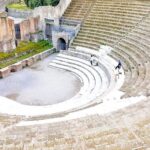
Then the tour heads to Teatro Grande, the theatre. The theatre stop gives you a different angle on Roman culture. Instead of civic decisions or daily routines, you get performance and community gathering. Standing in a space like this makes it easier to imagine what the city sounded like and how people spent evenings.
One small reality check: public buildings can be crowded, and Pompeii can be noisy in peak season. That’s where the included audio support helps when you’re moving with a group.
House of the Vettii: the final showpiece
The tour ends with Casa dei Vettii. This is the sort of place that feels like a reward: a major home where decoration and design help you see Pompeii as lived-in, not just preserved.
I like ending here because it gives you a strong emotional memory. You’ve spent the morning-and-early-afternoon understanding public spaces and streets, then you finish with household detail. It’s the classic travel pattern of city, then life inside.
Also, there’s practical value: after your guided route, you’ll be in the right mindset to keep exploring on your own nearby rather than wandering randomly.
Two hours is fast—so plan your energy
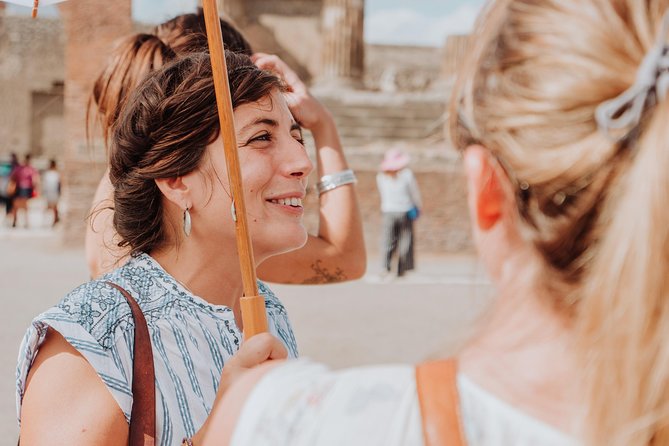
This is a 2-hour experience, and the pacing is built for covering many highlights. That’s great if you want a route that hits the top sights without dragging. It’s also why you should treat the tour as part one of your Pompeii day, not the whole day.
A useful rule of thumb: bring a water bottle and plan for sun. In the summer, people often suggest bringing a fan, and an umbrella or hat can help. Water may be available from fountains, but you’ll feel better if you’re ready from the start.
Also, wear shoes that forgive uneven stone. Pompeii is famous for its terrain, and it can be rough on ankles and knees.
Group dynamics and audio
This tour keeps groups capped at 20 per guide, which is a big deal for Pompeii. Smaller groups mean you can follow the guide’s explanations without constantly losing people.
Headsets are included for groups of 16 or more. Even with that, very busy moments can make it tough to hear perfectly at every stop. If you’re sensitive to noise, aim for a front-of-group position when you can.
Price and value: what $35.67 actually buys
At $35.67 per person, the value here comes from four things you don’t want to manage yourself:
- Skip-the-line entry with the admission ticket handled
- An expert archaeologist guide leading the route and explaining what you see
- A small-group cap, so the tour feels like a guided walk, not a lecture
- Headsets for larger groups, helping you keep up
What’s not included is transportation and food/drinks. So you’ll want to budget those separately.
If you’re the kind of visitor who would otherwise stand in front of a doorway and wonder what you’re looking at, this price starts to make sense quickly. You’re paying for interpretation, not just access.
Who this tour fits best
This works especially well for:
- Families with kids who need explanations that keep moving
- First-time visitors who want a smart highlights route
- People who like asking questions and prefer a smaller group feel
- Anyone who wants Pompeii explained in real time while they walk
If you already have a deep background and want a slow, room-by-room style visit, you might feel the time limit. For that style, a private tour can make more sense. But for most people, this hits the sweet spot: fast, clear, and guided.
Should you book this tour?
I’d book it if you want Pompeii without the guesswork. The combo of skip-the-line admission, archaeologist-led commentary, and a route that covers the forum, street life, major homes, baths, and theatre makes it a strong use of limited time.
I’d think twice if you’re highly noise-sensitive or you want a slow, exhaustive visit. Pompeii is big, and during crowded hours the experience can feel busy no matter what you book. If that’s you, consider a quieter time of day or a more flexible format.
Either way, if you show up rested, hydrated, and ready to walk, you’ll leave with a much clearer sense of how this city worked.
FAQ
How much does the Pompeii archaeologist tour cost?
The price is $35.67 per person.
About how long is the tour?
It runs for about 2 hours.
Is the tour offered in English?
Yes, the tour is offered in English.
What’s the maximum group size?
The tour has a maximum of 20 travelers.
Where do I meet the guide, and where does the tour end?
You meet at Via Villa dei Misteri, 2, 80045 Pompei NA, Italy. The tour ends at Piazza Esedra, 80045 Pompei NA, Italy.
Is Pompeii admission included, and do I get skip-the-line entry?
Yes. Pompeii admission is included, and the tour uses skip-the-line admission tickets.
Are headsets included?
Headsets are included for groups of 16 or more.
What does the tour stop at?
Stops include the Archaeological Park of Pompeii (Porta Marina Superiore meeting point), Foro de Pompeya, the Basilica, Lupanar, Granaries of the Forum, House of Menander, House of the Faun, Stabian Baths (Terme Stabiane), Via dell’Abbondanza (free), Thermopolium VI, Teatro Grande, and Casa dei Vettii.
Is transportation or food included?
No. Transportation and food and drinks are not included.
What’s the cancellation window, and are there any rules for minors or pets?
You can cancel up to 24 hours in advance for a full refund. Service animals are allowed. Only dogs that do not exceed 10 kg and 40 cm height are permitted, and they must be on a leash and held in the arms inside buildings, with excrement collected. Travelers under 18 are advised to bring a passport or ID to qualify for free admission.