REVIEW · POMPEII
Pompeii with an archaeologist, the original!!!
Book on Viator →Operated by Naplesprit · Bookable on Viator
Pompeii clicks when your guide has real excavation experience. This private visit brings you through a major slice of the Pompeii Archaeological Park with an archaeologist who actually did research and field work at the site, not a script.
I love the hands-on archaeologist approach, with explanations tied to how people lived there—houses, daily routines, and the small details you’d miss alone. I also love that the guide experience I’d expect is strong on communication; Valeria is called out for excellent English, plus a fun, clear way of guiding the walk through the ruins.
One thing to plan for: the Pompeii entrance ticket (19€ adults) is not included, so your total cost will be higher than the tour price.
In This Review
- Key highlights you’ll feel fast
- Why Pompeii makes sense with a true archaeologist
- The 2-hour scope: what you’ll realistically cover (and what you won’t)
- Where you’ll start: Ristorante Suisse in Piazza Esedra
- Stop 1: Pompeii Archaeological Park, with daily life at the center
- The typical Roman house: decorations with a purpose
- Shops and street life: business in plain view
- Thermal baths: social space, not just plumbing
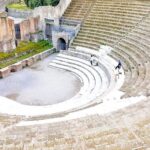
- Theater and public entertainment: civic life in action
- The lupanary: reality of urban nightlife
- Moving molds: understanding production and work
- Afternoon scheduling: heat and crowds, managed on purpose
- What’s included: private, 100% archaeologist-led, plus official support
- Price and value: how $226.89 per group can make sense
- Practical tips so you get the most out of the walk
- Who this Pompeii archaeologist tour is best for
- Should you book? My take on booking this Pompeii experience
- FAQ
- How long is the Pompeii tour?
- How many people are in a group?
- Is the Pompeii entrance fee included?
- Where do we meet for the tour?
- Do I receive a mobile ticket?
- When will I receive confirmation after booking?
- What happens if the weather is bad?
- Are service animals allowed?
Key highlights you’ll feel fast
- Real archaeologist leadership with field credentials tied to Pompeii research work
- Private tour for up to 8 people, so you can ask questions without a big-group shuffle
- A focused 2-hour route through the most important sights you want to understand
- Roman daily life made practical, not just dates and big names
- Afternoon timing designed to reduce heat and crowd pressure, with nice light at day’s end
- Valeria-style communication (clear English, friendly energy)
Why Pompeii makes sense with a true archaeologist
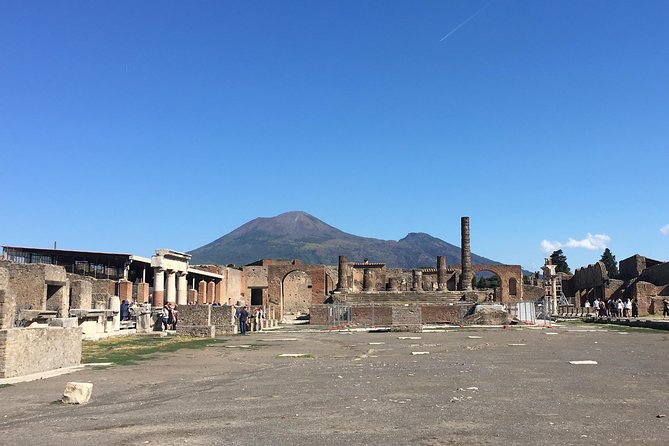
Pompeii can feel overwhelming. It’s a huge site—66 hectares of a Roman city that was buried by Vesuvius in 79 AD—and it’s easy to wander from one ruin to the next without knowing what you’re looking at.
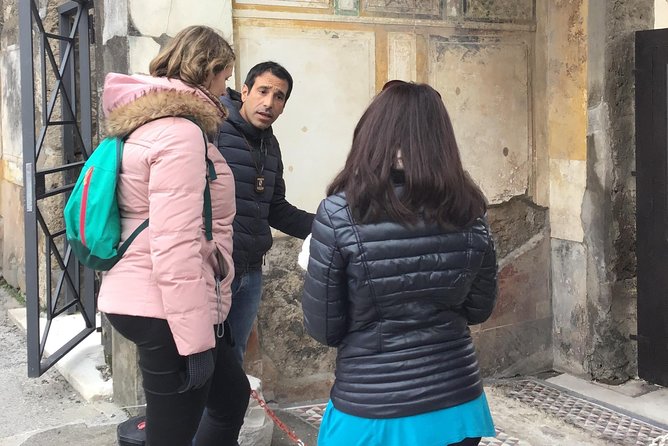
That’s where this tour’s premise matters. You’re not getting a generic walk-through from someone learning on the job. You’re getting an archaeologist (or trusted archaeologist colleagues) who has actually worked with the kind of evidence Pompeii preserves so well: built spaces, layout choices, wear patterns, and material clues that help turn stone and plaster into real human behavior. That changes the whole experience. The city becomes readable.
Another big advantage is structure. Even if you love history, you usually don’t want an entire semester in a two-hour slot. This visit is designed to hit the key buildings and the daily-life angles that connect them—so you leave with a framework, not just photos.
You can also read our reviews of more tours and experiences in Pompeii.



The 2-hour scope: what you’ll realistically cover (and what you won’t)
This is an approximately 2-hour private visit, and it’s important to manage expectations. You won’t see every corner of Pompeii in one go. Instead, you’ll concentrate on the highlights that help you understand how the city functioned.
You can expect a route that includes the kinds of places you actually want to know on your first serious trip:
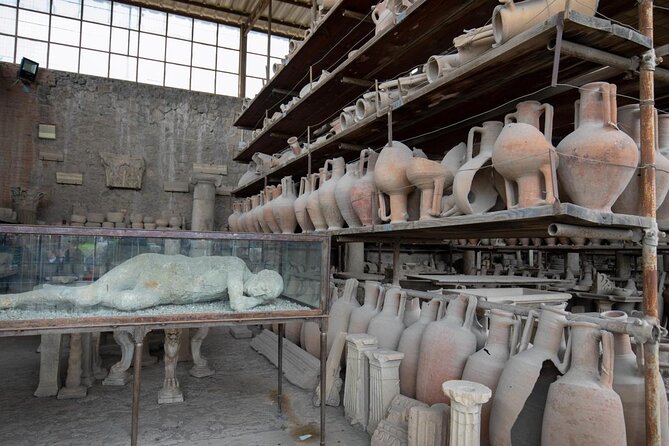
- the typical house with its decorations
- shops (where business happened in a public-facing street world)
- thermal baths (a social space, not just a hygiene stop)
- the theater (community entertainment and civic identity)
- the lupanary (a famously documented part of the city’s nightlife economy)
- the moving molds angle (work and production details tied to what’s preserved)
Because the tour is private and archaeologist-led, the guide can slow down where it counts. If something is confusing—like how decoration connects to status, or why a bath complex tells you about social habits—you’ll have time to ask and get a direct answer.
A drawback to consider: if you want a long, deep survey of the whole park, this time window may feel tight. For many first-timers, that’s actually a plus. You get the essentials without fatigue.
Where you’ll start: Ristorante Suisse in Piazza Esedra
The meeting point is Ristorante Suisse, Piazza Esedra, 10/13, 80045 Pompei NA, Italy. This matters more than people think. Pompeii can be a maze, and being at the right start spot helps you avoid burning your limited tour time just finding your guide.
The tour ends back at the same meeting point. That keeps things simple: you’re not stuck figuring out where to regroup while you’re already tired from walking the park.
Also note the practical side: it’s described as near public transportation. If you’re combining this with other plans in Naples or along the Sorrento line, it’s easier to stitch together your day without complicated transfers.
Stop 1: Pompeii Archaeological Park, with daily life at the center
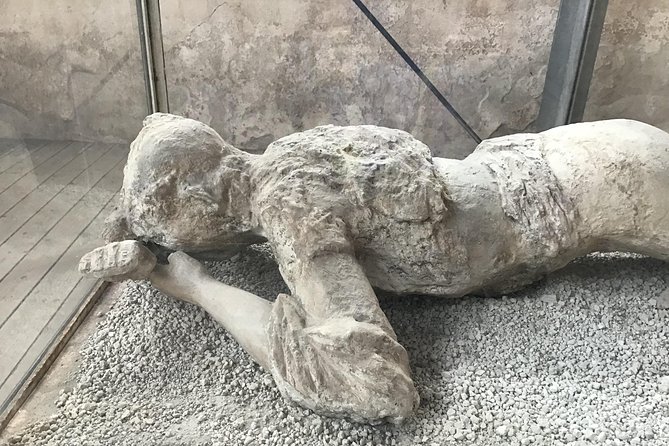
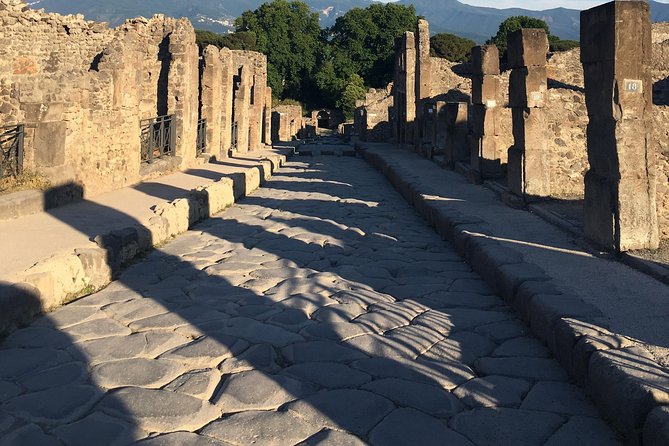
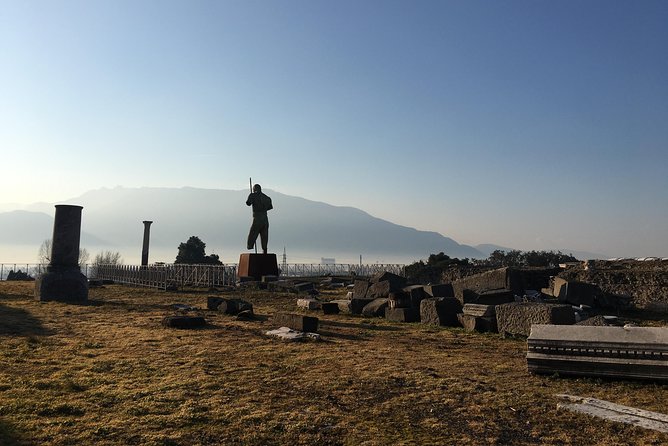
Your main stop is the Pompeii Archaeological Park. You’ll be walking through a Roman city preserved in a freeze-frame by the 79 AD eruption—66 hectares where streets, homes, and public spaces survived long enough to teach modern visitors how Romans organized ordinary life.
Here’s what’s special about the way this tour is framed: it doesn’t treat Pompeii like a museum of isolated objects. The visit connects places to habits and routines. So instead of only asking What is this building? you also start asking What did people do here every week? Who used it? How did it fit into the city’s rhythm?
The typical Roman house: decorations with a purpose
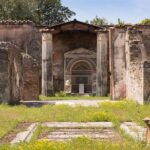
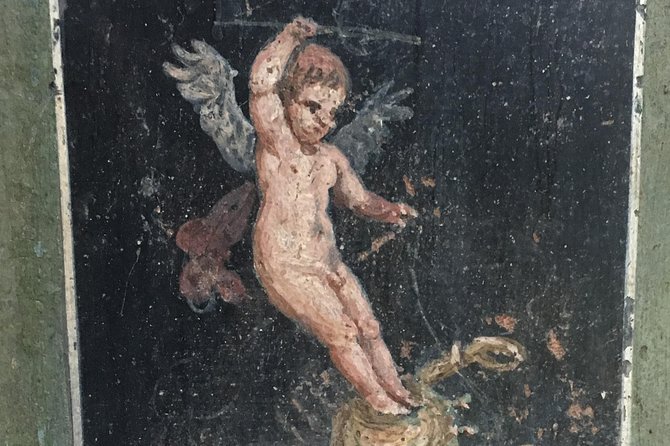
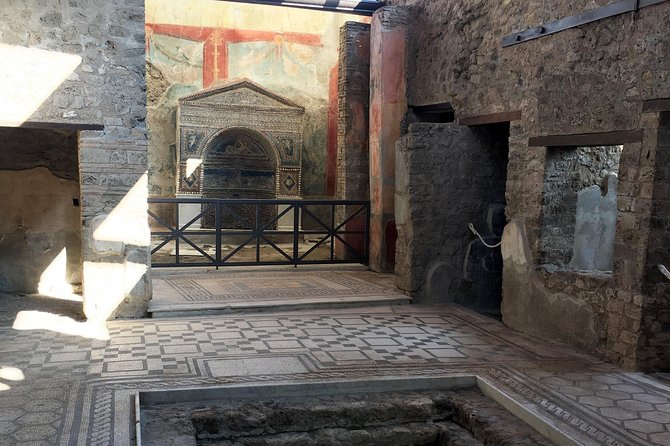
A house at Pompeii isn’t just a floor plan. The guide focuses on the house with its decorations, which helps you understand home life as a statement of identity. You start noticing how space and decoration worked together—showing taste, status, and how people wanted to be seen, even in domestic settings.
If you’ve ever looked at a ruin and wondered why it’s so decorated, this kind of explanation is exactly what you need.

Shops and street life: business in plain view
Pompeii is packed with evidence of public-facing work. When the tour moves through the shops, the point isn’t only commerce as an abstract idea. You’re looking at the city as a working place—where visitors and locals met, where goods were displayed, and where daily transactions were part of normal life.
A guide who knows Pompeii well can help you connect what you see in the surviving spaces to how those spaces likely functioned. That’s the difference between seeing a storefront and understanding a street.
Thermal baths: social space, not just plumbing
Thermal baths are one of Pompeii’s most valuable teaching sites. When you visit them with an archaeologist, you’ll get beyond the basics and into the social logic of bath culture—how people used these spaces for interaction as much as cleanliness.
Even if you don’t love ancient engineering, you’ll come away with a better sense of how a Roman city made time for leisure and community.
Theater and public entertainment: civic life in action
The theater isn’t only about performances. It’s about gathering. It’s about shared experience in a public civic space. The guided approach helps you understand the theater’s role as part of city identity, not just as a dramatic ruin.
If you’ve been to modern arenas and theaters, you’ll quickly see the parallel idea: public culture needs architecture. Pompeii shows that in stone.
The lupanary: reality of urban nightlife
The tour includes the lupanary, which gives you a chance to face one of Pompeii’s most discussed, most documented aspects of city nightlife. With a serious archaeologist-led interpretation, you’re more likely to understand context—how it fit into the city and what the evidence suggests about function—rather than just getting scandal. It’s history, not gossip.
Moving molds: understanding production and work
The mention of moving molds is a clue that the guide won’t ignore craft and work. Pompeii isn’t only about where people ate and slept. It’s also about making and producing—how goods were created and how labor left evidence behind.
This is one of the reasons the experience feels different from a standard “here’s the big sights” tour. You’re learning how a city manufactured its normal life.
Afternoon scheduling: heat and crowds, managed on purpose
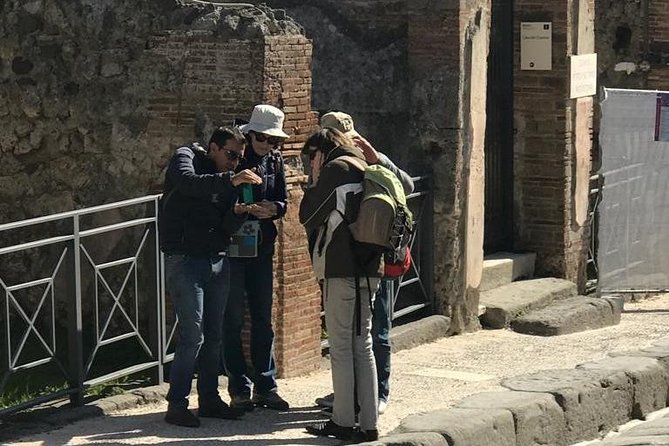
This tour is designed and calibrated for an afternoon slot with the explicit goal of avoiding the worst of heat and crowd pressure. That’s practical wisdom in Pompeii, where the sun can turn a walk into a slog fast.
It also helps that the tour notes the charm of light at the end of the day. Even when you’re not hunting for photos, better light makes it easier to see details in surfaces and textures. You’re more likely to notice signage traces, surface wear, and decoration patterns—things an archaeologist can explain, and you can actually observe.
If you’re someone who gets cranky when it’s too hot, this timing is a real advantage. If you’re a morning person who hates starting later, that’s your trade-off, but the pacing is built for comfort.
What’s included: private, 100% archaeologist-led, plus official support
The inclusions are straightforward:
- Private visit (only your group)
- 100% archaeologist guidance
- Local government guide included
- Mobile ticket
That combination matters. The archaeologist brings the interpretive work—turning ruins into evidence-based explanations. The local government guide adds the official layer, so you’re not only hearing personal theories or travel storytelling.
And because it’s private, you’re not trapped in a slow-moving line. Up to 8 people means you can actually ask follow-up questions when something catches your attention.
The tour lasts about 2 hours, and it’s built around you being able to walk, listen, and process without feeling like you’re rushing from spot to spot.
Price and value: how $226.89 per group can make sense
The price is $226.89 per group (up to 8). That structure can be a great deal if you’re traveling with friends or family. Pompeii tours often get expensive when you pay per person for a higher-end guide. Here, the group pricing can keep costs reasonable when you spread it out across your party.
But do the math with the entrance ticket. Admission isn’t included, and Pompeii’s ticket is listed as:
- 19€ adult
- 3€ for young people 18–24 in the EU
- free for minors
So your total cost becomes: tour price + entrance ticket per person (based on your category). If you’re an adult-only group of four or more, the value typically feels better because you’re paying for a specialized guide experience without multiplying guide fees for every person.
Also consider that you’re getting 2 hours with an archaeologist plus local government guidance. For people who want “the real Pompeii story” instead of a quick highlight route, this tends to outperform cheaper tours that treat Pompeii like a checklist.
Practical tips so you get the most out of the walk
A tour like this is at its best when you walk in with a little flexibility. Pompeii ruins can make your brain jump around—what looks impressive from one angle might be less important than something plain nearby.
To make the most of the archaeologist-led format:
- Wear shoes you trust. Pompeii floors can be uneven and tiring.
- Plan to ask at least one question during the walk. Private guides work best when you steer the focus a bit.
- Bring water and use the afternoon slot to your advantage. The tour is designed to avoid peak heat, but you’re still walking a lot.
And don’t ignore the entrance ticket planning. If you show up without it, you lose time right when the experience is meant to be smooth.
Who this Pompeii archaeologist tour is best for
This fits best if you want more than surface-level sightseeing.
You’ll enjoy it most if you:
- care about archaeology and want explanations tied to real research work
- want a first-time Pompeii visit with a clear structure and key stops
- prefer small-group attention where you can ask questions
- like the idea of daily life—homes, baths, shops, public entertainment, and the city’s working corners
It might be less ideal if you’re trying to cover the entire park in one day or you want a long, self-paced wander. This tour is focused by design, not exhaustive by ambition.
Also, the tour is described as most travelers can participate. If you have strong mobility needs, you’ll want to consider the walking involved, even though the experience is private and managed.
Should you book? My take on booking this Pompeii experience
Book this tour if you want the best shot at understanding Pompeii in a short visit. The archaeologist-led approach is the core value: it turns ruins into evidence and habits instead of turning them into random points on a map.
Also book it if you’re sensitive to heat and crowd stress. The afternoon timing is designed for comfort, and the mention of end-of-day light is a nice bonus for seeing details.
Pass or consider alternatives if you’re trying to keep things ultra-budget and you don’t want to add the entrance ticket. The tour price plus Pompeii admission is still reasonable for the experience, but it’s not a “cheap add-on.”
If you want Pompeii with depth, clarity, and a guide who knows what he or she is talking about, this is a strong choice.
FAQ
How long is the Pompeii tour?
The visit is approximately 2 hours.
How many people are in a group?
It’s priced per group for up to 8 people, and it’s private, so only your group participates.
Is the Pompeii entrance fee included?
No. Entrance fee is listed separately: 19€ for adults, 3€ for young people 18–24 years (EU community), and free for minors.
Where do we meet for the tour?
You meet at Ristorante Suisse, Piazza Esedra, 10/13, 80045 Pompei NA, Italy.
Do I receive a mobile ticket?
Yes, the tour includes a mobile ticket.
When will I receive confirmation after booking?
Confirmation will be received within 48 hours of booking, subject to availability.
What happens if the weather is bad?
This experience requires good weather. If it’s canceled due to poor weather, you’ll be offered a different date or a full refund.
Are service animals allowed?
Yes, service animals are allowed.