REVIEW · POMPEII
Pompeii Skip-the-line Tour with Archaeologist Guide
Book on Viator →Operated by Raphael Tours & Events · Bookable on Viator
Pompeii turns from ruins into real lives. This archaeologist-led skip-the-line walk helps you make sense of what you’re seeing, with expert storytelling about the AD 79 eruption and how Romans actually lived day to day. I love the focus on major places like the forum, theater, and thermal bathhouse, and I like that admission is included so you spend your time inside the excavations, not stuck at paperwork.
One drawback to plan for: it’s a real walking tour on original ancient streets (including lava rock), and you need to meet the guide on time near the entrance or you may miss your start.
In This Review
- Key highlights you’ll feel right away
- Pompeii Skip-the-line With an Archaeologist: the fast way to understand AD 79
- Price and value: what $71.35 buys you in 2 hours
- Getting to Pompeii: Circumvesuviana from Naples or Sorrento
- Meeting at Hotel Vittoria and how the tour keeps you moving
- Walking on lava rock: what your feet will notice
- Forum and civic life: temples, politics, and the gladiator connection
- Theatre, thermal baths, and everyday routines you can actually picture
- Shops, houses, and the Lupanare brothel: street life with uncomfortable honesty
- How the Vesuvius story becomes real when you walk the route
- Who should book this Pompeii archaeologist tour (and who might not)
- Should you book? My practical call
- FAQ
- How long is the Pompeii skip-the-line tour with an archaeologist guide?
- Is the tour offered in English?
- Does this include admission tickets to Pompeii?
- What is the maximum group size?
- Where is the meeting point for the tour?
- How do I get to Pompeii from Naples or Sorrento?
Key highlights you’ll feel right away
- Small group (max 16) means more questions and less rushing.
- Ear sets for hearing your guide help on busy, echoing walkways.
- Admission included, but guided entry only (you use your confirmation with the guide).
- Forum, theater, thermal baths, shops, barracks, and the brothel (Lupanare) cover the big “how people lived” story.
- Mt. Vesuvius explained in context, so the eruption becomes part of the route, not just a lecture.
- You walk on lava rock and cobblestones, so shoe choice matters more than you think.
Pompeii Skip-the-line With an Archaeologist: the fast way to understand AD 79
If you’ve ever walked around Pompeii with no plan, you know how easy it is to miss the point. Buildings and walls are impressive, but they’re also confusing until someone ties them together into a story. This kind of tour works because it answers the questions you didn’t know to ask.
The big advantage is that you’re not just touring “ruins.” You’re walking through an ancient Roman city and learning what each space meant—religion and politics in the forum, entertainment in the theater, daily cleanliness and gossip in the bathhouse, and commercial life along the streets and shop areas. The eruption of Mt. Vesuvius in AD 79 is explained right alongside the places it affected, so you can picture what happened instead of memorizing dates.
I also like the pacing for first-timers: about two hours is long enough to feel the scale, but short enough that you don’t lose your focus in the crowds.
You can also read our reviews of more guided tours in Pompeii


Price and value: what $71.35 buys you in 2 hours
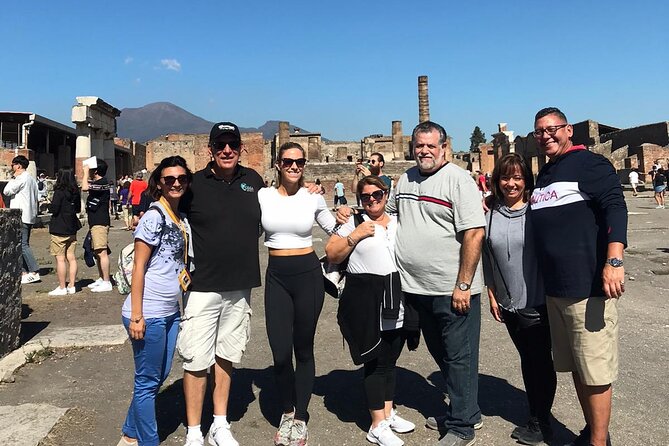
At $71.35 per person for about two hours, the price isn’t “cheap,” but it is usually fair for Pompeii. Here’s why: the tour includes a local guide and admission tickets, so you’re paying for time-saving access plus interpretation from someone who can point out features you would simply walk past.
In practice, that value shows up in three ways:
- You get a structured route through key areas like the forum, theater, and the bathhouse, instead of wandering.
- You’re guided through details such as wagon-wheel ruts carved into the ancient cobblestones—stuff that’s cool, but hard to notice without help.
- You’re more likely to leave with real understanding, not just photos of pretty stones.
If you’re the type who enjoys history, but hates guessing, this is the kind of spending that makes your ticket feel smaller than it is. It costs less than multiple museum-style “ticket plus guide” experiences, and you get a guided walk through the open-air city.
Getting to Pompeii: Circumvesuviana from Naples or Sorrento
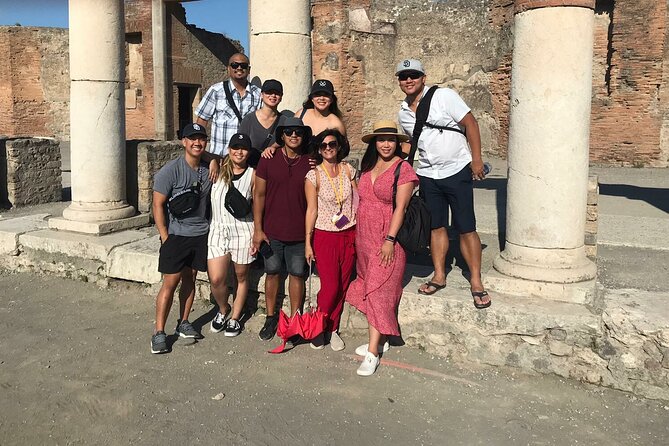
Most people do Pompeii as a day trip, and the easiest move is train. You’ll make your way to the excavation on your own, using the Circumvesuviana train from Naples or Sorrento, getting off at Pompei Scavi.
This matters because it keeps the tour from turning into a long transportation detour. You don’t need a hotel pickup or drop-off, and you can arrive when you’re ready. It also gives you control if you want to grab coffee or reposition yourself to be near the meeting area without stress.
Practical tip: build in extra time for the station-to-site walk. Pompeii is active, and you want to arrive early enough to settle before meeting your guide near the entrance.
Meeting at Hotel Vittoria and how the tour keeps you moving
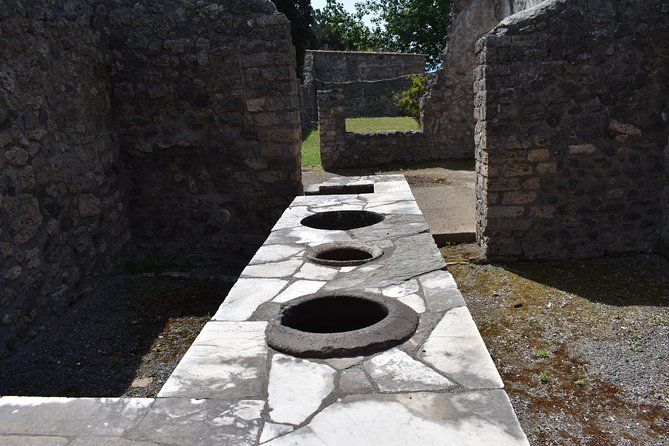
You meet at Hotel Vittoria, Piazza Esedra, 80045 Pompei NA, Italy, and the tour returns to the same meeting point. That simple loop is helpful in an enormous site, where “where do we regroup” can otherwise become a headache.
The guide is meant to get you moving quickly. The tour description calls it skip-the-line, and the real-world value of that is straightforward: less waiting means more time inside the ruins with someone explaining what you’re seeing.
Also pay attention to the meeting timing rule. If you’re late or you miss the tour, there are no refunds, so treat meeting time like a train departure, not a suggestion. If you’re traveling with kids or you’re unsure where the entrance is, arrive early and use the time to orient yourself.
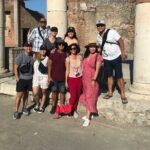
The tour is small—up to 16 people—so you’re less likely to get lost in a giant shuffle. In groups that size, guides can actually pace around questions, humor, and “wait, what is that” moments.
Walking on lava rock: what your feet will notice
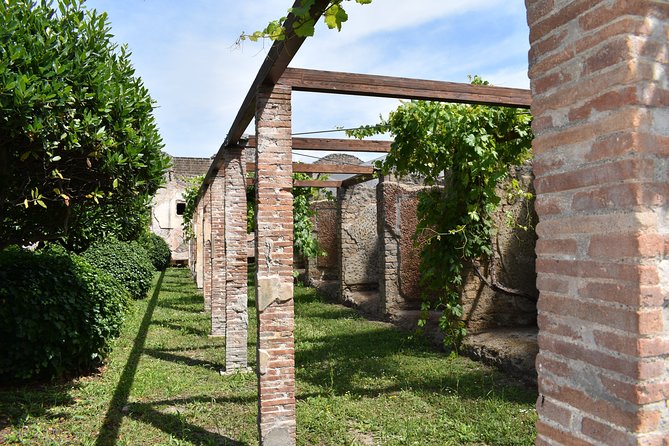
Two hours in Pompeii can sound easy until you’re on the ground. You’ll walk on original ancient streets, including lava rock and worn cobblestones. That means:
- You want comfortable, supportive shoes.
- You should wear a hat if it’s sunny (and bring water if you plan to continue after the tour).
This isn’t about comfort only. Your ability to notice details matters. Pompeii rewards slow attention—wagon-wheel ruts, layout clues in the road, and small architectural elements that show how people moved through the city. When your feet hurt, your brain speeds up. When you’re comfortable, you can actually look.
One more small reality: Pompeii can be busy even with skip-the-line. So the tour’s compact route and good pacing help you avoid the worst bottlenecks.
You can also read our reviews of more tours and experiences in Pompeii



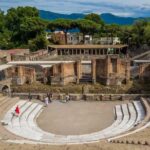


Forum and civic life: temples, politics, and the gladiator connection
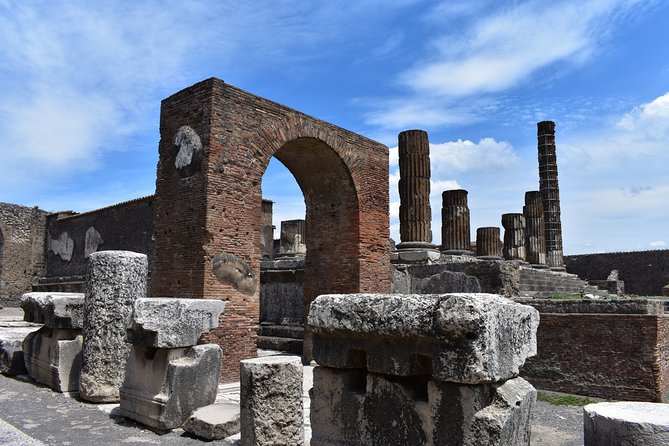
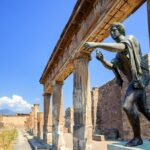
The forum is the heart of Roman public life, and this tour treats it like a “main chapter,” not a passing stop. You’ll walk through the ruins of civic and religious spaces where priests and politicians crossed paths—places where authority was performed as much as it was governed.
You also see the broader public infrastructure that makes the forum feel like a living city, not a historical diagram. The tour includes highlights such as the remains you’d associate with temples and civic buildings, plus stops that explain the city’s daily power structures.
One fascinating addition is the gladiator thread. You’ll visit barracks where gladiators trained and lived, which helps you understand that Roman sport wasn’t separate from politics and public life—it sat right inside it. Even if you don’t care about gladiators, this kind of stop turns the city into a social machine: work, entertainment, and status all connected.
If you tend to gloss over “buildings,” this is where a good guide matters most. Your guide’s job is to point out why this spot matters and what kinds of people likely spent time here.
Theatre, thermal baths, and everyday routines you can actually picture
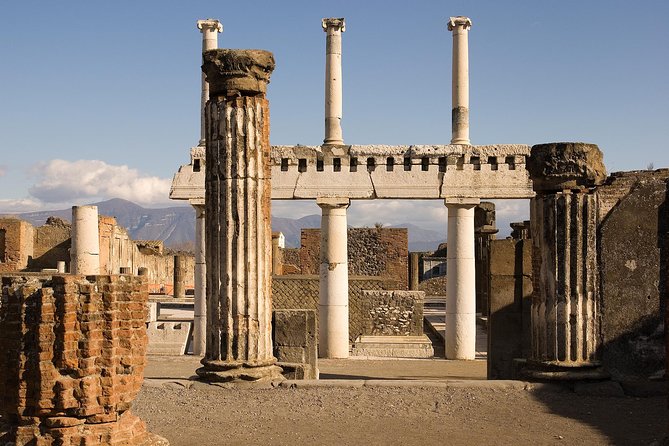
Pompeii is famous for big dramatic stories, but the best parts are often daily routines. This tour leans into that by taking you to:
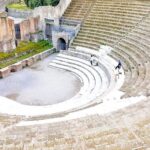
- The theater, where tragedy and comedy once played out to crowds
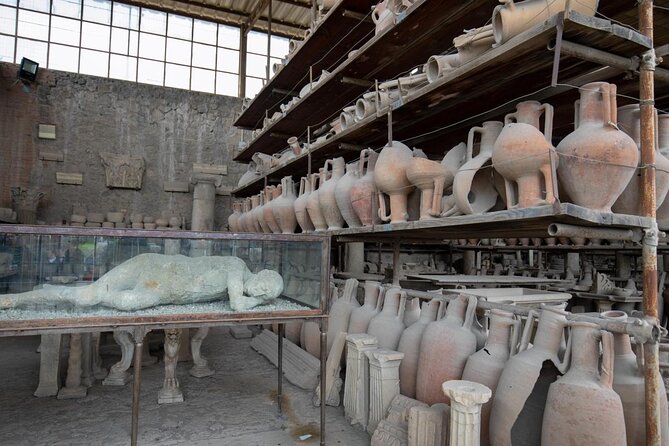
- The thermal bathhouse, where residents went to bathe, exercise, and gossip
These aren’t just impressive structures. They explain Roman leisure. The theater shows entertainment and public performance. The baths show how social life mixed with hygiene and health routines.
One of the smartest benefits of a guided walk is interpretation. Without help, you might see seating or arches and move on. With a guide, you start connecting the layout to behavior: where people gathered, how movement worked, and why the space was important enough to be rebuilt and used constantly.
Your guide also points out smaller commercial and street elements—restaurants, bars, and shops selling food and clothing. That helps you stop thinking of Pompeii as a single storyline and start seeing it as an entire neighborhood economy.
Shops, houses, and the Lupanare brothel: street life with uncomfortable honesty
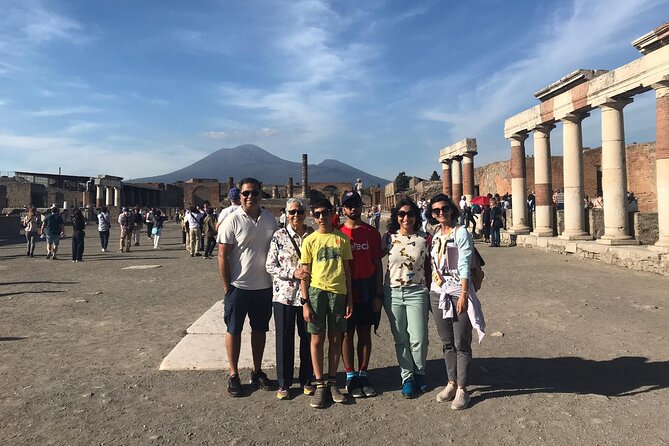
Pompeii doesn’t let you forget that ancient life included sex, crime, and commerce—often in the same street view. This tour includes the Lupanare, Pompeii’s rebuilt brothel, one of the most popular (and most talked-about) attractions.
Seeing it with context is the key. The guide’s role is to frame what you’re looking at as part of everyday Roman street life, not just shock value. It’s a place that tells you how much “public” could be, including sexuality and transactions that modern visitors might find awkward to interpret.
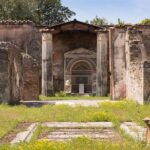
You’ll also hear about other parts of the city’s residential and business patterns, with stops such as the House of Menander and the Gymnasium mentioned among the highlights. Even though you don’t get every detail in a two-hour walk, you do get a sense of how diverse spaces sat side by side—sports, homes, public entertainment, and nightlife.
One small note from on-site behavior: it’s normal to hear reminders to respect the ruins. Pompeii is fragile, and you should expect a guide to emphasize not treating it like a picnic spot.
How the Vesuvius story becomes real when you walk the route
Mt. Vesuvius in AD 79 is the big event behind Pompeii’s survival, but the tour makes it more than a backdrop. You’ll learn what happened when the eruption buried Pompeii and the surrounding area, and you’ll connect the timeline to the city spaces you’re walking through.
That connection is what makes the story stick. Instead of repeating “volcano eruption” like a fact from a textbook, you see how it shaped preservation. You start to understand why Pompeii looks the way it does: why certain areas were frozen in time, and why daily life details survived while the modern world didn’t.
A good guide also adds a human scale. The humor and personality you’ll hear from guides like Lelo, Italo, and Cela (names that have been singled out for energy and storytelling) tend to do the same thing: they make the past feel readable. You still get the facts, but you also get a sense of what it might have felt like to walk those streets before the eruption.
Who should book this Pompeii archaeologist tour (and who might not)
This tour is a strong fit if you want:
- A first-time Pompeii route that hits the forum, theater, bathhouse, and Lupanare
- A guide who can explain what you’re seeing, including details like wagon-wheel ruts in the cobblestones
- A group experience that stays small enough to feel personal (max 16)
It’s also a good choice if you’re traveling with teens who can handle active walking. Kids may like the stories and visuals, especially the theater and the brothel context, while parents often appreciate the clear structure and pacing.
Consider another option if you:
- Hate walking on uneven ground and don’t have supportive shoes
- Want to spend more than two hours at Pompeii, because you’ll finish with time-saving value but not full-site coverage
Should you book? My practical call
I’d book it if your goal is to leave Pompeii understanding the city, not just seeing it. The admission is included, the group is capped at 16, and the tour is built around major places plus the “how people lived” connections—exactly what makes Pompeii click for most first-timers.
If you’re the kind of visitor who loves taking your time and reading every plaque, you could still do this tour and then return on your own later. But don’t plan to do everything in one go. Two hours is tight, and Pompeii is huge.
FAQ
How long is the Pompeii skip-the-line tour with an archaeologist guide?
The tour lasts about 2 hours.
Is the tour offered in English?
Yes, the tour is offered in English.
Does this include admission tickets to Pompeii?
Admission tickets are included with the tour. The confirmation is for using the guided entry with the guide.
What is the maximum group size?
The group size is capped at 16 travelers.
Where is the meeting point for the tour?
The tour meets at Hotel Vittoria, Piazza Esedra, 80045 Pompei NA, Italy, and ends back at the same meeting point.
How do I get to Pompeii from Naples or Sorrento?
Take the Circumvesuviana train from Naples or Sorrento to Pompei Scavi station, then make your way to the guide near the entrance.