REVIEW · POMPEII
Pompeii Virtual Museum Entrance Ticket
Book on Viator →Operated by TOURISTATION · Bookable on Viator
Pompeii feels close when it’s rebuilt in 3D. This ticket lets you virtually walk the ancient Roman streets and get a clear sense of daily life before the eruption. I especially like the 3D reconstructions and the way the show ends with the AD 79 eruption recreation, so you’re not just looking at ruins—you’re getting the story in order.
A big plus is that it’s a smooth supplement to your time at the real archaeological site. The only drawback to keep in mind: this ticket is for the virtual museum experience, and it does not include entry to the Pompeii archaeological area.
In This Review
- A 30-Minute Ticket That Helps You Read Pompeii Faster
- Key Things to Know Before You Go
- Pompeii Recreated in 3D: What This Ticket Really Gives You
- Entering the Experience: What Happens When You Arrive
- The Virtual Walk Through Ancient Streets
- Understanding Day-to-Day Life, Not Just Famous Landmarks
- The Forum, Houses, and a Brothel: Why These Stops Matter
- AD 79 Eruption Recreation: The Moment the Story Locks In
- How to Use This Ticket With Your Pompeii Archaeological Visit
- Price and Value: Is $13.90 Worth 30 Minutes?
- Where It Fits Best: Who Should Book This?
- Practical Tips for a Smooth Visit at Piazza Esedra
- Quick FAQ for the Pompeii Virtual Museum Ticket
- FAQ
- How long is the Pompeii Virtual Museum experience?
- What does the ticket cost?
- Where do I redeem the ticket?
- Is the Pompeii archaeological area ticket included?
- Does the ticket include an audio guide or a guided tour?
- Is Villa dei Misteri included?
- What’s included with the virtual museum ticket?
- What’s the main content of the virtual museum?
- Can I cancel for a full refund?
- Should You Book This Pompeii Virtual Museum Ticket?
A 30-Minute Ticket That Helps You Read Pompeii Faster
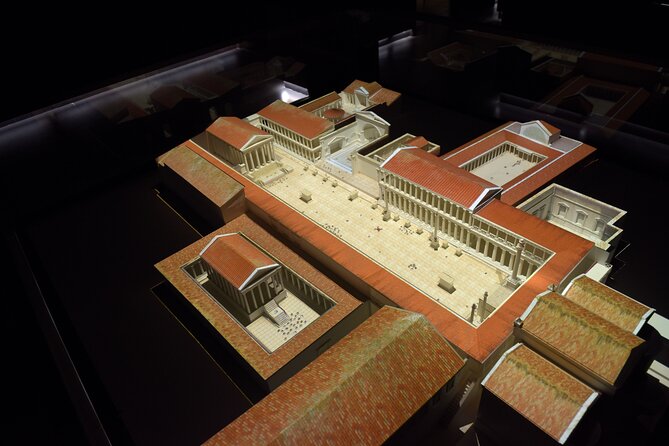
The pace is short on purpose, so you can fit it before or alongside your main Pompeii plans without losing a half day. You’ll also leave with a paper city map and practical help from the Touristation office, including access to WiFi, which makes it easier to plan what you want to see next.
If you’re visiting with kids or teens, this format can be a strong match: it helps turn unfamiliar ancient street layouts into something you can follow and imagine.
Key Things to Know Before You Go
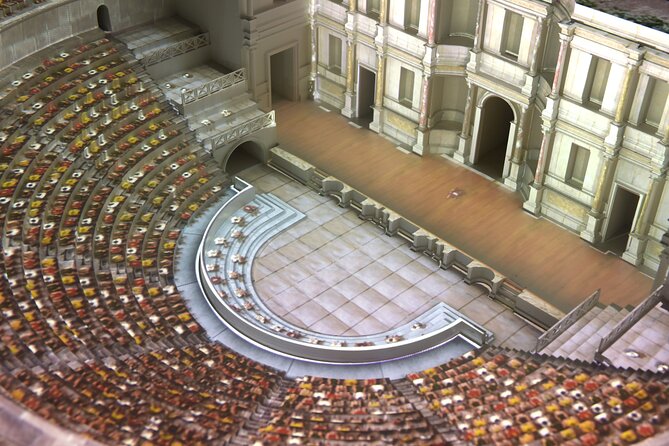
- Virtually walk Pompeii’s streets in 3D, with a before-the-eruption city feel
- See day-to-day life and key public spaces like the forum, plus more intimate areas like homes
- Ends with a full AD 79 eruption recreation, so the destruction has clear context
- You’ll get a paper city map and Touristation support for planning
- It does not include the archaeological park ticket, so you’ll need a separate plan for ruins
- You can get an unusual view from above, which helps you understand the city’s layout
You can also read our reviews of more tours and experiences in Pompeii



Pompeii Recreated in 3D: What This Ticket Really Gives You
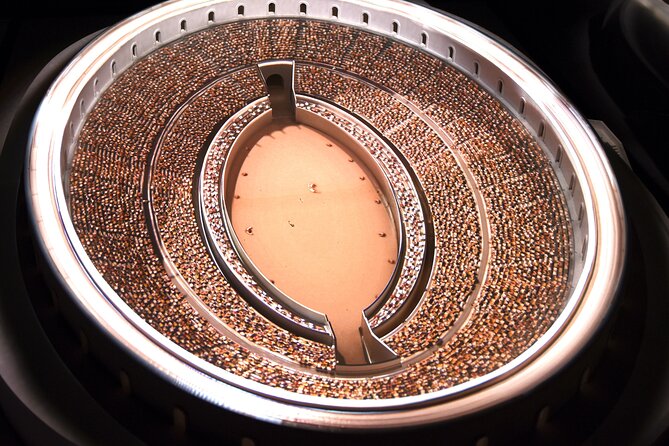
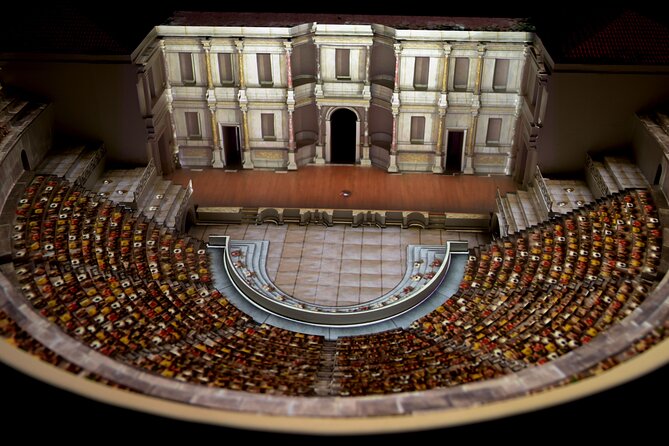
This is a virtual museum experience, not an “on-site museum display” ticket. Your main goal is to see Pompeii as it was, using 3D reconstructions, rather than only seeing the stones and outlines that remain today.
That difference matters. When you arrive at Pompeii archaeological area, you’re suddenly faced with a massive city. Streets, intersections, and buildings can look confusing at first—especially if you haven’t built a mental map. A short 3D introduction helps you start connecting what you’ll later spot in person: where the forum sits, how neighborhoods link up, and what some building types were used for.
Entering the Experience: What Happens When You Arrive
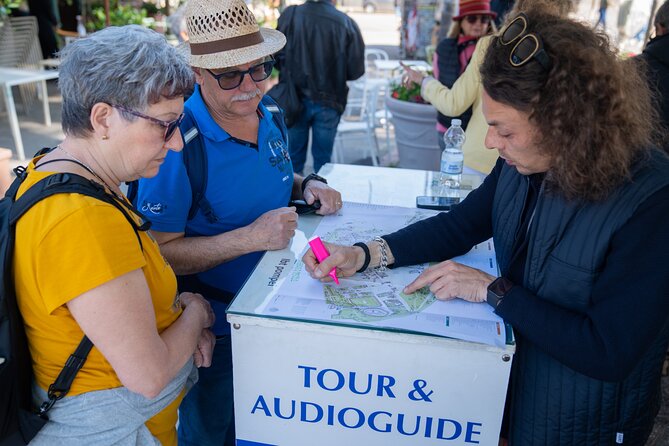
You redeem your ticket at Piazza Esedra, 11, 80045 Pompei NA, Italy. From there, the Touristation office provides assistance and WiFi, and you’ll also receive a paper city map as part of what’s included.
That map isn’t a gimmick. Even though this is a virtual experience, having a physical guide in your hand makes the rest of the day easier. I find it helps you avoid the common mistake of spending your first hour at Pompeii “just orienting,” instead of spotting things you recognize.
And since this is around 30 minutes, you’re not stuck waiting forever for a long group tour. The goal is to get your bearings fast so you can spend your energy where Pompeii is most powerful: the archaeological park itself.
The Virtual Walk Through Ancient Streets
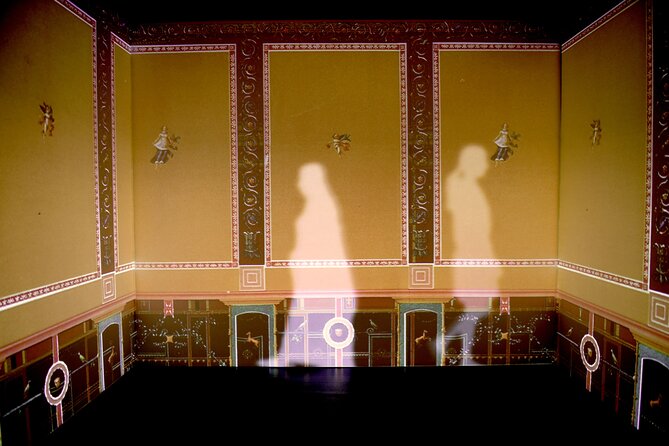
The headline feature is the virtual “walking” concept—basically, you move through Pompeii’s reconstructed streets and spaces in a way that feels more like being inside the city than reading about it.
This is where I think the value lives. Seeing a few famous ruins is one thing. Understanding that those ruins belonged to an organized city—with streets, storefront rhythms, and public spaces—makes the real visit click.
A couple of the most useful outcomes of the virtual walk:
- You start to recognize major structures instead of treating the site like random fragments.
- You get an idea of how wide or packed certain streets would have felt, which changes how you judge scale when you’re standing in the present.
The experience also highlights places that visitors often wonder about in ruins, like the forum and areas associated with everyday city life. You also get a sense of what parts like the houses and brothel would have looked like, which fills in gaps that the archaeological stones alone can’t explain.
Understanding Day-to-Day Life, Not Just Famous Landmarks
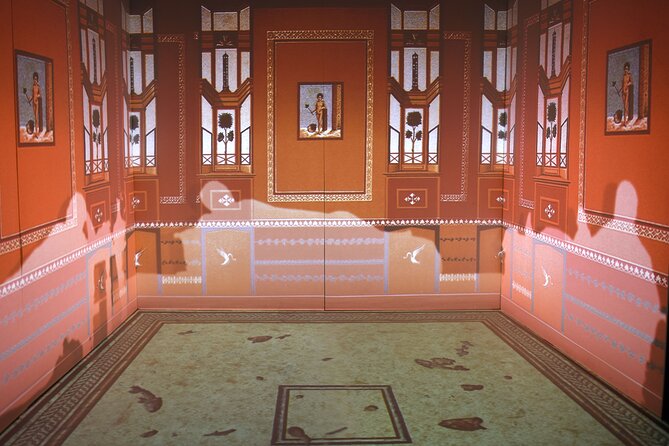
One of the best uses of a virtual introduction is that it makes Pompeii feel inhabited, not frozen. The experience is designed to show what daily life looked like for residents, not only the dramatic end of the story.
That approach helps in two ways:
- You’ll likely understand what you’re looking at in the ruins more quickly.
- You’re less likely to miss the “human scale” details that make Pompeii memorable.
For example, ruins can be visually impressive but still hard to interpret. The moment you see reconstructions of how spaces worked—social spaces, domestic layouts, and recognizable community areas—you’re better prepared to notice those same features when you walk the archaeological streets.
You can also read our reviews of more museum experiences in Pompeii

The Forum, Houses, and a Brothel: Why These Stops Matter
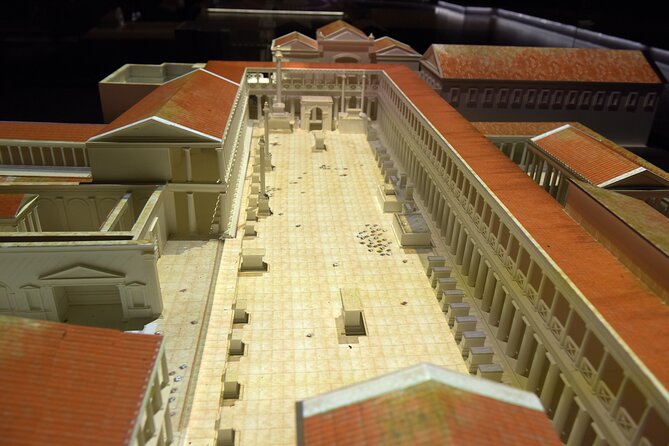
The virtual museum specifically points you toward major building types and social spaces. That’s useful because Pompeii isn’t just one attraction. It’s a full city, and your real visit will feel more coherent if you already know what the forum is and what kinds of private or semi-private spaces existed.
- Forum: In ruins, the forum can look like another square. In a reconstruction, it becomes clearer why it was central to community life.
- Houses: Seeing houses as they would have looked helps you interpret things like room purpose and how people moved within the home.
- Brothel: This can be one of those topics people feel awkward about—but it’s also part of what makes Pompeii historically complete. A virtual view helps without requiring you to guess.
Even if you’re not deeply into Roman history, this focus on everyday city functions gives you context that turns your on-site walking into something more than sightseeing.
AD 79 Eruption Recreation: The Moment the Story Locks In
The final segment recreates the AD 79 eruption, which destroyed Pompeii. This is the part that most helps tie everything together.
Why it works: it puts the city you just explored into a clear timeline. After the eruption recreation, the ruins don’t feel random anymore. You can understand why Pompeii preserves so much—and why the city’s appearance before the disaster matters.
This also tends to land well with younger visitors. They may not care about dates at first, but the story structure makes sense: life in the city, then catastrophe.
Just remember: since this is a 30-minute experience, it’s a guided narrative format, not a deep scholarly lecture. That can be a positive if you want clarity and momentum.
How to Use This Ticket With Your Pompeii Archaeological Visit
This is where your planning pays off. The virtual museum is a supplement, and the main site is separate. The archaeological park ticket for Pompeii is not included, and the virtual experience doesn’t allow entry into the Pompeii archaeological area itself.
So here’s the practical way to think about it:
- Use the virtual museum ticket to prepare your eye.
- Use your separate Pompeii archaeological entry to do the walking and see the real stone details.
If you can schedule it so you’re heading to the ruins right after, you’re likely to get more from the first hour at Pompeii. You’ll have a stronger sense of how large the city is and how it’s organized, not just what the biggest highlights are.
Also note what’s not included: entrance to Villa dei Misteri isn’t part of this ticket. If Villa dei Misteri is on your wish list, plan it as a separate stop with its own access.
Price and Value: Is $13.90 Worth 30 Minutes?
At $13.90 per person, you’re paying for a short, high-impact introduction rather than a full day in a museum. That can be good value if:
- you want a quick way to understand what you’ll see outside
- you’re traveling with kids or teens who need a visual narrative
- you want context without adding hours of guided time
Think of it like this: Pompeii can be overwhelming at first. This ticket buys you an orientation tool. If it helps you enjoy the archaeological park more once you’re there, the cost starts to make sense.
On the other hand, if you already have a strong grasp of Pompeii’s layout—or if you prefer to spend time only on outdoor ruins—this might feel like a “nice-to-have.” Still, the format is short, and the story-driven pace reduces the risk of wasting time.
Where It Fits Best: Who Should Book This?
This works best for people who want structure.
- Families with kids/teens: A virtual tour with reconstructions can help turn abstract ancient life into something you can follow. The show-and-story style is built for engagement.
- First-time Pompeii visitors: If you’re going in cold, you can use this to build a map in your head before you hit the streets of the archaeological park.
- People who like visual context: If you learn by seeing how places looked in their original state, the 3D reconstructions are a clear benefit.
It may be less satisfying if you’re the type who wants lots of time inside a museum or long guided commentary. This is about momentum and comprehension, not hours of deep interpretation.
Practical Tips for a Smooth Visit at Piazza Esedra
A few simple habits make the experience easier:
- Arrive a bit early for ticket redemption at Piazza Esedra, 11.
- Bring the paper map with you and glance at it later when you plan your real Pompeii route.
- If you’re going to the archaeological park afterward, think about your priorities before you start walking—this virtual intro helps, but you still need a plan for time and stamina.
You don’t need to stress about transport location too much because it’s noted as near public transportation. Service animals are allowed, and most travelers can participate, so it’s generally practical for a wide range of visitors.
Quick FAQ for the Pompeii Virtual Museum Ticket
FAQ
How long is the Pompeii Virtual Museum experience?
The experience runs about 30 minutes.
What does the ticket cost?
It costs $13.90 per person.
Where do I redeem the ticket?
You redeem it at Piazza Esedra, 11, 80045 Pompei NA, Italy.
Is the Pompeii archaeological area ticket included?
No. Tickets for the Pompeii archaeological area are not included.
Does the ticket include an audio guide or a guided tour?
No. An audio guide and guided tour are not included.
Is Villa dei Misteri included?
No. Entrance to Villa dei Misteri is not included.
What’s included with the virtual museum ticket?
You get a reserved ticket for the Pompeii Virtual Museum, a paper city map, and assistance at the Touristation Office with WiFi.
What’s the main content of the virtual museum?
You virtually walk through ancient Roman streets with 3D reconstructions, and the experience ends with a recreation of the AD 79 eruption.
Can I cancel for a full refund?
Yes. You can cancel up to 24 hours in advance for a full refund.
Should You Book This Pompeii Virtual Museum Ticket?
If you want Pompeii to feel clearer and more human, I’d book it. For the price and the time—$13.90 for about 30 minutes—the virtual museum acts like a fast orientation layer. You’ll walk into the real archaeological park with a better sense of what spaces were used for, where the forum fits into the city, and why the eruption story matters.
Skip it only if you already know Pompeii well and you’d rather spend every minute outdoors among the ruins. For most first-timers, and especially families with kids or teens, this is a smart, low-risk way to make the rest of your Pompeii day click.