REVIEW · POMPEII
Pompeii and Herculaneum Small Group Tour with an Archaeologist
Book on Viator →Operated by Askos Tours · Bookable on Viator
Pompeii and Herculaneum feel like time travel.
This small-group tour pairs an archaeologist guide with skip-the-line tickets and smart transport so you spend your day looking at Roman daily life instead of maps.
I especially love the structure: two hours in Pompeii to hit the biggest, most telling spots, then a second two hours in Herculaneum for houses and bath buildings that still look shockingly “lived in.” The headsets also make a big difference when the group is moving quickly across wide ruins.
One real consideration: Pompeii is huge, and the guided time there can feel fast—some people want more wandering time on their own, and one guest noted the pace made it hard to soak everything in.
In This Review
- Key highlights at a glance
- Pompeii and Herculaneum in one day, with less guesswork
- Meeting points and how your day starts smoothly
- Pompeii stops that actually teach you how the city worked
- Basilica and Forum: where business happened
- House of Menander and rich domestic life
- Stabian Baths and the social side of Roman routine
- Lupanar and the reality of Roman urban culture
- House of the Faun and the city’s big ambition
- Odeson/Teatro Piccolo and Teatro Grande
- A pacing truth you should know
- Pompeii to Herculaneum transfer: train ride vs minibus flow
- Herculaneum in two hours: why it feels different
- House of the Deer and domus design details
- La Terrazza di M. Nonio Balbo and public patronage
- College of the Augustales and emperor-era identity
- Casa del Rilievo di Telefo and unusual access
- Partem Domus lignea: the wooden partition story
- House of the Skeleton and the eruption’s human cost
- Central Thermae and gendered entrances
- House of the Black Salon: luxury and preserved door details
- Casa Sannitica and frescoed rooms
- Casa del Bel Cortile and an alternative to the atrium
- House of the Grand Portal: the centerpiece feel
- Guides, headsets, and the group size limit that matters
- Price and value: what you’re paying for
- Lunch, pacing, and how to protect your day
- Who should book this Pompeii and Herculaneum tour
- Should you book this Pompeii and Herculaneum small group tour?
- FAQ
- How long is the Pompeii and Herculaneum tour?
- Where do I meet the tour guide?
- How do we travel from Pompeii to Herculaneum?
- Are entrance tickets included?
- Do I skip ticket lines?
- Is lunch included?
- What’s the group size limit?
- Are headsets provided?
- Is the tour suitable for visually impaired guests?
- Can I cancel for free?
Key highlights at a glance
- Skip-the-line entry with Pompeii express tickets and included Herculaneum admission
- Archaeologist-led explanations across major villas, temples, and public buildings
- Headsets for every participant so you can hear even while walking
- Built-in Pompeii → Herculaneum connection: train with the guide (Pompeii start) or minibus (Naples/Rome/Sorrento starts)
- Small group size capped at 20 for an easier pace and better Q&A
Pompeii and Herculaneum in one day, with less guesswork
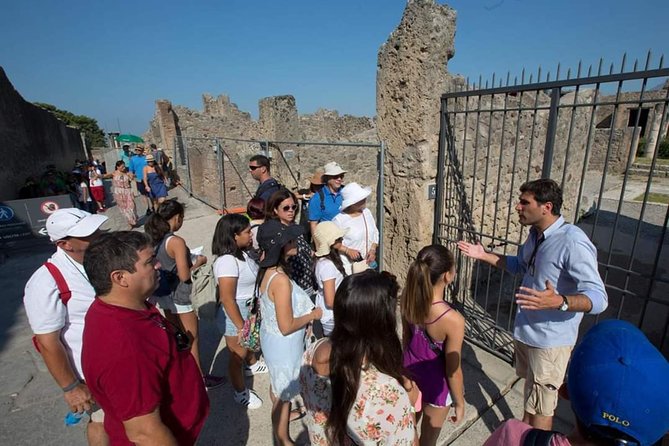
If you’ve ever tried to plan Pompeii solo, you know the problem: you spend energy choosing which street first, which forum corner second, and then the day is gone. This tour trades that stress for an archaeologist’s route, with just enough time at each stop to understand what you’re looking at.
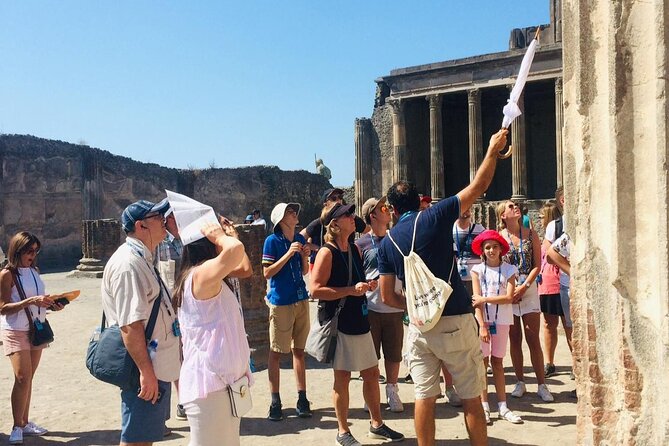
The format matters. You get a real “why” for the big sights—forums, baths, theatres, and domestic spaces—not just what they are, but how they worked in daily Roman life. And because it’s small-group style with headsets, you can keep your eyes on the ruins instead of constantly trying to catch the guide’s voice.
You’re also getting a practical logistics win. The day includes transport between the two sites, either by modern minibus or by the included Circumvesuviana train plus a short walk, depending on where you start.
You can also read our reviews of more tours and experiences in Pompeii.


Meeting points and how your day starts smoothly
Your meeting point depends on your departure option:
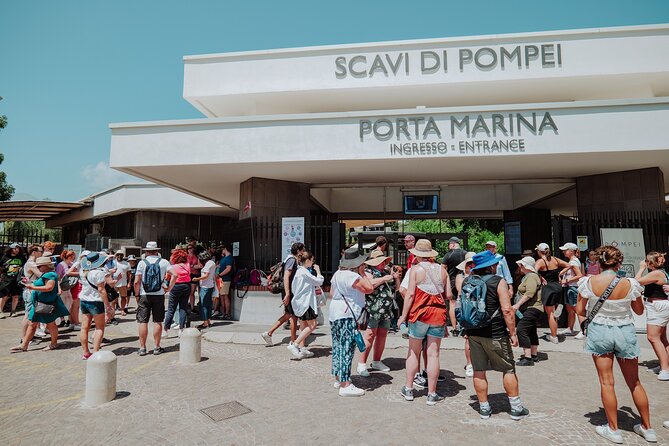
- Pompeii start: Porta Marina Superiore
- Naples and Rome start: Starhotels Terminus
- Sorrento start: Piazza Angelina Lauro
From Naples, Rome, and Sorrento, you’re handled with full-day transport by modern minibus. From Pompeii, you take the included Circumvesuviana train to reach Herculaneum with your tour guide, then connect on foot to the archaeological area.
This matters because the two sites are not “next door.” Even if you’re comfortable with public transit, the day is still packed. Having the transfer built in helps you avoid the common trap: spending half a day routing yourself and then arriving at the ruins tired and late.
Pompeii stops that actually teach you how the city worked
Pompeii is the type of place where a good guide turns ruins into a city you can picture. You don’t need every street to feel the place—what you need is the right mix of public life and private spaces. This tour does that with a tight run through key zones.
Basilica and Forum: where business happened
You start with the Basilica, an open portico space where merchants and other activities took place. It’s not flashy like a theatre, but it’s the kind of setting that explains the city’s rhythm—trade, meetings, and movement through covered areas.
Then you get time at the Forum (main square). Even in a short visit, the Forum gives you a reference point for Pompeii’s civic core. You’ll also walk the main street to connect the “public backbone” of the city to what’s around it.
House of Menander and rich domestic life
The House of Menander shows how wealth expressed itself through architecture and decoration. This is where houses stop being “big buildings” and start becoming statements about taste, status, and daily routine.
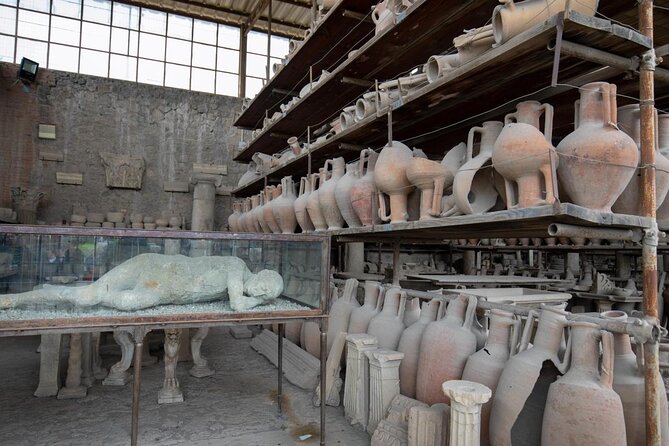
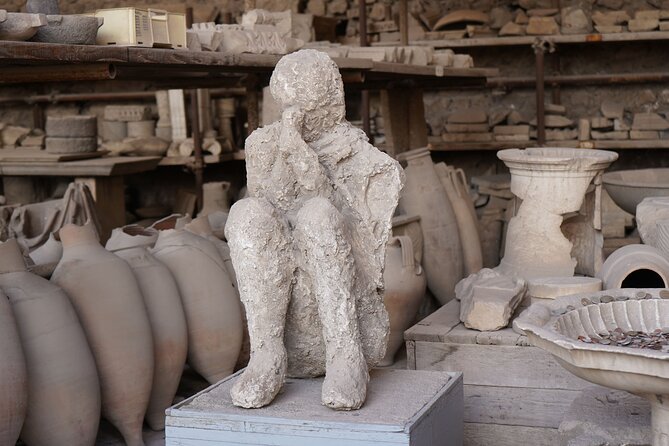
You’ll also see the granaries of the Forum, a useful stop because it reminds you Pompeii wasn’t just decorative. You get marble features connected to fountains and entrances, plus casts linked to the eruption—somber material that gives the scale of what happened.

Stabian Baths and the social side of Roman routine
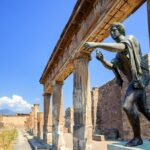
The Stabian Baths (Terme Stabiane) represent a huge thermal complex and are considered the oldest in the city. Baths were central to Roman social life: washing, meeting, and relaxing all in one place. Seeing this area with context is a fast way to understand how “public” even personal routines could be.
Lupanar and the reality of Roman urban culture
At the Lupanar, you visit Pompeii’s best-known brothel. It’s one of those stops where the guide’s framing matters, because without explanation it can feel like a shock-value attraction. With a tour-led explanation, you can connect it to street life and how Romans organized entertainment and commerce.
House of the Faun and the city’s big ambition
The House of the Faun is one of the largest and most impressive private residences. This is the “wow” domestic stop—think scale, design, and what the city’s elite were building.
Odeson/Teatro Piccolo and Teatro Grande
You’ll also see the Odeon (Teatro Piccolo) and then the Teatro Grande, the most important theatre in Pompeii. These stops help you understand how culture and public gatherings were built into the city’s planning.
A pacing truth you should know
The Pompeii portion is about two hours. That’s long enough to grasp major themes, but short if you want to slow down for every mosaic and inscription. If you like to read everything and linger, plan to return someday—or accept that this day is built for overview plus interpretation.
Pompeii to Herculaneum transfer: train ride vs minibus flow
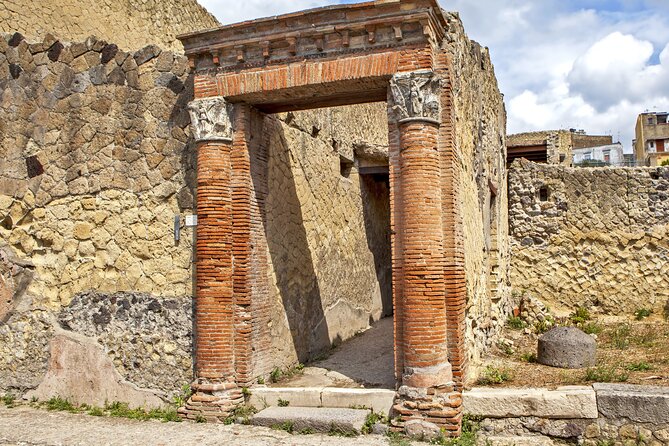
After Pompeii, you get a transfer to Herculaneum. There’s a quick lunch break available before the move, but meals and drinks are not included, so bring your own plan.
Here’s what changes based on your start point:
- Naples, Sorrento, Rome options: you travel with the guide by modern minibus directly to Herculaneum.
- Pompeii option: you use the included Circumvesuviana train ticket (about 30 minutes plus a short 10-minute walk) with your guide.
This is a smart choice. A minibus day keeps things simple if you’re coming from farther away. The train option feels more “local” when you’re starting in Pompeii, and it reduces the stress of figuring out connections on your own.
Herculaneum in two hours: why it feels different
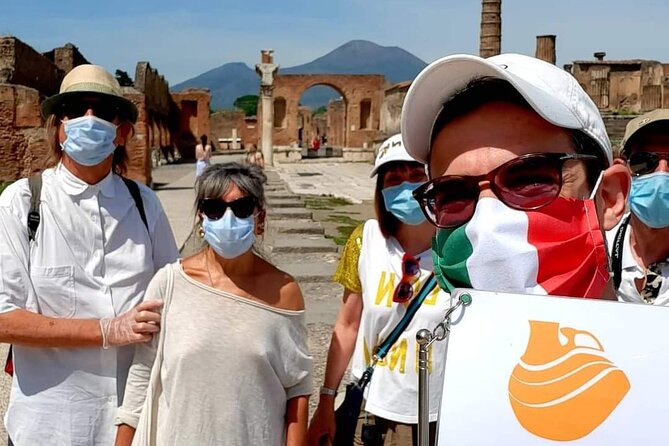
Herculaneum is smaller than Pompeii, and that difference is exactly why it can feel more intimate. Instead of sprinting across the biggest landmarks, you can spend more time with building details and layout.
Once you arrive, the guide leads the group directly to the ticket office. Entry tickets are included, and you’ll access the site either by direct drop-off near the entrance (minibus options) or via a short walk from Ercolano Scavi station (train option).
Then you get about two hours of guided walking through a set of well-chosen houses and public spaces.
House of the Deer and domus design details
The House of the Deer takes its name from marble stags/deer found in the peristyle. Stops like this are great because they explain naming systems—why archaeologists remember places by particular objects or features.
La Terrazza di M. Nonio Balbo and public patronage
At the Terrazza di M. Nonio Balbo, you learn about M. Nonius Balbus, a major benefactor who restored and built public buildings. This is one of the tour’s clever reminders that ancient cities were shaped by individuals funding civic life.
College of the Augustales and emperor-era identity
The College of the Augustales ties the site to the cult of Emperor Augustus and a local religious/political structure tied to the collegium. It’s a quick stop, but it gives you a lens for how Roman identity was performed at the local level.
Casa del Rilievo di Telefo and unusual access
In Casa del Rilievo di Telefo, you may see how one leading benefactor’s home connects in an unusual way, including private access to the adjoining Suburban Thermae to the south. Even if you only catch part of the logic, the point is clear: homes and public amenities weren’t always separate worlds.
Partem Domus lignea: the wooden partition story
The Partem Domus lignea (Casa del Tramezzo di Legno) stop focuses on an important preserved wooden partition. This is the kind of feature that helps you “see” the house as it once worked—Roman life wasn’t frozen in stone, even though much of the surviving evidence is.
House of the Skeleton and the eruption’s human cost
The House of the Skeleton is named for remains found in 1831. It’s a heavy stop, but it fits the bigger picture: these sites preserve not just architecture, but the human outcome of the eruption.
Central Thermae and gendered entrances
At the Central Thermae, you get a clear explanation of how baths were organized, including separate entrances for men and women. That detail turns a bath complex from scenery into a window on social rules.
House of the Black Salon: luxury and preserved door details
The House of the Black Salon is one of Herculaneum’s more luxurious mansions, with a monumental entrance that retains carbonised remains of door elements. This kind of evidence makes Herculaneum feel vivid—like you’re seeing the doorway where something once happened.
Casa Sannitica and frescoed rooms
In Casa Sannitica, the layout reflects typical Samnite patterns, with a splendid atrium and gallery with Ionic columns plus frescoed rooms. It’s a reminder that Roman influence didn’t erase local identity patterns.
Casa del Bel Cortile and an alternative to the atrium
The Casa del Bel Cortile is special for its courtyard and stairway, with a stone balcony instead of an atrium. This is another stop that rewards a guided eye: house layouts can teach you more than individual rooms.
House of the Grand Portal: the centerpiece feel
Finally, the House of the Grand Portal gives you a sense of the overall architectural presence of a central domus—collonnati, fresco fragments, and charred remnants of wooden elements.
Guides, headsets, and the group size limit that matters
This tour is capped at 20 travelers, and that matters more than it sounds. Smaller groups move easier across ruins, and it’s easier for the guide to manage questions without leaving people behind.
The headsets for all participants are another practical win. They let you hear explanations clearly while walking, so you don’t miss details like why a building is named a certain way or how baths and theatres fit into daily routines. One drawback I’d flag: if the pace is fast for your comfort level, even good audio tech won’t make every moment slow down.
On the guide side, the archaeologist leadership is a big part of the value. Past guides you may run into—like Michele, Diego, Tomas, Paulo, Alfredo, Antonio, Vince, Gianni, Amadeo, Paolo, and Mario—show a consistent pattern in style: lots of explaining, plenty of answers, and real passion for how these places worked.
Price and value: what you’re paying for
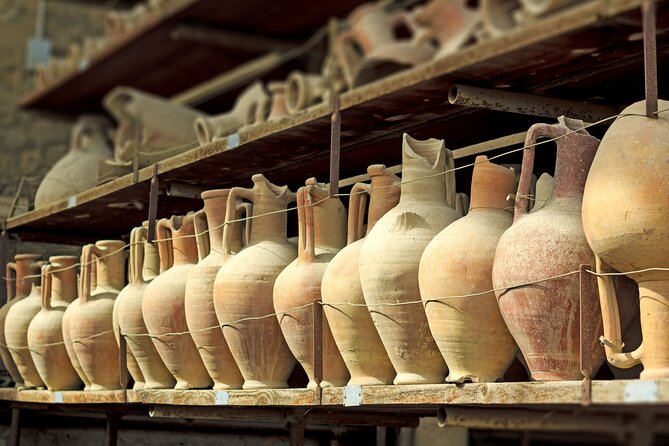
At $77.09 per person, this is not cheap, but you are buying more than access. You’re getting:
- guided time in both ruins
- Herculaneum admission included (listed adult entry is 16 euros)
- Pompeii admission included (listed adult entry is 20 euros)
- skip-the-line entry for Pompeii with Pompeii express tickets
- headsets
- transport between sites (minibus or train, depending on option)
If you price it like a checklist, the included admissions alone add up to about €36 for an adult, before transport and the archaeologist-led guiding. And since both ruins are best experienced with context, the guide component becomes the “reason to choose a tour,” not just the “nice extra.”
The trade-off is time. Pompeii and Herculaneum in one day means you don’t do “everything.” You get the story plus the most important stops, not unlimited wandering.
Lunch, pacing, and how to protect your day
Lunch is not included, but you do get a quick break before the transfer. Some people love having a scheduled break. Others find the lunch stop frustrating because it can shift the vibe away from the ruins.
My practical advice: go in with a plan. If you want to feel fully in the Roman world, consider packing a simple snack or choosing food close to where you stop so you don’t spend your break hunting for options. And if you’re the type who likes to linger over frescoes, accept that this tour is a “highlights plus learning” format, not a “slow museum day.”
Also, do yourself a favor and wear shoes you can handle for lots of walking. Both sites involve uneven surfaces and long stretches between meaningful viewpoints.
Who should book this Pompeii and Herculaneum tour
This tour is best if you want:
- a guided overview that connects buildings to daily life
- two-site efficiency without dealing with ticket lines and transport details
- a day built for learning without getting lost
It’s also a good match for first-timers who don’t want Pompeii to become a map-reading contest. If you already know Roman history and want deep specialization, you might still enjoy it for the structure—but you’ll likely want extra solo time later.
For accessibility: it’s not recommended for visually impaired guests unless accompanied by a dedicated personal assistant. If that applies, this is a key point to consider before booking.
Should you book this Pompeii and Herculaneum small group tour?
If your goal is a smart, story-driven day that covers the biggest Pompeii landmarks and a more detailed sampler of Herculaneum, I think you’ll be happy. The combo of archaeologist guidance, included admission, and headsets is exactly what makes a one-day format work.
I’d book it if you:
- want the main sights without planning stress
- like being able to ask questions as you walk
- value transport support between the two sites
I’d think twice if you:
- hate feeling rushed and want long free time in Pompeii
- prefer to control every minute yourself
- have specific accessibility needs related to vision without a dedicated assistant
If you’re on the fence, pick this as your “first successful visit” ticket. Then plan a second trip—because Pompeii can reward time you take on your own.
FAQ
How long is the Pompeii and Herculaneum tour?
The tour runs about 6 to 11 hours, depending on your departure option and the day’s transfer timing.
Where do I meet the tour guide?
You meet based on your option: Pompeii (Porta Marina Superiore), Naples and Rome (Starhotels Terminus), or Sorrento (Piazza Angelina Lauro).
How do we travel from Pompeii to Herculaneum?
If you start in Pompeii, you use an included Circumvesuviana train ticket (about 30 minutes) plus a short 10-minute walk, with your guide. If you start in Naples, Sorrento, or Rome, you travel by modern minibus with the guide.
Are entrance tickets included?
Yes. Admission tickets for both Pompeii and Herculaneum are included, and Pompeii uses Pompeii express entry tickets.
Do I skip ticket lines?
Yes, the tour is designed to skip the hassle of ticket lines in Pompeii.
Is lunch included?
No. There is a quick lunch break available before the transfer, but meals and drinks are not included.
What’s the group size limit?
The tour has a maximum of 20 travelers.
Are headsets provided?
Yes. Headsets are provided for all participants.
Is the tour suitable for visually impaired guests?
It is not recommended for visually impaired guests unless accompanied by a dedicated personal assistant.
Can I cancel for free?
Yes. Free cancellation is allowed up to 24 hours in advance for a full refund. If you cancel less than 24 hours before, the amount paid is not refunded.