REVIEW · POMPEII ARCHAEOLOGICAL SITE
2-Hour Private Walking Tour of Pompeii
Book on GetYourGuide →Operated by Leisure Italy · Bookable on GetYourGuide
Pompeii hits different when you walk it. This private, skip-the-line Pompeii tour pairs a private guide with a tight 2-hour route through the spots that shaped everyday Roman life. You’ll see the Forum, temples, market areas, bakeries, and even the human casts—frozen in the exact moments of the 79 AD eruption.
What I like most is how concrete the experience feels. You’re not just looking at ruins from a distance—you’ll walk the original road of volcanic basalt and notice details like the little white travertine spots linked to torchlight, plus the raised basalt blocks people used to avoid getting wet in rain. The other big win is the balance: you get religion and politics in the Forum, daily food in Pompeii’s bakeries, and entertainment in the theaters, all within two hours.
One consideration: it’s a walking-focused tour, and it’s listed as not suitable for wheelchair users or people with mobility impairments. Even so, one past group noted a guide was flexible for someone using a wheelchair over longer stretches—so if you’re in a mixed-mobility situation, ask ahead and plan on lots of uneven ground.
In This Review
- Key things I’d circle before you go
- Start at Café Hortus Pompeii and walk straight into Pompeii
- Skip-the-line tickets: what “skip” really buys you
- Two hours in Pompeii: how the route stays focused
- Walking the basalt street like Romans did
- The Forum: where politics, religion, and commerce met
- Pompeii’s bakeries: the Roman fast-food moment
- Human casts: seeing the eruption in a body’s language
- The former Red Light District and its frescoes
- Theaters: choose your kind of performance
- What the small-group guide experience feels like in practice
- Price and value: is $175.22 per person worth it?
- Should you book this Pompeii private walking tour?
- FAQ
- How long is the Pompeii tour?
- Where do I meet the guide?
- Does the tour include skip-the-line tickets?
- What areas can you visit with the skip-the-line tickets?
- Is this a private tour?
- What languages are available?
- What will we see in the Forum area?
- Do you visit bakeries and daily-life sites?
- Will the tour include human casts?
- Is this tour suitable for wheelchair users?
Key things I’d circle before you go
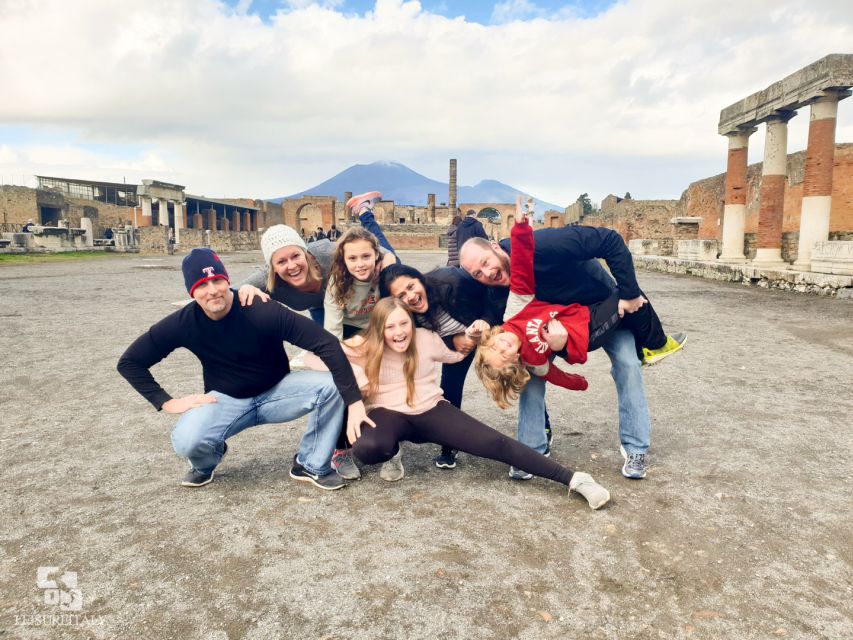
- Original basalt street details: torchlight reflection spots and “walk dry” basalt blocks.
- Forum as the city’s command center: Temple of Apollo, Capitolium, Temple of the Emperor, Basilica.
- Everyday food you can picture: Pompeii bakeries tied to carbonized bread found during excavations.
- The human casts and the shock of timing: poses preserved from the moment of eruption.
- Adults-only Pompeii flavor: the former Red Light District frescoes with erotic imagery.
- Pick one of three theaters: arena-style performances, a theater for mime/poetry, or tragedies/comedy.
Start at Café Hortus Pompeii and walk straight into Pompeii
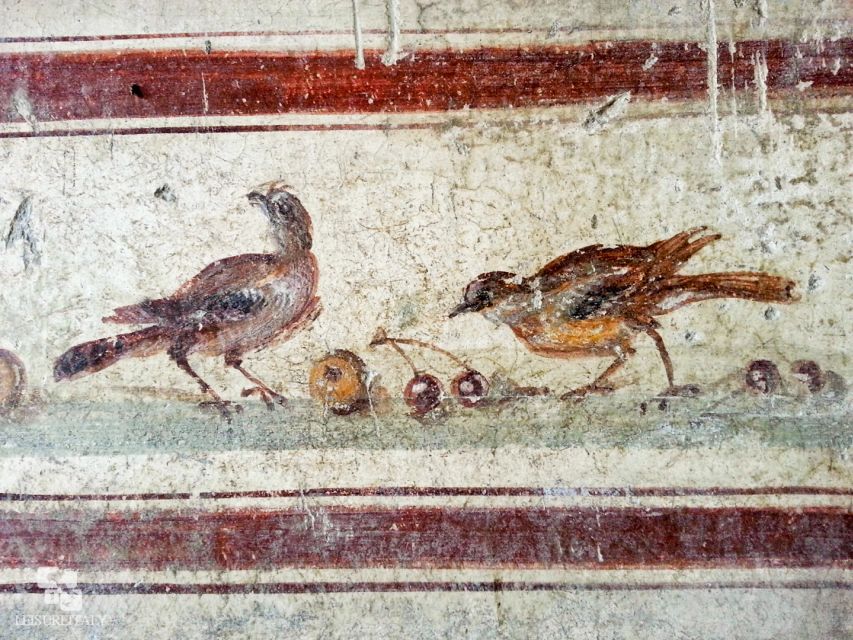
You meet at Café Hortus Pompeii, right in front of the entrance at Via Villa dei Misteri 2, inside the Pompeii Archeological Park area. From the first steps, the tour feels designed for pacing: it’s built around a 2-hour window, so your guide can keep things moving without tossing you into a chaotic self-guided maze.
Because it’s a small-group format with a limit of 10 participants, you don’t get that “follow the leader at arm’s length” feeling. You’ll have enough time to ask questions and adjust the route based on what you care about and your physical comfort level. That flexibility matters at Pompeii, where some areas are easier to navigate than others.
You can also read our reviews of more walking tours in Pompeii Archaeological Site

Skip-the-line tickets: what “skip” really buys you
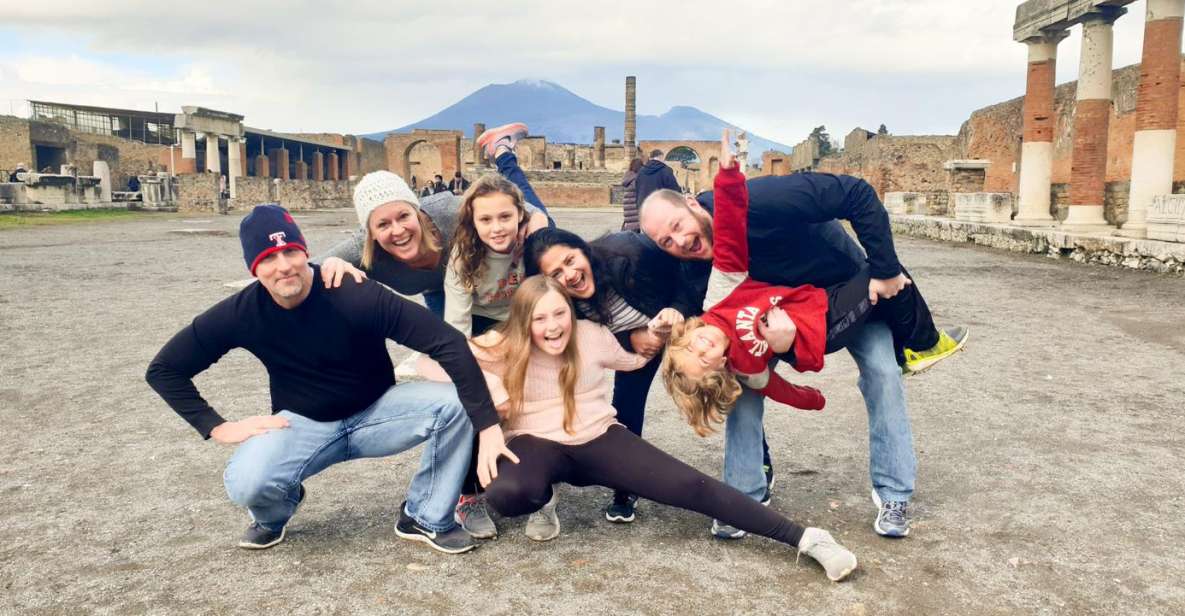
You get skip-the-line Pompeii Express tickets that allow entry to all areas within the city walls. For most people, the real value isn’t just saving time—it’s starting earlier in the experience. Pompeii’s scale can be intimidating. When you can skip long waits, you spend more of your limited time looking at buildings instead of standing in queues.
A practical note: you’ll need to provide the full names of all participants because the names are required for the tickets. If you’re traveling as a pair or family, gather names exactly as they appear on IDs before you show up.
Also, the first Sunday of each month is free entry—but tickets can’t be reserved ahead of time, so entry isn’t guaranteed. If you want certainty, don’t build your schedule around that free day.
Two hours in Pompeii: how the route stays focused
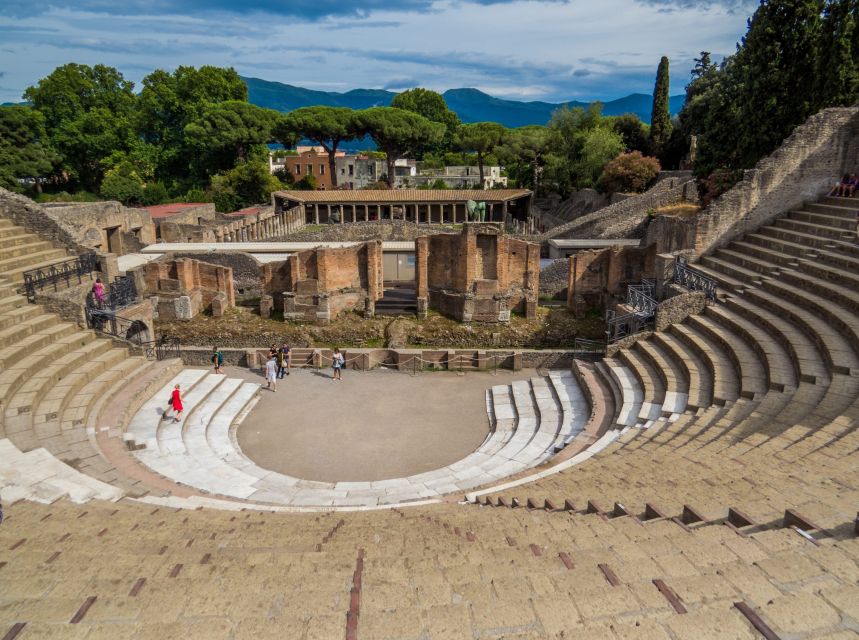
The big idea here is “enough of everything.” The tour aims to hit at least one example from each type of building—so you leave with a clearer sense of how Pompeii worked day to day. That’s a smart approach for a first visit, because Pompeii can pull you in 20 different directions.
The tradeoff is depth. In two hours, you won’t become an expert on every mosaic or inscription. You’ll get highlights and explanations that help you connect the dots, which is exactly what you want on a short, guided visit.
Walking the basalt street like Romans did
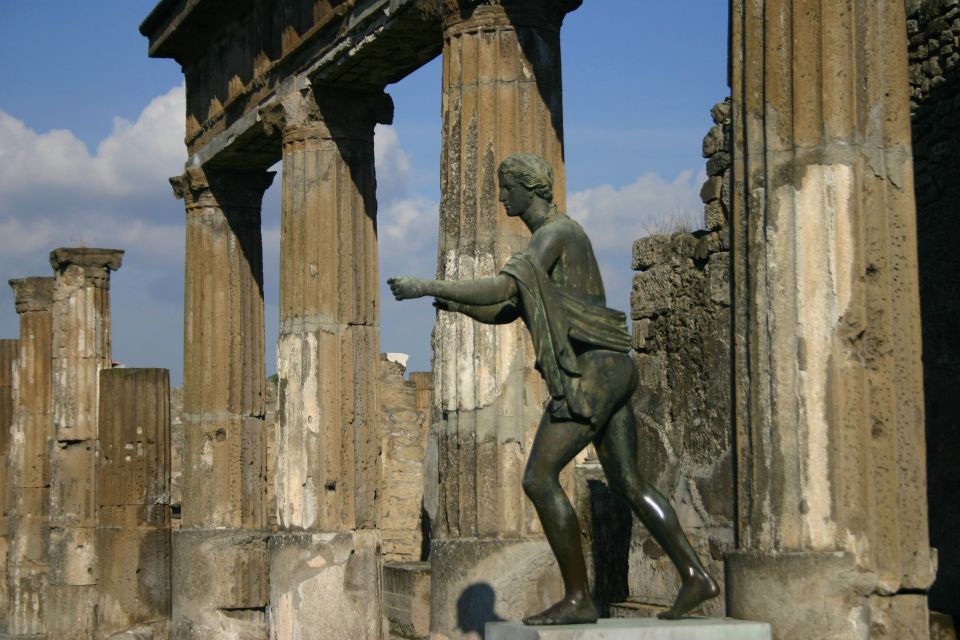
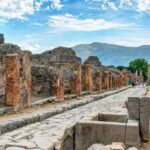
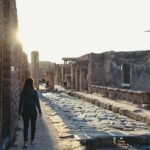
One of my favorite parts of this tour is the simple act of walking the original road—made of volcanic basalt rock. Your guide has you look down at hundreds of little white travertine spots. They’re tied to how torchlight was reflected at night, which is the kind of detail that makes the ruins feel lived-in rather than museum-like.
You’ll also notice big blocks of basalt that protrude in spots along the road. These were used by pedestrians as a kind of practical foot-guard when it rained. It’s easy to forget that Romans dealt with weather and mud just like we do. The guide’s pointing out of these “small survival details” helps you read the city with your feet, not just your eyes.
The Forum: where politics, religion, and commerce met
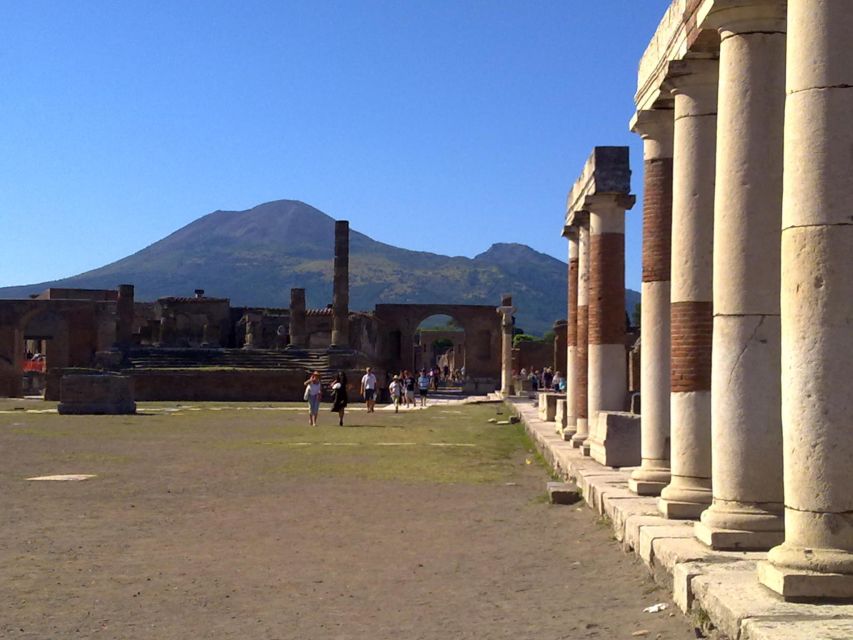
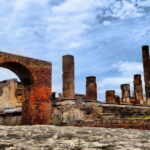
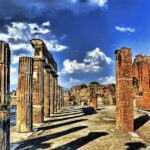
The Forum is Pompeii’s central stage—religion, trade, administration, and politics all braided together in one area. On this tour, you’ll see major structures here, including the Temple of Apollo, the Capitolium, the Temple of the Emperor, and the Basilica, plus the city-center spaces that connect everything.
What’s valuable about seeing the Forum with a guide is that you start to understand why the layout matters. Temples weren’t just spiritual buildings; they reinforced civic identity. The Basilica links to how business and civic life ran. Even if you’re not obsessed with Roman governance, you’ll feel how power moved through stone and ceremony.
Your guide also brings in market life nearby, including areas tied to the Macellum concept—Pompeii’s market setting where food and daily trading would have been a constant rhythm.
You can also read our reviews of more private tours in Pompeii Archaeological Site

Pompeii’s bakeries: the Roman fast-food moment
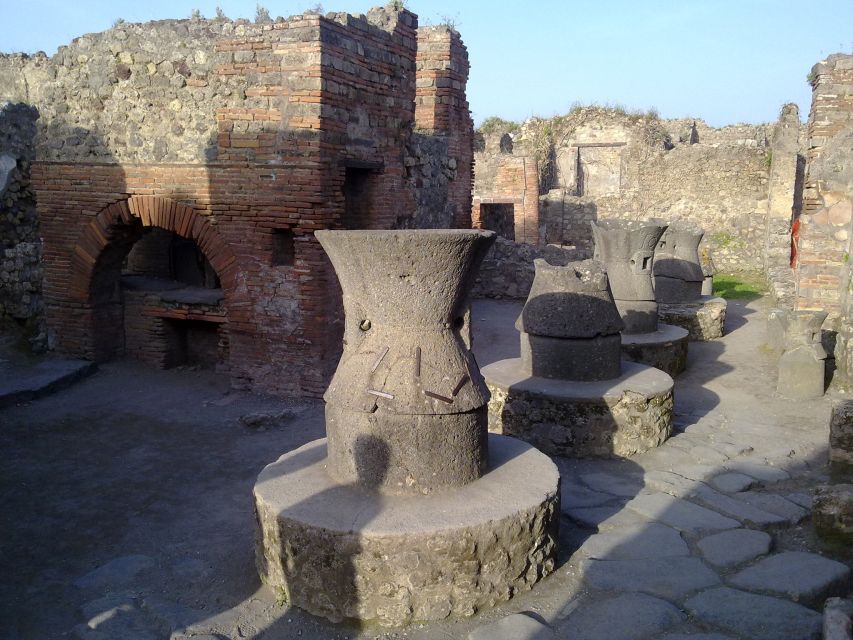
You’ll stop at one of Pompeii’s bakeries, and that’s where the tour becomes oddly relatable. The experience is framed as a Roman equivalent of fast food—bread you could buy, eat, and move on with your day. During excavations, carbonized loaves of bread were found, turning the bakery into something more than a set piece.
This is the kind of stop I love on short tours because it’s specific. You can picture what people ate, how often they needed supplies, and why a bakery mattered in a dense city. It also gives you a break from grand temples. You go from public life and monuments to something closer to daily errands.
Human casts: seeing the eruption in a body’s language
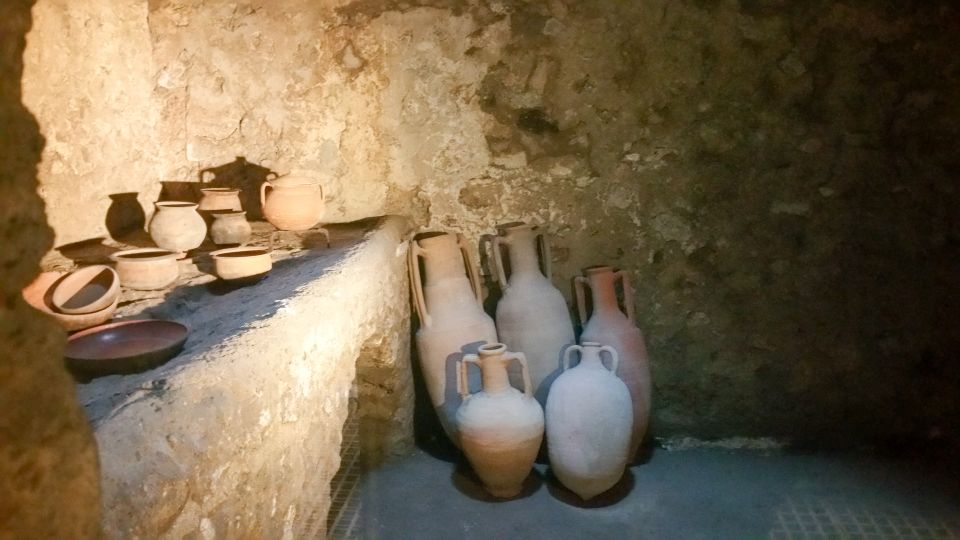
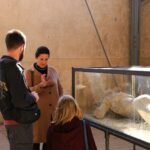
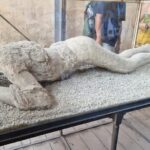
You’ll also see displays of human casts—preserved impressions of Pompeii residents caught by the volcano in the exact pose they died. It’s not a “fun” stop, but it’s an essential one if you want Pompeii to feel real.
In a two-hour visit, this moment is powerful because it interrupts the usual pattern of sightseeing. You go from buildings to people, and you start noticing how the town’s layout connects to survival and escape routes. It’s heavy, but it’s also the part that makes Pompeii more than scenery.
The former Red Light District and its frescoes
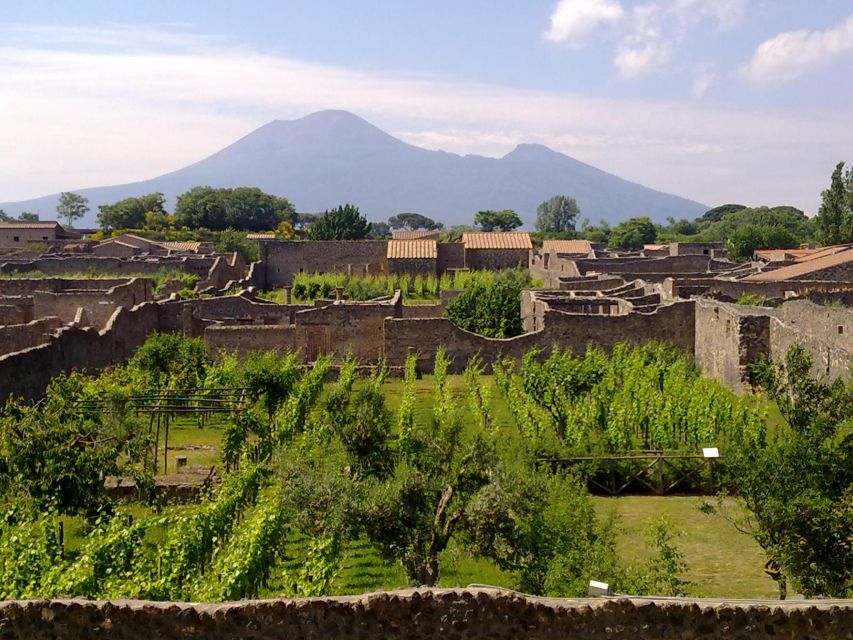
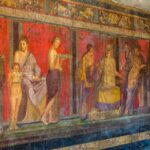
Next up is the former Red Light District, where you’ll see Roman frescoes with erotic images. This isn’t shown in a prudish “look but don’t talk” way. Your guide uses it to help you understand that Roman street life included what we’d now consider adult entertainment and casual sexual culture.
If you’re sensitive to explicit imagery, this is the moment to mentally prepare. If you’re comfortable with it, it can actually feel like a relief—Pompeii shows people being human, not just “ancient.” The guide’s framing helps you see why these images existed in the first place: they were part of how certain spaces functioned.
Theaters: choose your kind of performance
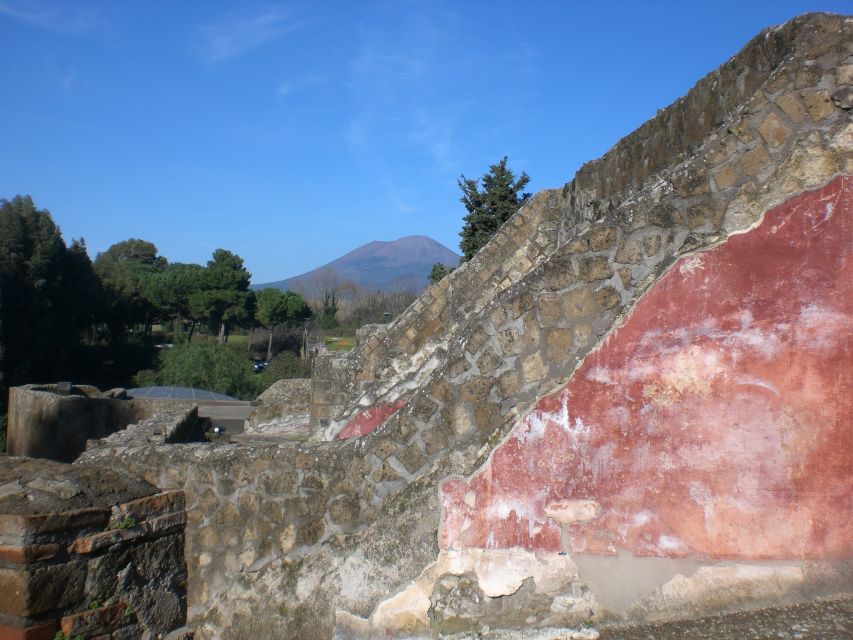
The tour includes a stop at one of Pompeii’s three theaters, and you’ll either see:
- the outdoor arena for public performances,
- the indoor theater used for mime and poetry, or
- an outdoor theater connected to tragedies and comedies.
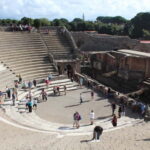
This part matters because it rounds out what the city offered besides work, worship, and food. It’s entertainment built into the town’s daily rhythm—proof that public life wasn’t only practical. Standing there, you can usually imagine the crowd noise and the way people would have gathered.
What the small-group guide experience feels like in practice
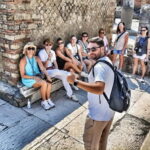
A small group capped at 10 participants changes the energy. You’re not stuck waiting for everyone to catch up, and your guide can adapt the plan if you need slower pacing or if someone’s more interested in certain building types than others.
The tour is also flexible based on your interests and physical abilities. I like that this isn’t a rigid checklist where everyone gets marched through the same angle of ruins. Pompeii is uneven, so having that flexibility helps.
One caution: the activity is listed as not suitable for wheelchair users and people with mobility impairments. Still, that earlier example of adaptation for a wheelchair user over longer stretches is worth noting. If you’re traveling with anyone who needs mobility support, contact the provider ahead of time and be clear about what “not suitable” means for your exact situation.
Price and value: is $175.22 per person worth it?
At $175.22 per person for a 2-hour private walking tour, you’re paying for three things that matter at Pompeii: a private guide, skip-the-line entry, and a focused route through the city walls with tickets that cover the main areas.
If you’re the type who gets more out of guided context than wandering on your own, this price usually makes sense. A knowledgeable explanation turns the Forum, theaters, and daily-life stops into a connected story instead of separate photos. And the skip-the-line piece protects your limited time, which is important because Pompeii is spread out and the experience can’t be rushed if you want to actually learn something.
If you’re traveling solo and happy to self-guide, you might feel like you can do Pompeii cheaper. But if you want a smoother first visit—especially the “right highlights in the right order”—the guide-led approach is where the value sits.
Should you book this Pompeii private walking tour?
I’d book it if you want a first-time Pompeii visit that feels organized, human, and specific. You’ll get the basalt street experience, the Forum’s top civic buildings, Pompeii’s bakeries as a real-food stop, the human casts that bring the disaster into sharp focus, and the frescoes in the former Red Light District—all without spending your whole day choosing what to see.
I would not book it if you (or your group member) can’t handle the walking and uneven ground typical of Pompeii sites, since the tour is listed as not suitable for wheelchair users and mobility impairments. If you’re borderline or your needs are mixed, ask questions early and plan around stairs, slopes, and surfaces.
If your priority is speed plus context, this tour hits that sweet spot.
FAQ
How long is the Pompeii tour?
It lasts 2 hours.
Where do I meet the guide?
Meet at Café Hortus Pompeii at the entrance on Via Villa dei Misteri 2, Pompeii Archeological Park.
Does the tour include skip-the-line tickets?
Yes. You get Pompeii Express skip-the-line tickets.
What areas can you visit with the skip-the-line tickets?
The tickets allow you to visit all areas within the city walls.
Is this a private tour?
You’ll have a private guide. The group is limited to 10 participants.
What languages are available?
The live guide is available in Spanish, English, French, and Italian.
What will we see in the Forum area?
You’ll see key Forum buildings such as the Temple of Apollo, the Capitolium, the Temple of the Emperor, and the Basilica.
Do you visit bakeries and daily-life sites?
Yes. You’ll go to one of Pompeii’s bakeries and see the Roman equivalent of fast food.
Will the tour include human casts?
Yes. You’ll see human casts of Pompeii residents caught by the volcano in the poses they died.
Is this tour suitable for wheelchair users?
No—it’s listed as not suitable for wheelchair users and people with mobility impairments. A guide may be flexible in some situations, but you should confirm your needs ahead of time.