REVIEW · POMPEII ARCHAEOLOGICAL SITE
Pompeii 3-Hour Walking Tour
Book on GetYourGuide →Operated by Askos Tours · Bookable on GetYourGuide
Pompeii hits fast, even at a walk. This private 3-hour tour is built to help you make sense of the ruins quickly, with an archaeologist-style guide explaining how Pompeii went from thriving Roman city to ash-covered silence. I especially like that you get skip-the-ticket-line entry for a smoother start and less time stuck waiting in the sun.
Two things I’d put at the top: you’ll see the big public landmarks (Forum areas, baths, theatres) and the more human side of Pompeii through the plaster casts and the Lupanar. One thing to consider: this is a walking tour with lots of outdoor stone surfaces, so if you hate uneven ground or crowds, you’ll want to pace yourself and wear proper shoes.
In This Review
- Key moments you won’t want to miss
- A private 3-hour plan that makes Pompeii make sense
- Start at Via Villa dei Misteri, then step into Porta Marina
- Villa of the Mysteries: paintings you can still read with your eyes
- The Forum, Basilica, and Roman Republic energy in stone
- Baths and theatres: how Romans cleaned, relaxed, and performed
- Temples and marketplaces: Jupiter, Apollo, Venus, and public worship
- Houses and courtyards: the private side of Roman life
- The Lupanar and the human edge of Pompeii
- Plaster casts: the moment of death that refuses to be abstract
- UNESCO context: why Pompeii matters beyond the rocks
- Price and value: is $508.15 for a group worth it?
- Timing, walking comfort, and what to bring
- Languages and guide interaction that can change the whole tour
- Should you book the Pompeii 3-Hour Walking Tour with Askos Tours?
- FAQ
- How long is the Pompeii 3-Hour Walking Tour?
- Is this tour private?
- Are Pompeii admission fees included?
- Will I be able to skip the ticket line?
- What languages are available for the live guide?
- Where do I meet the guide?
- What should I bring?
- Is the tour wheelchair accessible, and are umbrellas or backpacks allowed?
Key moments you won’t want to miss
- Porta Marina: the classic arrival point that helps you orient the whole site.
- Villa of the Mysteries: wall-painting moments that still feel startlingly specific.
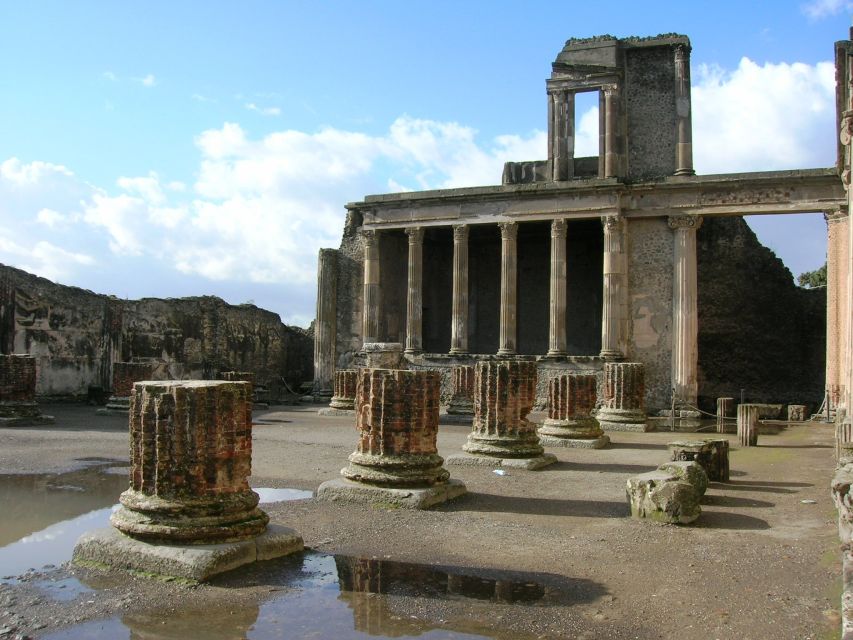
- Forum and Basilica areas: where you can picture public life and Roman power in motion.
- Thermal Baths (Sarno/Forum Baths): daily routines made visible through surviving architecture.
- Lupanar (old brothel) and plaster casts: the darker, very real human layer of the story.
A private 3-hour plan that makes Pompeii make sense
Pompeii is huge. Even if you know the basics, the site can feel like a maze of streets, arches, and rooms. This is why I like the structure of a short private walking tour: you don’t try to “see everything.” You focus on the key areas that explain the city’s layout and the daily rhythm of Roman life.
Your guide’s job is to connect the physical pieces. You’re not just looking at columns and doorways. You’re learning how Pompeii was buried under molten ash and lava from Vesuvius in 79 A.D., and what was preserved well enough for people centuries later to understand the way people lived, worked, and worshiped.
And yes, the experience is also about pacing. Three hours isn’t long, but with Pompeii you’re usually fighting time, heat, and the sheer scale. A focused route helps you get the most meaning per step. You’ll also be able to ask questions in your chosen language, and that makes a big difference in how quickly the site “clicks.”
You can also read our reviews of more walking tours in Pompeii Archaeological Site

Start at Via Villa dei Misteri, then step into Porta Marina
The tour begins at one of two meeting spots on Via Villa dei Misteri (Via Villa dei Misteri, 2 or Via Villa dei Misteri, 3). From there, you head into the archaeological area and get your bearings early, instead of wandering first and learning later.
Porta Marina is an especially helpful first anchor point because it’s a gateway. Standing near it, you can picture movement into and out of the city. It sets up a practical idea: Pompeii wasn’t a museum—this was a working urban machine with routes, entrances, and flow.
If you’re the type who likes context, you’ll probably enjoy this sequence. The guide can explain why certain buildings matter where they are, and how the city’s layout supported daily life. That orientation matters later when you move toward the Forum and major temples and entertainment areas.
Villa of the Mysteries: paintings you can still read with your eyes
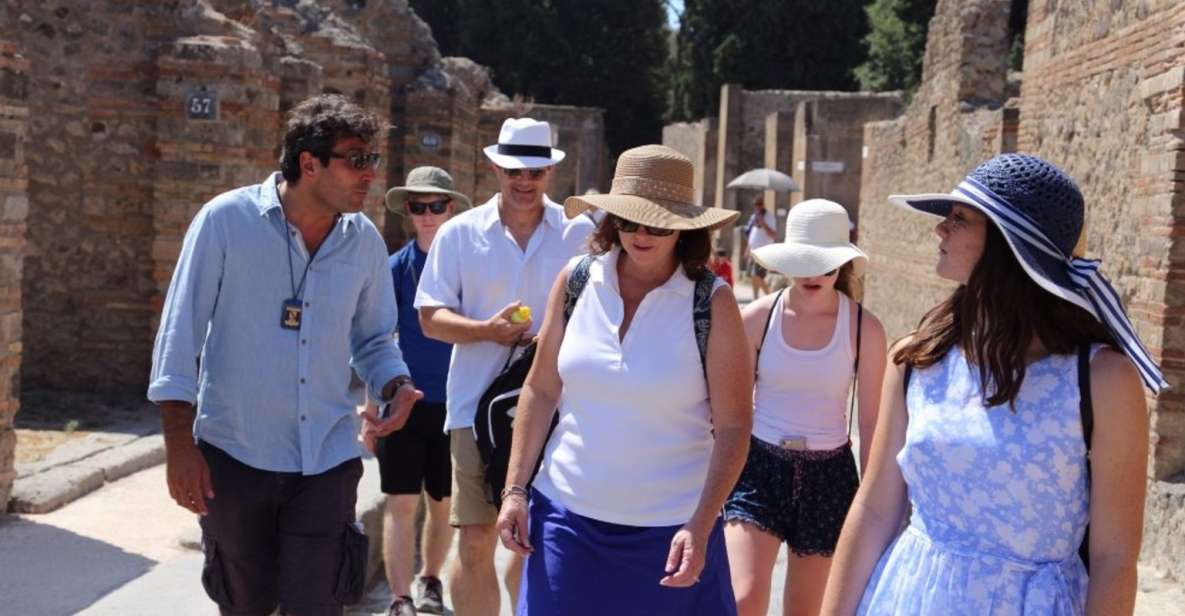
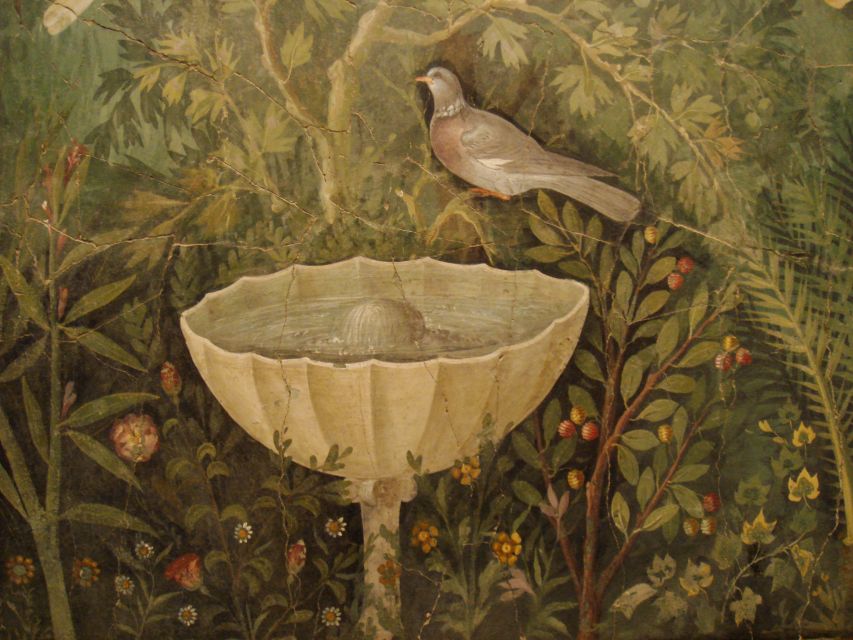
The Villa of the Mysteries is one of those stops that can feel like a time capsule. Even though it’s a ruin, it’s the kind of place where you can sense intention: someone lived and planned here, down to the level of painted decoration.
In a short tour, this stop works because it adds texture beyond the “big public monuments.” You’re seeing a private setting where Roman taste, symbolism, and storytelling show up in wall paintings. If you’ve ever looked at art in a book and thought, I need to see how it behaves in real space, this is that moment.
A smart guide will also help you avoid the trap of treating this like a random wallpaper stop. The value is in connecting the imagery to how Romans used domestic spaces—especially in villas where social status and identity were on display.
The Forum, Basilica, and Roman Republic energy in stone
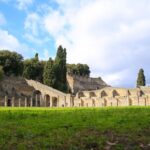
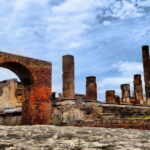
Next come the civic heart points: the Foro Civile di Pompei and the Basilica (court house). This is where you can imagine the city’s rules, disputes, and public gatherings without needing a single diagram.
The Forum areas are also one of the most “explainable” parts of Pompeii. Buildings cluster around the idea of public power and public life. The guide’s job is to make that logic visible: who would gather here, what kinds of things happened here, and how the space supported the Roman Republic culture people carried into daily life.
You’ll also see additional Forum-linked highlights such as the Triangolar Forum and major public structures in the same general orbit. It’s not just sightseeing; it’s a map of social life. With the right framing, you’ll start noticing how Pompeii’s public spaces encouraged movement and interaction.
One practical tip: when you arrive at Forum areas, slow down for a minute. Look for sightlines, doorways, and how buildings relate to one another. Pompeii rewards you for stepping back and “reading” the space, not only for pointing your camera at the closest wall.
Baths and theatres: how Romans cleaned, relaxed, and performed
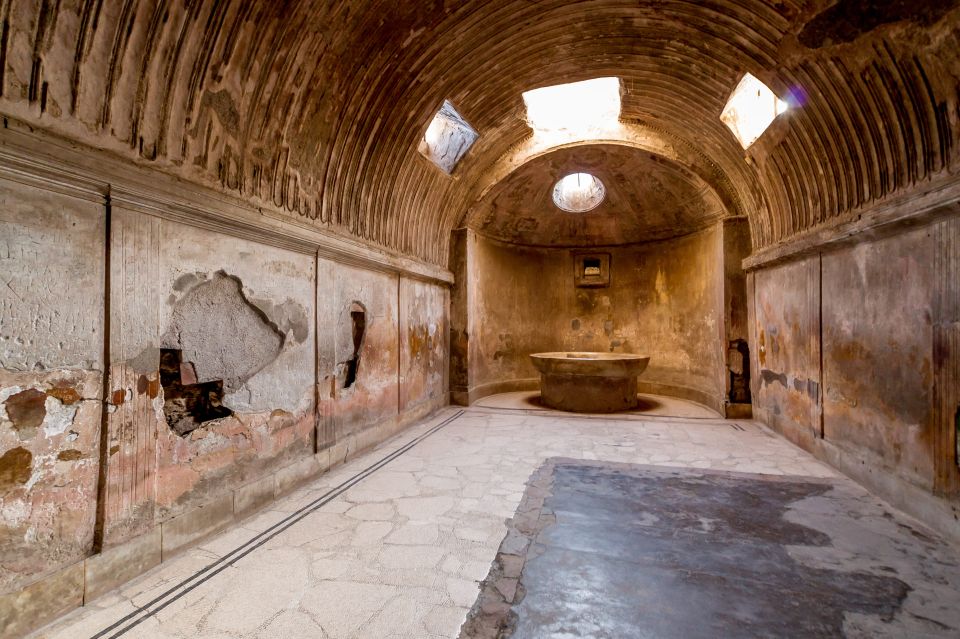
Pompeii’s thermal baths are a big deal because they show routine. The tour includes the Sarno Baths and Forum Baths, and these stops help you understand how daily hygiene, leisure, and social life intertwined.
Baths aren’t just about water. They’re about temperature zones, shared space, and a kind of public intimacy. Even in ruins, you can often grasp the workflow: where people would move, gather, wait, and socialize. A good guide will point out how the architecture guided that behavior.
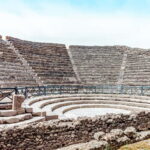
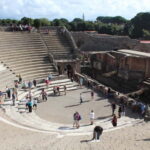
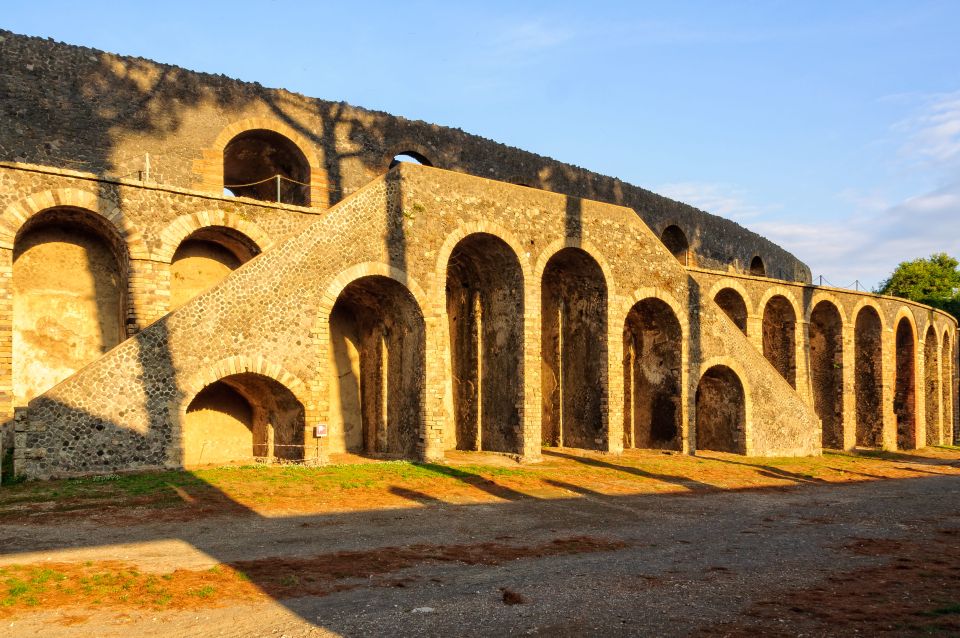
Then you’ll shift toward entertainment and gathering spaces, including the Teatro Grande (Large Theatre) and the Odeion (small theatre). Plus, the route also includes the Amphitheater—another major stage for performance and spectacle.
If you like connecting the dots between architecture and human behavior, this is a strong part of the tour. The guide can help you see why Romans cared about performance and public events, and how those venues fit into the city’s social calendar.

Temples and marketplaces: Jupiter, Apollo, Venus, and public worship
No Pompeii walk feels complete without religious landmarks. On this tour you’ll visit the Temple of Apollo, and you’ll also see stops linked to the Temple of Jupiter and the Temple of Venus (as part of the broader highlights route around these central areas).
Temples in Pompeii aren’t only religious sites; they’re community signals. They show what the city valued and how faith was woven into civic identity. In a short tour, you won’t get a textbook lecture, but you can still walk away with clear takeaways about how worship functioned as part of everyday public space.
This is also a great section for anyone who likes comparing what they expect versus what they actually see. The moment you notice that temples sit in the same cultural orbit as civic spaces, markets, and public gathering, Pompeii starts to feel like a lived-in city rather than a set of artifacts.
Houses and courtyards: the private side of Roman life
A highlight here is the chance to step through or view major domestic spaces, including the House of Menander, the House of the Faun, and the House of the Vettii. These are the kinds of homes where the layout says a lot about social standing and daily routine.
I like these stops because they offer contrast. Public Pompeii is loud in your imagination: forums, baths, temples, theatres. Private Pompeii is different. Domestic spaces focus on family life, display, and the small choreography of rooms around courtyards and entrances.
You’ll also encounter house-related highlights such as the House of Tragic Poet. Even when you’re not inside a fully intact home, the surviving structure often makes the relationships between rooms more understandable than you’d expect.
The Lupanar and the human edge of Pompeii
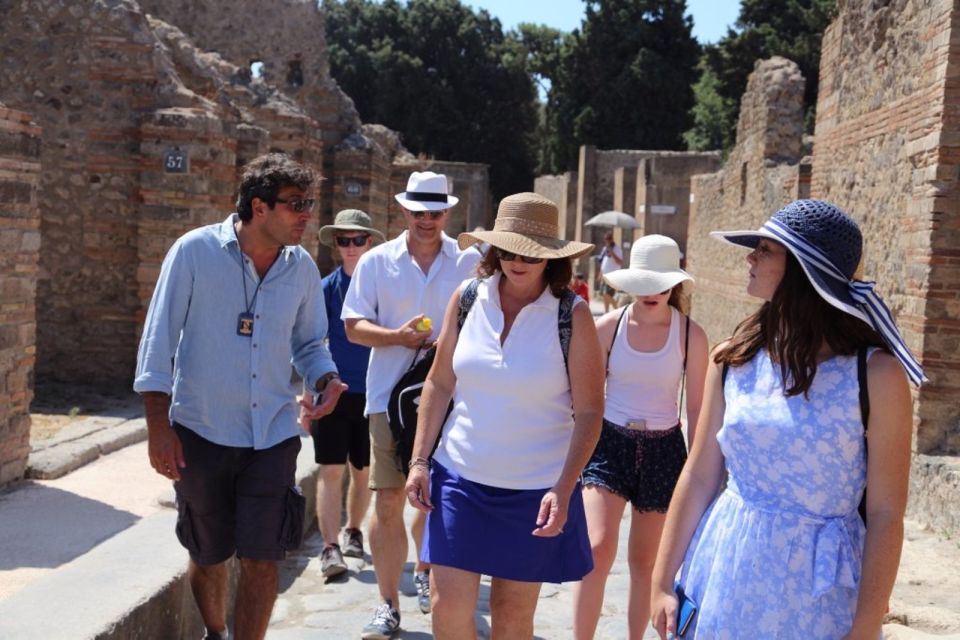
The tour includes the Lupanar, the old brothel. This is one of the stops that turns Pompeii from historical into personal.
Why? Because it’s about work and vulnerability, not only architecture. The Lupanar gives you a chance to think about how the city handled sex work, reputation, and business in a public setting. A strong guide will keep the discussion grounded, focusing on how the surviving layout reflects the way it functioned at the time.
It’s also emotionally intense, in a “history is real life” way. If you’re sensitive to topics like exploitation, plan to take your time and ask your guide to focus on factual context rather than sensational speculation.
Plaster casts: the moment of death that refuses to be abstract

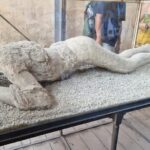
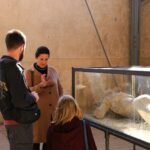
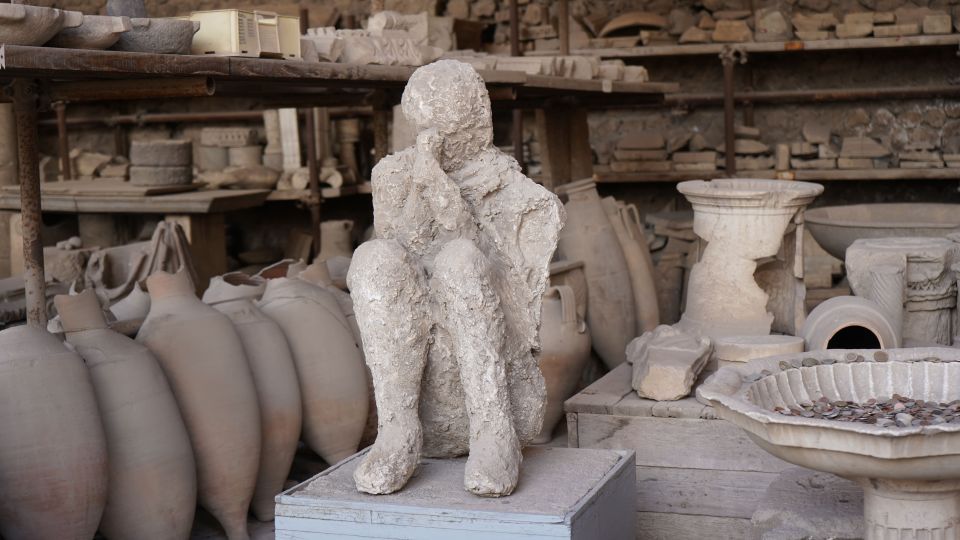
One of the most praised parts of Pompeii tours like this is the visit to the plaster casts of humans and animals at the time of death. This isn’t scenery. It’s something else. It turns a historical disaster into bodies, posture, and immediate impact.
The reason it lands so hard is also the reason it’s educational. You stop thinking about Vesuvius as a headline and start thinking about the chaos and fear people experienced. The casts make the scale of what happened feel intimate instead of distant.
I’d treat this stop as the emotional centerpiece of your tour. Don’t rush it. If you need a mental reset afterward, take a short pause—look at the surrounding architecture and remember that the city was preserved because of what happened in those final moments.
UNESCO context: why Pompeii matters beyond the rocks
Your guide will also tie Pompeii to its UNESCO World Heritage status, alongside Herculaneum. The core idea is that these sites offer a complete and vivid picture of society and daily life at a specific moment in the past, something without parallel.
That matters because Pompeii isn’t just famous for being old. It’s famous for being readable. You can still connect social roles, public spaces, domestic life, and disaster in one place—because the city froze in time.
In other words, the value isn’t only that Pompeii survived. It’s that it survived in a way that helps you understand people, not just buildings.
Price and value: is $508.15 for a group worth it?
The price is listed as $508.15 per group up to 1 for a 3-hour private walking tour. That wording usually means you’re paying for private guiding rather than a per-person mass tour model.
Here’s how I think about value at this level:
- Private guidance plus Pompeii admission fees included can mean you’re not paying separately for tickets and you’re getting a guide who can respond to your pace.
- Skip-the-ticket-line helps you spend more of the short time inside Pompeii rather than in waiting mode.
- An archaeologist guide style (and a guide like Vincenzo, mentioned as very friendly and entertaining) is the kind of upgrade that changes what you learn, not just what you see.
Now the honest part: if you’re comfortable self-guiding and you already know Pompeii’s highlights well, you might feel this is pricey for a short stroll. But if you want your questions answered in real time, and you care about understanding daily life rather than only ticking off monuments, the cost tends to make more sense.
If you’re traveling solo, “per group up to 1” can actually be a sweet spot for avoiding a larger crowd atmosphere while still getting expert context.
Timing, walking comfort, and what to bring
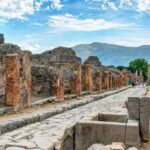
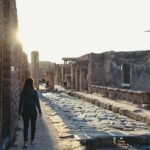
This is a 3-hour walking experience and you’ll be outside a lot. Pompeii paths can be uneven, with stone steps and ground that isn’t always flat. Wear shoes you’d trust on rough pavement.
A few rules matter for comfort:
- Backpacks are not allowed, so plan for a small bag or simple day storage.
- Umbrellas are not allowed, and the tour runs in any weather. If rain shows up, bring a raincoat instead of an umbrella.
- Pets are not allowed (assistance dogs are allowed).
You’ll also want an ID or passport with you. That’s it—no complicated checklist.
Languages and guide interaction that can change the whole tour
The tour offers live guides in Spanish, German, Russian, Chinese, English, Italian, Japanese, and Portuguese. That’s a big deal in Pompeii because so many details are interpretive: why a building is placed a certain way, what a room was used for, and how public life and private life overlapped.
When you can speak in your language, you’ll ask more questions. And the more you ask, the more the site becomes a story instead of just an image.
Should you book the Pompeii 3-Hour Walking Tour with Askos Tours?
Book it if you want:
- a fast, high-signal introduction to Pompeii’s most important areas
- an expert, archaeologist-style guide explaining how daily life worked
- the emotional weight of the plaster casts and the Lupanar, not just the “pretty stones”
- a private format that keeps the experience focused and adjustable to your pace
Skip it (or look at a longer option) if:
- you hate walking on uneven ground and want minimal moving around
- you already have a solid Pompeii background and are happy going at your own rhythm without guided context
My bottom line: for a first-time or time-crunched Pompeii visit, this is a smart way to get real understanding in a short window, with major highlights and the human details that make Pompeii unforgettable.
FAQ
How long is the Pompeii 3-Hour Walking Tour?
The duration is 3 hours.
Is this tour private?
Yes. It’s listed as a private group with private guidance.
Are Pompeii admission fees included?
Yes. Pompeii admission fees are included in the tour.
Will I be able to skip the ticket line?
Yes. The tour includes skip-the-ticket-line access.
What languages are available for the live guide?
The live tour guide is offered in Spanish, German, Russian, Chinese, English, Italian, Japanese, and Portuguese.
Where do I meet the guide?
The start meeting point can vary depending on the option booked, with two listed options on Via Villa dei Misteri, 2 or Via Villa dei Misteri, 3. The tour ends back at the meeting point.
What should I bring?
Bring a passport or ID card.
Is the tour wheelchair accessible, and are umbrellas or backpacks allowed?
The tour is wheelchair accessible. Umbrellas and backpacks are not allowed.