REVIEW · POMPEII ARCHAEOLOGICAL SITE
Pompeii: Skip-the-Line Guided Archaeological Discovery Tour
Book on GetYourGuide →Operated by Towns of Italy · Bookable on GetYourGuide
Skip the line, then read Pompeii up close. This guided Pompeii experience is built for real understanding, led by a professional archaeologist who helps you connect streets, buildings, and daily life in a city frozen at the height of Roman power. I like that it includes skip-the-line priority entry plus the kind of context that turns monuments into stories, not just photos.
Two other things I appreciate: the tour is limited and set up for listening, with earphones for groups up to 5 people, so your guide’s explanations stay clear even when you’re stopping often. And it’s monolingual (English or Spanish), which keeps the pacing tight and the details consistent. One drawback to plan around: it’s still a lot of walking, and it’s not suitable for people with mobility issues or back/heart problems, plus there’s a strict dress code and a compulsory security check.
In This Review
- Key highlights worth knowing
- Meeting at Piazza Esedra: where the tour actually starts
- Skip-the-line logistics: the priority entrance that still has rules
- What 2 hours in Pompeii really means: a focused route
- Stop-by-stop: the route through Roman daily life
- Stop 1: Piazza Esedra (starting point)
- Stop 2: Pompeii Archaeological Site (guided time on the main route)
- Stop 3: Garden of the Fugitives (photo stop)
- Stop 4: Forum Baths (photo stop)
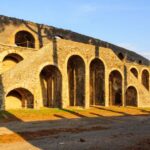
- Stop 5: Amphitheater of Pompeii (photo stop)
- Stop 6: Lupanare (photo stop, guided context)
- Stop 7: House of the Vettii (guided visit)
- Stop 8: Vetutius Placidus House and Thermopolium (photo stop, visit)
- The archaeologist’s role: why this tour feels different
- Price and value: is $42.19 a fair deal?
- Who should book this tour, and who should skip it
- Practical must-knows before you go
- Should you book the Pompeii skip-the-line guided tour?
- FAQ
- FAQ
- How long is the Pompeii skip-the-line guided tour?
- Where do I meet the guide?
- What languages are the tours offered in?
- What’s included in the price?
- Is there still a security check even with skip-the-line?
- What should I bring?
- What are the dress and bag rules?
- Is the tour suitable for wheelchair users?
- What happens if I’m late to the meeting point?
Key highlights worth knowing
- Express entry, not magic: you skip crowds with priority entrance, but there’s still a required security check
- Small-group listening setup: earphones are provided for groups of max 5 people
- English or Spanish only: monolingual delivery helps the guide keep the story focused
- Big Pompeii zones in 2 hours: public spaces, elite residences, and the everyday food scene
- Photo stops built in: quick views at places like the Garden of the Fugitives, Forum Baths, and Lupanare
Meeting at Piazza Esedra: where the tour actually starts
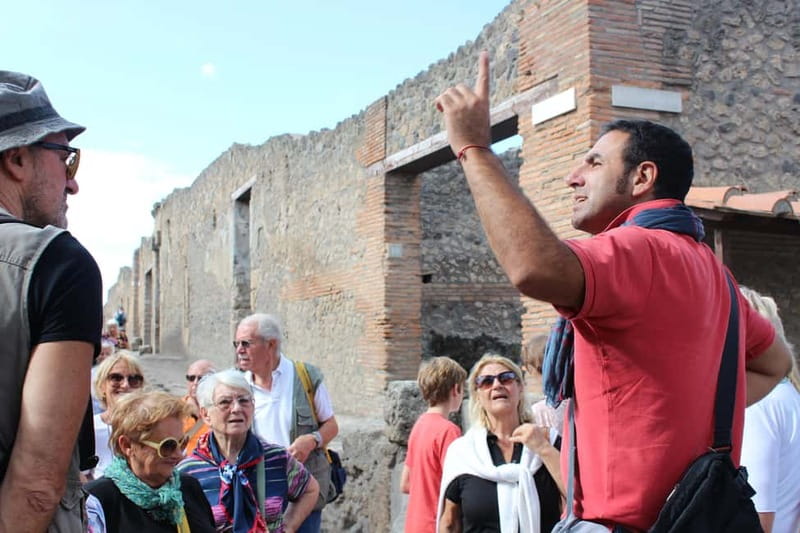
You’ll meet your guide at the Towns of Italy-Vox Kiosk at Piazza Esedra, Pompeii (next to Coffeeshop Vittoria). Aim to arrive 15 minutes early. The rules are firm: if you’re late, you can’t join and there’s no refund. That’s not meant to be rude; it’s how a tight 2-hour route stays on time.
If you’re coming from the main station area, give yourself a little buffer. Pompeii can be confusing at the edges, and you’ll want time to get your bearings before the walk begins. This tour is short by design, so being punctual pays off immediately.
You can also read our reviews of more guided tours in Pompeii Archaeological Site
Skip-the-line logistics: the priority entrance that still has rules
This is a skip-the-line guided tour, and it uses an express security approach. But here’s the key practical point: even with priority, there is still a compulsory security check that can slow entry a bit. So if you’re the type who likes to squeeze in a café stop right at tour time, don’t.
Also plan for the park rules. You’ll need:
- a passport or ID card
- to follow the dress code (no shirtless, and entry can be refused for inappropriate clothing)
- to travel light (no backpack or big bags; the limit listed is 30×30×15 cm, stored in the clockroom)
If you show up with a backpack you can’t store, you may lose time that this tour doesn’t have to spare. For comfort, the tour strongly suggests good walking shoes—no flip-flops—and also hat and sunscreen. Even in cloudy weather, Pompeii is bright, and the pace is steady.
What 2 hours in Pompeii really means: a focused route
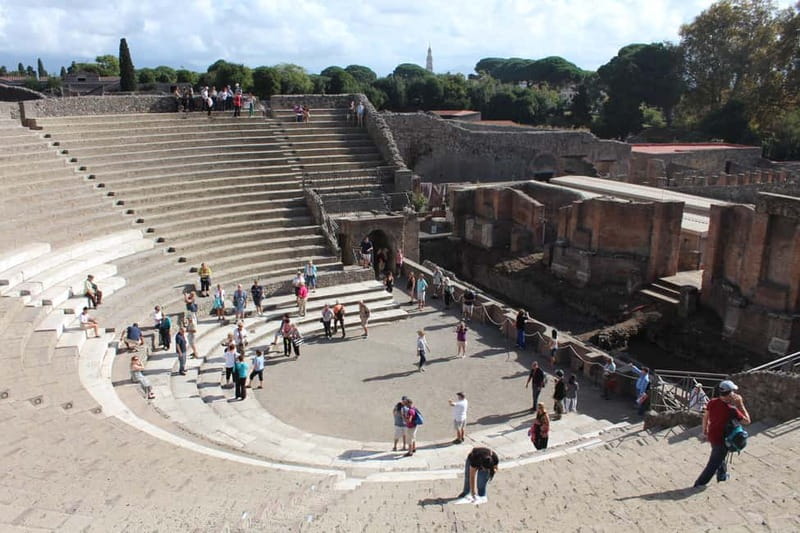
In only 2 hours, this tour aims to cover major stops across Pompeii rather than linger at one site for ages. That matters because Pompeii is huge and easy to lose time in. The upside: you’ll leave with a clearer sense of how the city worked—public spaces, wealthy homes, and daily routines—without needing a full-day plan.
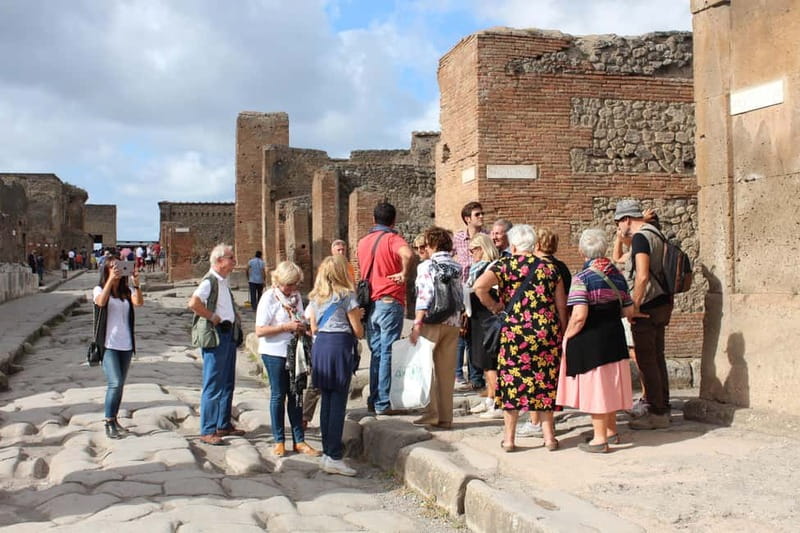
The pace is also why the included setup is important. You’ll get earphones for small groups (max 5 people). That’s a big quality-of-life detail. Pompeii’s stone surfaces can make sound bounce, and groups often get separated. Earphones help you stay with the guide instead of constantly doing the “where are they?” dance.
This tour also runs in all weather conditions, so expect it to go forward even if it’s damp. Bring a light rain layer if that’s your style, and keep your shoes grippy.
Stop-by-stop: the route through Roman daily life
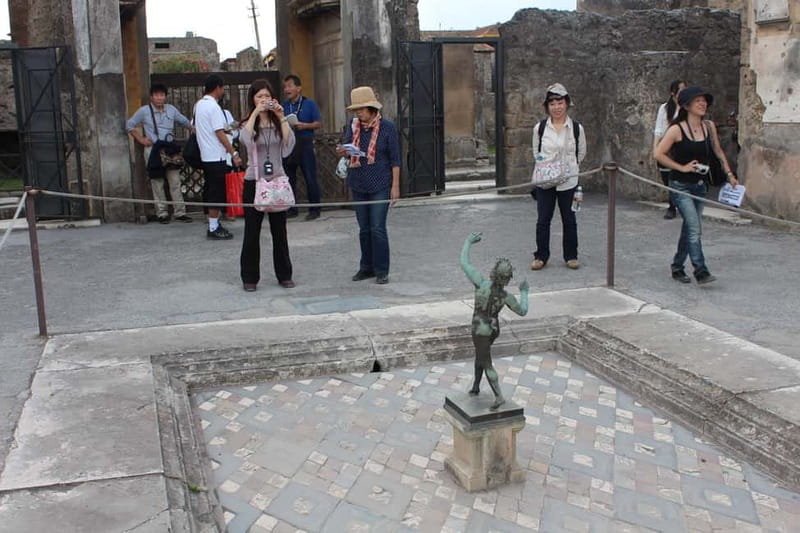
Below is how the tour flows, and what each stop is likely to help you notice.
Stop 1: Piazza Esedra (starting point)
Before you enter the ruins, you get the start-of-tour focus: timing, what to pay attention to, and how the guide will connect buildings to Roman behavior. This is the moment to ask quick questions, like what you should photograph first or what details to watch for inside homes.
You can also read our reviews of more tours and experiences in Pompeii Archaeological Site

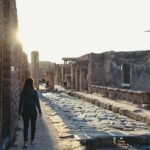
Stop 2: Pompeii Archaeological Site (guided time on the main route)
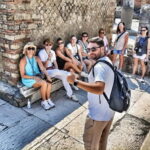
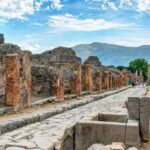
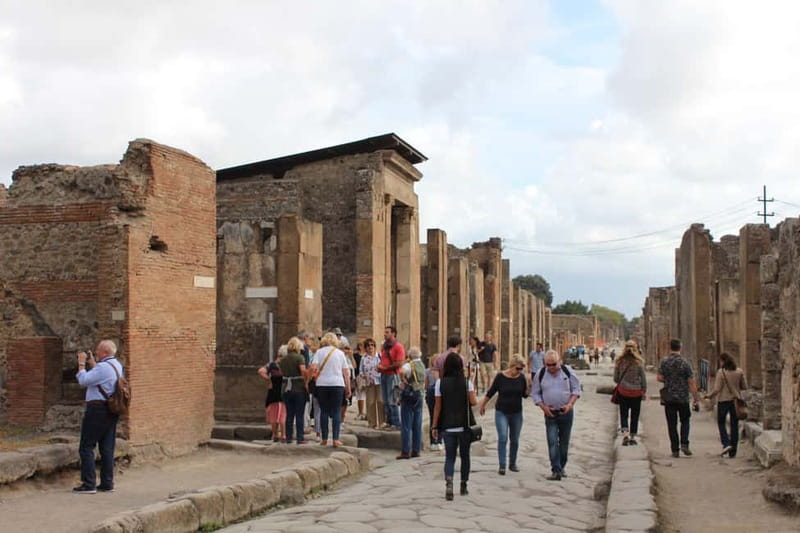
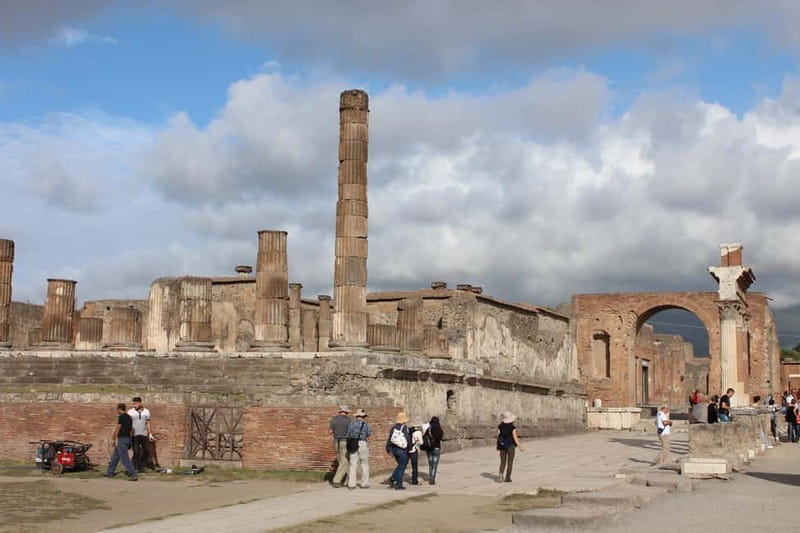
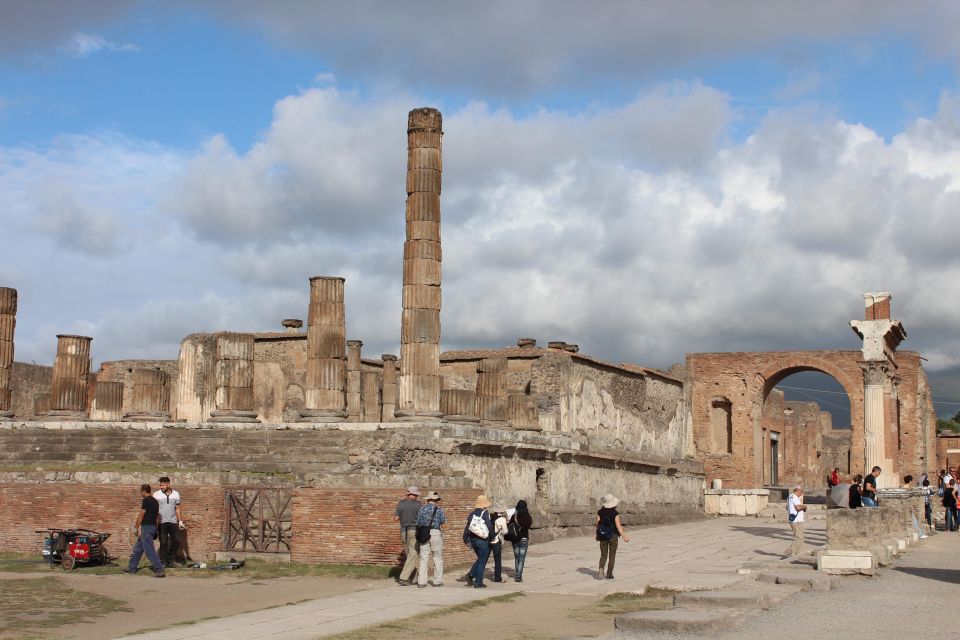
This is where the tour really starts doing its job: walking ancient streets while your archaeologist turns structures into explanations. The city reads differently when someone links what you’re seeing to how people lived—work, status, entertainment, and tragedy.
Expect the guide to frame key themes across the route, including:
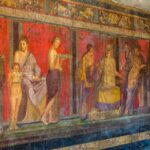
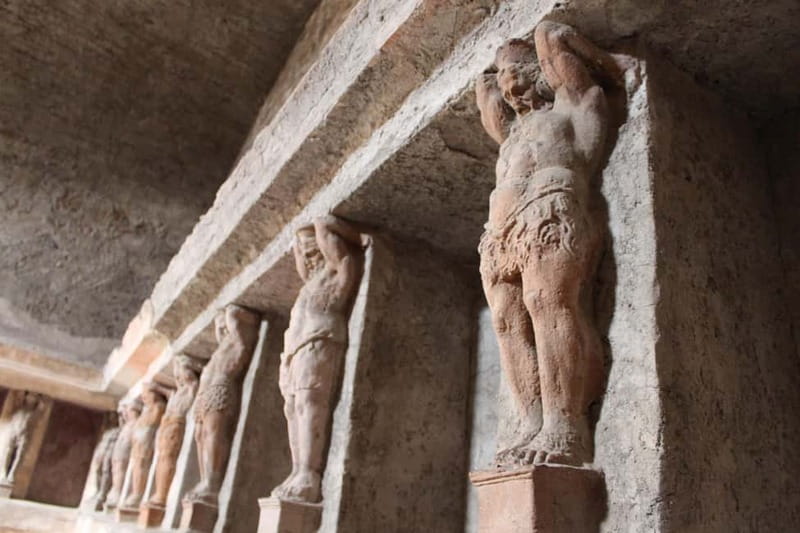
- wealthy residences and preserved frescoes
- “everyday fast-food” type spots (thermopolia)
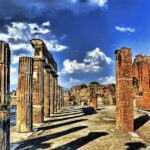
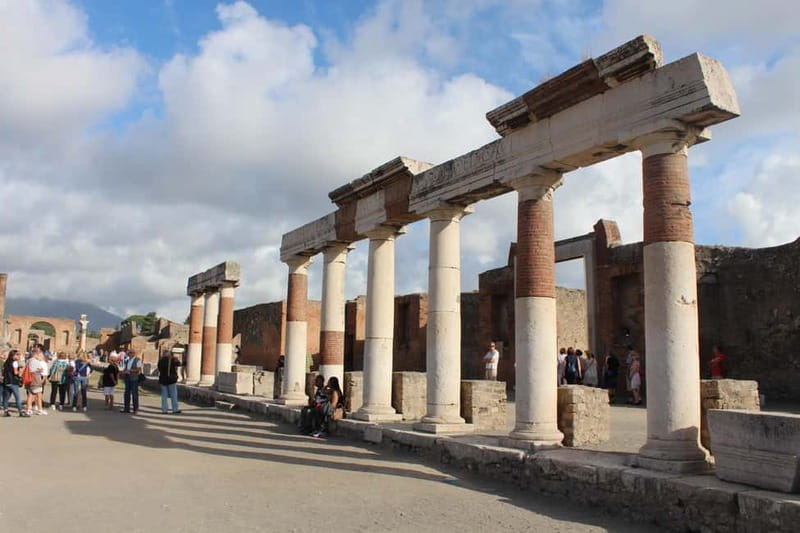
- public spaces like the Forum area
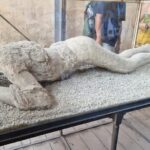
- and the human side of the Vesuvius story, including plaster casts of victims
That combination is what makes a short tour feel meaningful instead of like a photo sprint.
Stop 3: Garden of the Fugitives (photo stop)
This is a quick photo stop. You’ll get only a few minutes, so use them well:
- scan for the big layout first
- then take the closer shots after you understand where you are in relation to the street grid
It’s one of those stops that helps you picture what the city looked like at ground level, not just from postcards.
Stop 4: Forum Baths (photo stop)
Another short stop, but in the Forum zone—Pompeii’s political and social heart. Even with a brief pause, you can learn a lot from baths. They weren’t only about cleanliness. They were conversation space, routine space, and part of how status showed up in daily life.
If you like architecture and engineering details, this is a good “quick hit.” If you’re mostly here for drama, this also sets the stage for the social rhythm of the city.
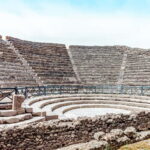
Stop 5: Amphitheater of Pompeii (photo stop)
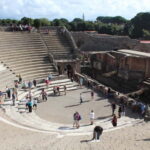
This is Pompeii’s entertainment side. Your guide’s commentary is what elevates it beyond a “cool old building.” Roman entertainment wasn’t just leisure—it was public life. Seeing the space helps you understand crowd behavior and how architecture shaped experience.
Again, it’s brief. If you want long photo time, you’ll need to work efficiently and follow your guide’s timing.
Stop 6: Lupanare (photo stop, guided context)
The Lupanare is where the tour gets honest about what life included, including the mention of an erotic art collection. This is a stop that may feel intense if you’re not expecting it, but it’s also part of what makes Pompeii such a strong “whole city” story.
If you’re photographing, this is one of those places where details matter—so don’t only shoot wide angles. Look for the surfaces and layout cues your guide points out.
Stop 7: House of the Vettii (guided visit)
This is a deeper stop with guided tour and visit time. The House of the Vettii is known in general for elite domestic life, and in this route it represents the “status at home” side of Pompeii.
You’ll likely focus on:
- the feeling of how rooms flowed
- the preserved fresco environment
- and how wealth showed up visually in a private setting
A short domestic visit like this can be enough to teach you how to read a villa instead of just walking through walls.
Stop 8: Vetutius Placidus House and Thermopolium (photo stop, visit)
This is one of my favorite “daily life” combos on the route because it ties together a residence-style context with a thermopolium—a Roman form of quick, prepared food.
Even if you don’t geek out on ancient kitchens, this stop helps you imagine regular routines:
- where people grabbed food
- how the built environment supported commerce and foot traffic
- how daily spending connected to private wealth around the neighborhood
If you’re craving context over trivia, this is the kind of stop that makes the whole tour click.
The archaeologist’s role: why this tour feels different
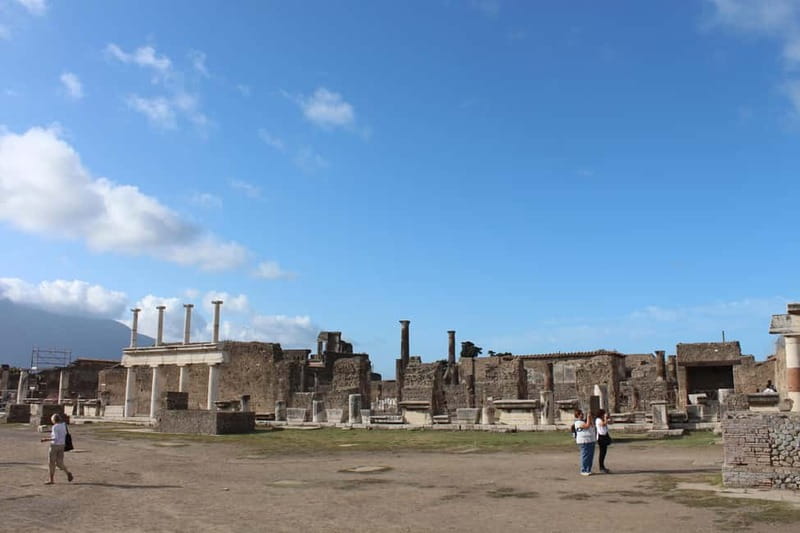
The heart of this experience is the promise of a professional archaeologist guiding you through Pompeii’s layers. In practice, that means the tour isn’t only “look at this wall, it’s old.” It’s explanation: what the city layout says about power, what homes communicate about class, and why the everyday spaces matter.
I also like the way the tour is set up to keep learning coherent: monolingual English or Spanish, plus earphones for small groups. Those two details reduce confusion and let you actually follow the story line instead of hearing snippets while the group shuffles.
If you’re a first-time visitor, this archaeologist-led approach is especially valuable. Pompeii can feel like a list of ruins unless someone helps you connect the dots quickly.
Price and value: is $42.19 a fair deal?
At $42.19 per person, you’re paying for three main things:
1) skip-the-line entry via express security
2) a professional archaeologist guide
3) earphones for up to 5 people
Food and drinks are not included, so budget for water or a snack before or after. But for a 2-hour guided route that hits major sites and includes a specialist, the price sits in the “you’re paying for time and interpretation” category. In other words: you’re not just buying access. You’re buying an organized way to understand Pompeii in a short window.
If you’re going independently, you can save money, but you’ll trade away explanations and lose the tight flow. If your time is limited (or you hate wandering in circles), this is a practical way to get your money’s worth.
Who should book this tour, and who should skip it
This tour is a strong fit if you:
- want a first-timer-friendly introduction that still includes deeper insights
- care about how people lived, not just what buildings look like
- want a timed route that works in only 2 hours
- appreciate clear guidance in English or Spanish
It’s not a good match if you:
- have mobility impairments, back problems, heart problems, or use a wheelchair
- prefer fully accessible slow-paced touring
- don’t want to follow strict dress code and bag rules
- travel with pets (pets aren’t allowed)
Practical must-knows before you go
A few details can make or break your day.
Walking and weather: bring shoes with grip and be ready for steady walking. The tour operates in all weather, so plan accordingly.
Security and restrictions: even with skip-the-line, you’ll go through security. Also note the equipment rules: you can’t bring professional optical or audio gear, and drones are not allowed.
Bags and storage: there’s a bag size limit (max 30×30×15 cm). Expect to use the clockroom if needed.
Dress code: this is real. Don’t gamble with it. If clothing is too revealing or disrespectful, entry can be refused.
Should you book the Pompeii skip-the-line guided tour?
I’d book it if you want a structured, archaeologist-led route through Pompeii that respects your time. The small-group earphones, monolingual delivery, and focused stops are exactly what make this kind of short tour worth doing.
Skip it if you need an accessible route, want long stays at each monument, or are likely to arrive late. In Pompeii, the city moves at its own pace. This tour helps you move with it.
FAQ
FAQ
How long is the Pompeii skip-the-line guided tour?
The duration is 2 hours. Starting times vary by availability.
Where do I meet the guide?
Meet at the Towns of Italy-Vox Kiosk at Piazza Esedra, 80045 Pompeii, next to Coffeeshop Vittoria.
What languages are the tours offered in?
The tour is offered in English or Spanish, and it is monolingual to preserve the quality of the experience.
What’s included in the price?
You get skip-the-line Pompeii ruin ticket, a professional archaeologist guide, earphones for groups of max 5 people, and the live guided tour in English or Spanish.
Is there still a security check even with skip-the-line?
Yes. Even with the skip-the-line entrance, there is still a compulsory security check that may cause some delays.
What should I bring?
Bring a passport or ID card.
What are the dress and bag rules?
A dress code is required for the Pompeii Archaeological Park, and entry can be refused if you don’t comply. No discorteous clothing or shirtless is allowed. No backpack or big bags are allowed (max 30×30×15), and you must deposit them in the clockroom.
Is the tour suitable for wheelchair users?
No. It is not suitable for wheelchair users or for people with mobility impairments.
What happens if I’m late to the meeting point?
Latecomers will be unable to join the tour, and no refunds will be provided.