REVIEW · POMPEII ARCHAEOLOGICAL SITE
Pompeii: Exclusive Tour with Archaeologist and Entry Tickets
Book on GetYourGuide →Operated by Grand Tour Experience · Bookable on GetYourGuide
Pompeii moves fast, in the best way. With an archaeologist leading you through skip-the-line entry, you start at Porta Marina and quickly get to the Forum’s pulse. It’s the kind of start that keeps your time for seeing, not standing.
I also love the headset setup. When guides like Ricardo and Antonio stay in motion, you still catch every explanation without straining your voice or playing guessing games.
One real consideration: the ruins demand walking on uneven ground, and this tour isn’t suitable for wheelchair users or people with mobility impairments. If you need accessibility support, plan an alternative.
In This Review
- Key points at a glance
- The meeting point: where your Pompeii day actually starts
- Porta Marina Superiore: the original gate sets the tone
- Basilica and Foro Civile: how civic life worked in real space
- Temples of Jupiter and Apollo: religion tied to city identity
- Forum Baths and the rhythm of everyday comfort
- Macellum and plaster casts: the eruption becomes personal
- Houses of the Tragic Poet, the Vettii, and the Faun: art as social language
- House of the Vettii: wealth you can see
- House of the Faun: Pompeii at a bigger scale
- Lupanare and the theatre district: the city’s edges, not just its center
- Why the archaeologist + headset combo is the real value
- Price and value: why $50 can be money well spent
- What the 2-hour route feels like on the ground
- Where you’ll end: dropping at Pompeii Ruins and Piazza Esedra
- Who this Pompeii VIP tour suits best
- Quick practical notes before you go
- Should you book this archaeologist-led Pompeii walk?
- FAQ
- How long is the Pompeii VIP tour?
- Where is the meeting point?
- What is included in the ticket?
- Is transportation included?
- Do I need a passport or ID?
- Can I choose a private tour?
- What languages are available?
- Is this tour suitable for wheelchair users or mobility impairments?
- Are there restrictions on what I can bring?
Key points at a glance

- Skip-the-line entry with Express admission so you’re not stuck at the start
- Archaeologist and licensed guide who explains what you’re seeing, not just where to point
- Headsets included for clear audio across a large site
- A focused route in 2 hours hitting Porta Marina, Forum areas, baths, houses, and the theatre district
- Plaster casts at the Macellum bring the 79 AD story to a human scale
- You can choose private or small-group pacing and still get guidance on what matters most
The meeting point: where your Pompeii day actually starts
You meet outside Pompeii’s Porta Marina entrance. The spot is just in front of the train station Pompei Scavi – Villa dei Misteri (Circumvesuviana), which makes this tour easier than it sounds if you’re already using the local rail.
Your guide holds a sign with the tour name, Pompei VIP. If you’re arriving by train, I’d double-check which Pompeii stop you’re aiming for, since there are multiple stations in the area and a last-minute sprint is no one’s idea of a good start.
You can also read our reviews of more tours and experiences in Pompeii Archaeological Site

Porta Marina Superiore: the original gate sets the tone
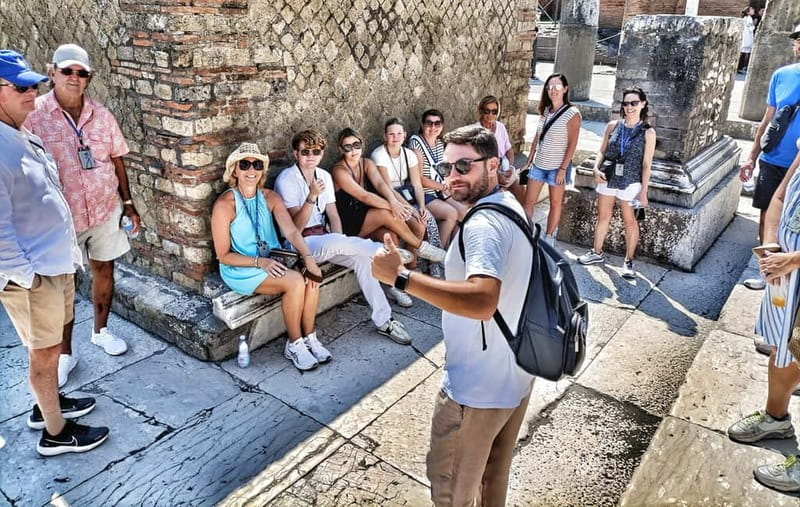
The first moment that matters is stepping through Porta Marina Superiore. Even before you reach the big “must-see” areas, you get a sense of how Pompeii was designed to funnel people into civic life.
This stop works because it gives you landmarks early. Once you understand where the gate sits, the rest of the route feels less like wandering and more like following a plan.
Basilica and Foro Civile: how civic life worked in real space
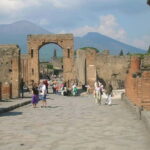
Next you’re led to the Basilica and the Foro Civile di Pompei—the city’s political and legal center. I like these stops because they’re not just pretty ruins; they show how Romans organized daily decisions and public gatherings.
In this area, your guide’s job becomes very practical: you learn what you’re looking at and why it mattered. It’s easier to connect the dots when someone can point out the functions of spaces rather than only describing them.
Temples of Jupiter and Apollo: religion tied to city identity
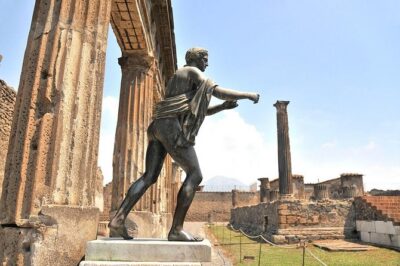
From the civic core, the tour moves to temples dedicated to Jupiter and Apollo. This is where Pompeii stops feeling like a single “disaster site” and starts looking like a normal, functioning city with beliefs, festivals, and routines.
What to watch for here is the layout and the way sacred spaces fit into the public world. Your guide can help you interpret the difference between a site that’s meant for worship versus one meant for public services, markets, or gatherings.
Forum Baths and the rhythm of everyday comfort
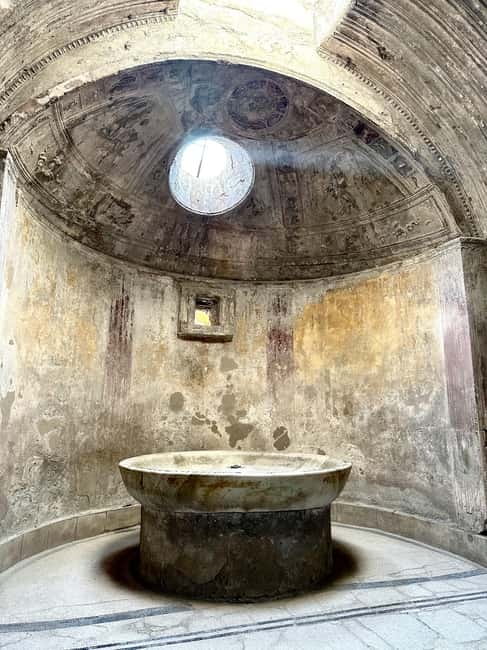
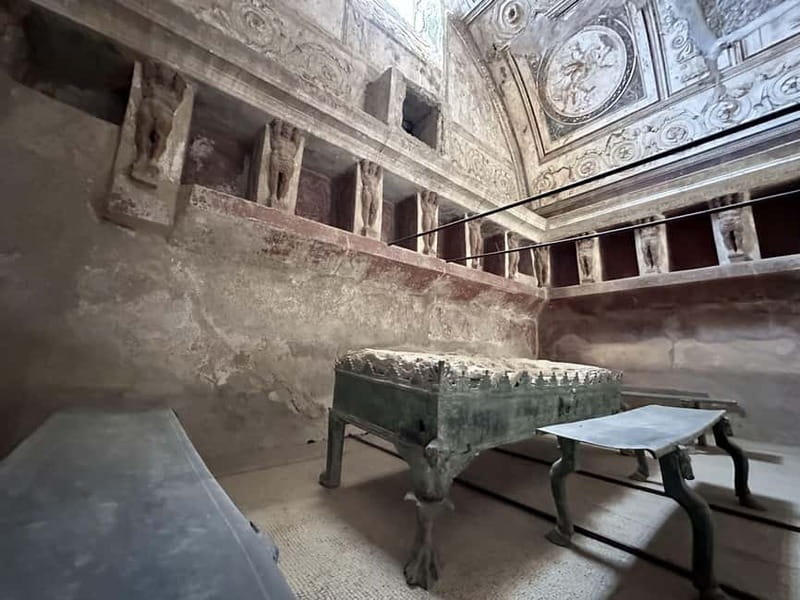
Then come the Forum Baths. This is one of the best sections for understanding daily life because baths weren’t occasional treats—they were part of routine social and physical life.
Even if you’re not an architecture nerd, it helps to see how design supported movement and use. A good guide makes the ruins feel logical: where people would have lingered, where activity would have happened, and why the spaces were built the way they were.
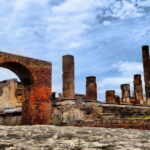
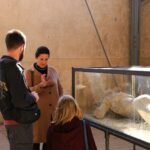

Macellum and plaster casts: the eruption becomes personal

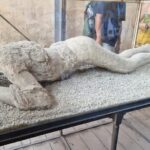
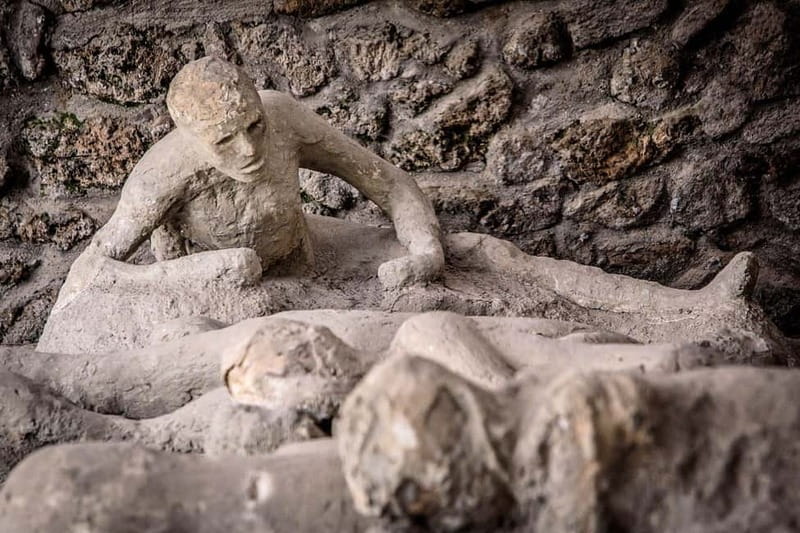
At the Macellum, the story turns. This is where you’ll see haunting plaster casts of victims—one of the most emotionally powerful parts of Pompeii.
I appreciate how this stop anchors everything that came before. You go from civic life, commerce, and leisure straight into the final, irreversible moment of 79 AD—and the guide’s explanations help you understand what you’re seeing without turning it into a shock-value stop.
Houses of the Tragic Poet, the Vettii, and the Faun: art as social language
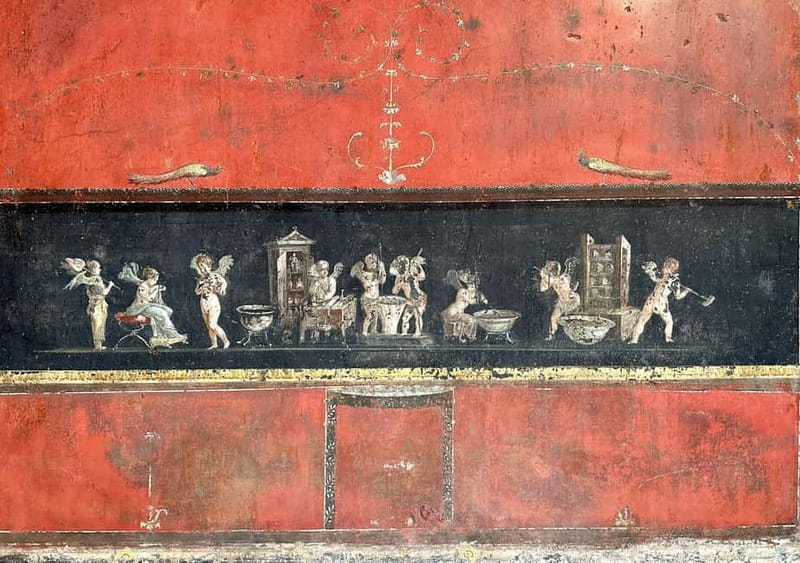
Pompeii’s houses are where you’ll understand taste, status, and how people used art as decoration and identity. The route includes the House of the Tragic Poet, the House of the Vettii, and the House of the Faun.
Look for the frescoes and mosaics in these homes. Your guide’s interpretations help you read the art like something more than wall patterns—symbols, stories, and style choices that signal who lived there and what they valued.
House of the Vettii: wealth you can see
This is a strong stop for anyone who likes details. Wealth shows up in materials, room layout, and the overall “designed-for-show” feel.
You’ll get better results if you slow down here for a few minutes. The guide will keep you moving, but you can still pause for the wall art and the floors if your legs hold out.
House of the Faun: Pompeii at a bigger scale
The House of the Faun feels expansive, and it’s a good reminder that Pompeii wasn’t only small streets and shops. You’re seeing how the wealthy lived and how space itself communicated rank.
If you’ve only planned a half-day for Pompeii, this is one of the places where guided context is worth paying for. A quick description from your guide can help you understand what’s central versus what’s decorative.
Lupanare and the theatre district: the city’s edges, not just its center
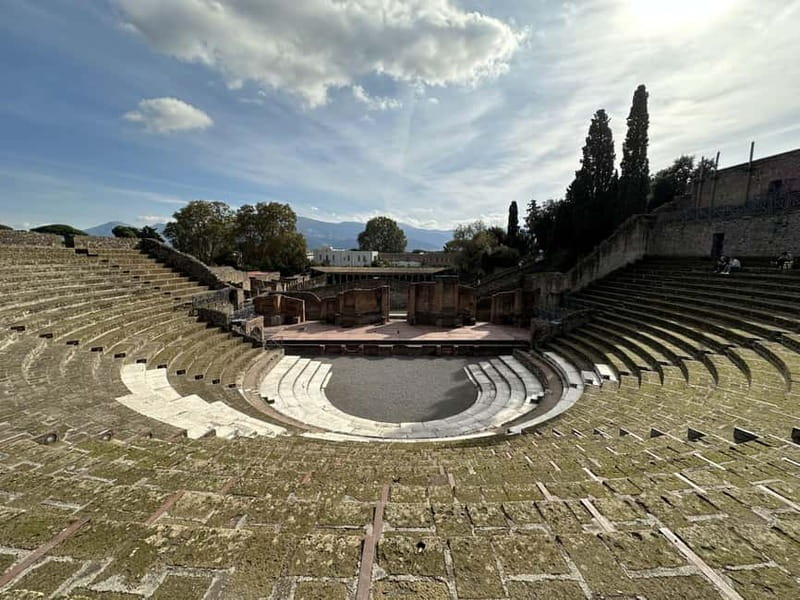
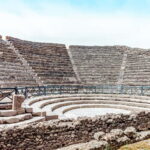
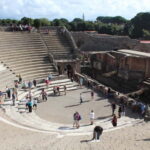
Next up is the Lupanare, followed by the Large Theatre. This part of the tour gives Pompeii some of its raw, human texture—entertainment, nightlife, and the side of city life that doesn’t fit neatly into schoolbook summaries.
The theatre stop matters because it shows how Romans spent leisure time. The Lupanare matters because it reminds you that Pompeii was also about work, economics, and everyday transactions—not only religion and politics.
If you’re traveling with teens or mixed-age group members, this section often lands well. It’s still history, but it reads like real human behavior in a real place.
Why the archaeologist + headset combo is the real value
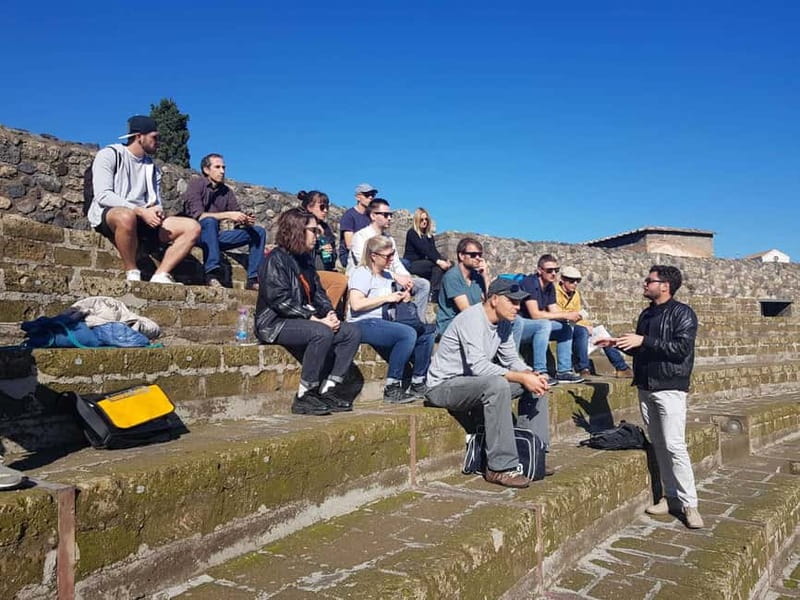
This tour is designed for a clear outcome: you get a guided walkthrough of key sites in 2 hours, with the sound quality to keep up. Headsets mean you can stand slightly to the side, listen, and still hear clearly while the group moves through the maze-like streets.
The guides also shape the experience through how they pace. I noticed patterns in the guide styles tied to names like Livio, Ivan, and Antonio: humor mixed with professional delivery, careful timing for photos, and a willingness to answer questions without rushing you.
And there’s another practical win: at the end, your guide points out what to see next after the guided segment. That’s smart because Pompeii is big, and you’ll save time by knowing where your energy should go afterward.
Price and value: why $50 can be money well spent
$50 per person for 2 hours is not “cheap,” but it can be good value in three ways.
First, your entry is handled with skip-the-line access and Express admission, which often matters more than people expect. The ticket line can chew up your morning or afternoon, and Pompeii is at its best when you’re inside the site with momentum.
Second, you’re paying for interpretation. Pompeii is easy to misunderstand if you’re scanning stone fragments on your own. An archaeologist and licensed guide helps you connect spaces to function—basilica to civic life, baths to daily routine, Macellum to commerce and the plaster casts to the eruption’s human story.
Third, you’re paying for time efficiency. The tour hits a dense route: Porta Marina, Basilica, the Foro Civile areas, temples, baths, Macellum, major houses, and the theatre district. If you only have a short window, this keeps you from seeing only the easiest parts.
What the 2-hour route feels like on the ground
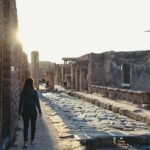
The pacing is active. Expect to keep moving and stop often enough to absorb key points and grab photos. This is a “see the best parts with context” format, not a slow museum stroll.
The upside is that you’ll leave with structure. Even if you want to return on your own later, you’ll know the city’s logic better than if you’d started with a map.
Where you’ll end: dropping at Pompeii Ruins and Piazza Esedra
At the end, you have two drop-off locations: Pompeii Ruins and Piazza Esedra. I like this setup because it lets you pick your next step based on what you feel like doing—either continue exploring immediately at the site, or reorient near Piazza Esedra to plan your next move.
If your schedule allows it, it’s very doable to extend your time after the tour. Your guide’s pointers help you avoid wasting hours backtracking through areas you didn’t understand the first time.
Who this Pompeii VIP tour suits best
This works especially well if you want a guide to help you hit the highest-impact sites without getting lost in details. It’s also a solid fit for families and mixed groups because the tour length is tight enough to hold attention, but long enough for real explanations.
I’d also recommend it to solo travelers. Walking Pompeii alone can be rewarding, but it can also become frustrating when you’re trying to figure out what you’re looking at while the crowds and pathways move around you.
Skip it if accessibility is your priority. The tour is not suitable for wheelchair users or people with mobility impairments, and it’s built for guests who can handle uneven ruins.
Quick practical notes before you go
Bring comfortable shoes and water. You’ll also need an ID or passport, since full names are required on the ticket.
One more planning tip: there’s a rule for Pompeii tickets that requires your full name and surname to be added, along with participants’ ages. You’ll send the details through the provided messaging channel before entry, and you should carry a valid ID the day of the tour.
Not allowed items include pets and alcohol or drugs. Swimwear is also not permitted, so pack like you’re going for a serious walk, not a beach day.
Should you book this archaeologist-led Pompeii walk?
If you’re choosing between a self-guided visit and a guided Pompeii route, I’d lean toward booking this one—especially if you only have a short time window. You get skip-the-line entry, a licensed archaeologist guide, headset audio, and a well-sequenced route that hits civic life, daily routines, major houses, and the eruption’s most human evidence.
If you have mobility needs or you want a slow, flexible pace where you can wander for hours without checkpoints, then this may feel too structured. But for most people—first-timers, couples, families, and history fans—this is a smart way to see Pompeii with context instead of confusion.
FAQ
How long is the Pompeii VIP tour?
The tour lasts 2 hours.
Where is the meeting point?
You meet outside Pompeii’s Porta Marina entrance, in front of the train station Pompei Scavi – Villa dei Misteri (Circumvesuviana). Your guide will hold a sign with Pompei VIP.
What is included in the ticket?
The tour includes skip-the-line entry tickets, Pompeii’s admission Express ticket, and a headset for better listening.
Is transportation included?
No. Transportation is not included.
Do I need a passport or ID?
Yes. You should bring a passport or ID card for the adults and children on the booking. Photo ID is fine.
Can I choose a private tour?
Yes. You can choose a private slot or a sharing small group experience.
What languages are available?
The live guide is available in English, Italian, French, and Spanish.
Is this tour suitable for wheelchair users or mobility impairments?
No. It is listed as not suitable for people with mobility impairments and wheelchair users.
Are there restrictions on what I can bring?
Pets are not allowed. Swimwear, alcohol and drugs, and electric wheelchairs are also not allowed.