REVIEW · POMPEII ARCHAEOLOGICAL SITE
Pompeii Ruins Private Tour with Optional Skip-the-Line Entry
Book on GetYourGuide →Operated by Tempio Travel Pompei Tickets · Bookable on GetYourGuide
Pompeii without the wait feels like cheating. This private 2-hour tour is built for people who want the biggest moments fast: an expert guide, fewer headaches at the entrance, and a walk through the everyday streets of a Greco-Roman city frozen in time. You’ll see Pompeii as a living place, not just a pile of stones.
I especially like the Skip-the-line EXPRESS setup. It can save your morning in a site where crowds can turn a quick visit into a long shuffle. I also love that the tour concentrates on the most meaningful stops, including Porta Marina (Sea Gate), the Forum, and surrounding temples and civic buildings—so you leave with a clear picture of how Romans actually organized their day.
One consideration: 2 hours is still a sprint in Pompeii. You’ll see key highlights, but you won’t cover the whole city—so come with priorities, or plan to build on this visit later.
In This Review
- Key Things That Make This Pompeii Tour Worth It
- Skip-the-Line EXPRESS and a Private Guide in Pompeii
- Porta Marina (Sea Gate): Your Walk Into Pompeii’s Daily World
- The Forum and Civic Buildings: How the Roman Town Was Run
- Temples, Porticoes, and Law Courts: Reading Power in Stone
- Everyday Roman Life After the Ash: Artifacts, Plaster Casts, and Pets
- The 2-Hour Rhythm: Pace, Shade, and Smart Expectations
- Price and Value: Is $254.89 per Group Actually Fair?
- Who This Tour Fits Best (and Who Might Prefer to Wander)
- Practical Notes Before You Go (So the Tour Feels Easy)
- Final Call: Should You Book This Private Pompeii Tour?
- FAQ
- How long is the Pompeii private tour?
- How big is the group?
- Does this tour include skip-the-line entry?
- What are the top sights included?
- Which languages are available for the guide?
- What should I bring?
- Are there restrictions on bags?
- Is there parking available?
- Is entrance free on the first Sunday of the month?
Key Things That Make This Pompeii Tour Worth It
- Skip-the-Line EXPRESS ticket helps you start seeing things sooner, even when Pompeii is packed.
- Private group up to 8 means your guide can shape the pace and answer questions without constant crowd management.
- Porta Marina access gets you into one of the original city entrances instead of only viewing the ruins from the edges.
- Forum + civic sights (temples, porticoes, law courts) show how a Roman provincial town ran.
- Human stories through plaster casts and preserved artifacts make the 79 AD eruption hit in a real, personal way.
- Guides can bring out daily-life details—like how you might spot a shop versus a house from door design.
Skip-the-Line EXPRESS and a Private Guide in Pompeii
This tour is designed around one big problem at Pompeii: time loss. The ruins are huge, signage can be confusing, and ticket lines can eat up your energy fast. With a Skip-the-line EXPRESS ticket, you’re aiming to spend your limited time moving through the site instead of waiting at the gate.
The other half of the value is the guide. A good guide doesn’t just list what you’re looking at. They help you connect buildings to routines—work, shopping, worship, and social life—so the city feels like it had people in it yesterday. You’ll also get a live guide in Spanish, English, French, Italian, or German, so you’re not stuck translating history in your head.
This is a private format, meaning you’re not fighting for attention in a big group. Reviews reflect this clearly: guides like Imma, Marina, Daniella, Giulia, Irene, Lucia, Rosella, Mele, Giro, Rossella, Carmen, and Alexandra were repeatedly praised for clear explanations and for keeping people engaged. That matters at Pompeii, where the temptation is to wander and miss the point.
You can also read our reviews of more private tours in Pompeii Archaeological Site


Porta Marina (Sea Gate): Your Walk Into Pompeii’s Daily World
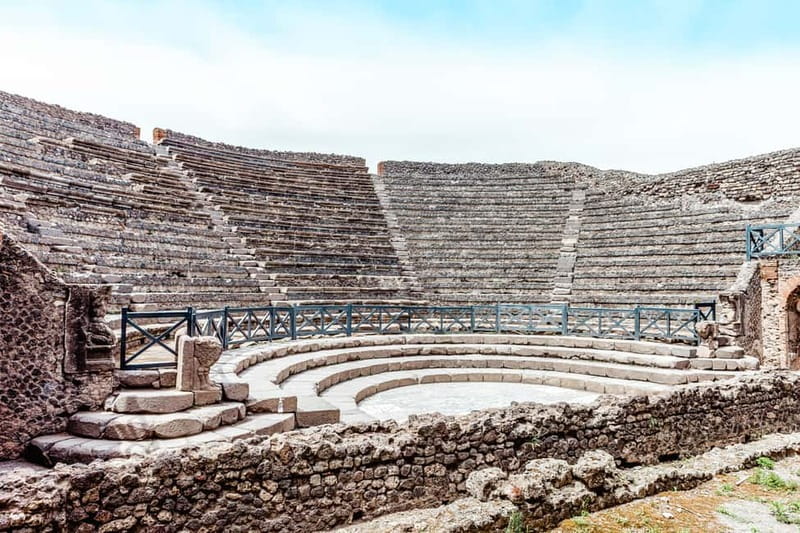
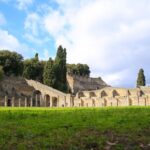
Your tour focuses on the parts of Pompeii that help you understand it as an everyday city, not just a dramatic disaster site. One of the standout stops is Porta Marina, the Sea Gate and one of the city’s original entrances.
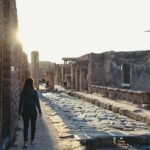
As you walk, the guide should frame what you’re seeing: where people entered, how city movement worked, and why location mattered. Think of it as building the city’s map in your mind. You’re also getting practice in reading the ruins: doors, street shapes, and building layouts that hint at how life worked.
A practical note: Pompeii’s ground can be uneven and slippery depending on weather. Even on a short guided tour, you may be on cobbles or stone steps. Wear good walking shoes and keep your balance—one real-world reminder from the experience is that pace can vary by guide and by group needs.
The Forum and Civic Buildings: How the Roman Town Was Run
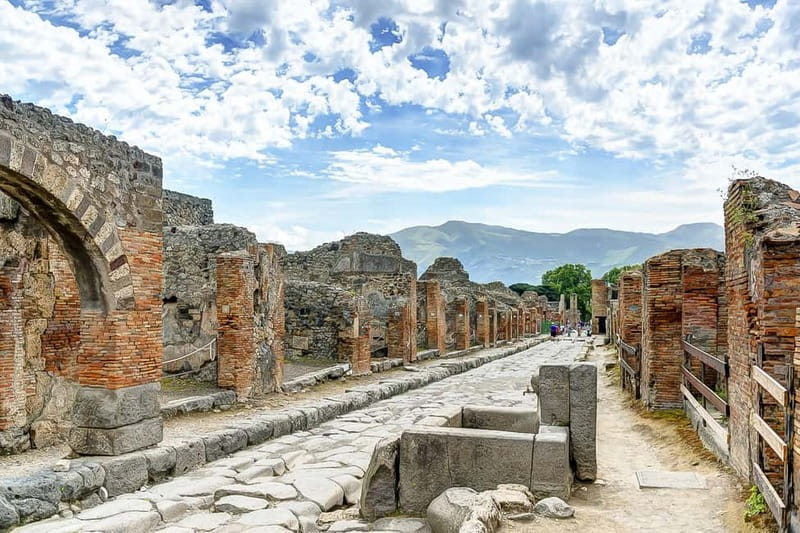
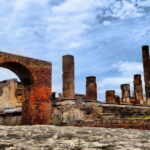
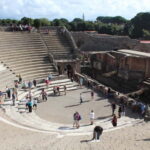
Next comes the heart of the city’s public life: the Forum and the surrounding civic buildings. This is where you stop seeing Pompeii as separate monuments and start seeing it as a system.
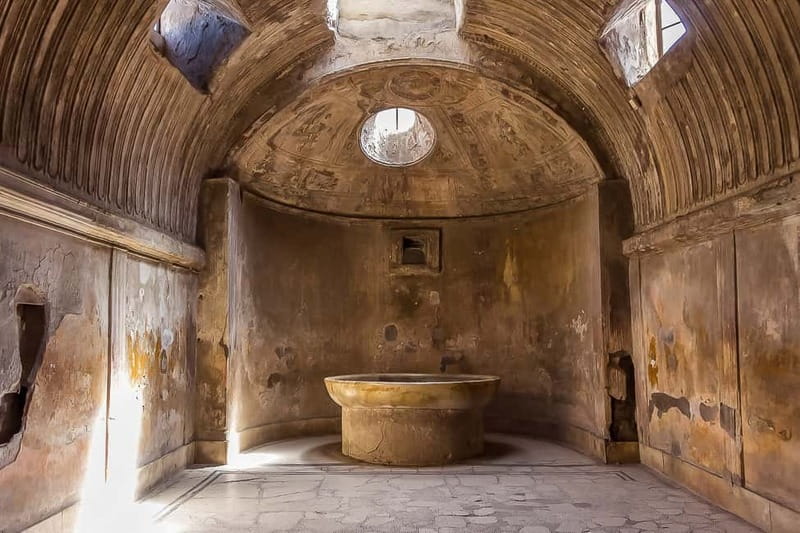
You’ll likely cover major components around the square, including temples, porticoes, and law courts. These weren’t random places. They were the stage for daily governance, public debate, religion, and commerce-by-proximity. In a Roman provincial city, people didn’t just live and eat; they participated—at least socially and often legally—in civic routines.
The guide’s job here is to connect architecture to human behavior. When a guide explains what the space suggests, you start recognizing patterns: where people gathered, why certain buildings were clustered, and how a “town square” functioned in the Roman Empire. That’s also where a private group really pays off. You can ask the obvious questions—what this space was for, how the city hierarchy worked, what normal life may have looked like.
Temples, Porticoes, and Law Courts: Reading Power in Stone

Pompeii’s power is visible in its shapes. Temples show religious priorities. Porticoes show public shelter and social flow. Law courts show formal order.
During this part of the tour, you should aim to slow down mentally. Even if your feet move fast, let your guide’s context help you notice details that you’d otherwise miss. Porticoes and public corridors can look similar at first glance. With guidance, they become tools for understanding how people spent time outside their homes.
From the tour experience, the best guides also add quick “how to look” tips. One example from the information you’ll hear: you might learn how to distinguish a regular house from a shop by looking at door-related design choices. That kind of detail doesn’t feel academic. It turns ruins into a readable street.
Everyday Roman Life After the Ash: Artifacts, Plaster Casts, and Pets
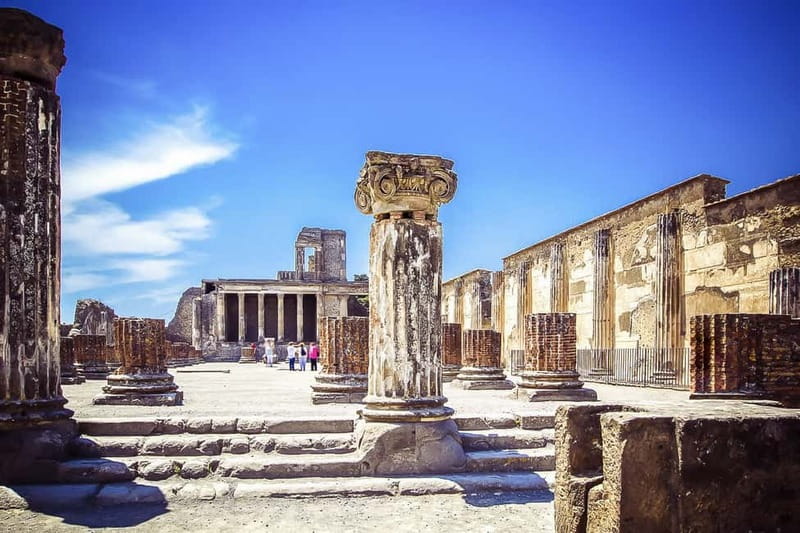
Pompeii’s eruption is famously tragic, but this tour tries to make it understandable—especially in the way it explains what the city preserved. You’re looking at a place covered for 1,700 years by volcanic ash and pumice from Vesuvius in 79 AD. The result wasn’t just ruins. It was a snapshot of ordinary life.
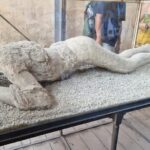
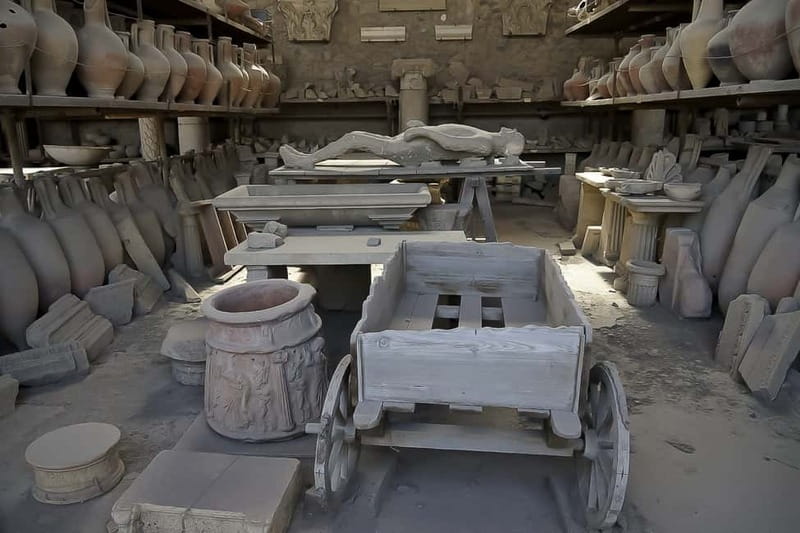
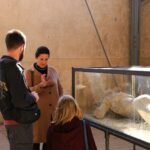
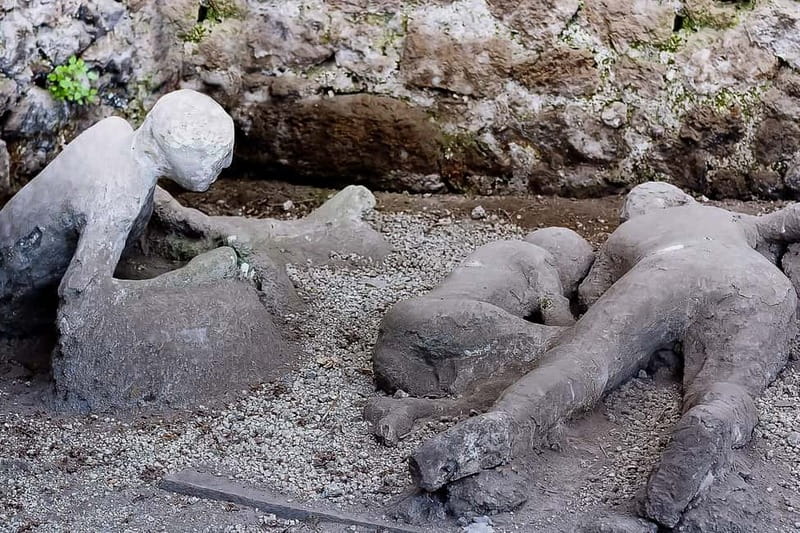
One of the most poignant aspects is the plaster cast models made from Pompeii citizens, plus preserved elements like pets. These moments tend to be the emotional center of the tour. They’re not there to shock you for shock’s sake. They help you grasp that the city wasn’t empty buildings; it was thousands of lives interrupted.
The preserved artifacts also help you understand the “everyday” claim in the tour description. You’re not only seeing grand civic sites. You’re getting reminders that people cooked, traded, worshipped, and ran errands—then the eruption froze those routines.
If you’re the type who loves connecting history to human behavior, this segment will feel like the tour’s payoff. If you get emotional easily, I’d brace for it, because these displays usually land with real weight.
You can also read our reviews of more tours and experiences in Pompeii Archaeological Site

The 2-Hour Rhythm: Pace, Shade, and Smart Expectations
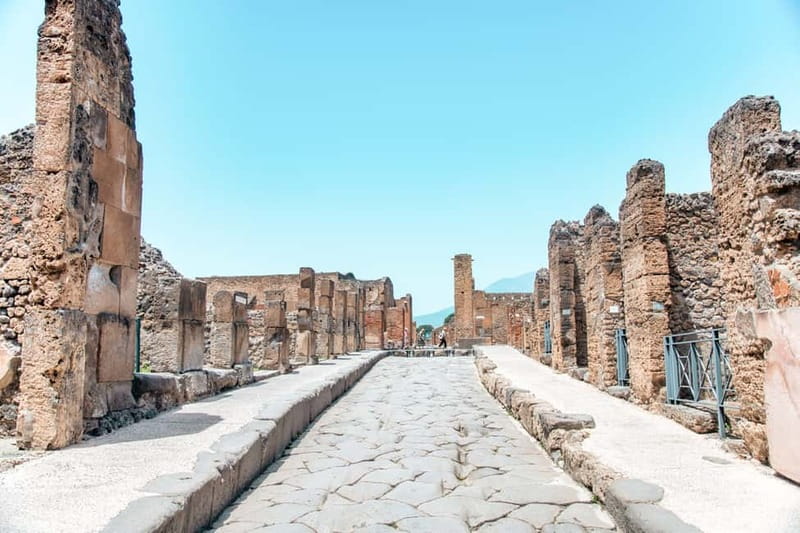
Pompeii is big. Even with skip-the-line entry and a private guide, you can’t see everything in two hours. This tour is a highlights circuit designed to leave you oriented: entrances, civic spaces, and emotional anchors.
In practice, that means the guide is likely to keep you moving. Some guides are described as fast and highly efficient, which can be great if you’re in good shape and want maximum coverage. Other guides were praised for slowing down, finding shady spots to pause, and adjusting the route to keep teens or multi-age groups comfortable and interested.
If you’re traveling with kids or a wide age range, a private format helps. Reviews highlight guides who worked hard to keep younger visitors engaged with stories and daily-life context. That’s not fluff. At Pompeii, attention is a resource, and a good guide protects it.
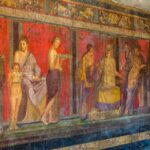
If you want extra time, think about pairing this tour with your own plan. One useful approach mentioned in the experience: after the guided portion, some groups continued on their own toward nearby sights such as the Villa of Mysteries using a separate ticket (often called a Pompei Plus ticket). You can treat this tour as your orientation session, then expand when you’re ready.
Price and Value: Is $254.89 per Group Actually Fair?
At $254.89 per group (up to 8 people), this sits in the “pay for convenience and quality” category. It’s not cheap, but it can be good value depending on your group size and your priorities.
Here’s how I’d judge it:
- If you’re a couple or family, the private price can feel more reasonable because you’re not paying per person for a guided experience. Your “cost per head” shrinks as the group fills.
- If you hate wasting time in long lines, the Skip-the-line EXPRESS piece is directly tied to this tour’s main promise. You’re buying back time in a place where queues can be brutal.
- If you care about context—why these buildings mattered, what everyday life looked like—private guiding tends to outperform self-guided wandering. Pompeii isn’t always intuitive at street level, and a guide helps you make sense of what you’re looking at.
There’s also free parking if available, which is a nice add if you’re driving. And remember the tour includes access to Porta Marina, plus a structured guided walk through core civic areas. In other words, you’re not just buying a lecture. You’re buying guided selection.
Who This Tour Fits Best (and Who Might Prefer to Wander)
This tour is ideal if you want a clear, high-impact Pompeii visit in limited time. You’ll likely love it if:
- you want a guided orientation to Pompeii’s most important areas
- you’d rather spend your energy looking at ruins than standing in lines
- you like asking questions and getting answers on the spot
- you have a group with mixed ages, and you want pacing to be adjustable
You might choose a different approach if you want to roam for hours without a set route. Pompeii is so large that “full wandering” can be enjoyable if you don’t mind losing the narrative thread. Also, if you’re trying to cover specific parts of Pompeii far beyond the core highlights, you may need a longer guided session or multiple visits.
Practical Notes Before You Go (So the Tour Feels Easy)
A few details can make your experience smoother:
- Bring a passport or ID card.
- Avoid bringing luggage or large bags.
- The entrance situation includes a special case: on the first Sunday of each month, entry is free, but tickets can’t be reserved ahead of time, so entry is not guaranteed.
- The meeting point can vary depending on the option booked, and your tour should end back at the meeting point.
One more piece of real-world sanity: some experiences emphasize that the tour can start from an office outside the ruins rather than inside the Pompeii complex itself. So don’t wait at the first gate you see. Confirm the exact meeting instructions before you head there, especially if you’re coordinating with timed entry plans.
Final Call: Should You Book This Private Pompeii Tour?
If you want Pompeii in two hours—with the right sights, a guide who connects buildings to daily life, and a better chance of avoiding the worst crowds—this private tour is an easy yes. The price is high enough that you should book it with intention, but the setup makes sense: skip the long line, focus on core areas like Porta Marina and the Forum, and include the human side through plaster casts and preserved details.
I’d book it if your goal is understanding and momentum. I’d reconsider if you’re trying to see every corner of Pompeii or if you need a slower, fully flexible pace. For most people—especially first-timers—this is a smart way to get oriented and feel the weight of Pompeii without burning a half-day in logistics.
FAQ
How long is the Pompeii private tour?
It runs for 2 hours. Starting times depend on availability.
How big is the group?
The price is for a private group up to 8.
Does this tour include skip-the-line entry?
Yes, it includes a Skip-the-line EXPRESS ticket depending on the option you choose (and may be added in the option with no tickets).
What are the top sights included?
The tour includes a guided visit to Pompeii with access to Porta Marina, plus key areas like the Forum, main square, and nearby temples/porticoes/law courts.
Which languages are available for the guide?
The live guide is available in Spanish, English, French, Italian, and German.
What should I bring?
Bring a passport or ID card.
Are there restrictions on bags?
Yes. Luggage or large bags are not allowed.
Is there parking available?
There is free parking if available.
Is entrance free on the first Sunday of the month?
Entrance is free on the first Sunday of each month, but because tickets can’t be reserved ahead of time, entry is not guaranteed.