REVIEW · POMPEII
Pompeii: living with the volcano
Book on Viator →Operated by Michele Arpa · Bookable on Viator
Pompeii feels human when you walk with the right guide. This 2-hour private tour frames everything you see as if you’re living the day before Vesuvius’ 79 AD eruption, turning ruins into real routines and real choices. You’ll cover streets, shops, and major public spaces at a steady, guided pace inside the Pompeii Archaeological Park.
I love two things most. First, the route makes daily life feel practical—where people gathered, ate, shopped, argued, and relaxed. Second, the explanations connect big sites (like the amphitheater) with small clues (like the names of candidates painted on walls for magistrate elections), so Pompeii stops being just stone and becomes a working city.
One consideration: the price covers the guide service, but entrance tickets aren’t included, so you’ll want to budget a bit more up front. Also, with time limited to about two hours, you’ll get highlights rather than every corner of the site.
In This Review
- Key things to know before you go
- Pompeii, one day before the eruption
- Your guide: Michele Arpa’s approach in plain language
- Pompeii Archaeological Park: the route that makes the city click
- The amphitheater and gladiator world
- Shops, streets, and what “living there” really meant
- Domus and the contrast between luxury and ordinary life
- Election names on the walls: politics you can physically see
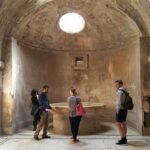
- The spa and how Romans relaxed
- Forum life: the civil forum square and public decisions
- Price and value: what $33.36 covers and what it doesn’t
- Timing and physical reality: a good pace, but it’s still Pompeii
- Who this Pompeii tour is best for
- Should you book Pompeii: living with the volcano?
Key things to know before you go
- A 79 AD time-slice approach: the whole experience is organized around one tense day before the eruption
- Private, English-guided pacing led by Michele Arpa
- Theater + amphitheater focus so gladiator culture isn’t just a backdrop
- Public life details like election markings and how the city ran its civic world
- Bathing and downtime at the spa to show how Romans slowed down, not only fought
- Guide included, admission not included so plan your total cost early
Pompeii, one day before the eruption
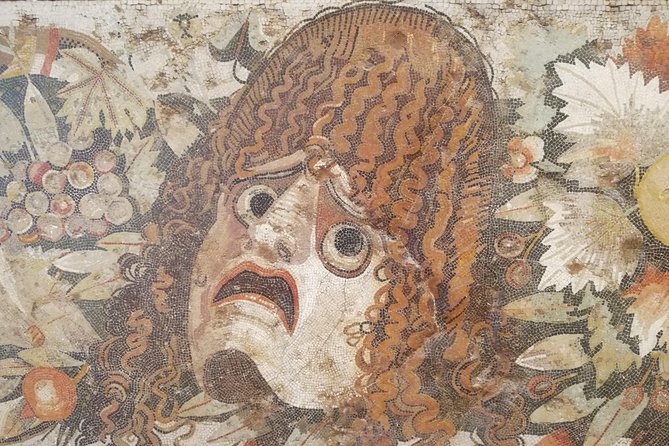
Pompeii’s ruins can feel cold at first. You’re surrounded by broken walls and dark openings, and it’s easy to think the whole place is one big museum display. This tour fights that problem with structure. Instead of a random walk, it’s organized around the idea that you’re moving through Pompeii as an inhabitant would—right up to the day the volcano changed everything.
The time framing matters because it changes how you notice things. A doorway isn’t just a doorway anymore. A courtyard isn’t just architecture. Streets and shops feel like routes you could take to work or to dinner. Even the public spaces read differently when you’re imagining the city as crowded, loud, and busy the day before the ash fell.
You also get a clear rhythm to your visit. It’s not “see everything fast.” It’s “see the right things in the right order,” so the city starts to make sense while you’re still standing in it.
You can also read our reviews of more tours and experiences in Pompeii.
Your guide: Michele Arpa’s approach in plain language
The most consistent praise for this experience is the guide. Michele Arpa leads in a way that turns Pompeii into a story you can follow, not a list of facts you have to memorize. The tone is intimate and friendly, and the pacing is designed for real understanding rather than rushing.
You’ll especially notice how he connects sites with everyday meaning. The tour doesn’t treat the amphitheater as a standalone spectacle. It ties gladiator culture to what people did, how they spent time, and what they cared about. The same goes for the domus, the shops, and the forum spaces. Explanations are anchored to what you’re looking at, so the city feels coherent.
One extra reason this guide style can be valuable: Michele has a reputation for helping people solve small problems when language or practical issues pop up. For example, he’s helped visitors handle an online parking-ticket payment when they didn’t speak Italian. That kind of calm problem-solving won’t replace common sense, but it does reduce stress when you’re traveling with limited language support.
Bottom line: if you want Pompeii to make emotional and practical sense—not just photo moments—this guided approach is the point.
Pompeii Archaeological Park: the route that makes the city click
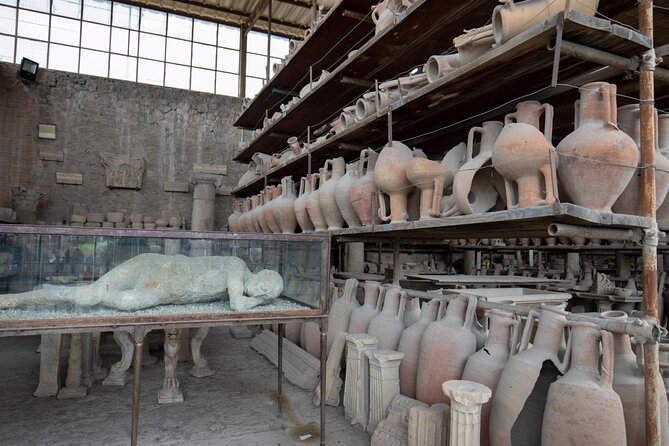
Your tour stays inside the Pompeii Archaeological Park, with the meeting point right at the park itself (Archaeological Park of Pompeii, 80045 Pompei). This matters because you don’t waste time figuring out logistics on the day. You can focus on walking and learning.
The route is built to take you through Pompeii like a city resident, hitting a mix of entertainment, commerce, home life, and civic life. In about two hours, you’ll move between areas that show how Pompeii worked day to day. That balance is what makes the time feel worth it.
Here’s what that usually looks like in practice:
- You start in the core of the park, where streets and buildings give you your first “scale check.”
- You shift from everyday spaces to entertainment spaces, so the amphitheater doesn’t feel random.
- You move back toward public decision-making areas, where political life shows up in physical clues.
- You end with a more reflective stop, tied to how people lived under constant Roman routines even right before disaster.
There’s a helpful note in how the tour is framed: some areas can be restricted at certain times. A good guide plan means you’re not left staring at taped-off barriers. You get context for what you can access right now, and you still come away with the bigger picture.
The amphitheater and gladiator world
The amphitheater stop is one of the biggest emotional draws of Pompeii. But this tour doesn’t treat gladiators like a generic “wow” moment. It connects the arena experience to the wider culture of spectacle—how the city’s people spent time, how entertainment worked, and what power looked like on display.
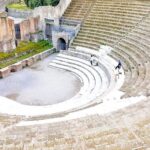
You’ll also be given atmosphere in how the theater and amphitheater areas are described. Even from the outside, these spaces feel designed for crowd energy, noise, and tension. With a guided narrative, you’ll understand why gladiator fights mattered beyond sport: they were tied to social order, status, and the public performance of power.
Practical tip: in a place like Pompeii, ruins can blur together. The guide’s job here is to help you keep straight what you’re looking at—where crowds would have gathered, how sightlines worked, and how the event would have felt from the ground level rather than from a distance.
If you like cultural context with your archaeology, this part will land well.
Shops, streets, and what “living there” really meant
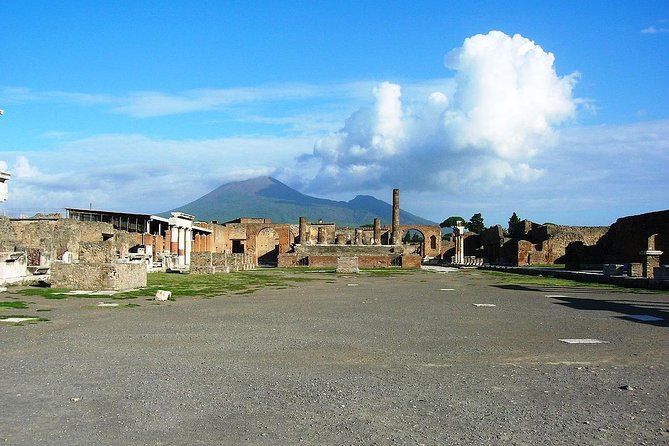
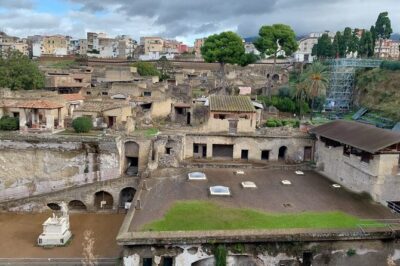
One of the most effective parts of this tour is how it treats Pompeii as an inhabited city. You walk the streets and shop areas with the idea that people were moving through them one day before the eruption of 79 AD. That framing is more than poetic. It’s a way to interpret the layout.
Here’s what you can expect to learn as you walk:
- how commercial life would have shaped daily movement
- how street space relates to how people met, bought, and traveled
- how the physical setting supports the idea of routine, not just tragedy
This is where the tour earns its value. Many Pompeii experiences concentrate heavily on disaster. This one balances that with normal life: eating, shopping, spending time, and moving through familiar routes.
You’ll also hear how archaeologists’ work affects what you see today. The tour includes the idea of meeting the people who lost their lives in those frantic hours—through the remains preserved by volcanic ash and studied over time. That’s heavy material, but it’s handled by keeping you anchored to what you’re actually looking at.
Domus and the contrast between luxury and ordinary life

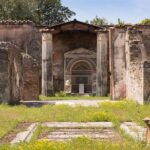
Pompeii isn’t one uniform class experience. The city ranges from everyday spaces to elite homes. This tour intentionally includes that contrast by pointing you toward the domus of the richest people in society, alongside the more modest spaces connected to meals and daily routines.
That matters because it prevents a common mistake: turning Pompeii into a single story. Instead, you get a sense that different people in the same city had very different realities. Yet the city still connected them—through civic life, entertainment, and public spaces.
Even within the time limits of a two-hour tour, this class contrast adds depth. It helps you understand why the same streets could serve multiple worlds: a place for commerce, a place for gathering, and a place for showing status.
Election names on the walls: politics you can physically see
One of the most interesting Pompeii details is the political signage preserved in stone and plaster. On this tour, you’ll read on the walls the names of the candidates for magistrates’ elections.
That one detail changes your whole experience of the site. It’s not just ruins anymore. It’s propaganda, public messaging, and the everyday visibility of politics. You’re seeing how power advertised itself and how citizens would have encountered that messaging during their normal routines.
If you like details that make the city feel real, this is a standout. It’s also a reminder that Pompeii was not a distant civilization. It was modern in its own way: people campaigned, competed, and used public space to push their case.
The spa and how Romans relaxed
A lot of visitors only associate Pompeii with public squares and spectacle. This tour adds a different angle by making space for relaxation at the spa.
That’s a smart choice for two reasons. First, baths tell you what people did to unwind and socialize, not only what they did when they were chasing status. Second, the spa setting helps you understand why daily routines mattered so much. Disaster didn’t erase the fact that life was built around food, conversation, and bathing practices.
When you’re walking ruins for hours, it helps to have a stop that feels slower and more human-scale. The spa stop does that, while still staying true to the theme of “living with the volcano.”
Forum life: the civil forum square and public decisions
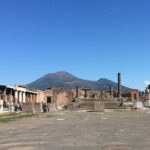
The tour ends with a strong public-life note at the splendid square of the civil forum. This is where Pompeii most clearly shows civic structure—how citizens moved through the city’s decision-making spaces and how public order was reinforced through the built environment.
You’ll get explanations tied to what people would have used these spaces for, not just what they looked like. And since the tour is framed around the day before the eruption, you experience the forum as something active and urgent rather than as a silent stage.
This stop also helps you tie the whole tour together. Entertainment spaces explain one side of Pompeii culture. Residential and commercial areas explain another. Then the forum gives you the political and administrative core.
When your tour ends here, you leave with a city-shaped memory, not just a collection of impressive ruins.
Price and value: what $33.36 covers and what it doesn’t
At $33.36 per person, this is a fairly accessible way to get guided meaning in Pompeii—especially because you’re booking a private tour for your group with a named guide.
But the math has one key caveat: admission tickets to the site are not included. So your real total will be the tour price plus the park entry. That’s not a deal-breaker, just don’t assume the $33.36 is the whole bill.
Still, value-wise, the guide service is doing heavy lifting. Two hours is short in a huge site, and Pompeii rewards the right navigation. A good guide helps you focus on what matters and keeps you from wandering into dead ends where the city’s story is hard to grasp.
If you’re coming to Pompeii for the first time, or you want more than a self-guided walk, this price can be a smart shortcut to understanding.
Timing and physical reality: a good pace, but it’s still Pompeii
The tour runs about 2 hours and operates in the morning window (from 9:30 AM to 11:30 AM). A morning start tends to feel calmer and helps you beat the thickest crowds, but the main point is that you have a structured visit rather than an open-ended free-for-all.
You also need moderate physical fitness. Pompeii terrain and the overall condition of outdoor routes can be uneven. The tour also notes that due to the state of the roads, it is not recommended for people with mobility difficulties. Service animals are allowed, and the tour is near public transportation, which can help if you’re arranging onward travel.
I’d treat this as an active walking tour inside an ancient outdoor site. If that fits you, you’ll enjoy the flow. If not, you’ll likely feel rushed or uncomfortable.
Who this Pompeii tour is best for
This experience works especially well if you want:
- a structured walk through Pompeii’s most meaningful spaces in a limited time
- story and interpretation, not only photographs
- a guide who can explain symbols and civic clues like election markings
- a mix of daily life, entertainment, elite homes, and public civic areas
It can also be a good match for families or groups that want one person to keep everyone pointed in the right direction, while still feeling personal and not like a mass group bus situation.
And if you’re the type who likes to build a bigger day, Michele Arpa is associated with other Pompeii and Herculaneum experiences. In fact, some people book him for additional sites in the same stretch, so you can keep the same interpretation style while expanding your itinerary.
Should you book Pompeii: living with the volcano?
I’d book this tour if you want Pompeii to feel like a city in motion, not just a cemetery of buildings. The theme—living the day before the eruption—gives you a strong framework, and the focus on practical daily life details makes it easier to remember what you saw.
I’d skip or rethink it if you’re expecting total coverage of the whole archaeological park. Two hours is a highlights pass. Also, you’ll need to add site entry tickets on top of the tour price.
If you’re okay with walking, and you want guided meaning from a personable English-speaking guide like Michele Arpa, this is a solid way to make Pompeii click fast—then still have energy to explore on your own afterward.