Pompeii moves at your pace. This wheelchair-friendly Pompeii experience is built around a special, about 2 km path and a guided visit to the park’s biggest highlights, with skip-the-line admission so you’re not stuck in a queue. It runs for about 2 hours, which is a good length when you want real Pompeii without turning the day into a full marathon.
I also like the way the guide makes the ruins feel practical and human, from main streets and everyday stops like mills to major public spaces like the Forum and the Theater. One caution: meeting the tour at the Amphitheatre can be a bit of a puzzle if you’re coming from farther away, and at least one wheelchair user found the route to the starting point more complicated than expected.
In This Review
- Key points at a glance
- Skip-the-line Pompeii tickets without the wait
- The 2 km accessible route through Pompeii’s top highlights
- Starting at the Amphitheatre: a clear beginning point
- Pompeii Archaeological Park, in the order that makes sense
- Thermal baths and domus areas: everyday life, not just temples
- Gladiators’ Gym and mills: work, training, and food
- Lupanare and Pleasure Houses: adult life in Roman style
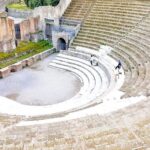
- The Theater and the Forum: public life and performance
- What makes the guiding here feel worth it
- Price and value for a wheelchair-accessible private tour
- Who this tour fits best
- Should you book this wheelchair-accessible Pompeii tour?
- FAQ
- How long is the Pompeii tour?
- Where does the tour start?
- Is admission included?
- Do I get skip-the-line access?
- Is this tour private?
- Is a mobile ticket provided?
- Is the tour wheelchair accessible?
- Are service animals allowed?
- When will I get confirmation after booking?
- What is the cancellation policy?
Key points at a glance
- Skip-the-line Pompeii Archaeological Park tickets so your time goes to ruins, not lines
- Wheelchair-accessible route along a special path, about 2 km long
- Guided highlights in ~2 hours, including baths, Forum, Theater, domus areas, and more
- Pompeii’s day-to-day stops like the mills and the Lupanare for a fuller picture of Roman life
- Private tour for your group only, which matters when you’re using a chair or scooter
- Accessible help from the guide, with positive notes about guides like Mariano and Momma
Skip-the-line Pompeii tickets without the wait
If you’ve ever visited Pompeii, you already know the big time-waster: waiting. This tour solves that with skip-the-line ticketing included, plus a guided format that keeps things moving. That matters even more on an accessible tour, because you don’t want long idle stretches when you’re managing a wheelchair or scooter.
The admission is part of the package, and the tour is centered on Pompeii Archaeological Park highlights. So instead of drifting around on your own, you get a route that’s designed to cover the main sites people actually come for, without requiring you to figure out what’s worth your limited energy.
And yes, you’ll get that Roman-stone feeling quickly. Pompeii’s layout can look confusing at first glance, but a guide helps you connect streets, buildings, and public spaces so the city starts making sense fast.
You can also read our reviews of more tours and experiences in Pompeii.


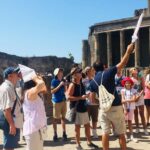
The 2 km accessible route through Pompeii’s top highlights
The tour’s accessibility approach is what makes it different from the standard Pompeii shuffle. It follows a special path about 2 kilometers long, designed to make Pompeii’s key areas reachable for wheelchair users.
That distance is the real “sweet spot” here. It’s long enough to feel like you actually saw Pompeii, but short enough that you’re not grinding for hours. For many people, this is the difference between a successful visit and a tiring one where you only catch the edge of what you came to see.
Also, the tour is private, meaning only your group participates. That can make a noticeable difference on an accessible itinerary. You’re not constantly catching up to a faster group, and you’re less likely to get stuck behind bottlenecks because someone else is trying to force the pace.
A practical tip from how these tours feel in real life: arrive ready to start on time. When a route is carefully managed, a late start can compress everything, especially in a place with crowds even when you skip the entry line.
Starting at the Amphitheatre: a clear beginning point
You begin at the Amphitheatre of Pompeii in Piazza Immacolata, Pompei NA, Italy. The tour ends back at the meeting point, so you’re not dealing with the stress of navigating to a new exit or finding your way back after the visit.
This starting location is helpful because it’s a recognizable anchor in the park area. And it also sets expectations: Pompeii is a city, not a single monument, so the best tours help you orient like you would in a real neighborhood—street by street, stop by stop.
One thing to keep in mind, based on accessibility feedback: the meeting point itself can be tricky to reach smoothly depending on where you’re coming from and how you travel. If you’re using a wheelchair or scooter, I’d map out your route ahead of time and build in extra buffer so you don’t arrive stressed.
Pompeii Archaeological Park, in the order that makes sense
The tour is built as a highlight circuit through Pompeii’s most important remains. It’s not just photos and facts. The goal is to help you picture how Romans lived, worked, and spent time.
From what’s included, here are the main categories you can expect to see, in a guided flow:
Thermal baths and domus areas: everyday life, not just temples
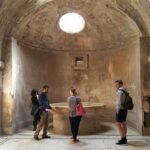
You’ll visit the thermal baths and domus-type spaces. This is where Pompeii gets oddly relatable. It’s easy to focus only on the big public buildings, but the baths and home life show how people used community space, privacy space, and routine space day after day.
Bathrooms, water systems, and everyday rooms can feel like technical history until a guide points out what it means for daily behavior. That’s where the tour format helps: you’re not wandering alone trying to interpret floor plans.

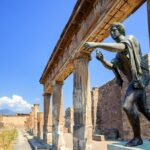
Gladiators’ Gym and mills: work, training, and food
Two included stops—Gladiators’ Gym and the mills—add texture. Pompeii isn’t only a dead city frozen in grief. It’s also a place where people trained and worked, and where grain and food mattered.
The gladiator-related spaces help you think about sport and status. The mills help you think about labor and supply. Put together, they shift Pompeii from ruins-as-a-museum to ruins-as-a living system.
Lupanare and Pleasure Houses: adult life in Roman style
You’ll also see the Lupanare, famous for its erotic frescoes, and you’ll visit Pleasure Houses. This part is memorable because it’s so different from the standard Roman tourist checklist.
It can also be emotionally awkward for some people, depending on your comfort level and the group. If you’re traveling with teens or if you prefer more family-friendly pacing, tell your guide what you’d rather focus on. A good guide will help you handle the stop without making the whole tour feel tense.
Still, for adults who want the full picture, these stops are valuable because they show that Roman life included entertainment and commercial sex in a very public, coded way. Pompeii is honest like that.
The Theater and the Forum: public life and performance
The Theater and the Forum are the tour’s big public-life anchors. A theater points you to entertainment and civic gatherings. The Forum points you to politics, commerce, and community decisions.
When your guide ties these places together, Pompeii starts to read like a real city. You begin to understand where people would gather for news, where they would watch performances, and where daily conversations turned into public business.
What makes the guiding here feel worth it
This tour is guided, and the guides matter. In the feedback I reviewed, two names come up with strong praise: Mariano and Momma. The consistent thread isn’t just knowledge. It’s attention to whether everyone can actually see and experience the sites.
That’s huge on an accessible tour. Good guiding means you don’t just talk while someone else waits. It means you slow down at the right spots, angle your view so you can take in what’s in front of you, and explain what you’re looking at without making you guess.
There’s also a practical angle: guides helped wheelchair users and people in a walking boot enjoy the visit. That tells me the tour is the kind of operation that expects mobility needs, not just “okay, you can come along.”
So when you’re considering this experience, think less about the ruins you already know you want and more about whether you’ll be able to understand them in the time you have.
Price and value for a wheelchair-accessible private tour
At $254.67 per person, this isn’t a budget tour. But value isn’t only about price. It’s about what’s included and what kind of day you’re buying.
You get:
- Skip-the-line Pompeii tickets
- A guided tour
- A route designed for wheelchair access along an about 2 km path
- A private tour format for your group only
- Mobile ticket delivery
- Group discounts are listed as a feature
Here’s how I’d judge the cost in your shoes: if you’re paying for a traditional, non-accessible Pompeii visit, you might spend the day battling navigation, crowd flow, and “can I actually get to this spot?” problems. This tour is paying for friction removal. That matters when you’re managing limited mobility or when a chair or scooter needs a predictable path.
Also, two hours is a short enough commitment that you’re not risking your whole day on logistics. Pompeii is spread out, and timing is everything. Paying a premium can make sense when it turns Pompeii into a planned experience rather than an improvisation.
Who this tour fits best
This is a strong match if you:
- Use a wheelchair or scooter and want a planned route rather than a self-guided scramble
- Need a more controlled pace and appreciate a guided explanation for what you’re seeing
- Prefer a private format where your group isn’t held back or rushed by others
It also makes sense for families and mixed mobility groups if the goal is to see the main Pompeii highlights without turning the visit into a negotiation about stairs, detours, and time limits.
If you’re the kind of traveler who loves long, slow wandering with lots of time for side streets and extra stops, two hours may feel tight. But for most people coming to Pompeii for its “greatest hits” plus context, it’s a practical length.
Should you book this wheelchair-accessible Pompeii tour?
Book it if you want Pompeii’s major highlights with skip-the-line entry and a wheelchair-friendly route that’s measured to fit real mobility needs. The guided format, the private setup, and the mix of sites (baths, Theater, Forum, domus areas, mills, Gladiators’ Gym, Lupanare, Pleasure Houses) are exactly what you want for a first Pompeii visit.
Skip it or at least double-check your expectations if you’re worried about getting to the meeting point smoothly. One accessibility-related concern comes up around how complicated it can be to reach the Amphitheatre start location. With a little planning on your end, that risk can shrink fast.
If you’re ready to prioritize a smooth, meaningful Pompeii visit over maximum wandering, this tour is a solid pick.
FAQ
How long is the Pompeii tour?
The tour lasts about 2 hours.
Where does the tour start?
It starts at the Amphitheatre of Pompeii, Piazza Immacolata, 80045 Pompei NA, Italy.
Is admission included?
Yes. Admission ticket is included with the tour.
Do I get skip-the-line access?
Yes. Skip the line tickets are included.
Is this tour private?
Yes. Only your group will participate.
Is a mobile ticket provided?
Yes. A mobile ticket is included.
Is the tour wheelchair accessible?
The tour is designed with a special path of about 2 kilometers to make Pompeii accessible for everyone, including wheelchair users.
Are service animals allowed?
Yes. Service animals are allowed.
When will I get confirmation after booking?
Confirmation will be received at the time of booking.
What is the cancellation policy?
You can cancel for free up to 24 hours in advance for a full refund.
If you want, tell me your group size and whether you’re using a wheelchair or scooter. I’ll help you sanity-check if the 2-hour, 2 km format matches your pace.