REVIEW · POMPEII
Pompeii: Tour with Archaeologist Guide & Skip-the-Line Entry
Book on Viator →Operated by Travelcampania · Bookable on Viator
Pompeii hits fast, even in two hours. This archaeologist-guided Pompeii walk focuses on the big, unforgettable sights of the UNESCO site—then ties them directly to the eruption of Vesuvius in 79 AD. The skip-the-line entry also matters, because Pompeii can eat up time before you even step into the ruins.
I especially love how the route blends public Pompeii and private Pompeii. You’ll look at the amphitheater and main civic spaces like the Forum and Basilica, then you’ll shift into everyday life in the domus with frescoes, plus places that feel surprisingly specific, like the Stabian baths and the lupanare. A short tour like this works best when the guide gives you real context—and that’s the point here.
One consideration: two hours is tight for a site this vast. You’ll see a lot of highlights, but you won’t have that slow, wander-all-day luxury—so wear comfy shoes and keep your expectations focused on getting your bearings fast rather than reading every wall like a novel.
In This Review
- Key highlights worth planning for
- Skip-the-line entry that starts your tour on the right foot
- Piazza Esedra to Foro di Pompei: how the route makes sense
- Teatro Grande and the Roman stage: where you get context fast
- The Forum, Basilica, and Via dell’Abbondanza—public Pompeii in plain view
- Domus with frescoes: how private homes make Pompeii feel real
- Stabian baths and the lupanare: leisure, routine, and hard truths
- The casts and 79 AD: the moment the story turns personal
- Price and value: is $57.84 reasonable for 2 hours?
- Who this Pompeii tour fits best
- Should you book this Pompeii archaeologist tour?
- FAQ
- FAQ
- How long is the Pompeii tour?
- Does the price include admission and skip-the-line entry?
- Where do I meet the guide, and where does the tour end?
- What key Pompeii sites will I see?
- What kind of walking is involved?
- Can I cancel, and what’s the cutoff?
Key highlights worth planning for
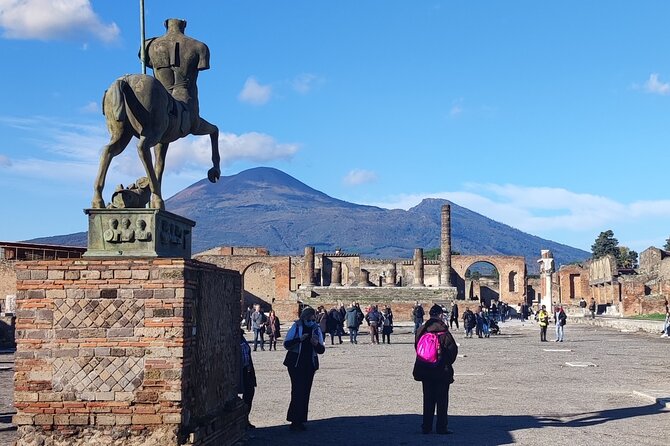
- Skip-the-line ticket handling by your guide, so you spend less time stuck at entrances
- Teatro Grande/amphitheater area as your first major anchor point
- Via dell’Abbondanza and the public city layout, so you understand how people moved through Pompeii
- Frescoed Roman domus and preserved everyday details that make the tragedy feel personal
- Stabian baths + lupanare for a look at leisure and local life beyond the temples and forums
- 1863 casts by Arch. Giuseppe Fiorelli, which turn the eruption story into something you can actually picture
Skip-the-line entry that starts your tour on the right foot
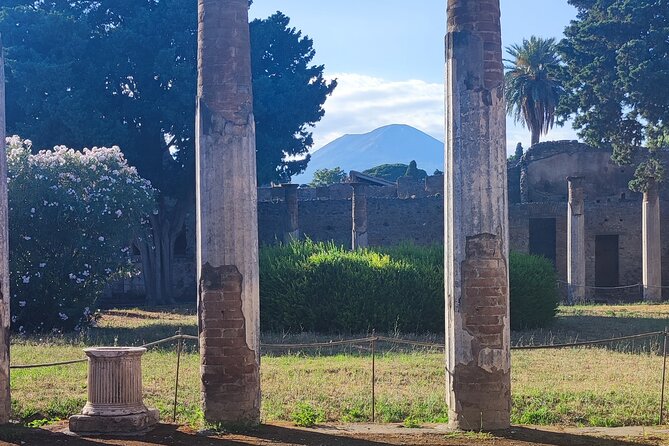
A huge win here is the way the skip-the-line service is handled. Your guide takes care of the entrance tickets, which means you’re not burning your morning queuing outside. In Pompeii, that kind of time saved is real value, not just a convenience.
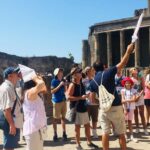
You’ll start near Piazza Esedra (meet near Coffee Shop Vittoria Bar) and then head into the park with an archaeologist guide who keeps the story tight. The tour lasts about two hours, so every minute counts. If you’ve got limited time in the area, this format helps you get to the heart of Pompeii without turning your day into logistics.
Also, the group size is capped at 25 people. That usually translates to an easier pace for questions and photo stops. You won’t feel like you’re sprinting through the ruins with a hundred strangers.
You can also read our reviews of more guided tours in Pompeii

Piazza Esedra to Foro di Pompei: how the route makes sense
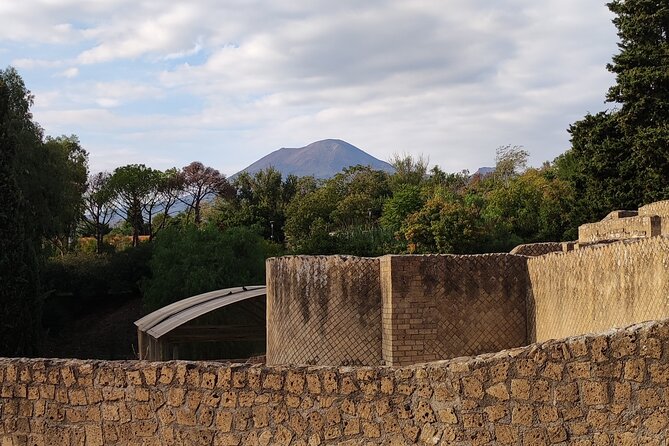
The tour starts from the area around Piazza Esedra—specifically, meet your guide near Coffee Shop Vittoria Bar—and ends at Foro di Pompei near Via Villa dei Misteri, 2. That end point is helpful if you want to keep exploring afterward, because you can stay inside the archaeological park.
The overall flow is smart: you begin with a major public landmark, then work through key streets and civic buildings, and finally land on some of the most haunting “how did this happen?” moments. That order matters. It helps you build a mental map before your brain tries to process the tragedy.
One practical note: the tour involves walking through uneven ground in an archaeological park. The activity lists moderate physical fitness as the expectation. If your knees and ankles aren’t thrilled by cobbles and slopes, bring good shoes and plan for small breaks.
Teatro Grande and the Roman stage: where you get context fast
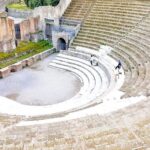
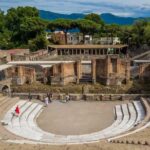
Your first big stop is Teatro Grande, part of the ancient amphitheater complex. This is a great opener because it’s instantly readable: you can see how crowds gathered, how space was organized, and how public life worked in Pompeii.
From there, you’ll be guided through major connections in the city. The tour highlights routes that show you how people likely moved between entertainment, daily business, and civic space. It’s not just “look at that building”—it’s “here’s what this meant for how Pompeii functioned.”
This kind of start is especially valuable if you’re visiting for the first time. Amphitheater and street alignments help you stop feeling lost, and they give your later stops better meaning. Even if you’ve read about Pompeii before, the physical layout can still surprise you.
The Forum, Basilica, and Via dell’Abbondanza—public Pompeii in plain view

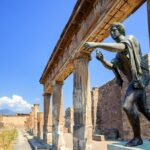
A standout part of this tour is how it ties together Via dell’Abbondanza with the Forum and Basilica. These are the places where you can feel the city’s rhythm: commerce, administration, gatherings, and status.
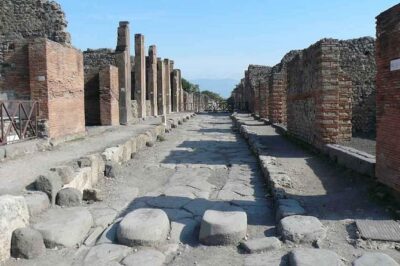
Walking a main street inside the ruins is like getting a cheat code for understanding the city. You can look down the corridor of history and imagine storefront life, foot traffic, and social power—long before the eruption ever interrupts the story.
Then the Forum and Basilica help you zoom out from daily movement to public authority. You’ll also see references to key sites that give a fuller picture of Roman urban design. The guide’s job is to connect what you’re seeing to what it likely meant in real life, not just label it.
If you’re the type who likes structure—who wants to understand the “why” behind the layout—this section tends to click fast.
Domus with frescoes: how private homes make Pompeii feel real
After the public spaces, the tour shifts toward the private houses (domus) of the Romans, including areas with frescoes. This is where Pompeii stops being a historical site and becomes something more human. Frescoes and domestic details tell you what people watched, decorated, and lived with—things that don’t feel distant or abstract.
You’ll also see everyday objects preserved in ways that help you picture routines. A short guided tour is good for this because the archaeologist guide can point out what matters, so you’re not staring at fragments wondering what you’re supposed to notice.
The sweet spot here is the way the guide helps you “read” the rooms. Pompeii’s homes can be confusing at first glance, so even a few pointed explanations make the difference between random-looking ruins and lived-in spaces.
The tour also includes the first casts made in 1863 by Arch. Giuseppe Fiorelli. That’s not just a fun fact; it’s part of how the site communicates the eruption’s impact.
You can also read our reviews of more tours and experiences in Pompeii




Stabian baths and the lupanare: leisure, routine, and hard truths
Two stops in particular give this tour texture: Stabian baths and the lupanare (ancient brothels). These aren’t the classic “temple-and-temple” sightseeing blocks. Instead, they widen the story to how people spent time—how leisure and daily habits fit inside the city.
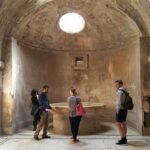
The baths are valuable because they represent routine. They help you understand hygiene, social life, and the role of communal spaces in Roman culture. You’ll see how the architecture supported movement through different areas, and the guide can translate those shapes into an idea of how the building worked.
Then comes the lupanare, which is where Pompeii gets uncomfortable in the best possible way. It’s a reminder that ancient cities included all sorts of services, not just art and politics. Seeing it on a guided route keeps it from feeling like shock-value; it becomes part of a broader, realistic picture of daily life.
If you want Pompeii to feel complete—public, domestic, and social—these stops add a lot of value.
The casts and 79 AD: the moment the story turns personal
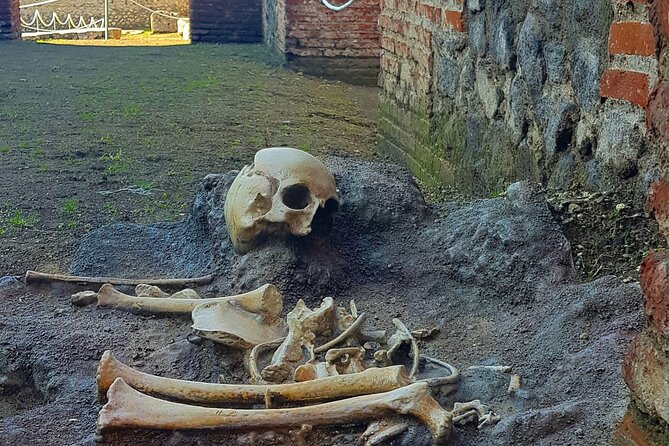
No Pompeii tour can avoid the eruption, but this one handles it with the help of the casts created in 1863 by Arch. Giuseppe Fiorelli. The value isn’t just seeing the casts—it’s understanding why they were made and what they reveal about the final moments of the people trapped by the disaster.
This is also the emotional core of Pompeii, because the story moves from dates and geology into physical presence. It helps you grasp scale: this wasn’t a distant catastrophe. It was a sudden interruption of normal routines.
I like how the tour ties the end of the city’s story to the spots you visited earlier. By the time you’re hearing about the last moments, you’ve already walked through the city’s public and private spaces. That contrast is what makes the tragedy land.
Price and value: is $57.84 reasonable for 2 hours?
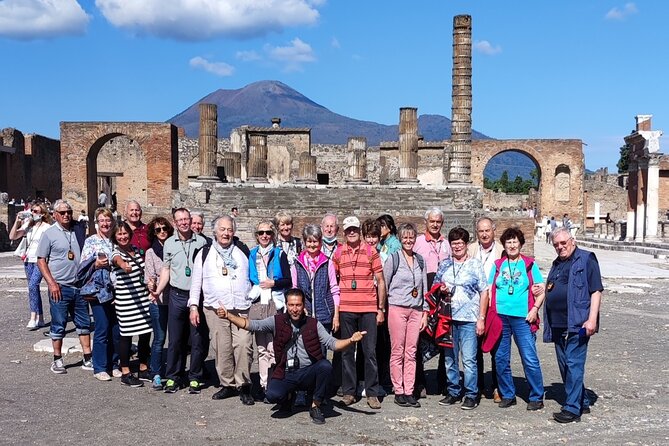
At $57.84 per person for about 2 hours, the value depends on one thing: do you want guidance that helps you interpret Pompeii, not just walk through it? For many people, the answer is yes—especially if it’s your only structured Pompeii stop.
Here’s what you’re getting for that cost:
- An archaeologist guide focused on major sites and context
- Skip-the-line handling for entry tickets
- A highlight route that covers amphitheater, domus with frescoes, baths, the lupanare, and civic spaces like the Forum and Basilica
You’re not paying for a long, slow day. You’re paying for focus. If you’re short on time in Campania, the guided format helps you compress a lot of significance into a small window.
If you prefer to roam independently and you already know what to look for, you might question the value. But if you want your first contact with Pompeii to feel organized and understandable, this price-to-time ratio tends to make sense.
Who this Pompeii tour fits best
This is a great option if you:
- Have only a short window for Pompeii
- Want an organized route through the most important UNESCO features
- Like learning that explains how buildings connect to real daily life
- Prefer a guide who keeps you moving while still sharing details
It’s also a good match for small group dynamics. Max 25 people usually feels manageable for a walking tour.
I’d also suggest it if you’re doing Pompeii as a day trip from elsewhere in Italy and you want your time to be efficient. (One practical note from visitors: driving can be doable, but expect toll costs to add up.)
Should you book this Pompeii archaeologist tour?
Yes—if you want Pompeii with structure, context, and less waiting. The skip-the-line setup plus the archaeologist-led pace is a strong combo for a first visit or a time-limited stop. You’ll see the big emotional and architectural anchors: the amphitheater area, frescoed homes, public civic spaces, the baths and lupanare, and the Fiorelli casts tied to 79 AD.
If you’re the type who wants hours to wander room by room with no pressure, or you’re chasing every niche corner, then two hours may feel rushed. In that case, consider adding extra time inside the park after the tour ends at Foro di Pompei.
FAQ
FAQ
How long is the Pompeii tour?
The tour is about 2 hours.
Does the price include admission and skip-the-line entry?
Yes. Admission is included, and the skip-the-line service is handled by the guide purchasing the entrance tickets.
Where do I meet the guide, and where does the tour end?
Meet near Coffee Shop Vittoria Bar in the Piazza Esedra area (tour starts from Travelcampania, Via Plinio, 107). The tour ends at Foro di Pompei, near Via Villa dei Misteri, 2.
What key Pompeii sites will I see?
You’ll visit major areas including the amphitheater (Teatro Grande), the domus with frescoes, Via dell’Abbondanza, Stabian baths, the lupanare, the Forum, the Basilica, and the casts connected to 79 AD.
What kind of walking is involved?
The tour lists moderate physical fitness as the expectation. Good shoes help, since you’ll walk through an outdoor archaeological park.
Can I cancel, and what’s the cutoff?
Free cancellation is available. You must cancel at least 24 hours in advance of the experience start time for a full refund.