REVIEW · POMPEII
Pompeii tour with archaeologist
Book on Viator →Operated by Pina Esposito · Bookable on Viator
Pompeii makes sense fast with an archaeologist. With Dr. Pina Esposito leading the walk, you don’t just stare at stones—you get a clear story that connects the Forum, the temples, and everyday street life to the eruption of 79 AD. I also like that this is a small group (up to 15), so you can actually ask questions instead of shouting over other people.
The main thing to consider: the visit is packed. In about 2 hours 30 minutes, you’ll hit 14 stops, so if you’re the type who wants long, slow photo breaks, you may feel a bit rushed. Also, the tour price is for the guide, and the Pompeii entrance fee isn’t included.
In This Review
- Key things to know before you go
- Why this Pompeii archaeologist tour makes the site click
- Meeting at Villa dei Misteri and finishing in the Foro di Pompei
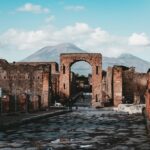
- The Forum: where you learn what Pompeii was before the eruption
- Practical note during this zone
- The “everyday Pompeii” route: mosaics, meals, and the streets between
- Temples and civic streets: understanding Roman worship and urban planning
- The theater district and the oldest temple remains
- Stabian Baths: the “social architecture” of hot water
- Who this tour is best for (and who should consider a slower plan)
- Price and value: what $42.01 buys you (and what it doesn’t)
- Should you book this Pompeii archaeologist tour?
- FAQ
- How long is the Pompeii tour with an archaeologist?
- Where does the tour start and end?
- Is the tour offered in English?
- Is the entrance fee included?
- What is included in the tour price?
- How large is the group?
- Can I cancel if plans change?
Key things to know before you go
- Forum-first focus that frames what you’re seeing in time and purpose, not just location
- Archaeologist-led explanations in English (also offered in Italian and German)
- Very small group size with room for questions and a smoother route
- Memorable set pieces like the plaster casts, the Cave Canem mosaic, and the House of the Faun
- Old-to-everyday Pompeii mix from temples and theaters to thermopolium and the Lupanar
- Ends at the Forum so you can stay inside the site after the tour
Why this Pompeii archaeologist tour makes the site click
Pompeii can feel like a maze until someone gives you a map for your brain. This tour is built around narrative. You start in the Foro di Pompei, where your guide sets the big picture: where Pompeii came from, how it developed, and what changed right up to the eruption in 79 AD. Once the story has a spine, the buildings start behaving like evidence instead of decoration.
What I like most is that the guide keeps translating the past into human terms: who used these spaces, what daily life looked like, and why certain objects and architectural details mattered. That’s exactly what people want when they’re paying for a guide—less guesswork, more understanding.
You also get a tight structure. Even though you’re seeing a lot, the stops are arranged so each one answers a question the last one creates. It’s not random wandering. It’s a guided sequence that helps you build a mental model of Pompeii as a living city.
You can also read our reviews of more tours and experiences in Pompeii.


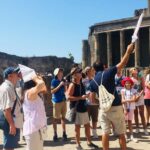
Meeting at Villa dei Misteri and finishing in the Foro di Pompei
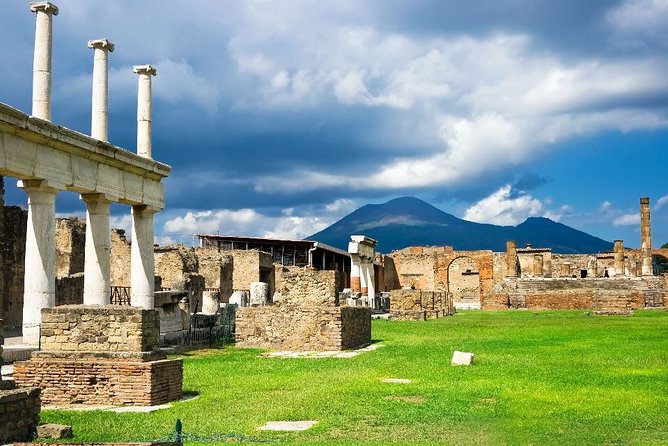
You meet near Pompei Scavi – Villa dei Misteri (80045 Pompei), and the tour ends at the Forum (Foro di Pompei). That matters more than it sounds.
Starting near Villa dei Misteri puts you in the right zone for early momentum inside the excavations. Ending in the Forum is handy because it’s a natural place to keep exploring on your own. If you still have energy after the guided part, you can linger longer around the Forum area instead of being funneled back toward the exit.
The tour runs throughout the day window when Pompeii is open (the schedule lists 9:00 AM to 7:30 PM). With a tour duration of about 2 hours 30 minutes, you can plan this as either:
- a high-impact first Pompeii visit, or
- a focused second visit after you’ve already toured a bit on your own.
Your ticket is handled as a mobile ticket, which is practical on the day when you’re walking and checking phones anyway.
The Forum: where you learn what Pompeii was before the eruption
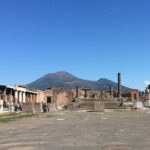
Your first stop is the Foro di Pompei, the civic heart of the city. Your guide explains the Forum’s role and Pompeii’s arc from origins to the disaster of 79 AD. This is a smart way to begin because the Forum is more than a big open area. It’s where politics, religion, and public identity overlapped.
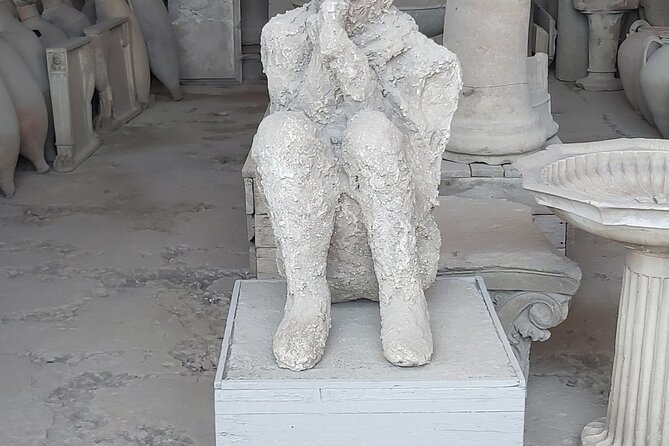
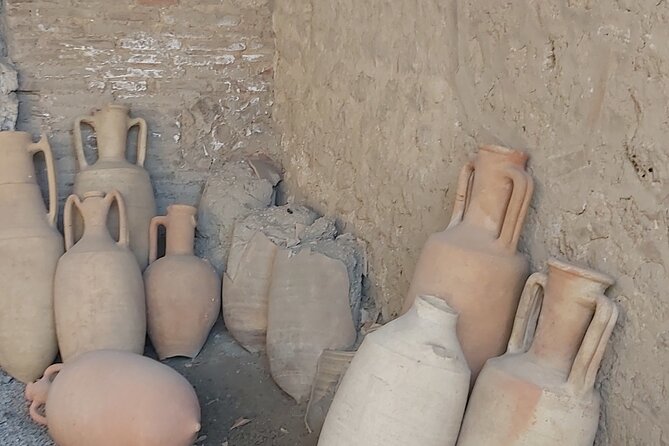
Next comes Granai del Foro, the Forum granaries. Your guide brings out the finds stored there—items like amphorae, sculptures, and inscriptions. Then you hit something that makes Pompeii feel immediate: the plaster casts of victims. Even if you’ve seen photos before, being there in person tends to land harder because you’re looking at the physical aftermath in an archaeological setting, not a museum display.
After that, you move to the Basilica. People often skip past this kind of building because it looks like ruins, but your guide explains the function—why it mattered for public life. Understanding the purpose of a place makes the architecture easier to read.
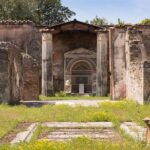
Then comes the Temple of Apollo, one of the highlights for anyone who likes religion and art meeting in stone. Your guide points out original-style details and related finds such as sculptures, altar elements, a fountain, inscriptions, columns, and even a Roman sundial. This stop is great for learning how religious spaces were designed to communicate with people, not just to impress them.
Practical note during this zone
This is where the tour does its most important “setup work.” If your mind is fresh at the start, you’ll enjoy the rest of Pompeii more because you’ll understand the city structure as you move.
The “everyday Pompeii” route: mosaics, meals, and the streets between
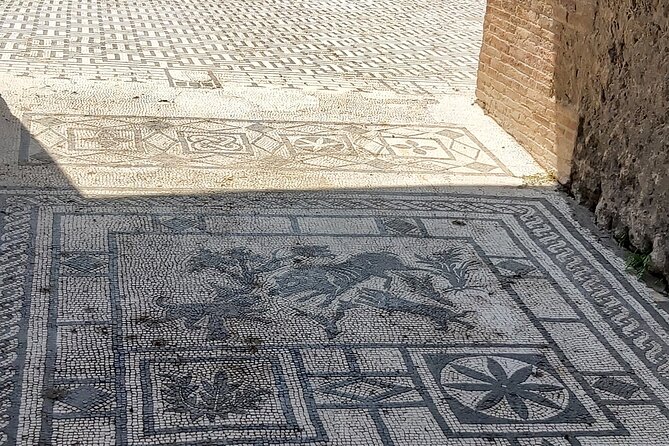
Once the public buildings are in your head, the tour shifts toward the neighborhoods and private life.
You’ll pass by the Hotel Vittoria, described as an ancient gateway to the city and the surrounding area. It’s a quick stop, but gateways are useful for orientation. They remind you Pompeii wasn’t an island of ruins; it was part of a road-connected world.
Then you visit Pompei Il Mosaico (cave Canem), the famous mosaic at the entrance of the House of the Tragic Poet. The mosaic is famous for a reason. It’s playful, a little intimidating, and very “Pompeii”—a reminder that elite homes still spoke the language of everyday drama and street-level humor.
The tour’s next major residential stop is the Casa del Fauno—the House of the Faun. This is the kind of place where your guide turns size and luxury into context. You’ll hear about the house as Pompeii’s largest, and you’ll get pointed attention to key masterpieces:
- the bronze sculpture of the dancing Faun, and
- the Mosaic of the Battle of Alexander, built from more than a million tiny colored tiles.
If mosaics are your thing, you’ll appreciate how your guide explains what you’re actually looking at. If mosaics aren’t your thing, this is still worth it because it shows how wealth and taste displayed themselves in daily space.
From homes you pivot to food culture with Thermopolium (Regio VI, Insula VIII, 8). Your guide explains how a thermopolium functioned—part snack counter, part street-food stop—and connects it to social life and nutrition in ancient Pompeii. It’s a clever counterweight to the temples and big ceremonial buildings. Suddenly you’re thinking about who ate where, how fast food worked, and what that says about city rhythm.
Then you hit a very different kind of “everyday” space: the Lupanar. Your guide describes Pompeii’s famous brothel, focusing on the state of conservation of the bedrooms and the erotic frescoes depicting amorous positions. This stop isn’t for everyone, but it’s also not a throwaway. It’s a window into how the city documented commerce, desire, and social behavior in built form.
Temples and civic streets: understanding Roman worship and urban planning
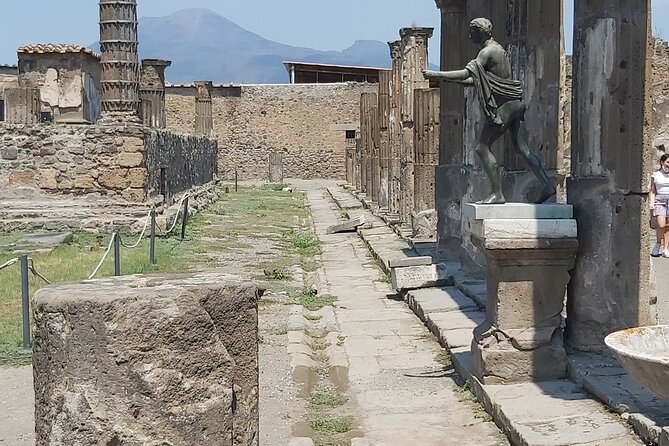
After you’ve seen daily life, the tour continues to the institutional structures that shaped how the city felt.
The Temple of Vespasian (also known as the temple of Genius Augusti) is next. Your guide explains why this mattered: the Roman imperial cult and the way emperors and state power were expressed through worship and public ritual. Once you’ve learned what an imperial cult is meant to do, the symbolism in temple spaces becomes more obvious.
Then there’s the Via dell’Abbondanza, a major street. Your guide discusses the road network and the city’s urban plan. This is where it helps to listen closely. Pompeii is famous for individual sights, but the layout is what makes the sights make sense. Streets determine movement, neighborhoods cluster, and public buildings anchor the urban design.
The theater district and the oldest temple remains
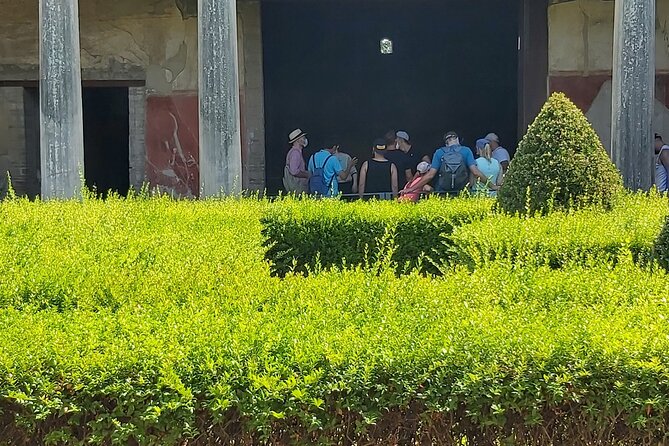
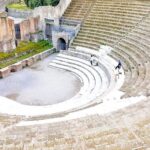
The Teatro Grande stop keeps the tour moving through Pompeii’s entertainment and public spectacle side. Your guide explains the theater district, including major surviving theaters such as the Teatro Grande and the Teatro Piccolo, plus the Quadriportico dei Teatri. If you’ve ever wondered whether Pompeii felt like a city of performance as much as politics, this is the section that answers that.
Then you get two shorter stops that work like historical bookmarks:
- the Doric Temple, described as the oldest temple in Pompeii, and the Triangular Forum, and
- the brief framing that helps you place earlier layers of worship and civic space before the later city shape.
Stabian Baths: the “social architecture” of hot water
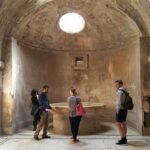
The tour includes the Stabian Baths (Terme Stabiane). Your guide explains this thermal building as an example of ancient bathing infrastructure—and how it functioned socially. Even if you don’t care about temperatures and plumbing, baths are one of the best ways to understand daily interaction: people gathered, talked, relaxed, and passed time in a structured environment.
This stop often becomes a favorite because it’s easier to imagine yourself there. You can picture routines even without seeing everything perfectly preserved. And your guide’s emphasis makes it less about the walls and more about the human use.
Who this tour is best for (and who should consider a slower plan)
I think this Pompeii tour is a great fit if you want:
- a guided path through major Pompeii highlights without getting lost,
- context that connects buildings to how people lived, and
- an archaeologist guide who can handle questions (especially in English).
It’s also a strong choice if Pompeii is your first big stop in the Naples area and you want the most out of limited time.
It’s less ideal if you already know Pompeii well and want a long, unbroken wander. With 14 stops in about 2.5 hours, the pace is efficient. You’ll learn a lot, but you may not linger as long as you’d like at each point.
Price and value: what $42.01 buys you (and what it doesn’t)
At $42.01 per person for a ~2.5-hour archaeologist-guided visit, you’re paying mainly for interpretation: someone reading the site with you and giving the “why” behind what you see.
What’s not included is the entrance fee. That’s an important distinction. You’re buying the guide service here, not the cost of getting into Pompeii. So your true budget depends on the Pompeii ticket price you bring with you.
Still, value is strong if you’re the type who gets more out of a story than a map. Pompeii is full of plaques and signage, but those can’t replace a guided explanation that connects one site to the next. With a max group size of 15, the setup also supports a more personal pace than a huge group tour.
If your goal is to understand Pompeii fast and see the big sights in a logical order, this price makes sense.
Should you book this Pompeii archaeologist tour?
If you’re deciding between self-guided Pompeii and a guided option, I’d lean toward booking when you care about context—especially around the Forum, the major houses, the baths, and the places that show daily life. This tour is structured to teach you how to look, not just where to walk.
Book it if:
- you want an archaeologist-led narrative in English,
- you like a small-group feel, and
- you want Pompeii explained in a sequence you can remember.
Skip or look for something slower if:
- you tend to want long pauses at a few favorite rooms, or
- you hate time-boxed tours and can’t handle a packed 2.5 hours.
Either way, go in ready to look carefully. Pompeii rewards attention, and this tour gives you the right questions to ask while you’re standing in the ruins.
FAQ
How long is the Pompeii tour with an archaeologist?
It runs about 2 hours 30 minutes (approx.).
Where does the tour start and end?
It starts at Pompei Scavi Villa Dei Misteri (80045 Pompei) and ends at the Foro di Pompei.
Is the tour offered in English?
Yes. The tour is offered in English (and also listed in Italian or German).
Is the entrance fee included?
No. The entrance fee is not included, even though the tour stops are inside the Pompeii site areas.
What is included in the tour price?
You get a guided tour with an archaeologist (in Italian or English or German).
How large is the group?
The tour has a maximum of 15 travelers.
Can I cancel if plans change?
Yes, you can cancel for free up to 24 hours in advance for a full refund.