Frescoes at Oplontis, myths at Stabiae. This 3-hour tour is a smart way to see more than just the famous streets of Pompeii, with an expert archaeologist who helps you read what you are looking at in the Villa di Poppea frescoes. I especially like the mix of major wow-factor art at Oplontis and the quieter, room-to-room walking at Stabiae, where you get to see how these villas functioned as real homes.
Two other big wins for me: skip-the-line tickets and included admission for the stops, so you spend less time stuck on logistics and more time on the archaeology.
One consideration: site access can change if opening hours shift, and the itinerary may get adjusted on the day. In one case, Stabiae time was lost due to hours outside the provider’s control, and the operator compensated with more in-depth time at Oplontis.
In This Review
- Key things I’d watch for before you go
- Why Oplontis and Stabiae beat the usual Pompeii detour
- Oplontis start: scavi di Oplontis – Villa Poppea and a quick warm-up
- Villa di Poppea: the frescoes that do the heavy lifting
- Stabiae in two steps: Villa San Marco first, then Villa Arianna
- Villa San Marco: walking the ancient rooms
- Villa Arianna: the Greek-myth wall painting
- Pacing and logistics: where you start, where you end, and what that means
- Price and value: why $226.37 can make sense
- What the guides do that you will actually feel
- Who should book this tour (and who might not)
- Should you book Villa Oplontis & Stabiae?
- FAQ
- What is the duration of the tour?
- Where does the tour start and end?
- What language is the tour offered in?
- Are admission tickets included?
- Is transportation included?
- Can I cancel for a refund?
Key things I’d watch for before you go
- Skip-the-line access with admission handled for you (Oplontis + Stabia villas)
- Three stops, tight timing, real pacing (about 1 hour + two 30-minute walks)
- Professional archaeologist guidance, not just a casual history talk
- Villa di Poppea frescoes as the main wow moment of the tour
- Villa Arianna’s Greek-myth wall painting that ties art to story
- Private group format so questions and slower moments are easier
Why Oplontis and Stabiae beat the usual Pompeii detour
If you already did Pompeii’s big blocks, you know the problem: you can look at ruins for hours and still not feel the human side of it. Oplontis and Stabiae help with that because they focus on Roman domestic life—how rooms were decorated, how stories were shown on walls, and how art worked inside ordinary routines.
This tour keeps it efficient. You are not trying to cram every site in one day. Instead, you get a guided sequence that moves from Oplontis’s star attraction to Stabiae’s villas, with just enough time at each stop to understand what matters.
And there is a practical upside: the tour runs about 3 hours, which is ideal if you want a serious archaeology dose without surrendering your entire day.
You can also read our reviews of more tours and experiences in Pompeii.


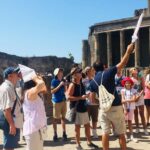
Oplontis start: scavi di Oplontis – Villa Poppea and a quick warm-up
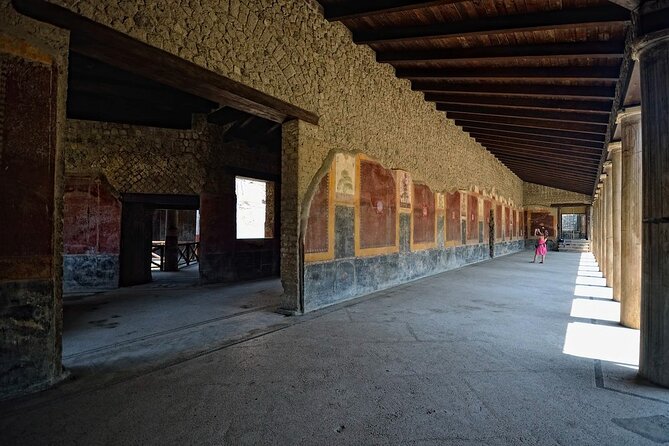
You begin at Scavi di Oplontis – Villa Poppea, at Via Sepolcri, Torre Annunziata. The tour ends at Scavi di Stabia – Villa San Marco after the archaeological promenade of Stabiae, so you are not marching back and forth the whole time.
You also get an early advantage: you start with skip-the-line tickets and a guide who is used to translating what you see into something you can actually use. That is the difference between looking at ruins and getting it. A good archaeologist guide does not just say what something is—they explain what to notice first, and why those details changed what we know.
You will be walking, but the schedule is built for visitors. The first stop gets the longer time, so your brain has a chance to settle in before the pace picks up later.
Villa di Poppea: the frescoes that do the heavy lifting
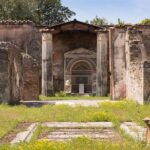
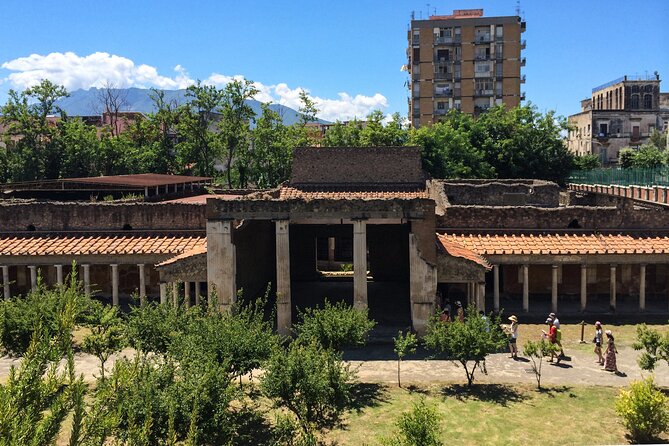
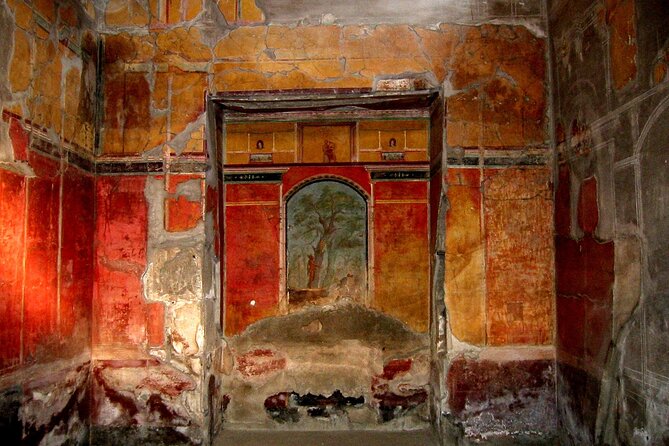
Stop 1 is Villa di Poppea (Oplontis), with about 1 hour on site. This is the emotional and visual anchor of the trip. The big takeaway is simple: the detailed frescoes are unforgettable.
Why does this matter? Because frescoes are not decoration you can safely ignore. In Roman villas, wall paintings are meant to shape mood, status, and storytelling inside daily life. When your guide points out specific elements—composition choices, how scenes are framed, and what the imagery suggests—you stop seeing color patches and start seeing design decisions.
This stop is where the tour earns its title. Even if you are not a painting person, the frescoes here have that rare combination of scale and clarity. You get to slow down and connect the art to the setting.
One small note to protect your plans: the detailed schedule calls out that an admission ticket is not included for this stop, while the overall included list says admission tickets are included. Before you go, double-check your booking confirmation so you are 100% sure you are covered. In practice, you want the day to run on auto-pilot.
Stabiae in two steps: Villa San Marco first, then Villa Arianna
Then you shift to Stabiae, where the vibe changes. Instead of one main spectacle, you get room-to-room walking and shorter, sharper visits.
Villa San Marco: walking the ancient rooms
Stop 2 is Villa San Marco (Stabiae) with about 30 minutes. Here you are literally moving along ancient rooms, and the point is orientation—figuring out how spaces relate to one another and what a villa layout implies.
A common mistake is to treat these rooms like a checklist. With a guide, you tend to look for the structural story: transitions between spaces, how the rooms would have been used, and what visitors would have noticed while moving through. That makes the time feel longer than it is.

Villa Arianna: the Greek-myth wall painting
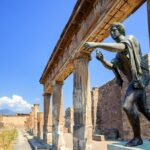
Stop 3 is Villa Arianna (Stabiae), again about 30 minutes. This is where the tour leans into narrative art. You are looking for a Greek myth described on a wall painting, and your guide helps connect the painting to its larger meaning in a domestic setting.
Even with limited time, this stop works because it gives you a clear target: not just ancient walls, but a specific story told through art. When you see how that myth plays into the villa context, the whole experience feels more human.
Pacing and logistics: where you start, where you end, and what that means
This tour is built around a clean flow: start at Oplontis, finish in Stabiae. The meeting point is clearly Scavi di Oplontis – Villa Poppea, and the finish point is Passeggiata Archeologica at Scavi di Stabia – Villa San Marco.
That matters because it changes your transportation math. You will likely not want to plan a tight connection back immediately at the end. Think of the tour as the core activity, then build travel time around it.
Also, the tour uses a mobile ticket, which is handy on busy days. It is also marked as near public transportation, which helps if you are not arranging private transport.
And yes, there is a simple comfort tradeoff: meals are not included. If you are prone to getting cranky after a couple hours on your feet, pack a snack or plan a meal before the tour.
Price and value: why $226.37 can make sense
At $226.37 per person, this is not a budget stroll. But the value case is pretty clear if you break down what you are paying for.
You are getting:
- A guided tour by a professional archaeologist and licensed guide
- Admission tickets to Oplontis Villa and Stabia villas
- Skip-the-line tickets
- A private format for only your group
- English-language guiding
- A duration that fits a half-day plan (about 3 hours)
So the cost is mostly paying for interpretation plus frictionless entry. Without a guide, you can still visit the villas, sure—but you may spend time figuring out what you are looking at while lines and timing tug at you.
This matters especially at Oplontis, where the frescoes are the real star. If you miss what your guide is pointing out, you lose part of the point of paying for a tour. With a strong guide, that fresco time starts to pay back immediately.
One more value angle: the tour offers group discounts and is private to your group. That combination often makes the per-person price feel less sharp than it looks on paper, especially if you travel with friends or family.
What the guides do that you will actually feel
A good archaeologist guide changes how your eyes work.
On this tour, you want someone who:
- points out small details you might otherwise glance over
- explains the meaning of what you see without turning it into a lecture
- keeps the pace moving, so you finish with understanding, not exhaustion
One review mentioned Livio specifically and highlighted two things that are rare in short villa tours: he was detailed about thoughtful context, and he was generous with small moments like taking a few pictures as you moved along. That kind of guidance matters because it keeps you from feeling rushed.
And there is a bigger emotional payoff: Oplontis and Stabiae complement each other. You get the art and the lived-in spaces, and the Vesuvius tragedy sits in the background without turning the visit into pure doom. The result is both moving and structured—Roman villas as places with people, not just artifacts.
Who should book this tour (and who might not)
This is a great fit if you:
- love Roman archaeology and want more than the headline sites
- care about frescoes and story-based wall art
- like having a guide so your time stays meaningful
- want a half-day plan that still feels substantial
It is less ideal if you want:
- a slow, open-ended wandering experience (this is timed: 1 hour, then 30/30)
- lots of stops and variety beyond these villas
- a day with food included (you will need to manage meals yourself)
Should you book Villa Oplontis & Stabiae?
If you want the best odds of a satisfying archaeology-focused day with minimal hassle, I’d say yes—especially if frescoes and villa art are your thing. The combination of archaeologist-led guidance, included admission, and skip-the-line tickets gives you real value for a short time window.
Just do one smart check: confirm your schedule details before you go, since changes to site hours can affect how much time you get at Stabiae. If you stay flexible and treat this as a focused art-and-rooms tour (not an all-day marathon), you should come away feeling like you actually understood the villas.
FAQ
What is the duration of the tour?
It is approximately 3 hours.
Where does the tour start and end?
It starts at Scavi di Oplontis – Villa Poppea (Via Sepolcri, 80058 Torre Annunziata NA, Italy) and ends at Scavi di Stabia – Villa San Marco (Passeggiata Archeologica, 80053 Castellammare di Stabia NA, Italy), after the archaeological promenade of Stabiae.
What language is the tour offered in?
The tour is offered in English.
Are admission tickets included?
Yes—admission tickets to Oplontis Villa and the Stabia villas are listed as included, along with skip-the-line tickets. (It is still worth checking your confirmation because the stop detail for Villa di Poppea says admission is not included.)
Is transportation included?
No. Private transportation and meals are not included.
Can I cancel for a refund?
Yes. You can cancel up to 24 hours in advance for a full refund. If you cancel less than 24 hours before the start time, the amount paid is not refunded.