A sunset walk through Pompeii feels like time folding in. This private tour is set up for cooler viewing, with an official guide and a focused route that hits the areas most people miss when they rush.
I like two things right away: the skip-the-line setup, and the sheer range packed into a short visit. You’ll get guided context for big-name spaces like the Forum and theaters, plus smaller details like mosaics, frescoes, and shopfront life.
One consideration: the main Pompeii admission (for the Pompeii Archaeological Park) is not included in the price, so you’ll want to plan for the ticket separately to avoid last-minute stress.
In This Review
- Key things that make this tour worth your time
- Pompeii at Sunset: Why This Format Feels Smarter
- Price and Value: What $95.31 Gets You (and What Doesn’t)
- Meeting Point at Porta Marina: Start Where It Makes Sense
- Stop 1: Pompeii Archaeological Park Highlights in Cooler Light
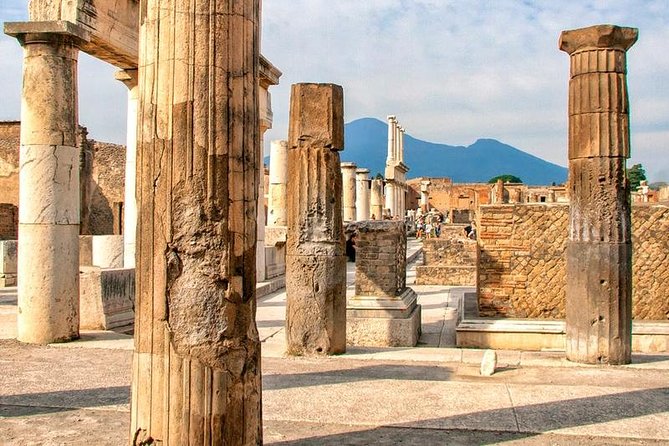
- The Forum Circuit: Apollo Temple, Main Square, Granai del Foro
- Terme del Foro and Via dell’Abbondanza: Daily Life You Can Actually Picture
- Teatro Grande and the Lupanar: Entertainment as a Neighborhood
- Two Mosaic-Focused Houses: Casa del Poeta Tragico and Casa del Cinghiale
- Temples of Venus and Jupiter: The Tiny Stops That Still Matter
- How the Private Sunset Timing Changes Your Experience
- Who This Tour Fits Best (and Who Might Want Another Option)
- Should You Book This Pompeii Private Guided Sunset Tour?
- FAQ
- Is the Pompeii entrance ticket included in this tour price?
- How long is the Private Guided Tour of Pompeii at Sunset?
- What is the meeting point for the tour?
- Is this tour private?
- Does the tour include skip-the-line access?
- What is the cancellation policy?
Key things that make this tour worth your time
- Sunset timing to beat crowds and heat, especially helpful in summer months
- Skip-the-line with an official tourist guide, so you start seeing things sooner
- A tight, high-impact itinerary: Forum, baths, main road, theaters, houses, and the entertainment district
- More than headline sights: mosaics and frescoes get their moment, not just passing glances
- Short stop structure (mostly 5–20 minutes each) keeps momentum without making it feel rushed
Pompeii at Sunset: Why This Format Feels Smarter
Pompeii is famous, but that also means it attracts the biggest crowds. This tour leans into the best alternative: going later in the day, when you can trade peak heat and packed lanes for easier pacing. Even if you are not a slow traveler, the comfort boost matters here. When your body feels better, you notice more details in the stone—doorways, layouts, and the way daily life is hinted at everywhere.
You also get a route that makes sense. Instead of zigzagging randomly across the site, the stops cluster around the parts that help you build a mental map fast: the Forum area, main circulation routes, and then the houses and entertainment spaces. That order helps first-timers connect what they see—public buildings, commercial areas, social spaces—into one story.
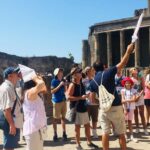
Finally, it’s private. So the guide can shape the pace to your group instead of counting down for a mixed crowd. That matters on a place like Pompeii, where a couple of extra minutes at a key mosaic can be the difference between seeing it and actually understanding what you’re looking at.
You can also read our reviews of more guided tours in Pompeii

Price and Value: What $95.31 Gets You (and What Doesn’t)
At $95.31 per person, this tour sits in the category where the real value is the guide time plus the entry strategy—not the raw number of stops. You are paying for:
- a private guided experience for your group
- an official tourist guide
- skip the line
- a compact route designed for about 2 to 3 hours
What’s not included is the big-ticket item that can catch people off guard: entrance ticket to the Pompeii excavations. The tour’s guided experience is tied to multiple included-ticket stops, but Pompeii Archaeological Park admission is not included. So you should budget for that separately.
The upside? When a tour includes skip-the-line and a guide who can keep you oriented, you spend less time stuck at entrances and more time learning what you’re seeing. And with Pompeii, learning is the multiplier. A house looks like a house until someone explains how the space functioned, where people moved, and why certain rooms mattered.
Meeting Point at Porta Marina: Start Where It Makes Sense
The tour starts at Pompei-porta Marina – scavi, and it returns you to the same meeting point. That round-trip setup reduces stress. You don’t have to worry about being stranded at the far end of the park with tired legs and no clear plan.
Because the route is compact, your early moments count. Getting your bearings from the start is one reason the guide experience is so valuable. A good guide doesn’t just point; they help you understand the site’s logic so you can connect stops as you go. In the best guide experiences shared for this tour, you get clear, organized communication before arrival, plus stories that connect the ruins to how the city functioned.
If you’re someone who hates waiting, the skip-the-line piece is a big plus. It helps you avoid the feeling that the day begins with standing still.
Stop 1: Pompeii Archaeological Park Highlights in Cooler Light
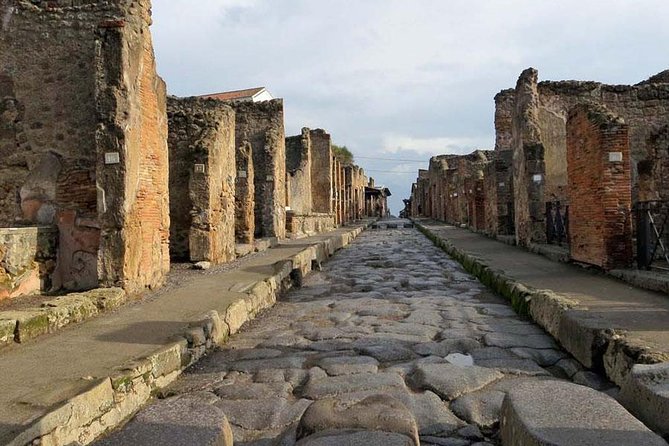
This is the heart of the tour: Pompeii Archaeological Park for about 2 hours (with admission ticket not included). Think of it as the foundation stop. The guide uses this time to lay out the big pieces, and you get a survey that doesn’t just name-drop landmarks—it explains how they fit into Pompeii’s daily rhythm.
You can expect to cover major zones such as:
- the Forum area (public life and power)
- the Baths (social life and routine)
- Roman villas (wealth and domestic spaces)
- the Lupanare (the entertainment district)
- Theaters
- ancient shops and bakeries
- plus mosaics and frescoes
This matters because Pompeii can feel overwhelming if you arrive cold. A guided overview gives you a set of references. Then later stops—temples, museum spaces, baths, roads, and houses—hit harder because you’re no longer seeing them as isolated attractions.
The only drawback here is the timing and ticket detail. Since the main admission isn’t included, you’ll want to make sure you have the correct entry sorted ahead of time. Otherwise, Stop 1 can slow down your momentum right when you want to be looking.
The Forum Circuit: Apollo Temple, Main Square, Granai del Foro
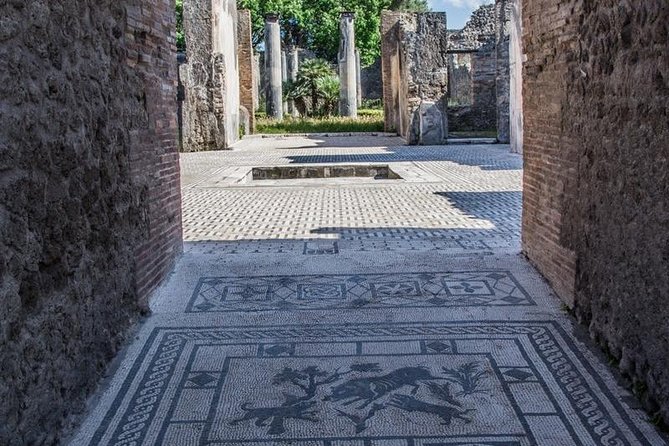
After the main Pompeii overview, the route narrows into the most meaningful civic core. The Forum stops are short, but they’re chosen to help you read Pompeii’s layout like a map.
Here’s what you’ll see in this cluster:
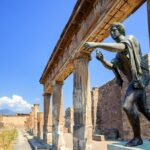
- Temple of Apollo (about 10 minutes, admission included)
One of the preserved temples, giving you a direct window into the religious identity of the city.
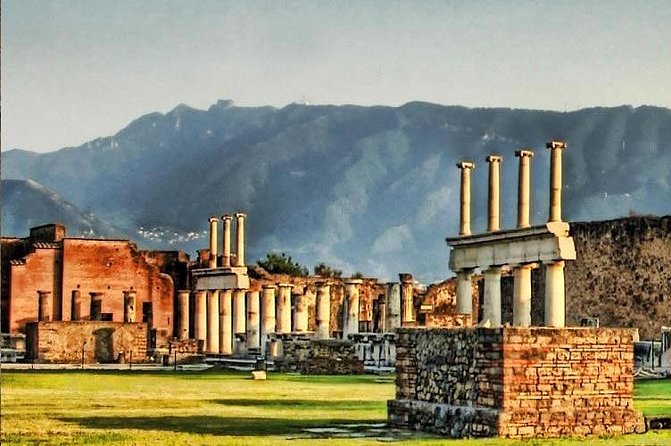
- Foro de Pompeya / Main Square (about 20 minutes, admission included)
This is the public stage—where civic life, commerce, and social behavior would have overlapped.
- Granai del Foro / A museum (about 15 minutes, admission included)
You’ll get a more interpretive stop here, which can be valuable because Pompeii isn’t only about ruins you can guess. Museums and curated spaces help you connect what you’re seeing to how people used buildings.
- Terme del Foro / The Forum Baths (about 20 minutes, admission included)
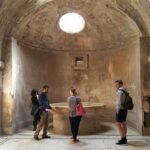
Baths are social and practical. Seeing them with guidance is where the site turns from pretty stone into a sense of routine—movement, meeting places, and daily habits.
- Via dell’Abbondanza / Main road (about 20 minutes, admission included)
The main road stop helps you connect everything: how people and goods would have flowed through the city’s center.
This sequence is smart for first-timers. You start with civic landmarks, then you hit the everyday spaces that made the city work. Even if you consider yourself a casual history fan, this route tends to bring the story into focus.
You can also read our reviews of more private tours in Pompeii



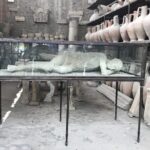
Terme del Foro and Via dell’Abbondanza: Daily Life You Can Actually Picture
I like these stops because they translate the big idea of Pompeii into human behavior. The Forum Baths are not just a set of rooms; with a guide, you can understand how they functioned as social space. And when you step onto the Via dell’Abbondanza, the city stops feeling like a collection of monuments and starts feeling like a place where people walked, visited shops, and moved between public and private spaces.
The route timing also helps. Because each stop is typically 10–20 minutes, you’re less likely to get stuck in one area long enough to lose interest. Instead, you keep moving with enough context that the details stick.
If you’re the kind of traveler who wants more than a quick photo stop, these are the moments where guided narration pays off.
Teatro Grande and the Lupanar: Entertainment as a Neighborhood
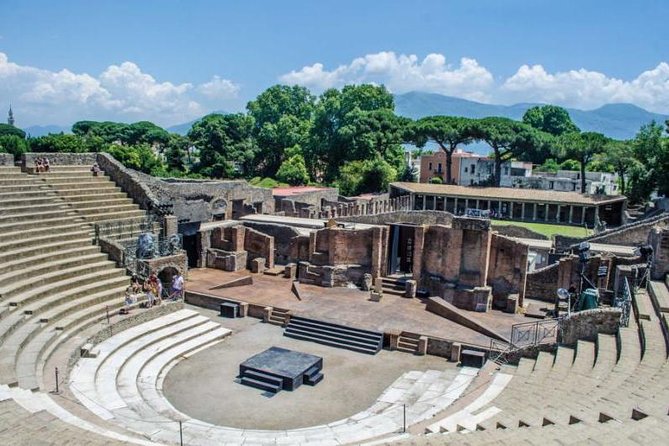
Two of the most memorable stops are the ones that show what people did for fun—and how that fun sat inside everyday life.
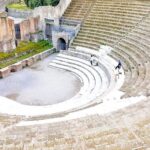
- Teatro Grande (about 20 minutes, admission included)
This theater is associated with comedies and tragedies. With guidance, theaters become more than a structure. They become a lens for social life: what audiences watched, and how performance fit into public identity.
- Lupanar (about 20 minutes, admission included)
Known as the ancient house of entertainment, it’s one of the places where Pompeii feels sharply real. The guide’s job here is to keep it historical and contextual. You’re looking at a space tied to social behavior, not just a headline stop.
I’ll be honest about the consideration here: if you find some topics uncomfortable, this portion may not be your favorite. But if you want a complete view of Pompeii, it’s part of the city’s picture. A private guide helps because you can ask questions and steer the pace rather than feeling stuck in a group shuffle.
Two Mosaic-Focused Houses: Casa del Poeta Tragico and Casa del Cinghiale
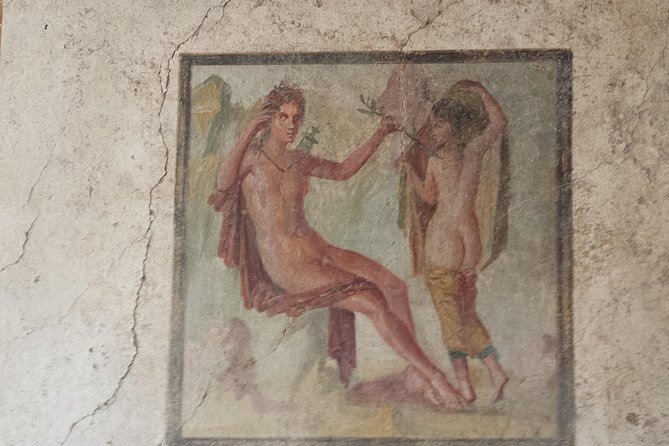
This is where the tour turns visually satisfying fast.
- Casa del Poeta Tragico (about 10 minutes, admission included)
Noted for mosaics—often the kind of detail you’d miss if you were moving quickly.
- Casa del Cinghiale (about 10 minutes, admission included)
Known for mosaics and architecture, giving you a quick but meaningful taste of how private spaces communicated status and taste.
These are short stops, so you need the guide to make them count. The best guide experiences highlighted for this tour emphasize clear, detailed explanations and a sense that the guide genuinely loves Pompeii. That combination is exactly what you want for homes like these, where a 10-minute window can either be a blur or a useful snapshot of how the space worked.
Temples of Venus and Jupiter: The Tiny Stops That Still Matter
The final temple micro-stops are brief but focused:
- Tempio di Venere (about 5 minutes, admission included)
- Tempio di Giove Capitolino (about 5 minutes, admission included)
These short stops do two things. First, they add completeness to the civic and religious picture. Second, they give you a sense of symmetry and structure in Pompeii’s main areas—like you’re walking through a designed world, not random streets.
You might feel tempted to rush these. Don’t. Even a five-minute stop can help you connect earlier Forum sights with the religious anchor points around them.
How the Private Sunset Timing Changes Your Experience
This tour is built around avoiding the worst of summer heat and peak crowd energy. That affects your experience in a practical way: you can concentrate. When you’re not overheated and not stuck shoulder-to-shoulder with everyone, you’re more likely to notice the things that make Pompeii memorable—door proportions, floor details, and the layout logic of public spaces.
It also helps with pacing. A typical big group visit can feel like a checklist. Here, the flow is structured: a major overview block, then targeted Forum and daily-life stops, and finally entertainment and domestic highlights. That keeps the experience coherent instead of scattered.
And the language detail is worth noting. The tour is offered in English, and the guide quality is one of the strongest selling points. Praise for guides like Romolo and Paolo highlights clear communication and a deep love for Pompeii that comes through in explanations. One guide was described as contacting people quickly with clear info, and another as giving detailed explanations that made the visit feel not too long. That kind of guiding style matters in a place where so much is visually similar if you’re not being taught what to look for.
Who This Tour Fits Best (and Who Might Want Another Option)
This is a great fit if you:
- want a 2 to 3 hour visit that feels purposeful, not rushed
- are worried about summer heat or crowded routes
- like your Pompeii with context: civic life, daily routines, entertainment, and domestic details
- prefer a private group experience where your guide can adjust pace and answer questions
It may be less ideal if you:
- want a long, go-at-your-own pace Pompeii day with lots of time to wander
- dislike the idea of paying separately for the Pompeii Archaeological Park admission
If you’re a repeat Pompeii visitor, you might already know the big highlights. Still, the way this route focuses on the Forum-to-houses arc can be a useful refresher, especially if you care about mosaics and street-level organization.
Should You Book This Pompeii Private Guided Sunset Tour?
My take: book it if you want a high-impact Pompeii experience that avoids the day’s worst conditions and keeps you oriented. The combination of official guidance, skip-the-line, and a route that connects public spaces, daily life, entertainment, and houses is strong value—especially for first-timers who want the site to make sense fast.
One last practical note: because the main Pompeii admission ticket is not included, I’d treat this as a two-part plan—ticket first, then tour. If you handle that ahead of time, you’ll spend your precious hours in Pompeii doing the one thing that matters: looking with understanding.
FAQ
Is the Pompeii entrance ticket included in this tour price?
No. The entrance ticket to the Pompeii excavations (Pompeii Archaeological Park) is not included. Other specific stops listed in the itinerary include admission.
How long is the Private Guided Tour of Pompeii at Sunset?
The duration is about 2 to 3 hours.
What is the meeting point for the tour?
The tour starts at Pompei-porta Marina – scavi (80045 Pompei, Metropolitan City of Naples, Italy) and ends back at the meeting point.
Is this tour private?
Yes. It is a private tour/activity, meaning only your group will participate.
Does the tour include skip-the-line access?
Yes. The tour includes skip-the-line service.
What is the cancellation policy?
You can cancel for a full refund up to 24 hours before the experience starts. If you cancel less than 24 hours before, the amount paid is not refunded.