REVIEW · POMPEII
Best of Pompeii & Herculaneum: Private Tour with an Archaeologist
Book on Viator →Operated by Tours with an archaeologist · Bookable on Viator
Pompeii and Herculaneum feel like a time machine. What I like most is the private archaeologist who translates ruins into real routines, and the focus on frescos and mosaics that show what people actually touched, ate, and saw. The one thing to plan around: the entrance fees are not included, and the whole plan depends on good weather.
In practice, this is the kind of tour where your questions matter. Guides like Roberto are known for answering everything from the eruption to day-to-day Roman life, and Giada’s mix of humor and clear explanations can make even the harder-to-read details click fast. It’s a group of up to 8, so you’re not fighting for attention.
In This Review
- Key highlights to expect in this private outing
- Why a private archaeologist makes the ruins make sense
- Pompeii Archaeological Park: public buildings and the Lupanare
- Public buildings: where social life happened
- The Lupanare: uncomfortable, but historically useful
- How to make the most of Pompeii in about two hours
- Herculaneum stop: homes and shops with frescos, mosaics, and stucco
- The power of domestic spaces
- The shop details: where art meets routine
- What the art is actually teaching you about Roman life
- Price and value: what your money covers (and what it doesn’t)
- Tickets, meeting points, and how to avoid wasting time
- Optional lunch and optional private transport: choose based on your energy
- Weather, cancellations, and the reality check
- Who this tour is best for
- Should you book this private Pompeii & Herculaneum tour?
- FAQ
- How long is the Best of Pompeii & Herculaneum private tour?
- What’s included in the tour price?
- Are the entrance fees included for Pompeii and Herculaneum?
- Does the tour require good weather?
- What language is the tour offered in?
- Where do you meet and where does the tour end?
- Is there an option for lunch or private transport?
Key highlights to expect in this private outing
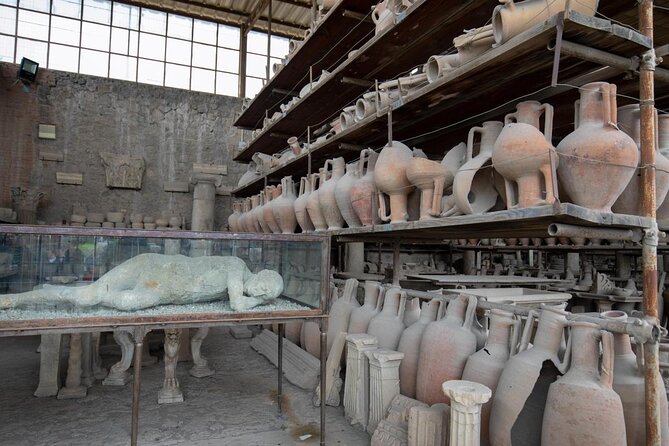
- Two UNESCO World Heritage sites in one go: Pompeii Archaeological Park and Herculaneum’s ruins
- Real Roman daily life, not just big names: public spaces in Pompeii, then homes and shops in Herculaneum
- Art you can actually see clearly: well-preserved frescos, mosaics, and stucco details
- A guide built for questions: archaeologists who can talk through the eruption and everyday routines
- Short, focused time blocks: about 2 hours in Pompeii and 1.5 hours in Herculaneum
- Private pacing: you move as a group without getting swallowed by crowds
Why a private archaeologist makes the ruins make sense
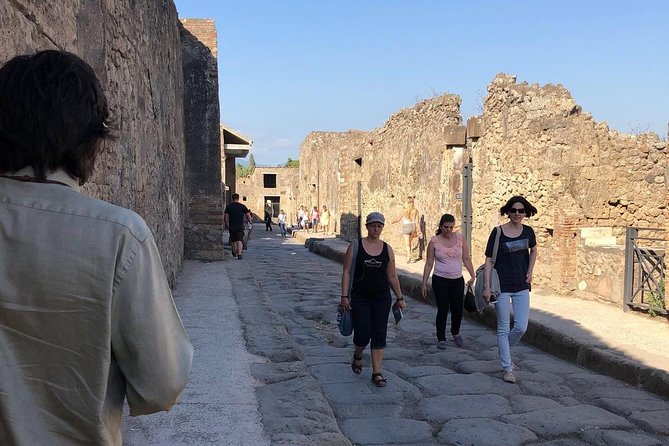
Pompeii and Herculaneum can look impressive even at a glance. But without context, it’s easy to walk past a doorway, a wall painting, or a bath complex and miss the point. With a local expert archaeological guide, I like that the tour is designed to connect what you’re seeing to how Romans lived.
This format also pays off when you’re curious. The guidance from archaeologists like Roberto has a reputation for handling tough questions with direct, grounded answers, including the day-to-day side of the Pompeii story. And if you have lighter interests—like how people spent their free time or how storefronts worked—you’ll still get a sensible explanation, not a lecture.
There’s also a practical benefit: you’re not stuck waiting for a big bus group. In a private tour for up to 8, the guide can slow down where you have questions and speed up where you don’t.
You can also read our reviews of more private tours in Pompeii


Pompeii Archaeological Park: public buildings and the Lupanare
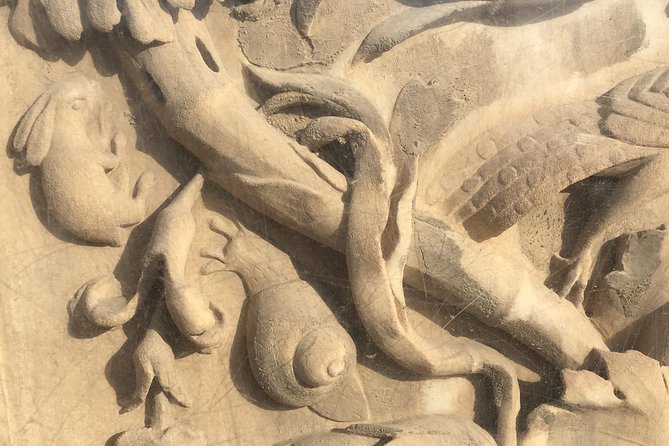
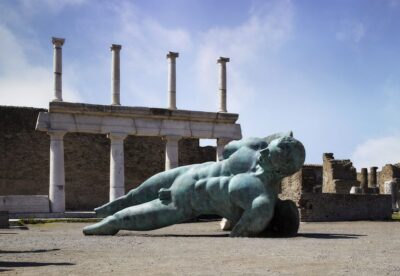
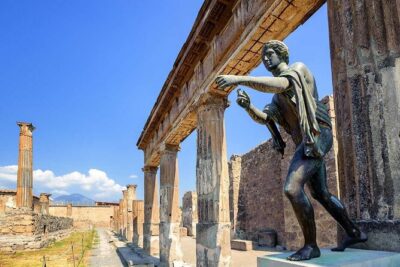
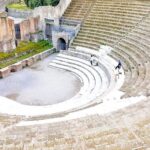
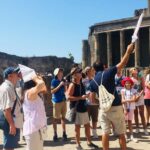
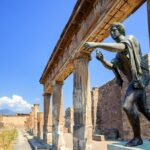
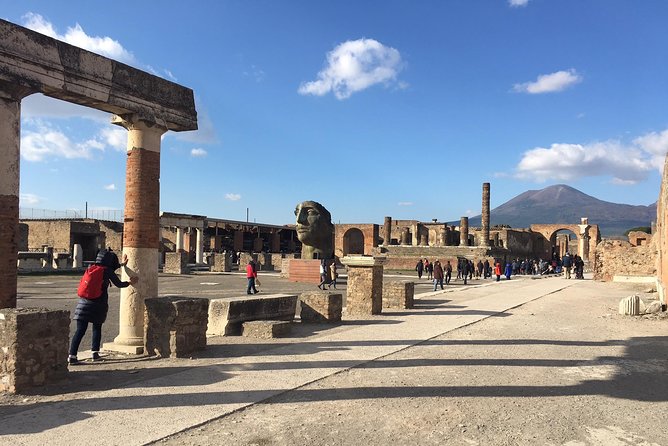
Your first stop is Pompeii, with about 2 hours on-site. The focus is on major public areas and how they shaped everyday life: theaters, thermal baths, the Forum and the surrounding area, plus the Lupanare, the famous brothel.
Public buildings: where social life happened
Pompeii’s public buildings are the best place to start because they show how Romans gathered. You’ll see the kind of spaces that hosted performance and conversation (theaters), hygiene and routine (thermal baths), and civic life (the Forum and nearby areas). A good guide helps you read these places like a map of social behavior, not just architecture.
A drawback here is simple timing. Two hours sounds like a lot until you’re walking a real archaeological site, where paths, viewpoints, and explanations all take time. You’ll get breadth rather than every nook, so arrive with the mindset of “high-impact highlights.”
The Lupanare: uncomfortable, but historically useful
The Lupanare can be a jarring stop. That’s also why it’s valuable. It’s a specific, preserved piece of evidence about sexuality, commerce, and social reality—things you don’t get from only imagining polite public life.
If that subject makes you uneasy, you can still learn a lot from the context and what the space tells you about how people interacted in that era. Just know this is not a purely “cute ruins” experience. It’s honest.
How to make the most of Pompeii in about two hours
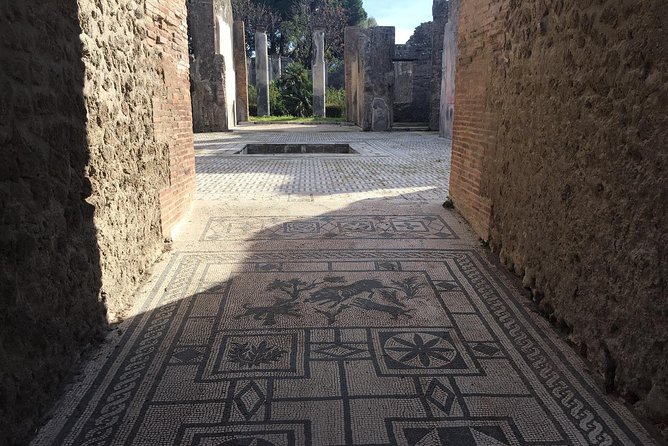
Two hours in Pompeii is tight, so you’ll want to be strategic. I’d treat this as a guided orientation plus key scenes: public buildings for the big-picture rhythms of Roman life, then the Lupanare for a more complete view of society.
Here’s what helps most:
- Go with questions before you arrive. Even one or two helps the guide tailor the pace.
- Keep your expectations focused. You’re not seeing everything; you’re seeing the parts that best explain the city’s functioning.
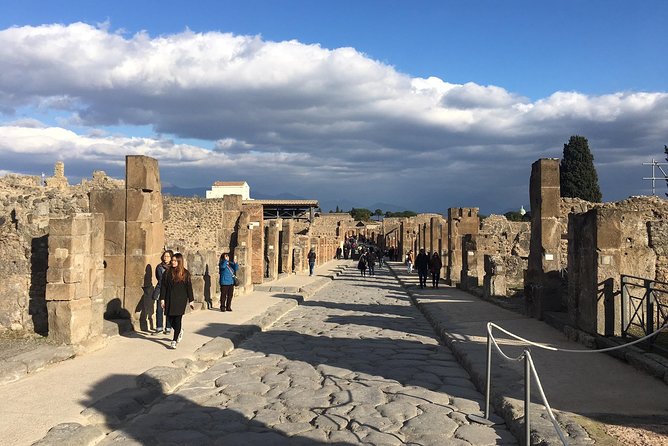
- Pay attention to scale. Pompeii’s layout can trick you—your guide can help you interpret distances and how different zones worked together.
Also, the entrance ticket for Pompeii isn’t included. That matters because you’ll want to plan your arrival so you’re not losing time later.

Herculaneum stop: homes and shops with frescos, mosaics, and stucco
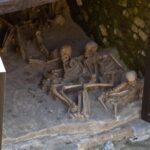
After Pompeii, the tour heads to Parco Acheologico di Ercolano (Herculaneum). You’ll have about 1 hour 30 minutes here, focused on the private side of life: homes and shops, including a bakery and a thermopolium (a type of Roman street-side food and drink place).
The power of domestic spaces
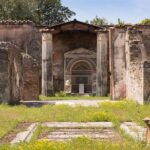
Herculaneum is often where the city starts feeling human. The emphasis on private houses matters because you see daily living in a way that public monuments can’t match. Interiors, decorative surfaces, and the way rooms connect help you picture how people moved, cooked, hosted, and relaxed.
The shop details: where art meets routine
The bakery and thermopolium stop is a smart pairing because it links visuals to practical activity. You’re not just looking at decoration; you’re seeing where trade and meals likely played out. In a place like this, frescos and stucco aren’t museum “wow” pieces. They’re evidence of taste, spending priorities, and how people wanted their spaces to look.
As with Pompeii, the time is limited. The upside is that your guide can point out the most telling surfaces quickly, so you leave with a sense of what matters—even if you don’t exhaust the entire site.
What the art is actually teaching you about Roman life
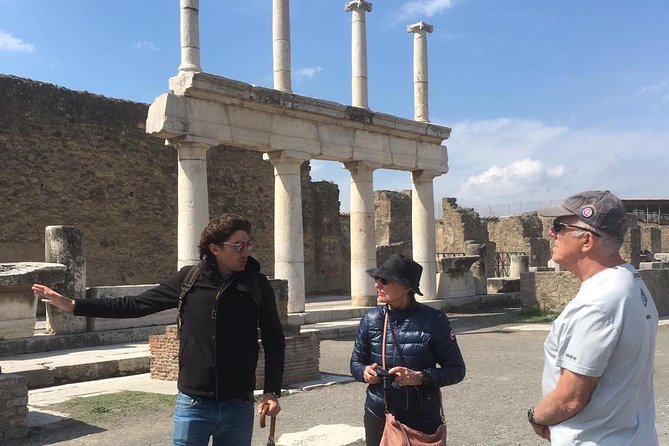
One reason this tour feels satisfying is that the guide doesn’t treat Pompeii and Herculaneum like two photo ops. You’re learning the day-to-day context behind what’s preserved: how public life worked in Pompeii, then how more private routines showed up in Herculaneum.
The well-preserved frescos and mosaics help with that. When you can see wall decoration and floor patterns clearly, you can start connecting people to their preferences—what they considered worth displaying, what they likely used and reused, and how spaces were designed for comfort or status.
And the best guides connect that art to the broader eruption story, too. Roberto’s reputation for answering questions about both the fateful day and daily life is exactly the blend that turns “ruins” into a real historical narrative you can hold onto.
Price and value: what your money covers (and what it doesn’t)
The price is $720.91 per group for up to 8 people, for a total duration of about 4 to 5 hours. To judge value, don’t just look at the headline number—look at what you’re buying: private time with a local expert archaeologist for two UNESCO sites.
That’s why the group cap matters. With up to 8 people, it can feel like good value compared with paying separate guided entries if you’re traveling with friends or family. It also keeps your experience focused, because the guide can manage questions and pacing without the chaos of larger groups.
Two costs to factor in:
- Entrance fees: Pompeii and Herculaneum parks are €40.00 per person (not included).
- Optional extras: lunch can be a light break around €20 per person, and private transport is available for €350.
If you’re the type who wants explanations, this pricing can make sense fast. If you only want photos and minimal walking guidance, it might feel pricey. But for anyone who enjoys context—how it worked, what it meant—the archaeologist-led approach is the whole point.
Tickets, meeting points, and how to avoid wasting time
The tour uses a mobile ticket, and it’s offered in English. You start at Piazza Esedra, 10/13, 80045 Pompei NA, Italy, and you end at the Archaeological Park of Herculaneum, Corso Resina, 187, 80056 Ercolano NA.
That start/end setup is practical, but it changes how you plan your day. You’re not returning to Pompeii at the end, so make sure your next stop or departure plan fits with being in Herculaneum afterward.
It’s also worth noting the tour confirmation happens within 48 hours of booking, subject to availability. Good news if you’re planning ahead, but it still means you should keep flexibility if your schedule is tight.
Optional lunch and optional private transport: choose based on your energy
You don’t have to add lunch. If you want a break, there’s an optional light lunch around €20 per person. This is the kind of planning detail that matters because you’ll be spending most of the day walking through archaeological sites.
Optional transportation is available with a professional driver for €350. If you’ll manage transit on your own, you can skip it. If you’d rather reduce stress—especially if weather changes or you want a calmer rhythm—private transport can be worth it.
My practical tip: decide based on how you handle transitions. Two major sites in one outing is smoother when the travel between them is handled for you.
Weather, cancellations, and the reality check
This experience requires good weather. If it’s canceled due to poor weather, you’ll be offered a different date or a full refund.
One other reality: the tour is non-refundable and cannot be changed for any reason. That means you should book when your schedule is solid and you’re comfortable with the weather risk.
Who this tour is best for
This private format shines if you like:
- Asking questions and getting specific answers (including the eruption and daily life)
- Focused sightseeing across two UNESCO sites without feeling rushed through everything
- Art and material culture—frescos, mosaics, and stucco details you can actually interpret
It’s also a good fit when you’re traveling in a small group of up to 8 and want a guide who can shift pace to match you.
One note from the experience details: most people can participate, and service animals are allowed. If you have mobility questions, it’s smart to check with the provider directly because no walking level is specified here.
Should you book this private Pompeii & Herculaneum tour?
I’d book it if you want more than a checklist. The best reason is the combination of a private archaeologist plus a plan that balances Pompeii’s public spaces (theaters, baths, Forum area) with Herculaneum’s more personal world (private homes and shops like a bakery and thermopolium). That mix is what makes the ruins feel like daily life, not just monuments.
Pass on it if you’re only after quick photos, or if €40 per person in entrance fees plus your schedule risk feels like too much. Also, keep the weather requirement in mind—this isn’t a plan that shrugs off rain.
If you’re the kind of person who loves learning as you walk, and you want your questions answered by someone like Roberto or Giada, this is a strong choice.
FAQ
How long is the Best of Pompeii & Herculaneum private tour?
The tour runs about 4 to 5 hours.
What’s included in the tour price?
You get a local expert archaeologist as your private guide. Entrance tickets, lunch, and transportation are optional or separate.
Are the entrance fees included for Pompeii and Herculaneum?
No. Entrance fees are €40.00 per person for Pompeii and Herculaneum Archaeological Parks.
Does the tour require good weather?
Yes. The experience requires good weather. If it’s canceled due to poor weather, you’ll be offered a different date or a full refund.
What language is the tour offered in?
The tour is offered in English.
Where do you meet and where does the tour end?
You start at Piazza Esedra, 10/13, 80045 Pompei NA, Italy and end at Archaeological Park of Herculaneum, Corso Resina, 187, 80056 Ercolano NA.
Is there an option for lunch or private transport?
Yes. There’s an optional light lunch (around €20 per person) and optional private transportation with a professional driver for €350.