REVIEW · POMPEII
Small-Group Tour in Pompeii with a Real Archeologist, ticket included
Book on Viator →Operated by Pompei Trip&Transfer · Bookable on Viator
Pompeii feels bigger when you have a guide. This small-group walk through the ruins pairs a real archaeologist with priority entry, so you spend your time learning instead of figuring out what’s where. You’ll cover top homes, the Forum area, the Suburban Baths, and major religious and entertainment sites in about 2.5 hours.
What I like most is the archaeologist-led interpretation. The best moments aren’t just the stones—they’re the explanations that help you date things, understand how people lived, and spot why Pompeii looks the way it does. I also like the mix of sites: you get both elite houses (with famous mosaics and paintings) and the less-pleasant corners of Roman life, including the Lupanar.
One possible drawback: each stop is short—around 15 minutes. If you want to linger for photos or read every wall-painting detail at a slow pace, you may wish you’d booked more time on your own after the tour.
In This Review
- Key things to know before you go
- Pompeii’s best quick plan: small-group pacing and priority entry
- A smart opener: Casa del Poeta Tragico and its Cave Canem mosaic
- Casa dei Vettii: luxury you can actually picture
- Lupanar and the Forum: Roman life, civic space, and hard facts
- Lupanar: five rooms per floor and the business side of Roman sex work
- Forum: 142 meters long, reserved for pedestrians
- Suburban Baths and Casa del Fauno: Pompeii beyond the walls
- Suburban Baths: hot water for travelers, not just locals
- Casa del Fauno: a bronze faun that signals fame
- Casa del Menandro and Temple of Apollo: art and belief before 79 AD
- Casa del Menandro: silver tableware and Trojan War wall scenes
- Temple of Apollo: religion, symbols, and shifting worship
- Inside the Archaeological Park: amphitheatre, gymnasium, and shade tactics
- What the amphitheatre tells you
- How the archaeologist guide changes the whole visit
- Price and value: what $66.23 buys you in Pompeii
- What to pack: Pompeii heat and lots of walking on stone
- Should you book this Pompeii tour?
- FAQ
- How long is the Pompeii small-group tour?
- What language is the tour offered in?
- What is the maximum group size?
- Is a priority ticket included?
- Do I get a mobile ticket?
- Are admission tickets included for the stops?
- Is a headset provided?
- Where is the meeting point and where does the tour end?
- Is private transportation included?
- What are the cancellation terms?
- What if the weather is poor or the minimum number of travelers isn’t met?
Key things to know before you go
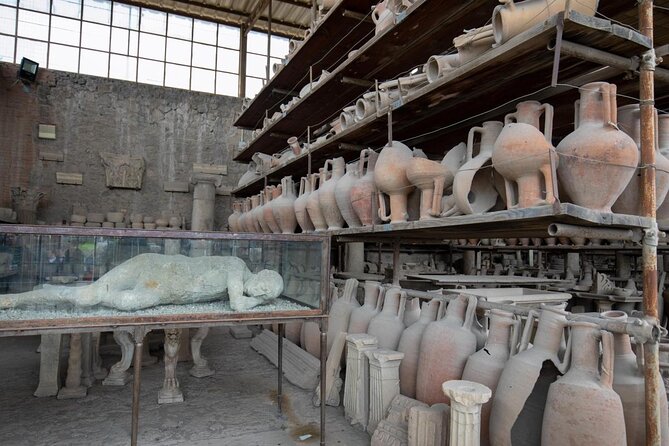
- Priority park access helps you get moving fast inside the Archaeological Park of Pompeii
- Real archaeologist guide brings daily life into focus, not just the eruption story
- Headset included so you can hear the commentary without pushing into the group
- A wide range of sites in 2.5 hours from mosaics and silver tableware to public life and entertainment
- Most stops have admission included during the tour time window
- Plan for heat: the ruins mean shade can be spotty, even when there’s some cover
Pompeii’s best quick plan: small-group pacing and priority entry
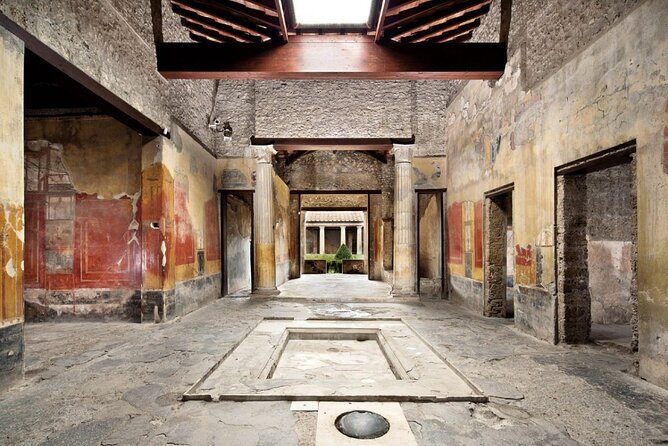
This tour runs about 2 hours 30 minutes and is designed for a maximum of 15 people. That size matters. Pompeii can get loud and crowded, and a smaller group helps you actually follow what the guide points out—especially when you’re looking at floors, thresholds, or small details that you’d miss on your own.
You also get headsets, which is a smart inclusion. Even if your guide is great (and you want that), standing too close to other groups can make conversations hard. With the headset, you can keep your eyes on the ruins instead of playing human antenna.
The other practical win is the priority ticket for the Archaeological Park of Pompeii. You’re arriving to a major attraction, so anything that reduces delays is real value. It’s also a mobile ticket, which saves time versus hunting for paper tickets.
Logistically, the tour starts and ends at the same place: Hotel Vittoria, Piazza Esedra, 80045 Pompei NA, Italy. That’s helpful on a day when you also want time for lunch or a second walk through the ruins after the guided portion ends.
Finally, remember what’s not included: private transportation. In other words, you’ll handle getting to Pompeii yourself, and the tour experience begins once you’re at the meeting point.
You can also read our reviews of more tours and experiences in Pompeii


A smart opener: Casa del Poeta Tragico and its Cave Canem mosaic
You start at Casa del Poeta Tragico, an elegant imperial-age house. The standout inside is the famous floor mosaic Cave Canem—the warning that a dog is likely inside.
This stop works well as an opener because it teaches you how to look. In Pompeii, the most important stuff is often low, close to the ground, or built into the layout. That mosaic is also a great reminder that these weren’t empty shells. This was private space, with art meant to set the tone the moment you entered.
The tour spends about 15 minutes here, and admission for this stop is included. Short visit, but it’s the kind of stop where you’ll see the most if you keep your head up and your eyes down—take a second to locate the mosaic and then listen for what the guide says about why it mattered in daily life.
Casa dei Vettii: luxury you can actually picture
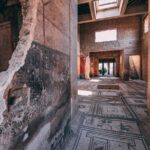
Next up is Casa dei Vettii, one of Pompeii’s most beautiful and luxurious houses. It takes its name from its owners: Aulo Vettio Restituto and Aulo Vettio Conviva.
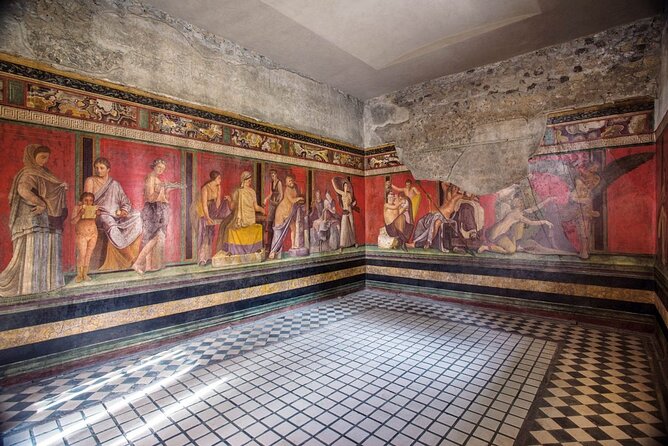
Why this stop is worth your time: it’s not just about admiring wealth. It’s about recognizing how Roman status showed up in everyday space. Even with a brief visit, you get the context to understand what “luxury” meant in a house—how art and space choices signal identity, power, and taste.
You get another 15-minute slot, with admission included for the stop. Because the visit is short, don’t expect a slow “museum pace.” Instead, use it like a guided orientation: look for what the guide highlights, and don’t worry about getting every detail into memory. You can always return later if you want a longer browse.
Lupanar and the Forum: Roman life, civic space, and hard facts
This tour doesn’t shy away from the real world.
Lupanar: five rooms per floor and the business side of Roman sex work
The Lupanar is a two-storey building associated with prostitution. It’s one of the most visited places in Pompeii, and it’s easy to see why: it’s direct, specific, and surprisingly “structured” in how it’s laid out.
The key details to notice: the building had five rooms on the ground floor and five on the upper one, and each room had a concrete bed—sometimes with what might have been a mattress or mat. That’s the kind of information that changes your mental picture from rumor to reality.
The visit is about 15 minutes, and admission for this stop is included. If you’re worried you’ll feel uncomfortable, you probably will a little. But the value here is understanding how the city functioned and how certain services were built into the urban fabric, not tucked away and forgotten.



Forum: 142 meters long, reserved for pedestrians
After the Lupanar, you move to the Foro de Pompeya. This Forum wasn’t for random traffic. It was reserved for pedestrians and carts were not allowed. That tells you how the city organized movement around its civic core.
The Forum measures about 142 metres long and 38 metres wide. Today it’s bare of statues and ornate flooring is largely gone, but there’s a clear explanation for why: after the eruption, parts were likely dug up and reused in other works.
This stop is about 15 minutes with admission included. It’s one of the best places to connect what you’re seeing to how the city lived—public buildings, civic space, and the rules of everyday movement.
Suburban Baths and Casa del Fauno: Pompeii beyond the walls
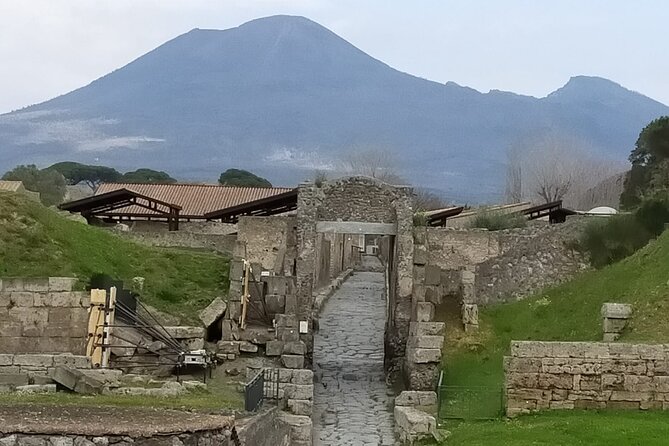
Pompeii wasn’t only a tight grid inside city walls. The tour shows you that with the Suburban Baths.
Suburban Baths: hot water for travelers, not just locals
The thermal baths were located outside the city walls, near an area tied to transport—possibly used by people arriving by sea. The nearby rocks where boats could moor likely made the baths convenient for travelers, not only Pompeii residents.
This is a smart stop because it broadens the story. You’re not only learning about wealthy households and civic rituals. You’re seeing how visitors moved through the region and how services like bathing could serve people on the road.
Admission for this stop is included, and it lasts about 15 minutes.
Casa del Fauno: a bronze faun that signals fame
Then you head into Casa del Fauno, named for a bronze statue of a faun in the impluvium. This is one of Pompeii’s most famous houses, and even in a quick visit, it helps you understand why certain places draw people in.
A practical tip here: don’t rush your attention. The guide’s job is to point you to what matters. If you let your eyes glide, you’ll miss why the statue is such a calling card for the house’s reputation.
Admission is included for this stop, and again the visit is about 15 minutes.
Casa del Menandro and Temple of Apollo: art and belief before 79 AD
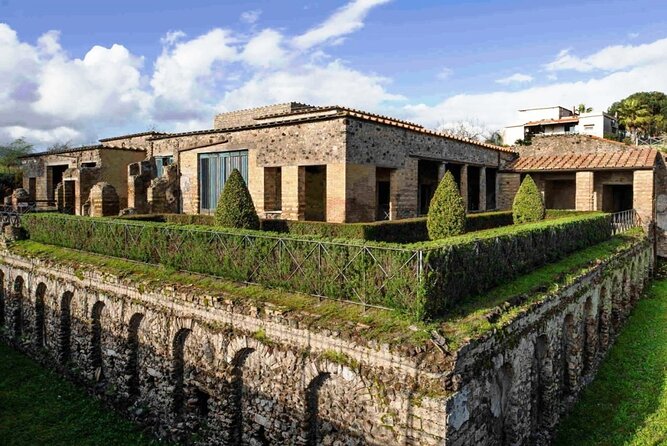
Two stops here help you understand Pompeii as a culture, not just a disaster site.
Casa del Menandro: silver tableware and Trojan War wall scenes
Casa del Menandro is described as a prestigious house about 2,000 square metres. The name comes from a fresco of the poet Menandro.
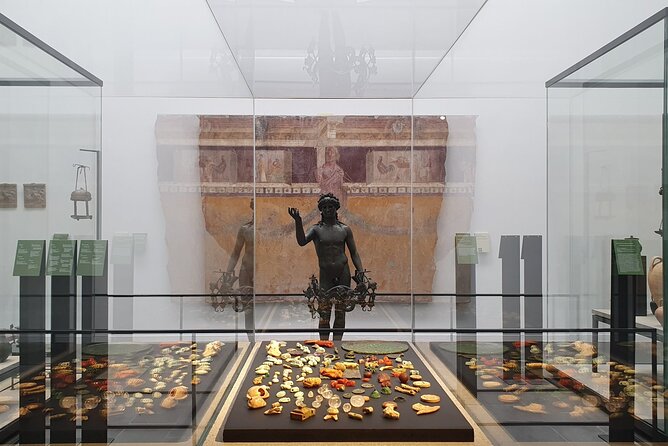
But what really makes this stop memorable is the scale of what was found there: 118 objects in silver, likely tableware tied to special dining and status. You also get references to frescoes related to the Trojan War, including the death of Laocoon, plus scenes featuring Cassandra and Ulysses.
Admission is included, and the visit is about 15 minutes. Because the time is limited, treat this stop like a “map for your imagination.” Let the guide’s context tell you what you’re looking at, then carry that with you when you explore on your own.
Temple of Apollo: religion, symbols, and shifting worship
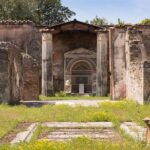
The Temple of Apollo is tied to the Apollo cult that arrived before the eruption in 79 A.D. The tour also connects it to Roman religious shifts, noting that Apollo’s followers had fewer adherents because Jupiter became a stronger God.
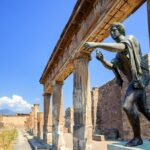
You’ll see a bronze statue of Apollo with bow and arrow, and a statue of Diana as well. This stop is a good counterbalance to the houses: your brain switches from household art to public worship and belief systems.
Admission is included here too, with about 15 minutes.
Inside the Archaeological Park: amphitheatre, gymnasium, and shade tactics
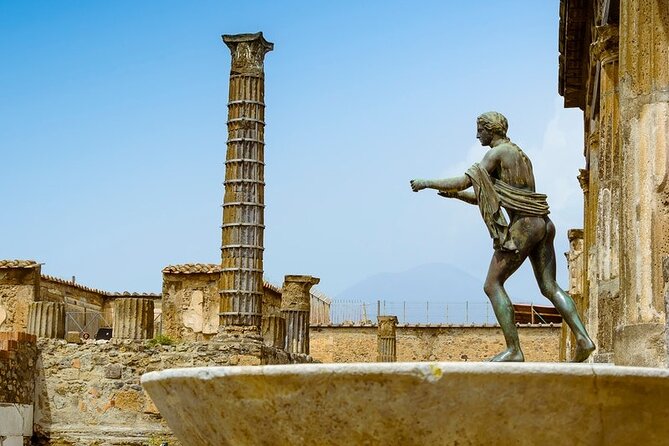
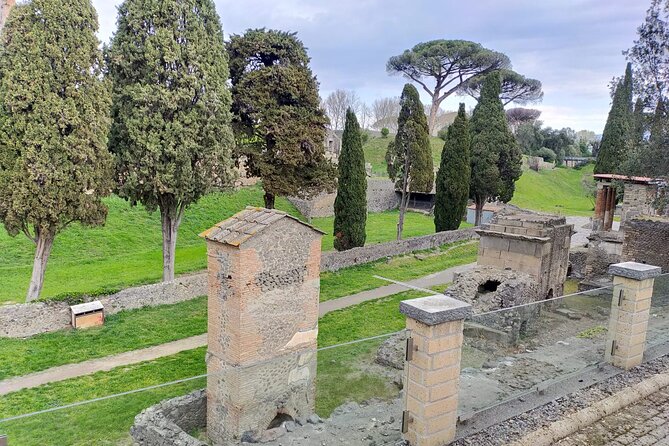
The final major ruin stop is the Archaeological Park of Pompeii, including an amphitheatre visit.
What the amphitheatre tells you
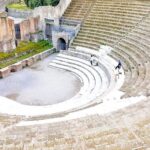
Pompeii had a place for games—gladiators against gladiators. The amphitheatre could house up to 20,000 people across three levels. That scale is hard to picture until you’re standing where the crowd would have been.
There’s also an interesting note about comfort in hot weather: during hot summer months, spectators were protected by a type of dark linen covering. It’s a small detail, but it makes the space feel more functional and human.
Adjacent to the arena, you can spot the gymnasium, where youngsters would work out. That adds context: this wasn’t only entertainment for adults; it also connects to training and youth culture.
The itinerary lists this as not included for an admission ticket on that specific line item, but the tour does include priority entrance for the park. Practically, you’re covered for entry to the park experience tied to the tour.
This stop is about 15 minutes, so it’s more of a focused highlight than a long sit-down history lesson. If you want to go deeper, this is where your after-tour time becomes valuable.
How the archaeologist guide changes the whole visit
This is the core of the value.
A real archaeologist lead doesn’t just point out what something looks like. They help you understand how to interpret it—why it’s placed where it is, what clues suggest about dates, and what different interpretations might mean.
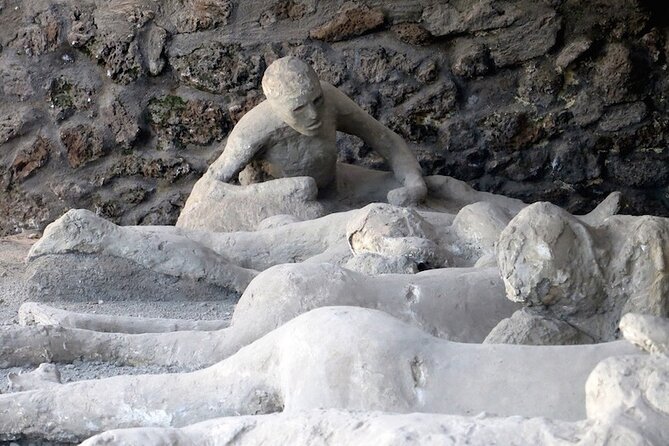
On past departures of this route, guides such as Teresa, Paulo, and Alfredo have led the walks, and the common thread is explanation that keeps the city and its people front and center. One of the biggest takeaways I’d keep in mind: a great guide helps you stop thinking of Pompeii as one big volcano story and start seeing it as a functioning community that happened to end.
If your guide is taking questions (often they will), ask things like:
- How do we know roughly when household features were used or made?
- What clues show what kind of public or private space you’re standing in?
- What would you look at first if you were trying to read the city like a local?
With headsets in place, you can actually hear those answers without crowd-control gymnastics.
Price and value: what $66.23 buys you in Pompeii
At $66.23 per person, you’re paying for three main things: a small-group experience, a guide service from an archaeologist, and saved friction through priority access and included equipment.
You get:
- Guide service in English
- Priority ticket entrance for the Archaeological Park of Pompeii
- Headset
- Admission included for most named indoor or ticketed stops on the route
You don’t get:
- Private transportation
That’s the right trade if you want understanding more than convenience car service. If you’re the type who likes to connect the dots—why a mosaic is here, what a Forum layout implies, how bathing outside the walls fits travel patterns—this tour can feel like good value. The priority ticket alone can be worth it on a busy day, and the guide saves you from time-consuming guesswork once you’re inside.
What to pack: Pompeii heat and lots of walking on stone
Pompeii can get brutally hot. Even when some areas have shade, you still move between them.
I’d pack these basics:
- Water (seriously)
- Good walking shoes with solid grip
- Sunscreen and a hat if you go in warmer months
- A lightweight layer if you’re sensitive to sudden cooler gaps between shaded areas
Because each stop is short, your comfort needs to be dialed in. You won’t want to spend your limited 15 minutes thinking about sore feet.
Should you book this Pompeii tour?
I’d book it if you want a real archaeologist leading a smart circuit through key parts of Pompeii, with priority entry and headsets doing the heavy lifting for comfort and clarity. It’s a strong choice for first-timers who want a wide snapshot—homes, civic life, religion, and entertainment—then continue at your own pace after.
I would reconsider if you want a slow, deep, one-site-only focus. This is built for momentum. You’ll see a lot, but you’re not settling in for hours at a single house or exhibit.
If you like learning while you walk, and you want Pompeii to make sense fast, this tour is a solid pick.
FAQ
How long is the Pompeii small-group tour?
The tour runs about 2 hours 30 minutes (approx.).
What language is the tour offered in?
The tour is offered in English.
What is the maximum group size?
The group size is limited to a maximum of 15 travelers.
Is a priority ticket included?
Yes. You get a priority ticket entrance for the Archaeological Park of Pompeii.
Do I get a mobile ticket?
Yes. The tour includes a mobile ticket.
Are admission tickets included for the stops?
Admission is included for most named stops on the route, while the itinerary notes one stop line item as admission ticket not included. The tour also includes priority entrance for the park.
Is a headset provided?
Yes. A headset is included.
Where is the meeting point and where does the tour end?
The tour starts at Hotel Vittoria, Piazza Esedra, 80045 Pompei NA, Italy, and ends back at the same meeting point.
Is private transportation included?
No. Private transportation is not included.
What are the cancellation terms?
You can cancel for a full refund if you cancel at least 24 hours before the experience’s start time. Free cancellation is available, and cut-off times are based on local time.
What if the weather is poor or the minimum number of travelers isn’t met?
If the tour is canceled due to poor weather, you’ll be offered a different date or a full refund. If the minimum number of travelers isn’t met, you’ll also be offered a different date or a full refund.