REVIEW · POMPEII
Pompeii walking tour (2hrs)
Book on Viator →Operated by Bites of History with Margherita · Bookable on Viator
Pompeii comes alive with a guided stroll. In just two hours, you’re inside the best-preserved Roman city destroyed by Mount Vesuvius in 79 A.D., spotting original theatres, shops, and painted homes with frescos and marble while learning how Romans ate, relaxed, trained, and partied—on a private walk with a licensed guide.
One catch: admission tickets to the archaeological park are not included, and Pompeii is huge, so you won’t see everything in 2 hours. This experience also needs good weather, so plan for a backup date if the site can’t operate.
In This Review
- Key Highlights That Make This Tour Worth Your Time
- Pompeii in 2 hours: what a good private walk changes
- Meet at Piazza Esedra and enter the ruins without chaos
- Margherita’s storytelling style: what you’ll actually remember
- Inside the park: theatres, shops, and painted houses with frescos
- Thermal baths and the gladiators’ gym: the daily life behind the ruins
- Tickets, price, and pacing: is $60.08 good value?
- Who this tour fits best (and who might want a different plan)
- Should you book this Pompeii walking tour with Margherita?
- FAQ
- How long is the Pompeii walking tour?
- Is the admission ticket to Pompeii included in the price?
- Where do we meet for the tour?
- Is this tour private?
- What language is the tour offered in?
- Will I get a ticket on my phone?
- What happens if the tour is canceled due to weather?
Key Highlights That Make This Tour Worth Your Time
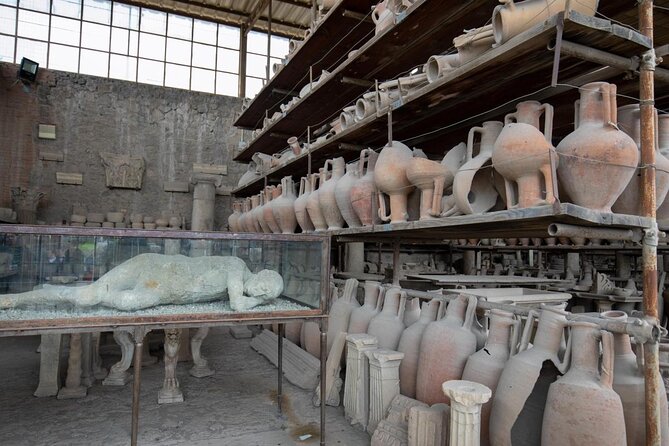
- Licensed English guide for a focused 2-hour Pompeii walk
- Meet at Piazza Esedra and start inside the Archaeological Park area
- Original scenes like theatres, shops, and house frescos and marble details
- Roman daily life in plain terms, including food, thermal baths, and gladiators’ training
- Margherita’s engaging approach, with practical, local color and Naples food tips
Pompeii in 2 hours: what a good private walk changes
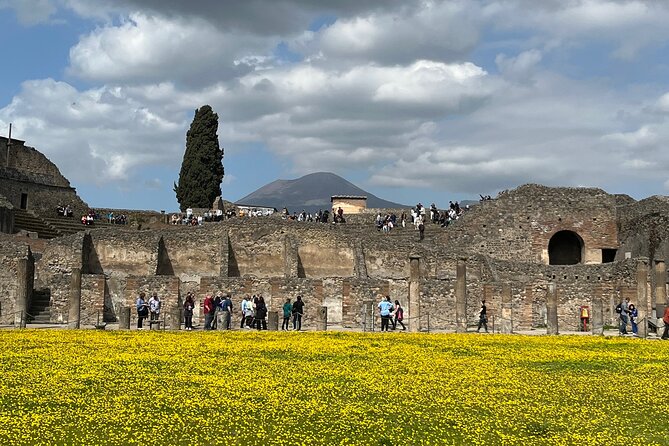
Pompeii has a special power: it’s not just ruins, it’s a whole city stopped mid-life. With a guide, that feeling becomes easier to grasp fast. You don’t waste time asking what you’re looking at; you move through the streets with a story that makes the place feel real.
I especially like this format because it’s private. Only your group goes with the guide, so the pace stays human and you can get answers when something catches your eye. And the tour is short enough to feel doable—two hours is a sweet spot for first-timers who want the big ideas without spending the whole day in the sun and dust.
The main consideration is that you’re not covering the entire site. Pompeii spreads out, and in two hours you’re going to prioritize the most meaningful, recognizable parts: the theatres, shopfronts, and the living spaces where you can still see the decoration. That’s actually a strength. It keeps the experience from turning into a hurried check-list.
You can also read our reviews of more walking tours in Pompeii

Meet at Piazza Esedra and enter the ruins without chaos
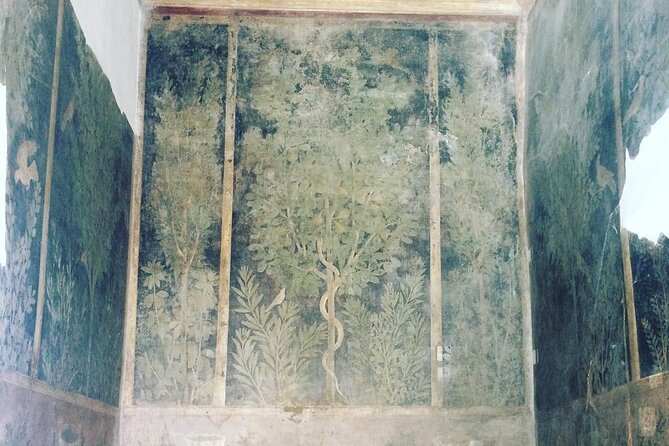
You start at the Archaeological Park of Pompeii area, meeting in front of the ticket office in Piazza Esedra (80045 Pompei). The activity ends back at the same meeting point, so you’re not worrying about getting back to a random corner of the site.
This is a practical setup for two reasons. First, it’s clear where to gather, which matters because Pompeii’s entrances and nearby streets can feel confusing when you’re arriving for the first time. Second, the meeting point puts you close to the park’s starting area, so you can shift your energy from logistics into walking.
If you’re coming in from the train and you’re not sure how to line up your start, you may find the guide helpful with getting to the entrance together and sorting out park tickets on arrival. The tour itself doesn’t include admission, but having someone who knows the flow can still save you stress at the gate.
And because this is offered in English with a licensed guide, you can expect explanations that stay clear and structured instead of turning into vague talking while you scramble for direction. Service animals are allowed, and it’s listed as something most people can participate in—just keep in mind you’ll be walking on uneven historic ground.
Margherita’s storytelling style: what you’ll actually remember
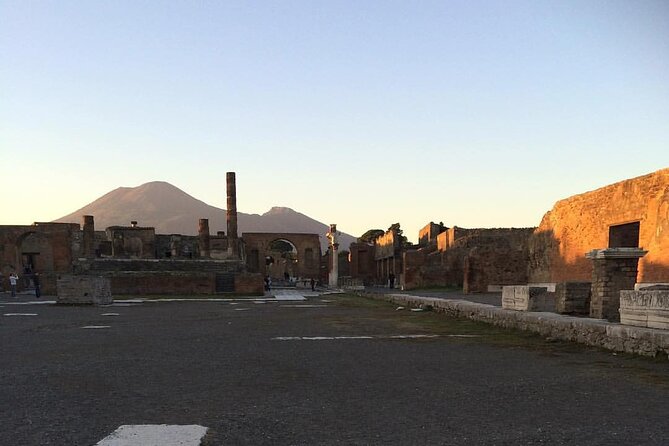
The biggest value in Pompeii isn’t “facts.” It’s comprehension. A good guide helps your brain connect what you see—doorways, floor space, rooms, and public buildings—to how people lived day to day.
This tour is led by Bites of History with Margherita, and her approach comes through in the way she talks about the city. She’s described as funny, professional, and engaging, and she has a way of making Pompeii feel active instead of distant. That matters because without context, Pompeii can look like a set of impressive stone shells. With context, it becomes a real town with routines.
You’ll get more than a standard rundown. The tour is framed around lived experience: how Romans used thermal baths, how entertainment worked, how food and daily habits fit into the city’s layout, and what life looked like around public spaces. She also adds cultural touchpoints tied to the region—Neapolitan details and practical Naples food tips are part of the experience, not just an afterthought.
Another reason this matters: Pompeii is packed with small details. In two hours, you can’t spot everything on your own unless someone helps you focus. A strong guide points out the specific things that make the site special—like how the streets and structures link to the roles they played in daily life.
Inside the park: theatres, shops, and painted houses with frescos
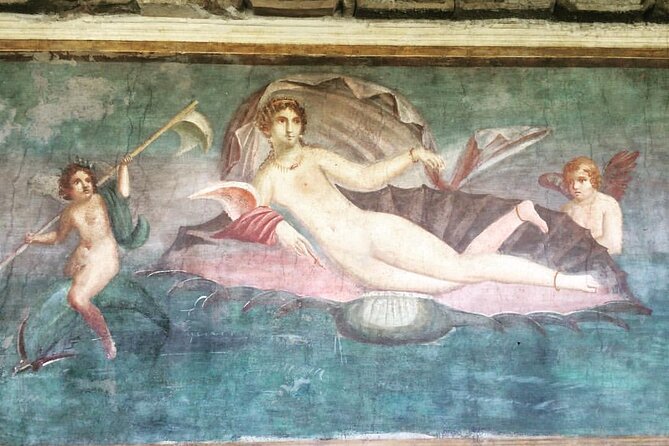
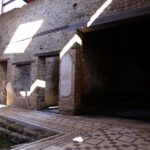
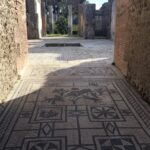
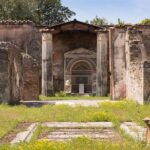
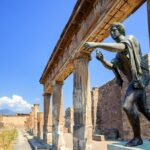
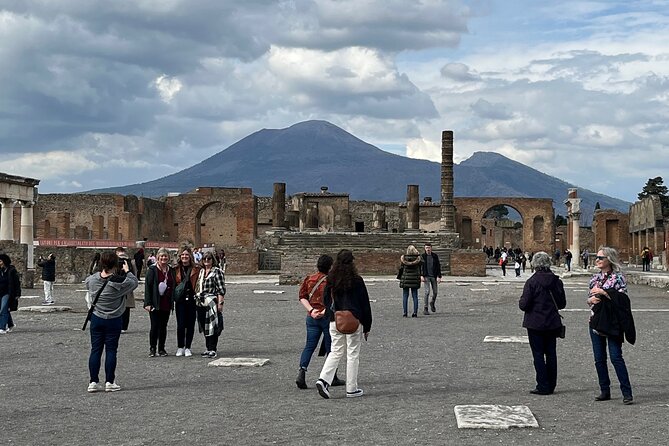
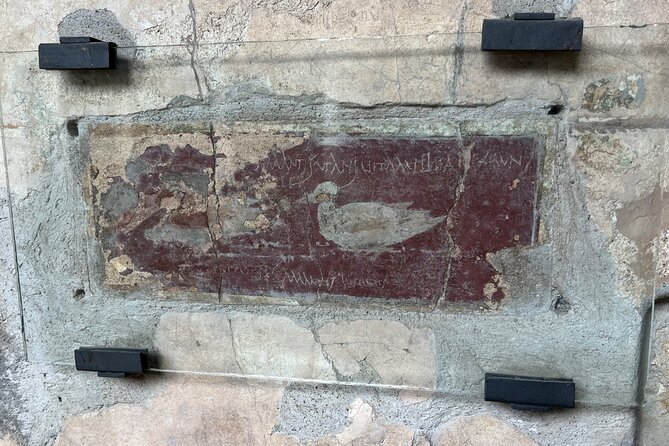
Your main time is spent inside the Archaeological Park of Pompeii, walking through the parts that show how Roman life looked in the real world. The tour description highlights original theatres, shops, and houses that still show decorative details—frescos and marble elements.
Here’s why that’s worth your attention. These aren’t “inspired by” reconstructions. You’re looking at surfaces and layouts that survived in place for centuries, then were uncovered. That difference changes how you interpret the city. When you see frescos on walls and marble in parts of homes, it stops being abstract. It becomes a snapshot of taste, spending, and daily pride.
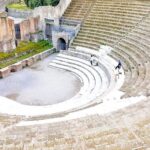
Theatres also give you a fast understanding of Pompeii’s social life. Public entertainment wasn’t a separate world from daily living—it was part of how people gathered and communicated. A guide helps you connect the building to the behavior: who would go, what kind of fun it represented, and why that mattered in a Roman town.
Then there are the shop and street-life elements. Shops and house fronts help you understand that Pompeii wasn’t just temples and landmarks. It was commerce. It was routine. It was people walking from home to work to leisure, with the city’s design supporting that flow.
A practical benefit of a guided route through these areas: you get to enjoy the ruins without constantly stopping to ask, What is this building supposed to be? In two hours, that saves energy and keeps you engaged.
Thermal baths and the gladiators’ gym: the daily life behind the ruins
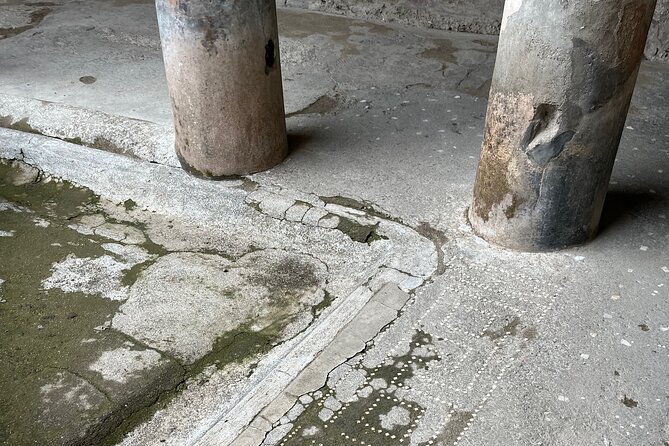
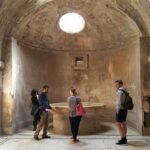
Pompeii’s thermal baths are a highlight for a reason. Roman baths weren’t just about cleanliness. They were a social hub, a place to talk, relax, and move through the day. When you hear how they worked as you walk past the ruins, you start seeing the space the way ancient visitors did—like a system with purpose, not just empty rooms.
This tour’s focus includes thermal baths and explains how they worked, which helps you read the ruins beyond “big structure.” You can better imagine the rhythm: the movement through spaces and the variety of functions that made the baths central to public life.
Then there’s the gladiators’ gym area. Even if you’re not a Roman history superfan, it’s a concept that pulls you in. Gladiators weren’t random entertainment. Training, discipline, and public spectacle all tied into the city’s culture. A guide can make the gym area mean something: where practice fits into the larger idea of performance and status.
In a short tour like this, these two elements are smart choices. Baths and training spaces tell you how Romans lived when they weren’t at home or at the theatre. They fill the middle ground between private life and public show—exactly where your understanding gets deeper.



Tickets, price, and pacing: is $60.08 good value?
At $60.08 per person for about two hours, this isn’t a “budget-only” option—but it also isn’t trying to be a full-day expedition. For Pompeii, the value is the combination of a licensed guide and a focused route that keeps your time efficient.
The key detail for your planning: the park admission ticket isn’t included. So your real total cost is that tour price plus the entrance ticket you’ll buy separately. If you’ve never visited before, this is the one place where your budget can surprise you, because Pompeii tickets matter and you’ll want to handle them correctly at the start.
Where the tour justifies the money is in how much easier it is to understand what you’re seeing. Pompeii is enormous, and self-guided wandering can turn into a lot of “wow” but fewer “aha.” A good guide compresses learning into a manageable walk, so you leave with clearer mental maps and a stronger sense of what these buildings were for.
Pacing also matters. Two hours is long enough to feel connected to the city, but short enough to avoid the mental fatigue that can hit when you try to do everything at once. You’ll come away feeling you visited Pompeii, not that you survived it.
Who this tour fits best (and who might want a different plan)
This is a strong choice for:
- First-timers who want the most important Pompeii sights and context fast
- Couples or small groups who prefer a private pace over crowded group tours
- People interested in how Romans lived day to day, especially baths, food habits, and entertainment
- Travelers with limited time—like a short Naples stop—who still want more than a quick walk
You might want to consider a different approach if you’re the type who wants to explore Pompeii at maximum depth across many zones. Two hours is focused, so it will highlight key areas (theatres, shops, houses with decoration, thermal baths, and the gladiators’ gym theme) rather than trying to cover every district.
If weather is a concern, keep it in mind up front. The experience requires good weather, and you’ll be offered a different date or a full refund if it’s canceled due to poor conditions. That flexibility is helpful when your schedule is tight.
Should you book this Pompeii walking tour with Margherita?
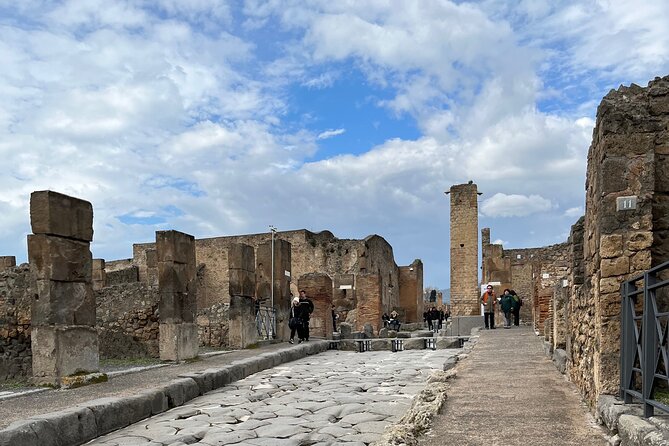
If your goal is to understand Pompeii quickly—without losing your day in confusion—this tour is a smart buy. The private format, the licensed guide, and the route built around high-impact Roman life scenes add up to more than a walk through stones. You’ll see theatres, shops, and richly decorated house spaces, and you’ll connect them to real routines like bathing and training.
I’d book it if you want a guided experience that feels personal and story-driven, and if you’re okay paying admission separately. The guide’s style—engaging, funny, and clearly passionate—also makes a difference in a place where it’s easy to feel overwhelmed by the scale.
Skip it only if you need a full-day itinerary or you’re determined to see every corner on your own. For most visitors, especially first-time Pompeii lovers, two hours with a focused guide is the best kind of souvenir: understanding.
FAQ
How long is the Pompeii walking tour?
It’s about 2 hours.
Is the admission ticket to Pompeii included in the price?
No. The archaeological park admission tickets are not included.
Where do we meet for the tour?
You meet in front of the ticket office in Piazza Esedra, in Pompei.
Is this tour private?
Yes. It’s private, so only your group participates.
What language is the tour offered in?
The tour is offered in English.
Will I get a ticket on my phone?
Yes, the tour includes a mobile ticket.
What happens if the tour is canceled due to weather?
The experience requires good weather. If it’s canceled due to poor weather, you’ll be offered a different date or a full refund.