REVIEW · POMPEII
Pompeii 3 Hours Walking Tour Led by an Archaeologist
Book on Viator →Operated by Askos Tours · Bookable on Viator
Pompeii clicks when an archaeologist talks. You get a private 3-hour walking tour that brings daily Roman life into focus, and you’ll visit major ruins like the thermal baths and the theaters with admission tickets included. The main downside: at $256.99 per person, it’s not a bargain price if you’re traveling solo.
What makes this tour work is the way the guide connects facts to what you’re actually standing in. In past tours, guides such as Daniela Mantice (an art historian) and Monica (who has a PhD in archaeology) are singled out for making Pompeii feel understandable, not like a textbook. You’ll also get that personal, question-friendly pace that’s hard to find in bigger groups.
Before you go, do plan for the physical side of Pompeii. The site is vast and exposed with minimal shade, so you’ll want sunscreen and a hat. And because it’s rain or shine, bring clothes that can handle a change in weather.
In This Review
- Key moments you’ll love on this Pompeii tour
- Where you start at Porta Marina Superiore (and why it matters)
- A tight 3-hour Pompeii route that hits the big ideas
- Basilica and the Foro: Pompeii’s public life in plain sight
- Granaries of the Forum: practical storage, plus haunting details
- House of Menander: the luxury side of Pompeii
- The Stabian Baths and the Lupanar: bathing culture and a city’s commerce
- House of Faun and the Odeon: elite space and Roman entertainment
- Teatro Grande: the big stage where Pompeii performed
- Price and value: what $256.99 buys you (and who it suits)
- Guide quality is the real difference here
- What to bring for Pompeii’s heat and open-air ruins
- A few practical tips before you go
- Should you book this Pompeii archaeologist-led walking tour?
- FAQ
- How long is the Pompeii walking tour?
- Is this tour private?
- Where do we meet the guide?
- What’s included in the price?
- Are admission tickets included for all stops?
- Is the tour only for adults?
- What language is the tour offered in?
- What weather conditions does the tour handle?
- Is there a place to store luggage before the tour?
- Can I cancel for a full refund?
Key moments you’ll love on this Pompeii tour
- Professional archaeologist leadership with strong storytelling: you’ll get technical detail plus clear explanations.
- A focused 3-hour route through the city’s essentials: from public buildings to elite homes to baths and theaters.
- Admission fees are included: you pay less on the spot for several major stops.
- Stops that show real Roman daily life: merchants, forums, bathing culture, and even a famed brothel.
- A private format just for your group: less rushing, more back-and-forth questions.
- Practical start-point support: luggage storage on site and help with how to get back after the tour.
Where you start at Porta Marina Superiore (and why it matters)
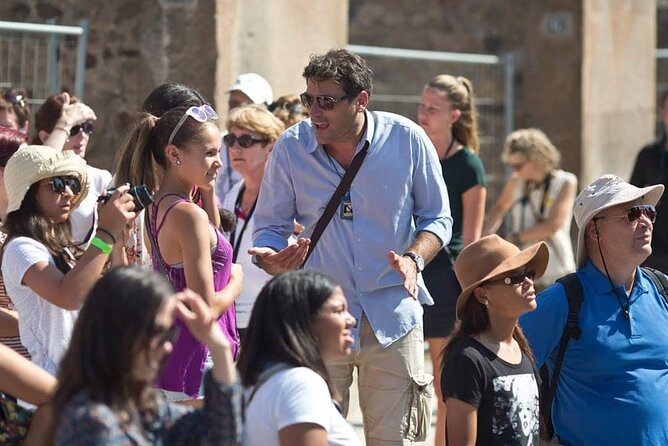
Your tour meets in the Pompeii area at Via Villa dei Misteri, 1, and you’ll link up at the Pompeii Archaeological Park entrance known as Porta Marina Superiore. Your guide holds a sign for Askos Tours, so even if you’re not fluent in Italian, it should be pretty straightforward to find them.
This matters because Pompeii can overwhelm you fast. Finding the right entrance, matching it to your timing, and getting oriented is half the battle—especially if you want to spend your energy on the ruins, not on map-staring.
You’ll also have a free luggage store at the meeting place. That’s a big quality-of-life detail if you’re carrying bags from a train station, an overnight stay, or a previous stop around Naples.
You can also read our reviews of more walking tours in Pompeii

A tight 3-hour Pompeii route that hits the big ideas
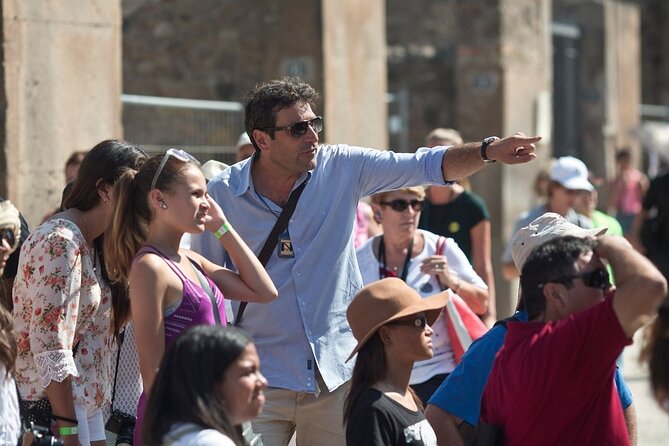
This is a walking tour, not a bus circuit, and the schedule keeps a good rhythm: you’re moving through key zones long enough to understand what you’re seeing, but not so long that you’re completely cooked by fatigue. Since the tour lasts about 3 hours, it’s built for travelers who want a strong “first Pompeii” experience without trying to conquer the entire archaeological park in one day.
Also, it’s described as private and customizable for your group. That doesn’t mean it turns into a free-for-all. It usually means you can ask questions and adjust how much time you want at certain spots—within reason—so you’re not locked into a scripted chant.
One important practical reminder: Pompeii is exposed. Minimal shade means the “quick photo” moments can turn into “why am I sweating already?” moments. Plan your pace around heat, not just distance.
Basilica and the Foro: Pompeii’s public life in plain sight
Early on, you’ll step into the Basilica, an open portico space that sheltered merchants and civic activity. Even if you only get a short look, it’s a great stop because it explains something tourists often miss: Pompeii wasn’t just dramatic tragedy and ruined art. It was also commerce, bargaining, news, and everyday routine.
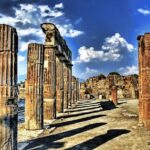
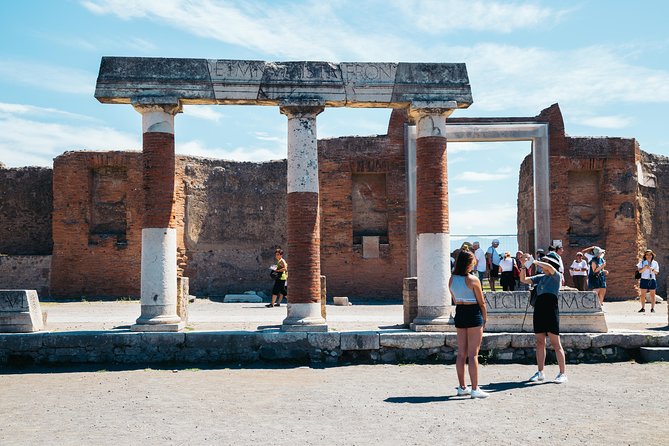
Then you move to the Foro de Pompeya—Pompeii’s main square. This is the place to start thinking in “city scale.” When you stand here, you can imagine how the square functioned as a social hub: people coming and going, civic buildings around them, and the sense that the city’s rhythm was centered on public spaces.
If you like understanding the logic behind a layout, these two stops do that well. They show you the difference between private life (houses, courtyards) and public life (business and civic activity).
Granaries of the Forum: practical storage, plus haunting details
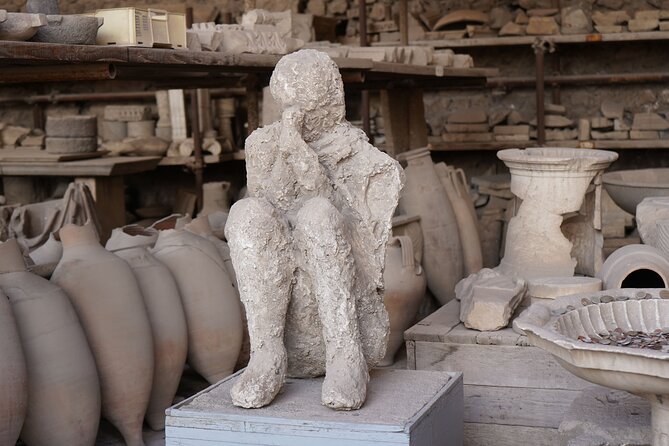
Next come the Granaries of the Forum. This stop stands out because it mixes function and meaning. You’ll see marble tables and structures connected to baths and fountains that once adorned entrances of homes. In other words, this wasn’t just storage—it was part of how people experienced the city’s aesthetic and comfort.
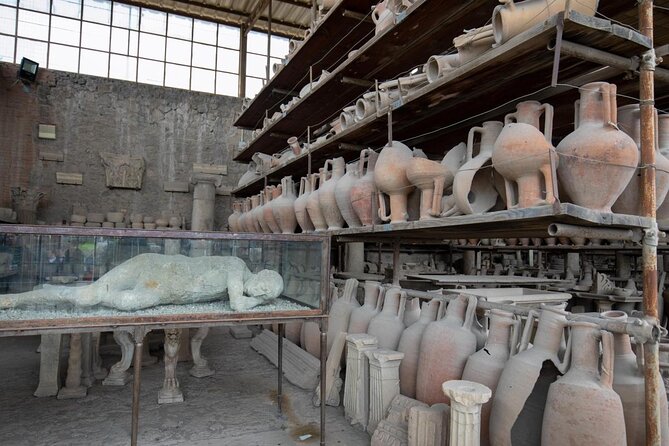
And then the emotional layer arrives. You’ll also encounter casts of victims connected with the eruption, including a cast of a dog and a tree. Pompeii is famous for these preserved moments, but seeing them in a real setting makes them hit differently than in a museum display.
This is a good stop to slow down. If your goal is to truly understand what you’re looking at, spend the time here rather than treating it like a quick “yep, that’s a thing” moment.
House of Menander: the luxury side of Pompeii
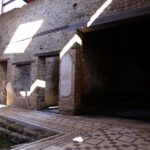
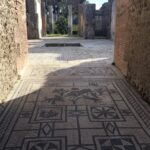
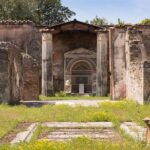
The House of Menander gives you a look at wealth, architecture, and interior design. It’s described as one of the richest and most magnificent houses in Pompeii, especially for decoration and contents.
You’ll likely notice how Pompeii’s elite homes weren’t only about big rooms. They were about visual messaging: art, ornament, and layout—designed to impress visitors and reflect status. This is a strong counterbalance to the forum and civic spaces. It shows you the full spectrum of Pompeii society, from public square life to private luxury.
One practical note: houses can be hit-or-miss depending on how you like to tour ruins. If you enjoy “walk into the space and imagine living here,” you’ll love this. If you want action and constant exterior views, you might wish for a slightly different balance. Still, for most first-time visitors, this home is a highlight for understanding the city’s social layers.
You can also read our reviews of more tours and experiences in Pompeii


The Stabian Baths and the Lupanar: bathing culture and a city’s commerce
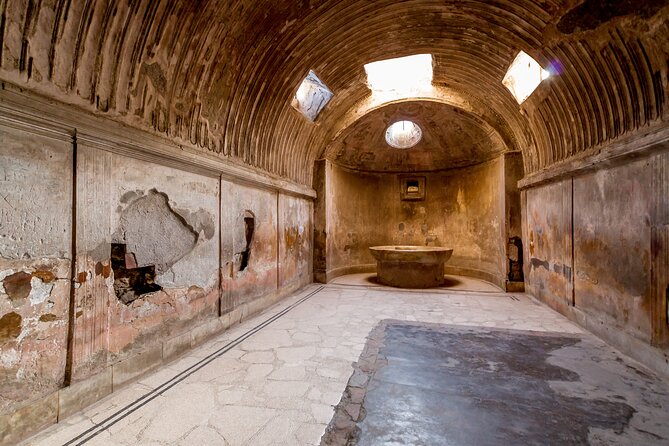
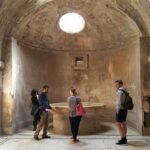
Now you enter the area of the Stabian Baths (Terme Stabiane). These cover a vast site and are noted as the oldest thermal complex in the city. Baths were more than cleaning. They were social spaces, exercise areas, and places to talk and pass time.
If you’ve ever wondered how Romans handled leisure, hygiene, and social life in one system, this is where the answer becomes physical. You’re seeing the building scale and layout that made it work.
Then you’ll visit the Lupanar, described as the most famous brothel in Pompeii. This stop is a reminder that Pompeii’s economy and social structures included all the messy parts of real life. It’s not just “shock value.” It’s also a window into how the city’s commercial life operated in everyday terms.
This is also where you may want to prepare emotionally. Pompeii doesn’t just show you art and architecture; it shows human realities. The guide’s framing makes a difference here, and the better guides help you read the space without turning it into a caricature.
House of Faun and the Odeon: elite space and Roman entertainment
Next is the House of the Faun, one of the largest and most impressive private residences in Pompeii. The scale alone is a lesson: big homes meant big investments, and Pompeii’s elite competed through size, decoration, and design.
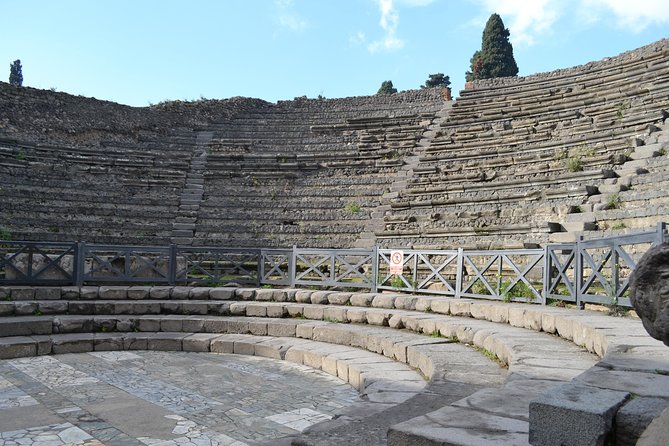
After that comes Odeon – Teatro Piccolo, a smaller theater often called the Teatro Piccolo. It’s a short stop, but it adds context. If you only look at the biggest theater later, the smaller one still helps you understand how entertainment was structured for different crowds and types of events.
Teatro Grande: the big stage where Pompeii performed
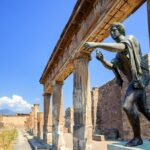
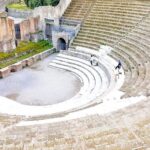
Finally, you reach Teatro Grande, the main and most important theater in Pompeii. This is the capstone for anyone who wants to understand how Romans spent evenings, gathered socially, and used public spaces for culture.
A theater can look like just “old stone seats” if you don’t have the context. With a trained guide, you’ll learn how the space worked, what it meant, and how it fits into the city’s daily rhythm.
This is also a great ending point because it helps you pull themes together: public civic life, elite display, and the entertainment world—still active in the minds of people who lived here.
Price and value: what $256.99 buys you (and who it suits)
At $256.99 per person for about 3 hours, this is premium-priced compared with basic sightseeing tours. But the value isn’t only the walking. The tour includes a professional archaeologist guide and admission ticket fees (at least for several key stops like the Pompeii Archaeological Park entry and others marked as included).
So what you’re really buying is:
- Expert interpretation at major ruins (not just “here’s the building”)
- A route that connects public, private, and cultural Pompeii in a short window
- Admission covered for multiple stops
- A private setup where you can ask questions without competing for airtime
This makes the cost easier to justify if you’re traveling with someone else, care about archaeology detail, and want a clean, guided first encounter. If you’re a solo traveler on a tight budget, it may feel steep—though the private format can still be worth it if you strongly prefer not to join a larger group.
One more thing: this experience is often booked around 50 days in advance. That tells me it’s in-demand, so if you’re traveling during peak season or on a popular week, book early rather than hoping for last-minute availability.
Guide quality is the real difference here
One reason this tour earns a strong reputation is the level of specialist focus from the guides. The names that come up include Daniela Mantice, Nicoletta, Anna Sorrento, Monica, Antonella, and Lia—and the common thread is how well they explain what you’re seeing.
Some people specifically praise guides for:
- Taking them to major spots without dragging
- Explaining history, architecture, and culture in a way that makes sense on foot
- Staying friendly and responsive to questions
- Using clear teaching style and even humor
There’s also a small caution in the feedback: at least one review notes a guide who wasn’t an archaeologist but still had strong knowledge. That doesn’t mean the tour is poor; it’s just a reminder that roles can vary. If archaeology expertise matters most to you, confirm you’ll have a professional archaeologist for your date.
What to bring for Pompeii’s heat and open-air ruins
Even with a great guide, Pompeii punishes poor planning. This park is vast and exposed with minimal shade. Use that as your baseline.
Bring:
- Sunscreen and a hat
- Water (you’ll want it, and shade is scarce)
- Comfortable shoes for uneven walking
- A light layer for rain if the weather turns
The tour runs rain or shine, so don’t bank on sunshine to keep things comfortable. Also, plan your day around the idea that you’ll be outside the entire time.
A few practical tips before you go
- Meet on time at Via Villa dei Misteri, 1. It keeps the first stop smooth.
- If you want the tour to be more than a checklist, ask for explanations around what you’re seeing—especially at the forum and houses.
- After the tour, your guide will help you figure out how to get back to accommodation or the nearest train station. That’s a real time-saver when you’re tired and hungry.
If you need flexibility, the tour offers free cancellation up to 24 hours in advance. If your schedule is fluid, that’s a comfort.
Should you book this Pompeii archaeologist-led walking tour?
I’d book it if your priority is a first-time Pompeii experience that feels smart and human. The 3-hour private format is a good length: long enough to cover major themes (public spaces, baths, elite homes, theaters), short enough that you’re not spending the whole day in the sun.
It’s especially worth it if:
- You want archaeology-focused explanations
- You prefer a smaller, question-friendly pace
- You like the idea of seeing both “pretty” houses and the harder realities (casts, brothel) with context
I’d think twice if:
- You’re strictly budget-focused and traveling solo at $256.99 per person
- You don’t like walking in direct sun and you’re not ready for rain-or-shine
If Pompeii is on your list for only one day, this tour is one of the better ways to make it count—because you’re not just passing through ruins. You’re learning how the city worked, and why those stones still speak.
FAQ
How long is the Pompeii walking tour?
The tour is approximately 3 hours.
Is this tour private?
Yes. It is a private tour/activity with only your group participating.
Where do we meet the guide?
You meet at Via Villa dei Misteri, 1, 80045 Pompei NA, Italy, at the main entrance of the Pompeii Archaeological Park called Porta Marina Superiore. The guide will be holding a sign for Askos Tours.
What’s included in the price?
The price includes a professional archaeologist guide and admission ticket fees.
Are admission tickets included for all stops?
Not for every stop. Some stops are marked as free admission, while others include admission tickets.
Is the tour only for adults?
Children must be accompanied by an adult.
What language is the tour offered in?
The tour is offered in English.
What weather conditions does the tour handle?
The tour takes place rain or shine.
Is there a place to store luggage before the tour?
Yes. At the meeting place there is a safe luggage store for free.
Can I cancel for a full refund?
Yes. Free cancellation is available if you cancel at least 24 hours before the experience start time.