REVIEW · POMPEII
Skip-the-lines Private Tour of Pompeii Including the Theatre the Forum and all Highlights
Book on Viator →Operated by Raphael Tours & Events · Bookable on Viator
Pompeii is better when you walk in fast. This private skip-the-line entry tour trades ticket chaos for a guided walk through UNESCO-listed ruins, and I like that it hits the big anchors without feeling rushed. I also love the way the guide turns specific places into real Roman daily life, from the Forum to preserved bath and street sites like Termopolium Capuano. One thing to plan for: it’s still a walking tour in the open air, so uneven ground and heat can be a factor.
You meet at Hotel Vittoria in central Pompeii and choose a start time (9am, 12pm, or 2.30pm). The tour ends back at the meeting point, which makes it easy to keep your afternoon flexible for a museum visit or self-guided wandering.
In This Review
- Key things that make this Pompeii tour worth your time
- Skip-the-line Pompeii: where the value really shows
- Where you meet (and how the 9am, 12pm, 2.30pm starts help)
- Stop 1: Pompeii Archaeological Park—seeing “everyday Rome” on foot
- Stop 2: Foro de Pompeya—public life in the heart of town
- Stop 3: Stabian Baths (Terme Stabiane)—architecture with real social purpose
- Stop 4: Via dell’Abbondanza—streets that make the city feel walkable
- Guides, pacing, and how private tours stay human
- Price and value: is $227.58 per person fair?
- What to bring (and what to watch out for)
- Should you book this private Pompeii skip-the-line tour?
Key things that make this Pompeii tour worth your time
- Guaranteed skip-the-line access so you spend more time seeing ruins, less time waiting outside
- Private, small-group feel with a guide who can set the pace for your crew
- A 2.5-hour hit list that focuses on Pompeii’s most important public and everyday spaces
- Admission tickets included for the main archaeological sites you stop at
- Professional guide plus art-history support for context beyond what you’d read on your own
Skip-the-line Pompeii: where the value really shows
Pompeii can get crowded fast, especially when everyone is arriving at the same time. The biggest practical win here is the promise of guaranteed skip-the-long-lines entry. That matters because once you’re inside, your time becomes productive right away: you’re following a route, you’re not stuck figuring out what to prioritize, and you’re not losing momentum to queues.
And because this is private, you don’t have to “listen harder” over a busier group dynamic. You can ask questions, slow down for details, and regroup when you hit the most visually intense areas—like the Forum and the baths—where it’s easy to stare and forget to move.
There’s also an emotional win that doesn’t show up on a website: a guide helps you see Pompeii as a living Roman city buried under ash, not just a pile of stone. You’ll spend less time saying, “What am I looking at?” and more time understanding why that wall, that doorway, or that floor matters.
You can also read our reviews of more private tours in Pompeii


Where you meet (and how the 9am, 12pm, 2.30pm starts help)
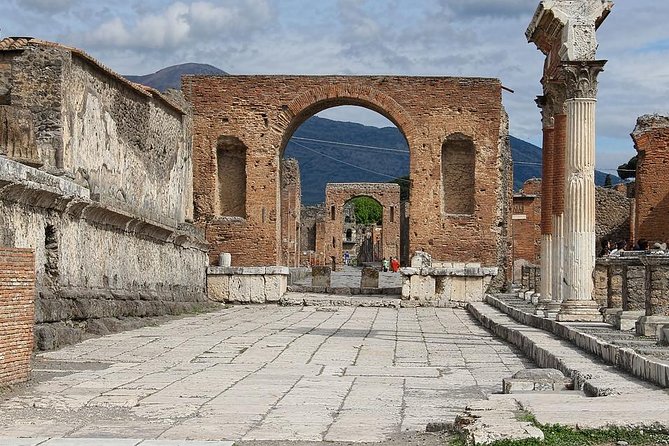
The meeting point is Hotel Vittoria, at Piazza Esedra, 80045 Pompei (near the center). You’ll meet your private guide in time for your departure (9am, 12pm, or 2.30pm depending on what you book). You finish back at the same spot.
Why those time options matter:
- A morning start often feels easier for walking comfort.
- A later start can help if you’re trying to dodge the harshest mid-day sun.
- Because the tour is about 2 hours (approx.), you’re not locked into the entire day. That’s great when you want time afterward for lunch, extra exploring, or a museum visit.
Practical tip: wear comfortable shoes you can trust on uneven surfaces. Pompeii is famous for its sights; it’s also famous for the kind of ground that makes flip-flops a bad idea.
Stop 1: Pompeii Archaeological Park—seeing “everyday Rome” on foot
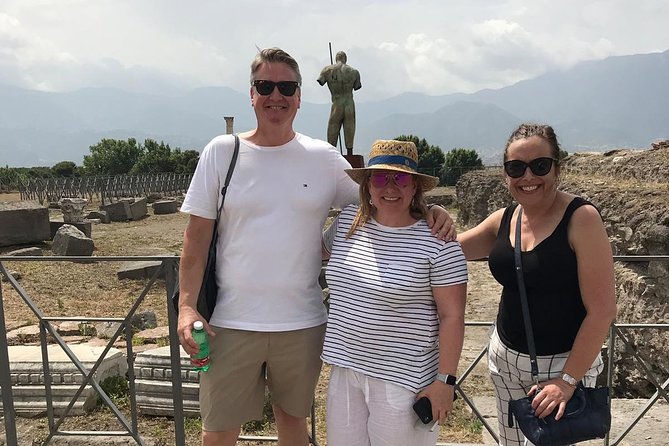
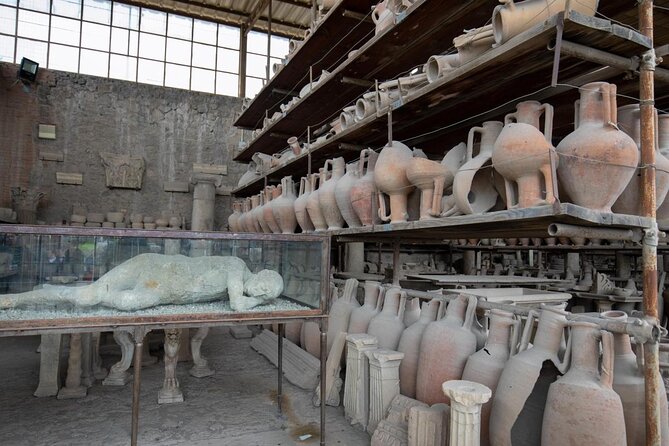
This is the engine of the tour: about 1 hour inside the Pompeii Archaeological Park with your guide shaping what you notice. You’ll start with the big idea—how people lived in a city that goes back to very early periods (as early as the 7th century BC) and then was frozen in time by the AD79 eruption of Mount Vesuvius.
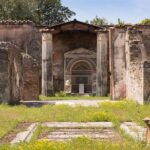
From there, expect a walking route through the main streets of Pompeii as ancient Romans would have moved through them. Guides typically highlight the “ordinary” spaces that turn ruins into a city you can picture: daily-use areas, bath culture, and homes that show what life was like for different social classes.
What you might see and what it means:
- Roman Baths and bath areas: You’ll get context for how important bathing was—socially and practically—so you don’t just see stone tubs.
- Termopolium Capuano: This was essentially a hot-food spot. It helps you understand Pompeii’s street life and quick meals rather than only elite houses.
- House of the Tragic Poet and other domus-style spaces: Even if you’re not an architecture expert, your guide can point out the layout logic—where people lived, moved, and gathered.
- Gladiators’ Gym and mills: These show how entertainment and daily labor fit into the city’s rhythm.
- Lupanare (known for erotic frescoes): A sensitive but important piece of Pompeii’s story, and your guide can frame it in context rather than turning it into a gimmick.
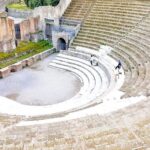
- You’ll also get oriented with major features like the area around the ancient amphitheater, which helps later when you stand in the Forum and feel how “public” the city really was.
The best part of this stop is that it’s not just highlights. Your guide should connect dots between spaces: food to streets, baths to social life, homes to the surrounding public areas. That’s what makes Pompeii feel like a city instead of a checklist.
Stop 2: Foro de Pompeya—public life in the heart of town
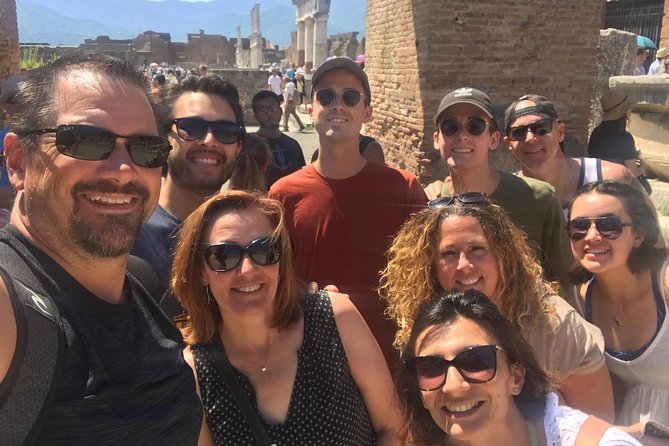
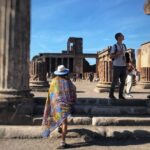
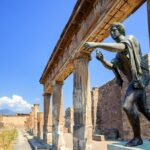
After the first park orientation, you move to the Forum (about 20 minutes). This is the center of the ancient city—the place where civic life happened. Standing in the Forum is different from looking at a photo because you can feel the scale of public space and imagine how crowds would have gathered for decisions, announcements, and everyday business.
Here’s what a good guide does in the Forum:
- Explains how authority and community life were staged in built space.
- Shows how the Forum connects to surrounding roads and major landmarks.
- Helps you understand why so many inscriptions, buildings, and monuments clustered here.
Also, because you have private attention, you can take a moment when it clicks. Forum areas can overwhelm your senses; having a guide means you’re not just walking through a wide open area, you’re walking through a meaning-filled one.
Stop 3: Stabian Baths (Terme Stabiane)—architecture with real social purpose
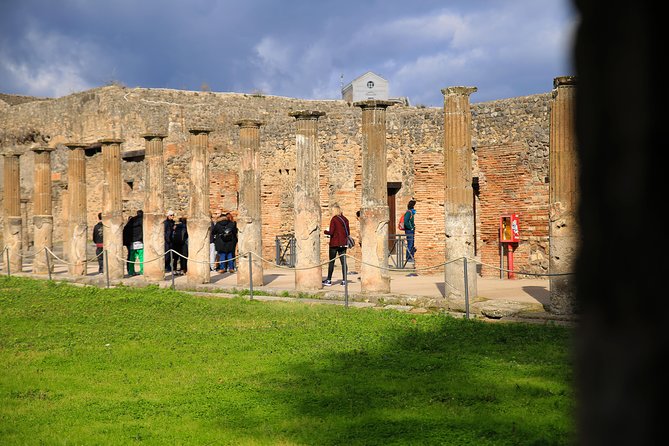
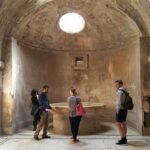
Next up is the Stabian Baths (about 20 minutes). Baths in Pompeii weren’t only about cleanliness. They were meeting places, routine spaces, and a core part of how people spent time.
These stops are short by design, and that’s okay. Pompeii is huge, and a guided “hit-and-leave” plan keeps you focused on what matters most. With a guide, even a brief stop can still become memorable, because you’re not left staring at ruins without a framework.
What to look for (with a guide’s help):
- The layout and flow of bath spaces
- How rooms likely functioned day-to-day
- The social rhythm implied by where people would gather and move
If you love design and want to understand how Romans used the world around them, baths are a great place to spend your guided time.

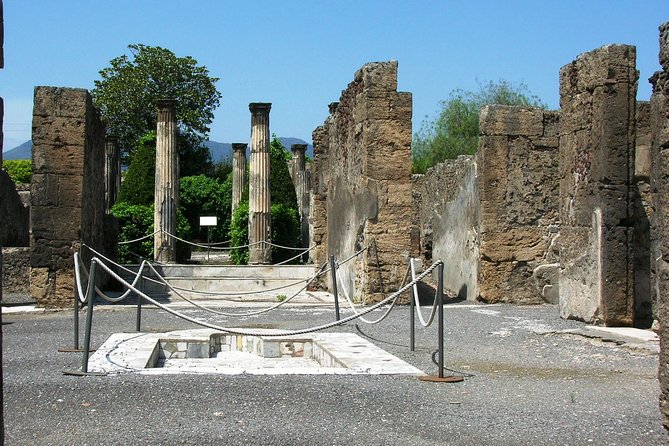
Stop 4: Via dell’Abbondanza—streets that make the city feel walkable
The last major stop on the stated itinerary is Via dell’Abbondanza (about 20 minutes). This is the kind of street that lets you put Pompeii back into motion. You’re not only seeing monuments; you’re walking along a path that feels like a main artery—where commerce and movement would have shaped daily life.
Why this street stop is useful:
- It helps you link the Forum to the surrounding city layout.
- It gives you a sense of pace—where people would have slowed down, passed by, or paused.
- It makes your earlier park walk feel connected rather than like a set of separate exhibits.
Even if you’re not a “street history” person, a good guide can point out small clues that make a street come alive.
Guides, pacing, and how private tours stay human
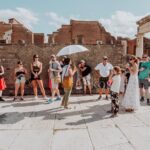
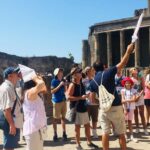
This tour is private, and that changes everything about how it feels on the ground. The best private guides don’t just name sights; they manage energy and attention. Several guides associated with this experience have been singled out for making the tour work for very different kinds of groups—families with young kids, mixed-age crews, and even guests who need the route managed more carefully.
You’ll also benefit from the presence of professional guiding support (including art-historical expertise). That doesn’t mean you’ll get a lecture. It means you can expect explanations that go beyond “what this is” and into “what it suggests about life.”
From a practical viewpoint, private pacing helps because Pompeii can be visually intense. Your guide can adjust how often you pause, how long you linger, and how quickly you move on—so you don’t end up racing through the most important areas.
Price and value: is $227.58 per person fair?
At $227.58 per person, this is not a budget activity. A private Pompeii tour usually costs more than group tours, and that’s the trade.
So where does the value come from?
- Admission tickets are included for the sites you visit during the walk.
- Skip-the-line access is guaranteed, which can save a chunk of wasted time.
- You get personal attention for questions and for matching pace to your group.
- You’re covering multiple major anchor areas—archaeological park time, Forum, Stabian Baths, and Via dell’Abbondanza—in about 2 hours (approx.).
If you hate crowds, want a guided narrative, and you’re traveling with kids or multi-generational family members, the private format can feel like money well spent. If you’re the type who reads maps well and enjoys independent roaming, you might prefer a self-guided plan. But if your goal is to understand Pompeii quickly and accurately without getting lost, this format is hard to beat.
What to bring (and what to watch out for)
Pompeii is outdoors. You’ll be walking, often with uneven ground, so come prepared.
Bring:
- Comfortable shoes you’ve already broken in
- A hat for sun protection in warmer months
- Water (especially if you’re doing this during hotter parts of the day)
- Your phone number with country code (requested for emergencies)
- A current valid passport on the day of travel
Also note:
- Children must be accompanied by an adult.
- The experience is offered in English.
- The meeting point is near public transportation, which can help if you’re already on a local schedule.
- There’s no hotel pickup or drop-off, so plan your route to Hotel Vittoria.
One more honest consideration: the tour is short, and it’s packed with stops. If you want a slow, linger-all-day experience, you may feel you’re moving briskly. That’s the price of fitting Pompeii’s highlights into one concentrated session.
Should you book this private Pompeii skip-the-line tour?
Book it if:
- You want guaranteed skip-the-line entry so you start seeing Pompeii instead of waiting.
- You value a guided route through major public and everyday spaces (Forum, baths, streets).
- You’re traveling with a group that benefits from pacing and personal attention—especially families or mixed ages.
- You’d rather learn how the city worked than just photograph ruins.
Skip it if:
- You’re comfortable doing Pompeii independently and you enjoy figuring out priorities on your own.
- You don’t mind spending time in crowds and standing around at entrances.
- You want a longer, slower tour with more museum-style reading and fewer structured stops.
If your goal is to get the meaning of Pompeii in a compact, well-organized walking experience, this is a strong choice. With the right shoes, some water, and a later start if the heat is intense, you’ll likely finish the tour with a much clearer picture of how a Roman city looked, moved, and lived—right before it was buried.